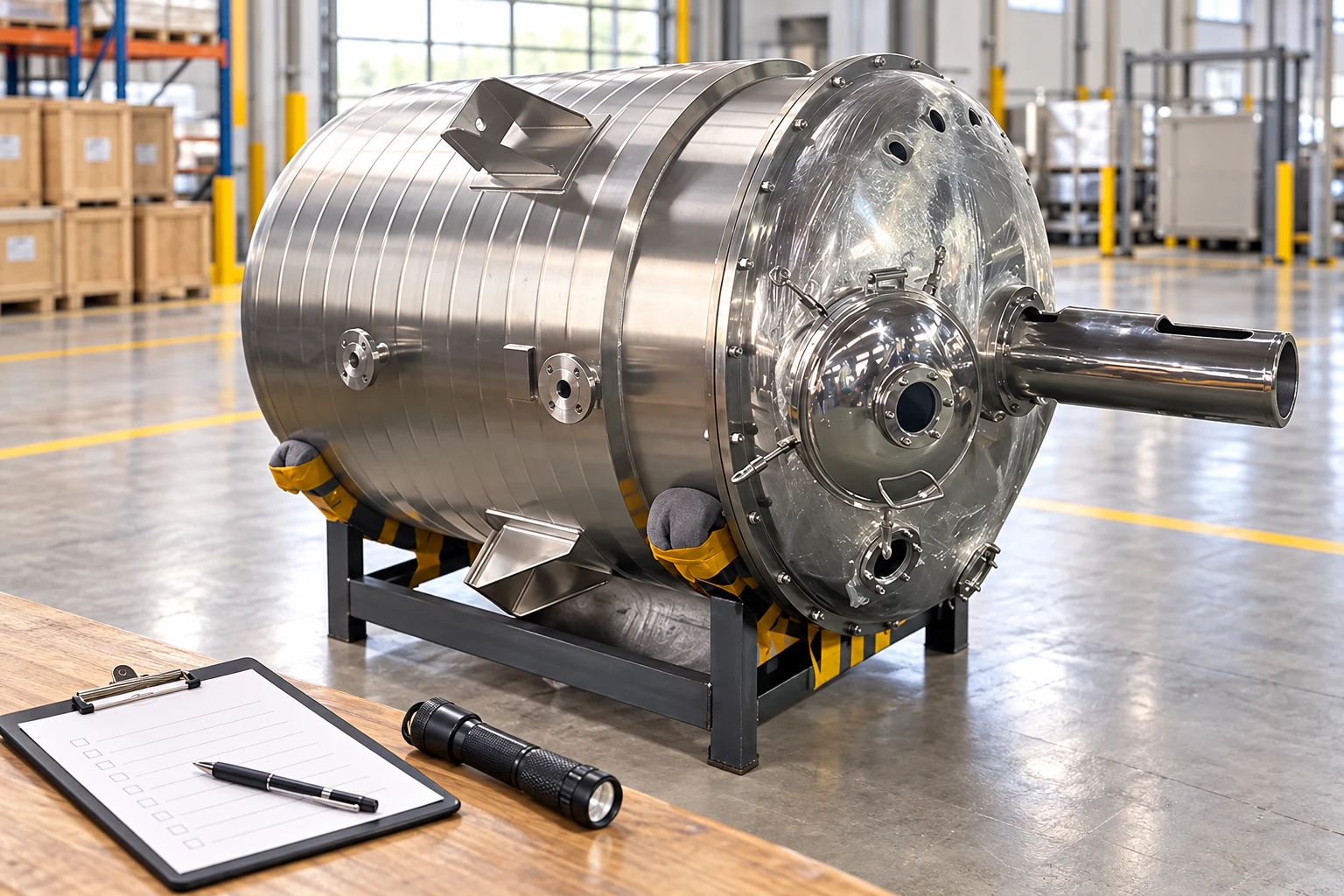
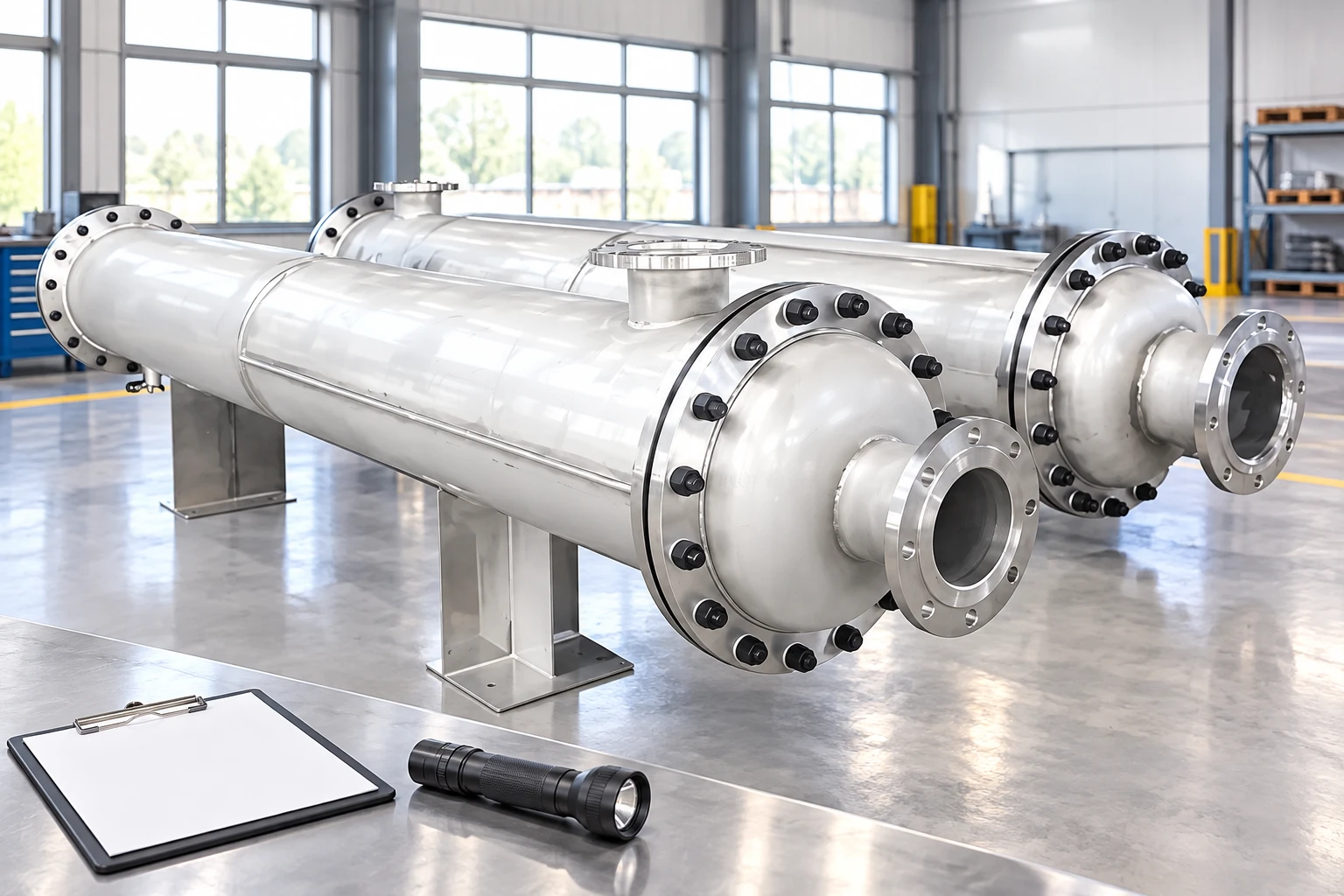
A fixed tube sheet heat exchanger and a floating head unit solve the same heat-transfer job with opposite serviceability trade-offs: the fixed construction keeps the tube bundle locked inside the shell, while the floating head lets straight tubes expand and be pulled for cleaning. This article compares pullability, shell-side access, thermal expansion, and outage work so buyers can match construction to fouling and turnaround reality—not to a generic shell-and-tube label.

What Serviceability Means for Fixed vs Floating Head Buyers
Serviceability here means how easily a plant can pull the tube bundle, reach the shell side for cleaning, absorb thermal expansion without mechanical distress, and execute outage work with realistic crane paths and labor. Heat duty still matters, but a wrong construction choice shows up first as fouling lock-in, gasket-heavy turnarounds, or expansion-related leaks.
TEMA letter codes describe rear-head and bonnet combinations that change access steps. ASME Part UHX design criteria treat fixed and floating-head tubesheets as distinct mechanical cases—not interchangeable outage assumptions.
For the wider fixed, U-tube, and floating-head bundle survey, see YIYI’s shell-and-tube bundle maintenance guide. For floating-head RFQ boundaries—lifting, isolation, documentation—use the floating head service planning article. For heat exchanger basics, see What is a heat exchanger?
Pullability: Locked Bundle vs Extractable Straight-Tube Bundle
Pullability is the first serviceability split. A fixed tube sheet heat exchanger welds or attaches both tubesheets to the shell, so the tube bundle is not withdrawn as a removable core. Maintenance can open channel covers on the tube side, but the bundle stays inside the cylinder for shell-side work.
A floating head heat exchanger keeps one tubesheet fixed and lets the other move axially inside the shell. That floating tubesheet supports removal of a straight-tube bundle for inspection and mechanical cleaning on both sides. Independent piping references describe floating-head designs as allowing bundle extraction and mechanical cleaning of the tube outer surface—capabilities fixed constructions generally cannot match.
Not every floating rear head pulls the bundle. Enerquip’s cleaning guide notes that packed floating-head styles can offer easy tube-side access without full bundle withdrawal, while pull-through and split-ring families are chosen when turnaround plans assume bundle extraction. Record the rear-head subtype in the RFQ instead of assuming “floating” always means a crane day.
Shell-Side Access and Real Cleaning Paths
Shell-side cleaning paths decide whether mechanical cleaning is realistic. On a fixed tube sheet unit, Process Heating’s TEMA overview states that when the bundle is not removable, the shell side cannot be cleaned easily by mechanical means. Plants typically circulate chemical cleaning agents through shell nozzles and must flush residues completely to avoid corrosion or contamination.
On fixed constructions with welded tubes, practitioners note the tube bundle is not accessible from the shell side even when channel heads are removable—field retubing discussions on Cheresources highlight how locked bundles push plants toward chemical shell-side work or bundle replacement instead of on-site mechanical shell cleaning.
Tube-side access on fixed straight-tube layouts is usually better: remove the channel cover or bonnet and run brushes, hoses, or chemical flushes through straight tubes. L-type and N-type heads often allow access without removing piping, while M-type heads can force full head removal and longer outage steps.
From the field: Practitioners describing decades of well-water silt on the outside of a fixed bundle report heat-transfer performance falling sharply when shell-side deposits cannot be mechanically removed. Source note: practitioner discussions on fixed-bundle shell-side fouling (research U-03); not a YIYI project result.
Floating head constructions align with dirty shell-side service because the bundle can be pulled and the shell interior reached mechanically. The same straight tubes also accept standard tube-side cleaning tools without U-bend restrictions—another reason floating head appears in heavy fouling and hydrocarbon duties where both sides foul.
If the shell fluid stays clean—closed cooling water on a utility cooler—practitioners often argue removable-bundle complexity is unnecessary. Match the fouling side to the construction before treating shell-side access as an afterthought.
Thermal Expansion and Outage Stress
Thermal expansion becomes an outage stress when the shell and tubes grow at different rates. A floating head absorbs that movement because the floating tubesheet travels inside the shell, reducing thermal stress between the bundle and shell during heat-up and cool-down cycles.

A fixed tube sheet heat exchanger is rigid: both tubesheets stay tied to the shell. Without expansion relief features, large continuous temperature differences between shell-side and tube-side fluids can push mechanical design toward expansion joints or shorter allowable temperature spans—project decisions outside this comparison, but real constraints on where fixed construction remains practical.
Expansion problems do not wait for planned outages. Leaks at tubesheet joints, packed heads, or expansion devices often force unplanned stops. Buyers comparing fixed vs floating should record startup and shutdown temperature swings alongside steady-state ΔT, then ask whether the outage plan can tolerate the gasket and head work a floating solution may require when expansion is severe.
Outage Work: Clearance, Rear Heads, and Labor Reality
Outage work is where serviceability becomes dollars and days. Floating head units carry more gasketed joints, rear-head hardware, and staged removal steps than fixed constructions. Wermac’s floating-head summary notes more gasket joints and generally higher cost than simpler fixed or U-tube alternatives—trade accepted when pull-through access is mandatory.
Within floating heads, rear-head subtype and TEMA rear head style changes labor:
- P-type (packed): easier tube-side access in some layouts, but bundle pull may be limited.
- S-type (split ring): removable bundle with more disassembly steps.
- T-type (pull-through): often preferred when bundle extraction and shell access dominate the turnaround.
- W-type (outside packed): removable bundle with a simpler external packing arrangement in many duty conversations.
Map the physical route before quoting: straight clearance for bundle length, crane or hoist reach, support removal, rigging ownership, and safe staging.
Bundle removal planning must match the available pull path. A floating head specification without measured clearance is only half a serviceability decision.
For U-tube heat exchanger removable bundles as a third path with bend cleaning limits, see YIYI’s U-Tube Tubular Heat Exchanger hub and the bundle-type guide linked above.

Fixed vs Floating Head Serviceability Comparison
Score fixed and floating head on the same outage inputs before ranking price.
| Serviceability input | Fixed tube sheet heat exchanger | Floating head heat exchanger |
|---|---|---|
| Tube bundle pull | Generally no | Yes—straight-tube bundle extraction and bundle removal |
| Shell-side mechanical cleaning | Limited; chemical circulation typical | Strong when bundle is pulled |
| Tube-side mechanical cleaning | Good on straight tubes via channel ends | Good on straight tubes |
| Thermal expansion handling | Rigid; expansion features may be needed | Floating tubesheet absorbs movement |
| Gasket joints and parts count | Lower | Higher |
| Relative outage complexity | Lower when shell stays clean | Higher; more heads and seals |
| Typical fouling fit | Clean or mild shell-side fouling | Heavy fouling on shell or both sides |
| Outage RFQ field | What to document |
|---|---|
| Fouling side and history | Shell, tube, or both; deposit type if known |
| Cleaning method available | Chemical only, rods/lances, bundle pull, or mix |
| Temperature swings | Startup/shutdown and continuous ΔT |
| Rear-head subtype required | Fixed, or floating P/S/T/W intent |
| Bundle pull clearance | Straight length, crane path, staging |
| Bonnet/head type | L/N/M or channel style affecting tube-side access |
Fixed tube sheet exchangers do not offer bundle access, so shell-side chemical cleaning is often the remaining plant option when mechanical pull is impossible—treat that as a planning constraint, not a surprise during turnaround.

When to Specify Fixed Tube Sheet vs Floating Head
Specify a fixed tube sheet heat exchanger when the shell-side fluid stays relatively clean, expansion needs are modest, and outages can rely on tube-side access plus occasional shell-side chemical circulation. Chemical plants, utility coolers on closed water, and many pharmaceutical or mining heater/cooler duties fit that pattern when fouling history supports it.
Specify floating head when turnaround plans assume bundle pull, both fluids can foul, or expansion is large enough that a rigid fixed layout would need special mechanical features. Petroleum reboilers, dirty process condensers, and services with repeated mechanical cleaning are common floating-head conversations—even though capital and gasket complexity rise.
Do not choose floating head by default for every duty. Higher mechanical complexity only pays back when pullability, shell-side access, or expansion relief are real outage requirements. When cross-leak isolation or hygienic multi-pass paths dominate instead of rear-head type, parallel SKU conversations may apply; this article stays on fixed vs floating serviceability.
Recommended Starting Point: Fixed Tube Sheet Shell and Tube Heat Exchanger
Start with the Fixed Tube Sheet Shell and Tube Heat Exchanger when serviceability inputs point to a simple fixed construction: clean or mild shell-side fouling, modest expansion, and outages that can live with chemical shell-side cleaning when needed. The page describes a partition-type exchanger with simple structure, Fixed Type construction on the product parameters table, materials such as carbon steel, stainless steel, and copper, and uses as heater, cooler, vaporizer, or condenser across chemical, oil, energy, petrochemical, mining, and pharmaceutical contexts.

Do not force fixed construction into a dirty shell-side service that needs mechanical bundle pull. Record fluids, fouling history, cleaning method, expansion swings, and pull clearance, then contact YIYI with those inputs—or use the floating-head service planning article when RFQ depth is the next step.
FAQs
Can you mechanically clean the shell side of a fixed tube sheet exchanger?
Generally no. Because the bundle stays inside the shell, shell-side mechanical cleaning is limited and plants usually rely on chemical circulation through shell nozzles or accept difficult access. That is why dirty shell-side fluids push buyers toward removable-bundle constructions such as floating head.
What is the purpose of a floating head in service planning?
A floating head allows the floating tubesheet to travel with thermal expansion while straight tubes stay accessible for cleaning. Buyers specify it when turnaround plans need bundle extraction and both-sides mechanical access despite higher gasket and rear-head complexity.
Does floating head always mean the bundle can be pulled?
No. Packed floating-head styles can ease tube-side access without full bundle withdrawal. Pull-through and split-ring rear heads are the families usually discussed when turnaround plans require bundle extraction—confirm the rear-head subtype in the RFQ.
When is a fixed tube sheet still the right serviceability choice?
When the shell-side fluid stays clean—such as closed cooling water—and expansion needs are modest, a fixed tube sheet heat exchanger can remain practical without removable-bundle complexity. Tube-side access through channel covers is often sufficient when fouling concentrates on the tube side or stays light.
How does thermal expansion affect outage risk for fixed vs floating?
Floating head constructions absorb differential expansion through the moving tubesheet, reducing thermal stress between shell and tubes during temperature swings. Fixed constructions are rigid; large continuous ΔT may require expansion features or narrower duty limits, and expansion-related leaks can force unplanned outages if the construction is mismatched to the temperature profile.
Is floating head always easier to maintain?
No universal ranking applies. Floating head improves pullability and shell-side mechanical access in many fouling duties, but more gasket joints and rear-head parts can lengthen turnaround work. Fixed constructions are simpler when shell-side fouling stays low and chemical cleaning is acceptable.
What should an outage RFQ record for fixed vs floating?
Document fouling side and history, available cleaning methods, startup and shutdown temperature swings, required rear-head subtype, bonnet or channel style, bundle pull clearance, crane path, and which isolation and rigging tasks belong to the site versus the equipment supplier.
How often should a shell-and-tube heat exchanger be cleaned?
No single cleaning interval applies to every duty. Fouling rate, fluid chemistry, operating hours, and plant procedure set the schedule. Document the expected cleaning method in the RFQ so fixed or floating construction aligns with the real outage plan.
References
- What you need to know about cleaning different tube configurations — Enerquip
- Understanding TEMA Types for Shell-and-Tube Exchangers — Process Heating
- Floating Head Heat Exchanger — Wermac
- PTB-7 Criteria for Shell-and-Tube Heat Exchangers (ASME Part UHX) — ASME
- Stainless Steel Hex: Retubing On Site — Cheresources
- Tubular Exchanger Manufacturers Association (TEMA)