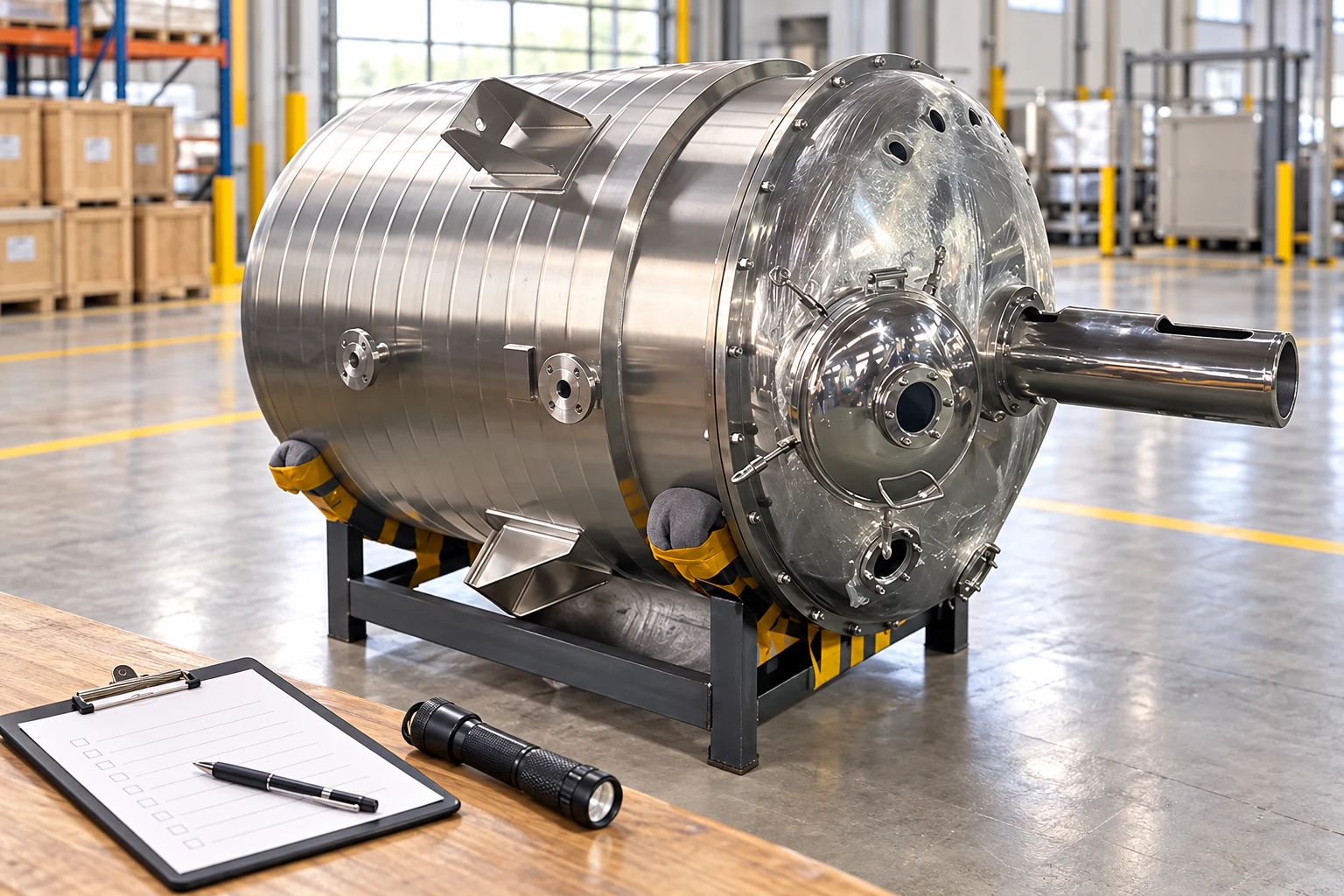
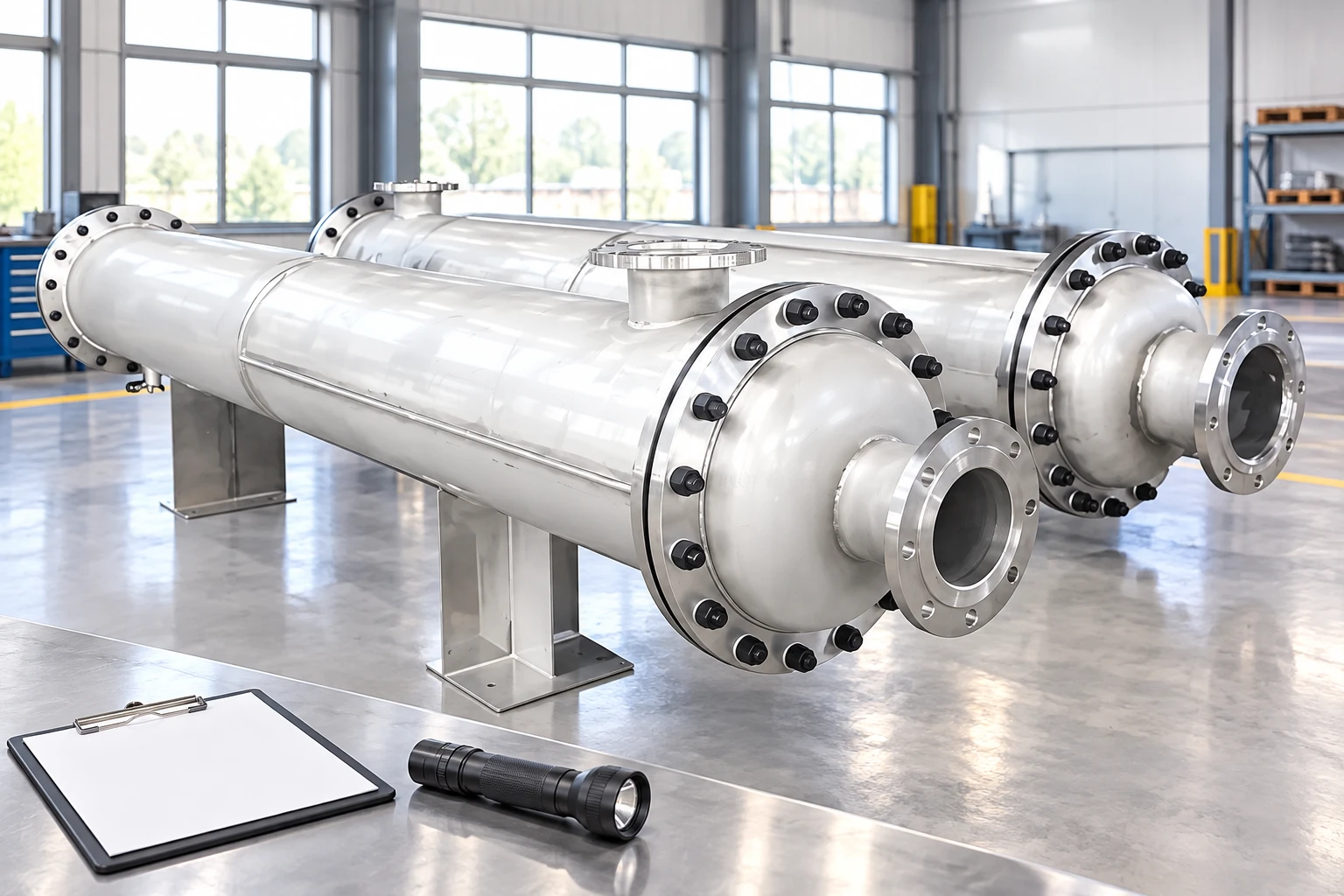
A floating head heat exchanger is a service-planning decision as much as a thermal one. Start with the real fluids, heat duty, fouling history, operating window, cleaning method, isolation points, available lifting route, inspection evidence, and the party responsible for the outage. A generic shell-and-tube image does not prove floating-head construction, material suitability, pressure capability, or project compliance.
For adjacent selection questions, review the tubular heat exchanger guide and the coiled-tube selection guide.

Part 1. What Is the Service Decision?
Record both sides of the duty before comparing constructions: fluid identity, solids or fouling history, inlet and outlet temperatures, flow range, cleaning medium, operating cycles, downtime window, and allowable pressure drop. State whether the primary concern is routine inspection, planned bundle work, unplanned repair response, or changeover between services. These inputs make a maintenance discussion testable instead of relying on a generic exchanger label.
| Input | Record in the duty sheet | Why it matters |
|---|---|---|
| Process fluids | Composition, contaminants, cleaning chemicals | Starts material and cleaning review |
| Thermal duty | Temperatures, flows, heat load, allowable pressure drop | Defines the process boundary |
| Fouling history | Deposits, rate, prior cleaning method | Sets maintenance assumptions |
| Outage | Window, access restrictions, permit boundary | Makes service planning realistic |
Part 2. Which Interfaces Must Be Defined?
The exchanger is only one part of the service boundary. Identify inlet and outlet connections, vents, drains, isolation valves, bypasses, instruments, supports, insulation removal, lifting points, drainage, access platforms, and external piping ownership. A supplier can quote a vessel configuration only when the project states which items belong to the equipment scope and which belong to the facility.
| Interface | Question to assign | Evidence to request |
|---|---|---|
| Isolation | Who supplies valves, blinds, and lockout points? | P&ID responsibility split |
| Access | What clearance and removal route are available? | Layout and elevation drawing |
| Lifting | Who supplies certified lift planning and site equipment? | Site lifting plan |
| Utilities | Who defines cleaning, drain, vent, and recovery connections? | Utility list and boundary note |
Part 3. How Should Bundle Access Be Planned?
Bundle-service planning needs a measured route, not an assumption. Map the removal direction, available straight clearance, obstructions, support removal, crane or hoist access, rigging responsibility, and safe staging area. TEMA, API, and ASME sources can inform a project’s standards review, but the applicable document, edition, jurisdiction, and design responsibility must be stated by the project team.

Part 4. How Are Cleaning and Inspection Scoped?
Specify the proposed cleaning method without assuming that it is suitable: mechanical access, chemical circulation, flushing, inspection openings, sample points, waste handling, and post-cleaning acceptance. Materials, deposits, cleaning chemistry, temperature, duration, and local procedures all need review. Ask which records are expected before handover, such as drawings, material documentation where requested, pressure-test evidence where applicable, and inspection or maintenance instructions.
Important: A construction name does not guarantee cleanability, inspection interval, code compliance, or safe maintenance. The confirmed duty and site procedure control those decisions. Source note: TEMA is public standards context only; project applicability requires review.
Part 5. What Data Makes a Comparison Usable?
Compare proposals using the same documented boundary. Do not compare nominal area, connection size, or construction labels in isolation. Put the requested process, mechanical, access, documentation, and exclusion fields in one comparison sheet.
| Comparison field | Buyer should define | Supplier should clarify |
|---|---|---|
| Duty | Fluids, temperatures, flows, load, pressure-drop allowance | Assumptions and calculation boundary |
| Construction | Required project standard and material assumptions | Proposed configuration and exclusions |
| Service | Cleaning, inspection, access, outage constraints | Required access and maintenance limits |
| Documentation | Drawings, records, testing, review milestones | Deliverables and exceptions |
Part 6. How Should the Supplier Scope the Decision?
Use the shell-and-tube configuration reference, the wider YIYI process-equipment range, and send a heat-exchanger RFQ with:
- fluids, contaminants, temperatures, flow range, thermal duty, and pressure-drop allowance;
- fouling history, cleaning media, inspection expectation, and outage window;
- connections, isolation, vents, drains, supports, insulation, lifting route, and access drawing;
- requested construction review, documents, applicable project requirements, responsibilities, and exclusions.

FAQs
What is a floating head heat exchanger?
A floating-head exchanger is a shell-and-tube construction category considered where the project evaluates thermal movement and service access. The actual configuration must be confirmed from the duty, drawings, and project requirements.
Does a floating-head design eliminate fouling?
No. Fouling depends on fluids, contaminants, temperatures, velocities, operating pattern, and the cleaning program. Document those conditions rather than relying on a construction label.
Can a shell-and-tube photo prove floating-head construction?
No. A photo can illustrate general equipment form but cannot establish the internal construction, materials, ratings, or compliance of a quoted unit.
Who provides extraction clearance?
The project must assign it. The layout owner normally provides the available route, obstructions, support conditions, and lifting boundary; the supplier should state the requested service-access assumptions.
Is chemical cleaning always suitable?
No. Cleaning chemistry, deposits, wetted materials, temperature, concentration, waste handling, and site procedure require project-specific review.
What should the RFQ include?
Include the complete thermal duty, fluid and fouling information, pressure-drop allowance, access and lifting constraints, cleaning and inspection plan, documentation needs, responsibilities, and exclusions.
References
- TEMA — public industry context for project-specific exchanger standards review.
- API standards catalog — public catalog for identifying petroleum and process standards relevant to a project.
- ASME codes and standards — source for confirming which code path the responsible project team must assess.