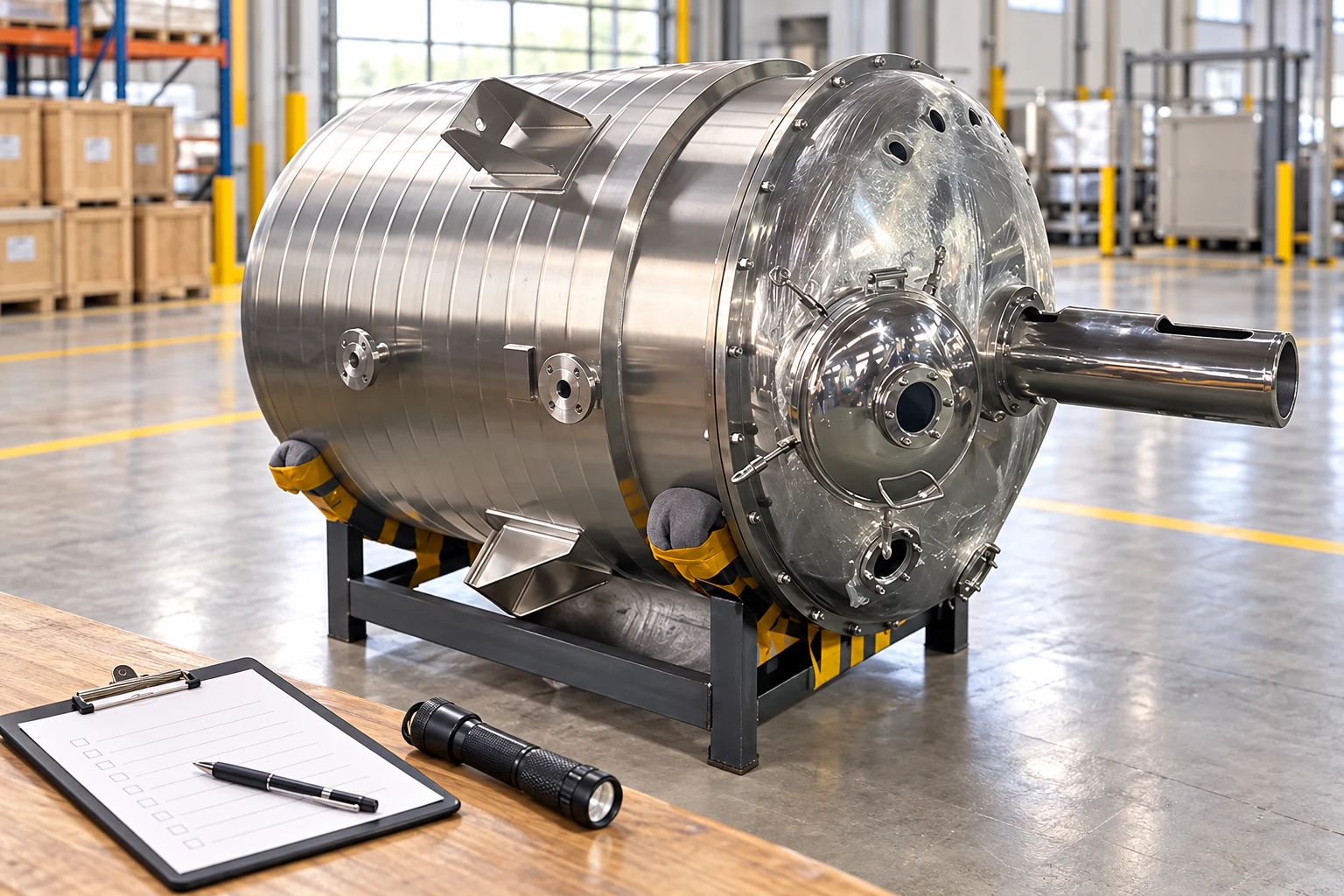
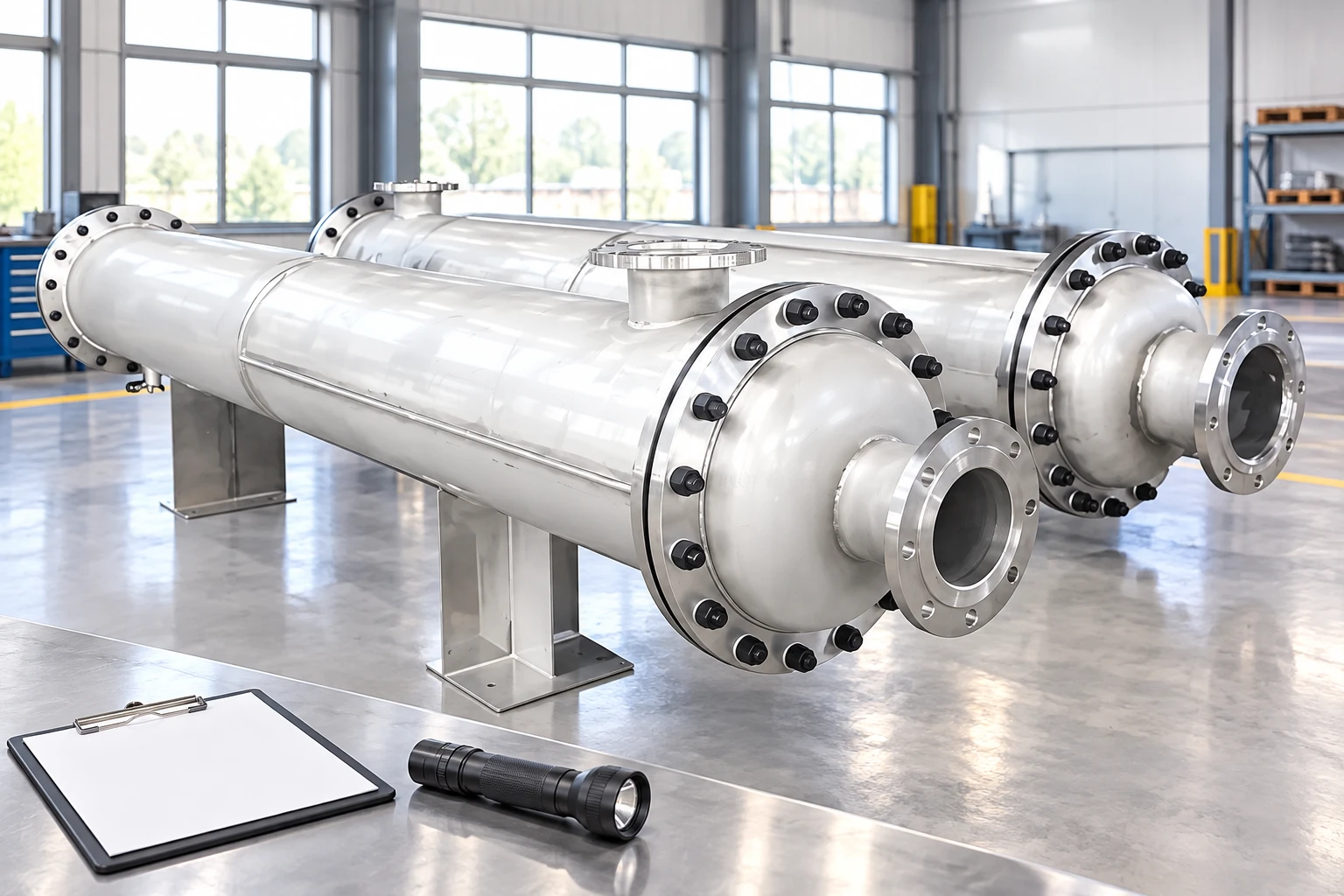
A coiled tube heat exchanger places process fluid and heating media in a compact coiled or spiral tube arrangement so plants can add or remove heat within a limited footprint. Selection succeeds when buyers document duty, media, pressure, and cleaning—not when they choose geometry from a photo alone.
The RFQ should make the heating story measurable. Record hot-side and cold-side identities, target temperatures, flow or batch load, design pressure and temperature, fouling expectation, and how the unit will be cleaned. With those inputs, coiled-tube and shell-and-tube proposals can be compared on the same boundary without disparaging either class. The buyer wins when every quotation answers the same measurable checklist.

Part 1. Define the Coiled Tube Heat Exchanger Role
A coiled tube heat exchanger uses coiled or spiral tube geometry to transfer heat between process and utility streams in a compact package. Buyers meet this class when jacketed vessels alone cannot meet ramp rates, when a dedicated heater is preferred upstream of a tank, or when space around the process cell is constrained.
Define the role before naming a catalog model. State whether the exchanger heats continuously, serves batch fill/heat cycles, or recovers heat from a hot return stream. Clarify which fluid is inside the coil and which fluid is on the shell or vessel side if the design uses that arrangement. Foundational vocabulary is covered in what is a heat exchanger; this article focuses on selection inputs for coiled-tube process heating.
| Role input | What to record | Why it matters |
|---|---|---|
| Service type | continuous vs batch heating | Sets control and hold strategy |
| Hot stream | steam, thermal oil, hot water, other | Defines materials and traps |
| Cold/process stream | identity and phase | Sets fouling and metallurgy |
| Footprint limit | skid envelope | Constrains geometry class |
| Maintenance access | side clearance, lift path | Affects coil vs removable-bundle choice |
Part 2. Capture Process Heating Duty and Media Data
Duty is more than a single outlet temperature. Provide inlet and outlet temperatures for each side, or batch setpoints and allowable heat-up time when the service is discontinuous. If flow meters already exist, include typical and design flow. If the plant runs batch fills, describe charge volume and how often the cycle repeats.
Media data prevents metallurgy and gasket mistakes. Identify any chlorides, solvents, food-contact requirements, or suspended solids. Note viscosity ranges at operating temperature when known. Do not invent film coefficients; ask suppliers to propose heat-transfer approach after the media and temperatures are fixed.
Sibling guidance for other geometries lives in the tubular heat exchanger guide for industrial buyers and the plate heat exchanger guide for industrial buyers. Use those articles for geometry-specific notes while keeping this RFQ on coiled-tube process heating.
Part 3. Set Pressure, Temperature, and Materials

State design pressure and design temperature for each side, plus operating values.
Important: Do not exceed the exchanger design pressure and temperature. When pressure-equipment rules apply to the quoted scope, review the boundary against practice such as ASME BPVC Section VIII and document design conditions in the RFQ. If vacuum can occur on one side during cooldown, say so. Materials should follow media chemistry and cleaning agents; stainless grades are common for hygienic and many chemical utilities, but the buyer must name the grade rather than assume a default.
Connection standards, nozzle sizes preferred, and gasket materials should appear in the same table as pressure data. When pressure-equipment rules apply to the quoted scope, review against practice such as ASME BPVC Section VIII.
| Send with quote | Example entry |
|---|---|
| Design pressure | each side, with units |
| Design temperature | each side, with units |
| Materials | coil and shell/vessel grade |
| Connections | flange or sanitary clamp preference |
| Allowable pressure drop | hot side and process side |
Part 4. Plan Fouling and Cleaning Access
Fouling expectation decides whether a compact coil is practical. Sticky products, fibers, or hard-scaling utilities may need mechanical access that some coiled arrangements cannot provide as easily as a removable tube bundle. State whether cleaning is CIP chemical circulation, flush-only, or mechanical.
Ask suppliers to explain how the coil is inspected, drained, and cleaned. Include CIP chemistry, temperature limits, and whether dead legs are acceptable. If the plant already validates sanitary shell-and-tube cleaning for similar media, document that experience so bidders can respond honestly about coiled alternatives.
Cleaning is a selection gate, not an afterthought. A unit that meets thermal duty on paper but cannot be cleaned on the planned schedule is not a successful purchase. Record who owns cleaning validation and which utilities supply CIP so the quotation does not assume plant capabilities that are not available.
Part 5. Compare Shell-and-Tube Options on Fair Boundaries
Shell-and-tube exchangers remain a strong option when buyers need TEMA-style maintenance conventions, multi-pass tube arrangements, or established plant standards. Fair comparison means scoring both geometries against the same duty, pressure drop, materials, and cleaning method—not arguing that one class is always superior.
Use TEMA practice as context when shell-and-tube is on the shortlist, and keep language neutral. If removable bundles, floating heads, or multi-pass sanitary tubes are required for maintenance culture, say so. If compactness and coil heating near a vessel are the priority, coiled designs may fit—provided cleaning and pressure drop remain acceptable.
Configuration references on YIYI include the fixed tube sheet shell-and-tube heat exchanger and the sanitary shell-and-tube multi-pass heat exchanger. Treat those pages as starting points for discussion, not as ranked winners over coiled units.
Part 6. Align Installation, Controls, and Utilities
Installation needs space for piping, venting, draining, and future removal. Provide the skid or room envelope, preferred nozzle orientations, and whether the unit mounts on a vessel, frame, or floor. Utility hooks—steam traps, condensate return, thermal-oil expansion, cooling water—must be named even when the article focus is process heating.
Controls should list temperature sensors, flow interlocks, and who programs setpoints. Clarify whether the supplier provides a local panel or dry contacts to a plant PLC. Insulation and personnel protection on hot surfaces should be in scope or explicitly excluded.
Browse the YIYI products overview to locate related heat-transfer and vessel equipment when the heating loop connects to tanks or sanitary lines.
Part 7. Select a Configuration and Send the RFQ
When coil heating near stainless process equipment is the likely fit, review the 316L stainless steel heat exchanger with coil furnace configuration as a discussion reference. Keep shell-and-tube options on the same comparison sheet when maintenance culture or TEMA conventions dominate.
Request GA drawings, materials, design pressure/temperature, expected duty statement against buyer inputs, pressure-drop estimates once media data is complete, cleaning provisions, instrumentation, and exclusions. Keep every bidder on identical utility assumptions so commercial differences reflect scope rather than missing media data. Then send process heating duty data for a configuration discussion.

FAQs
What is a coiled tube heat exchanger?
It is a heat exchanger that uses coiled or spiral tube geometry to transfer heat between process and utility streams, often chosen for compact process heating layouts when duty and cleaning are documented.
When is a coiled-tube unit a good fit for process heating?
It can fit when footprint is limited, coil heating near a vessel is preferred, and the media can be cleaned by the planned CIP or flush method. Confirm pressure drop and access before award.
What media data belongs in the RFQ?
Identify both fluids, inlet/outlet temperatures or batch setpoints, flow or batch load, chemistry concerns, and any solids or viscosity notes that affect fouling and materials.
How should buyers compare coiled-tube and shell-and-tube options?
Compare them on identical duty, design pressure/temperature, materials, pressure drop, and cleaning method. Use shell-and-tube when TEMA-style maintenance or multi-pass conventions are required.
Does coiled geometry always clean easier?
No. Cleaning depends on fouling type and access. Some sticky or fibrous duties need mechanical access that buyers should verify before selecting a compact coil.
What should be sent with a coiled tube heat exchanger RFQ?
Send media identities, temperatures, flow or batch data, design pressure/temperature, materials, fouling/cleaning method, allowable pressure drop, connections, controls, and installation envelope.