




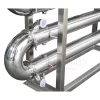
Product Overview
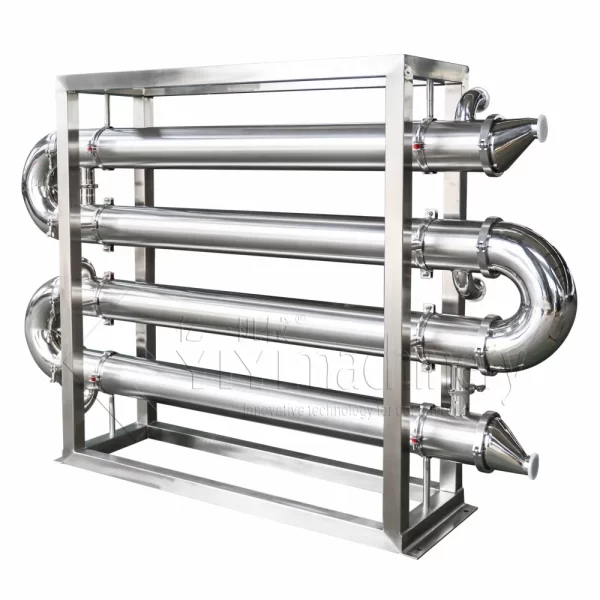
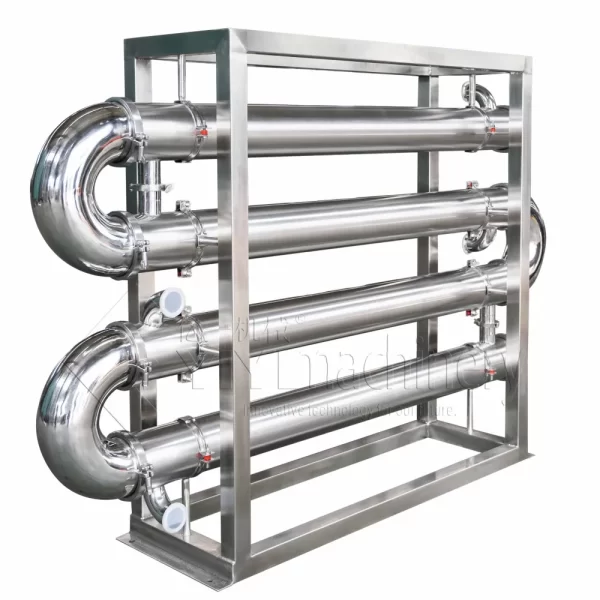
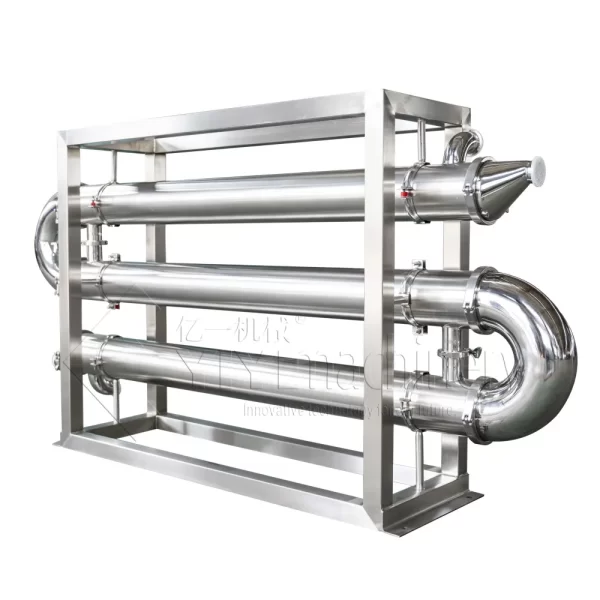
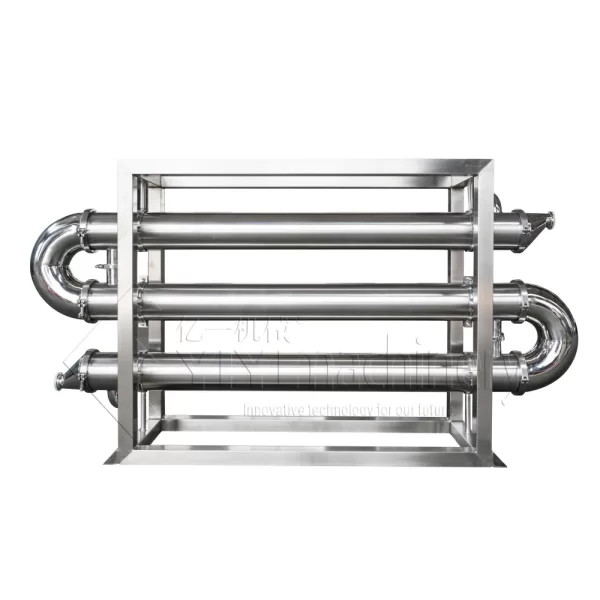
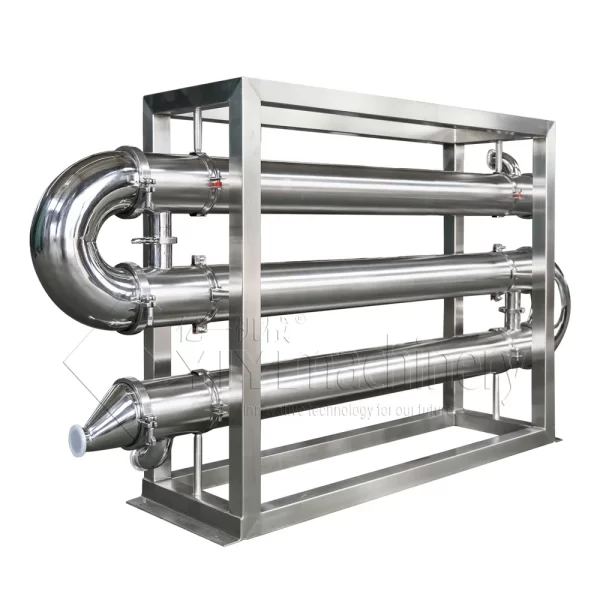
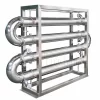
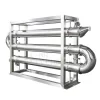
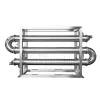
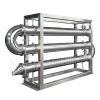
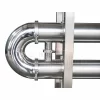
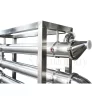
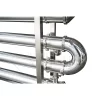
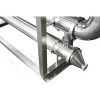
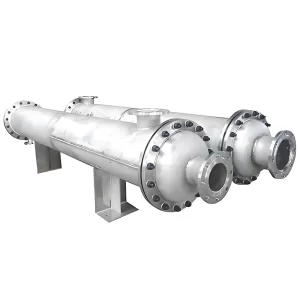
The sanitary shell and tube heat exchanger with multi-pass tubes is a heat exchange device specifically designed for industries with stringent hygiene standards, such as food, beverage, pharmaceuticals, and biotechnology. Its core feature lies in combining the high-efficiency heat transfer capabilities of a shell and tube structure with hygienic materials and surface treatments, and optimizing thermal efficiency through a multi-pass design.
Core Structure and Working Principle
Hygienic materials and surfaces: Typically made of 304L or 316L stainless steel, with contact surfaces mechanically or electrolytically polished. The surface roughness is usually controlled to Ra ≤ 0.5µm (20µin) or even lower to prevent bacterial growth and facilitate cleaning.
Multi-pass design: The fluid on the tube side is divided into multiple passes (such as 2 passes, 4 passes, etc.) by baffles inside the tube box. This design increases the flow velocity and turbulence of the fluid inside the tube, thereby significantly improving the heat transfer coefficient, while allowing for efficient heat exchange with a small temperature difference.
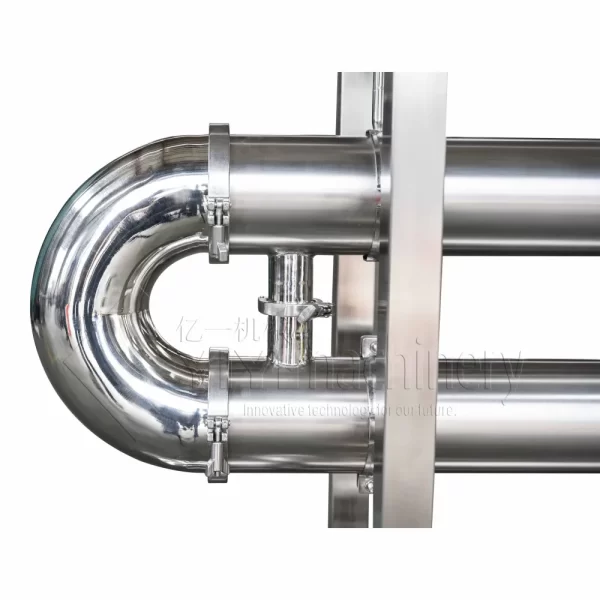
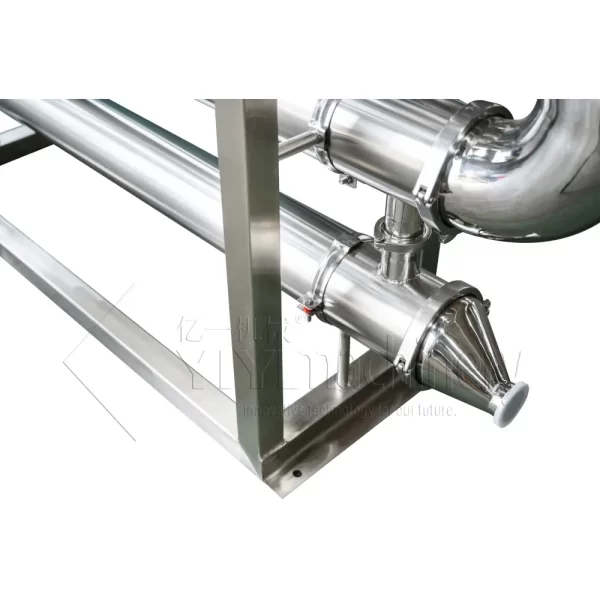
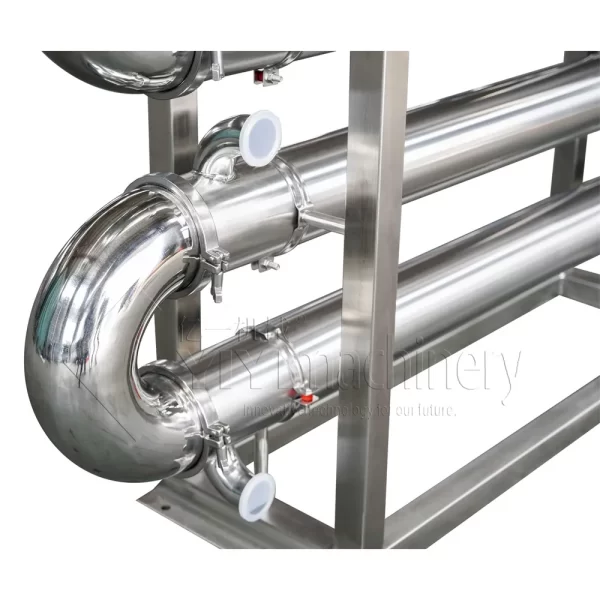
Connection method: To avoid dead zones and residue, Tri-clamp connections are typically used instead of traditional flange or threaded connections. This ensures the system has no retention areas and meets CIP (Clean-in-Situ) and SIP (Sterilize-in-Situ) requirements.
Product Advantages
High hygiene standards compliance: Complies with international hygiene standards such as 3-A Sanitary Standards and ASME BPE (Bioprocessing Equipment), and is suitable for aseptic processing.
Preventing cross-contamination: Some high-end models offer a double tubesheet design, with a leak detection port between the inner and outer tubesheets to completely eliminate the risk of cross-contamination between process fluids and utility fluids (such as steam and cooling water).
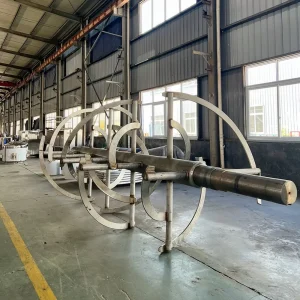
Easy to maintain and clean: The design typically includes removable tube bundles for easy regular inspection and deep cleaning; the interior of the housing is also polished to reduce dirt buildup.
Application scenarios
Dairy and beverage industry: Used in pasteurization, heating, or cooling processes for milk, juice, beer, etc.
Pharmaceutical industry: Used for temperature control in purified water preparation, water for injection (WFI) systems, and aseptic heat exchange in the production of active pharmaceutical ingredients.
Bioengineering: Temperature control in fermenters and heat exchange in cell culture media.
Reviews
There are no reviews yet.