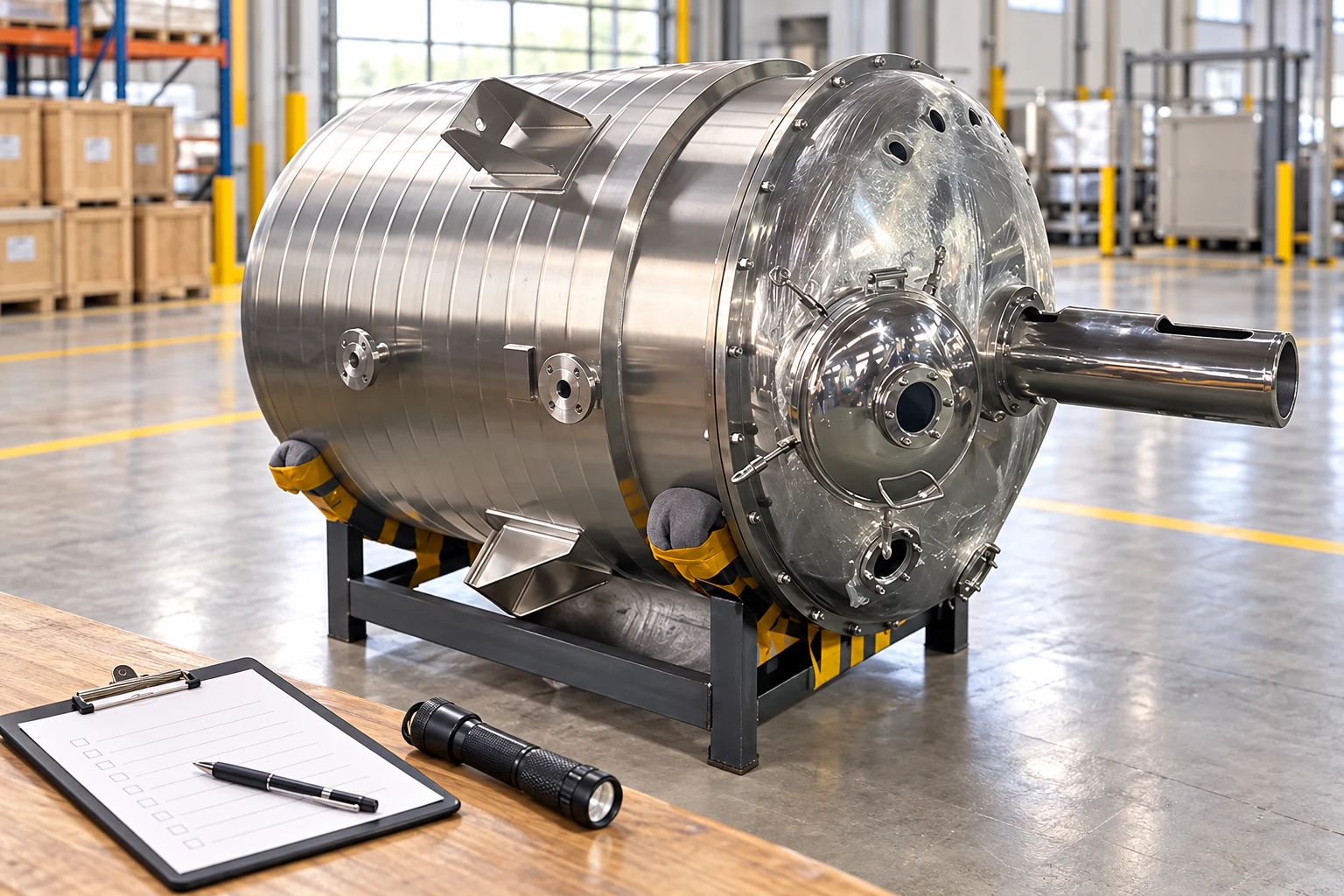
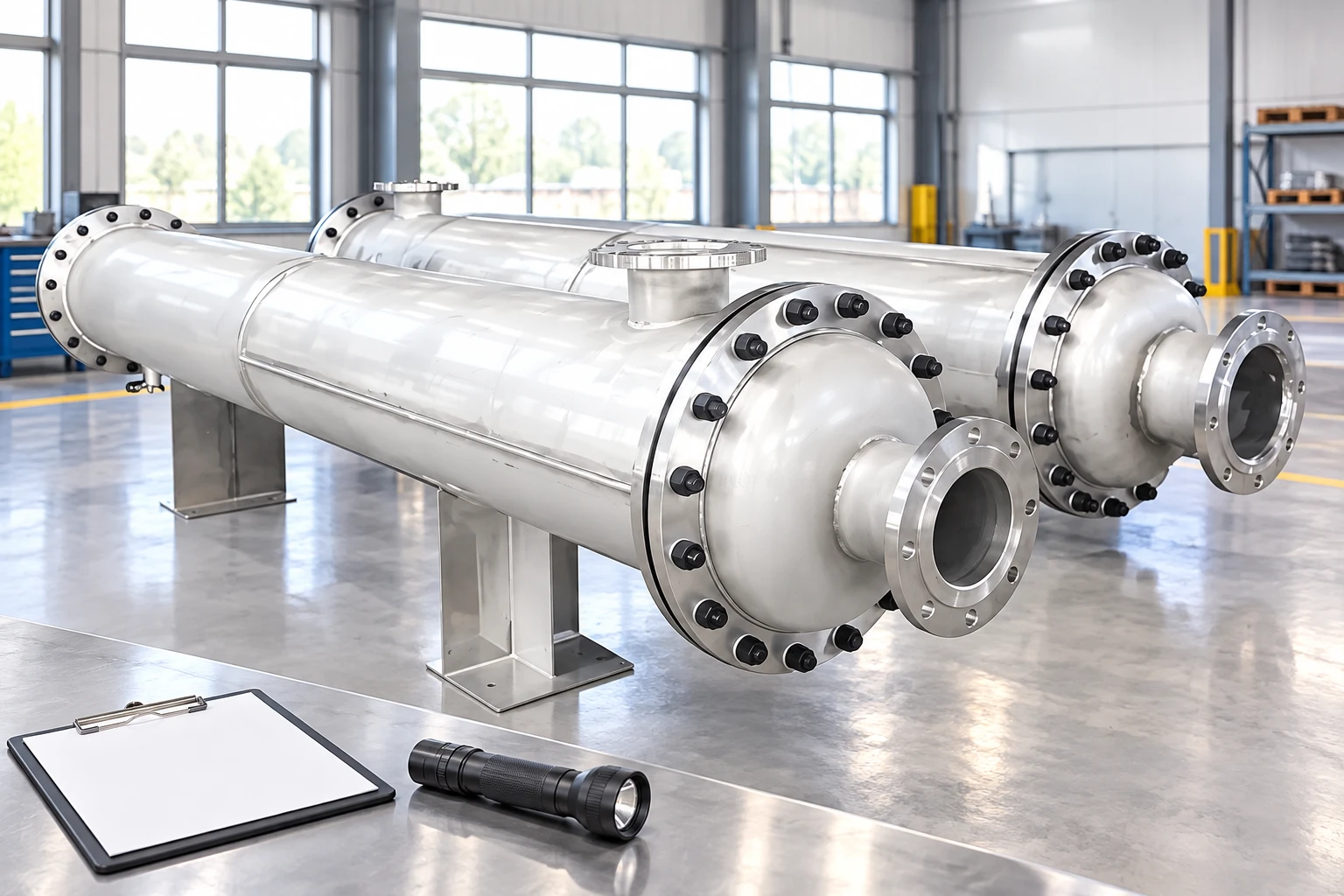
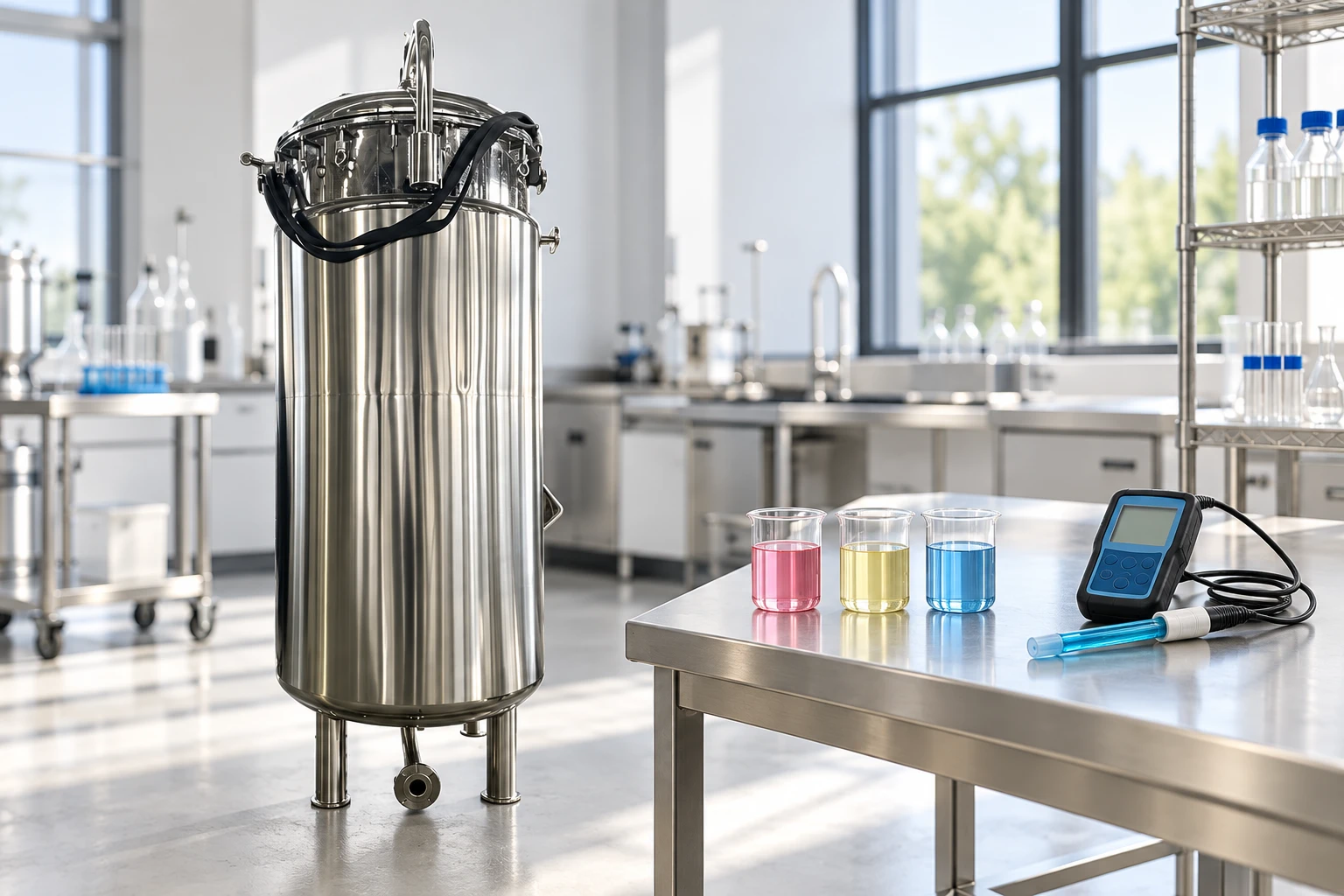
A methanol storage tank is a hazardous-liquid facility component, so the exact product, materials, seals, transfer route, venting, containment, and local safety boundary must be defined before quotation. A generic tank title cannot prove methanol compatibility, flammable-liquid suitability, or safe operation.
This guide frames a methanol-storage RFQ. Compare broader solvent questions in the solvent storage tank guide and material questions in the ethanol storage tank article.

Part 1. What Defines a Methanol-Storage Duty?
Record product concentration, additives or denaturants, temperature, storage duration, fill/discharge method, volume range, transfer frequency, location, and tank role. Receiving, reserve, and day-tank duties have different connection and inspection needs.
| Input | Record | Why it matters |
|---|---|---|
| Product | Methanol concentration, additives, safety data | Starts compatibility and hazard review |
| Temperature | Receipt, storage, transfer, cleaning | Changes materials and vent questions |
| Volume | Minimum, normal, maximum | Defines level and transfer scope |
| Location | Indoor/outdoor, access, ambient | Defines facility boundary |
Part 2. How Should Materials and Seals Be Reviewed?
Review vessel, fittings, valves, gaskets, sampling devices, and transfer seals together. Ask what methanol and cleaning assumptions support the proposed materials. A stainless grade or elastomer name alone does not establish compatibility for every condition.
| Field | Question | Evidence |
|---|---|---|
| Product contact | Which materials touch methanol? | Material list |
| Seals | Are product and cleaning exposures included? | Seal list |
| Temperature | Are hot or idle conditions considered? | Duty assumptions |
| Records | Which material documents are requested? | Documentation list |
Part 3. What Venting and Closed-Transfer Interfaces Matter?
Venting and transfer depend on product, temperature, fill/discharge method, location, and applicable facility requirements. OSHA 1910.106 provides public context for applicable flammable-liquid installations; it is not a design approval. Define vents, pumps, hoses, meters, filters, external piping, and inspection responsibility.
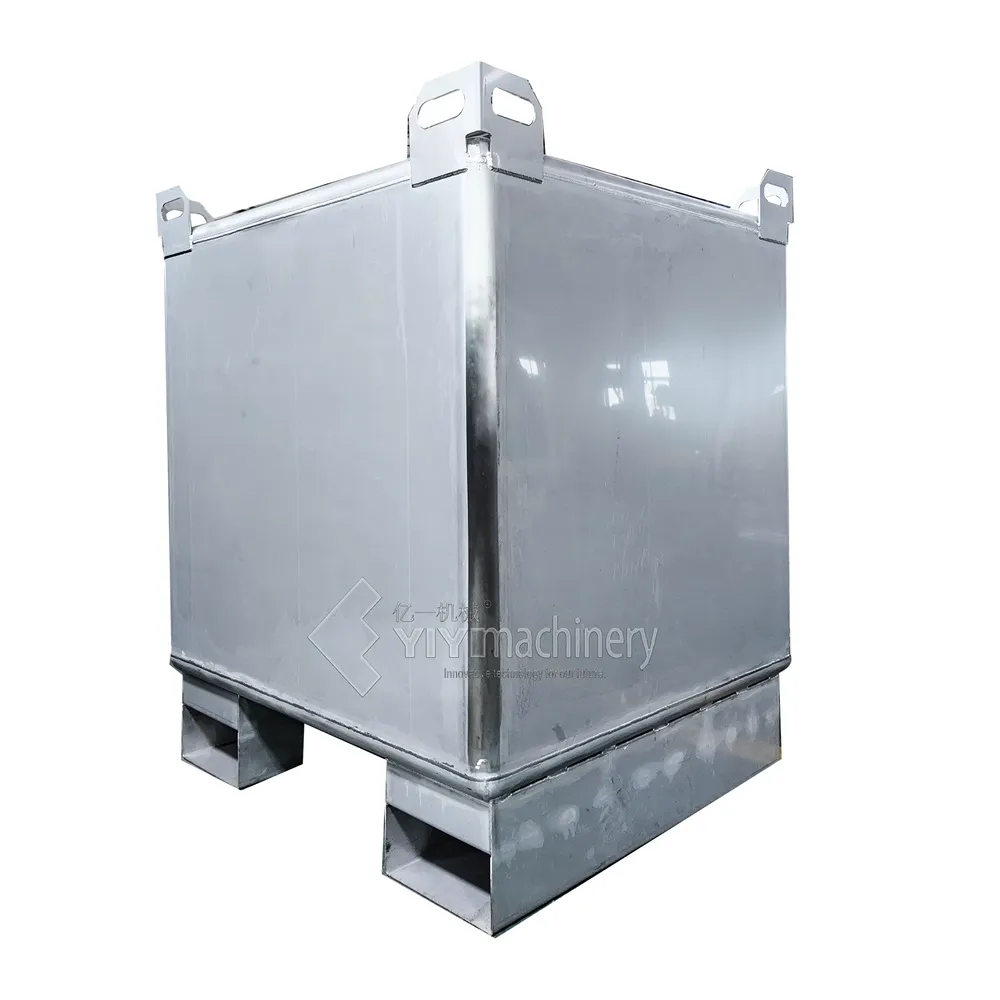
Part 4. How Should Containment and Facility Safety Be Assigned?
Containment, access, spill response, emergency isolation, grounding or bonding, signage, and ventilation are facility interfaces. State which party supplies each item. Do not describe the vessel as a complete safety system.
Important: A methanol tank title does not establish flammable-liquid suitability, grounding, venting compliance, containment, or safe operation (OSHA 1910.106).
Part 5. What Inspection and Documentation Evidence Is Needed?
List access, level indication, sampling, drains, maintenance clearance, supports, lifting, records, and the requested material or construction documents. API standards provide context, but the project must name the applicable document and responsible party.
Part 6. What Belongs in a Methanol-Storage-Tank RFQ?
Use the storage tank configuration reference, storage tank family, and contact YIYI with:
– product concentration, additives, temperature, volume, role, and storage duration;
– materials, seals, cleaning, venting, closed transfer, pumps, meters, and filters;
– containment, location, access, inspection, grounding/bonding responsibility, and facility interfaces;
– documents, safety review, acceptance method, exclusions, and responsible parties.

FAQs
Is stainless steel automatically compatible with methanol?
No. Product concentration, additives, temperature, cleaning, seals, and exposure must be reviewed together.
Is venting the same for every methanol tank?
No. Product, temperature, fill/discharge, location, and local requirements affect venting.
Should methanol use closed transfer?
The transfer arrangement should be selected from the product hazard, facility design, and applicable requirements; document the required boundary in the RFQ.
Does a tank provide secondary containment?
Not by itself. Containment is a site-level arrangement whose scope must be assigned.
Can a product page guarantee methanol safety?
No. Safety depends on the complete tank, transfer, facility, procedures, maintenance, and applicable requirements.
What should a supplier quote include?
Include product data, volume, temperature, materials, seals, transfer, venting, containment, access, documents, safety boundary, and exclusions.
References
- OSHA 1910.106 — source for checking controls that may apply to a methanol installation.
- API standards catalog — petroleum and process-industry standards context.
- ASME codes and standards — public source for identifying standards that require project-specific review.