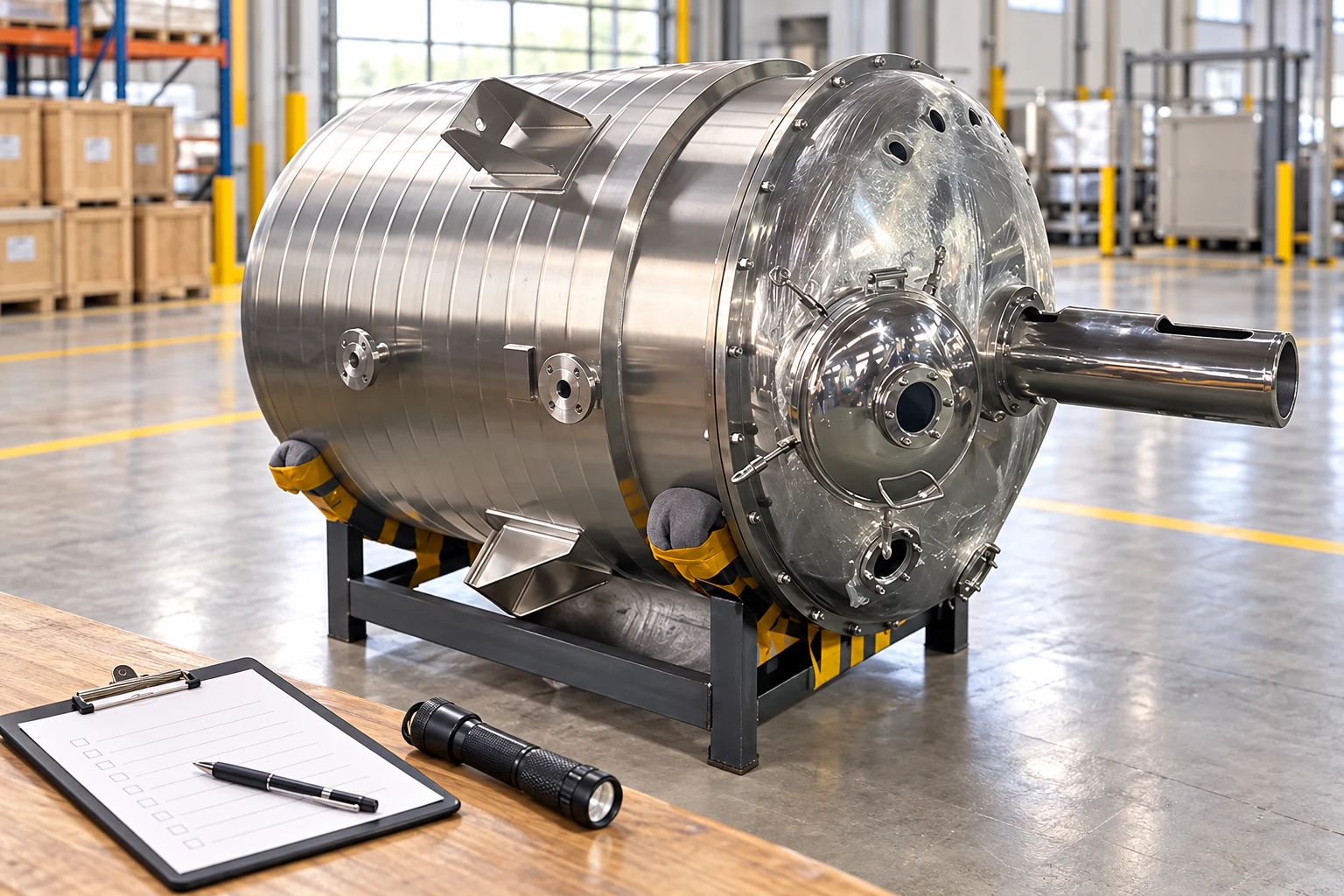
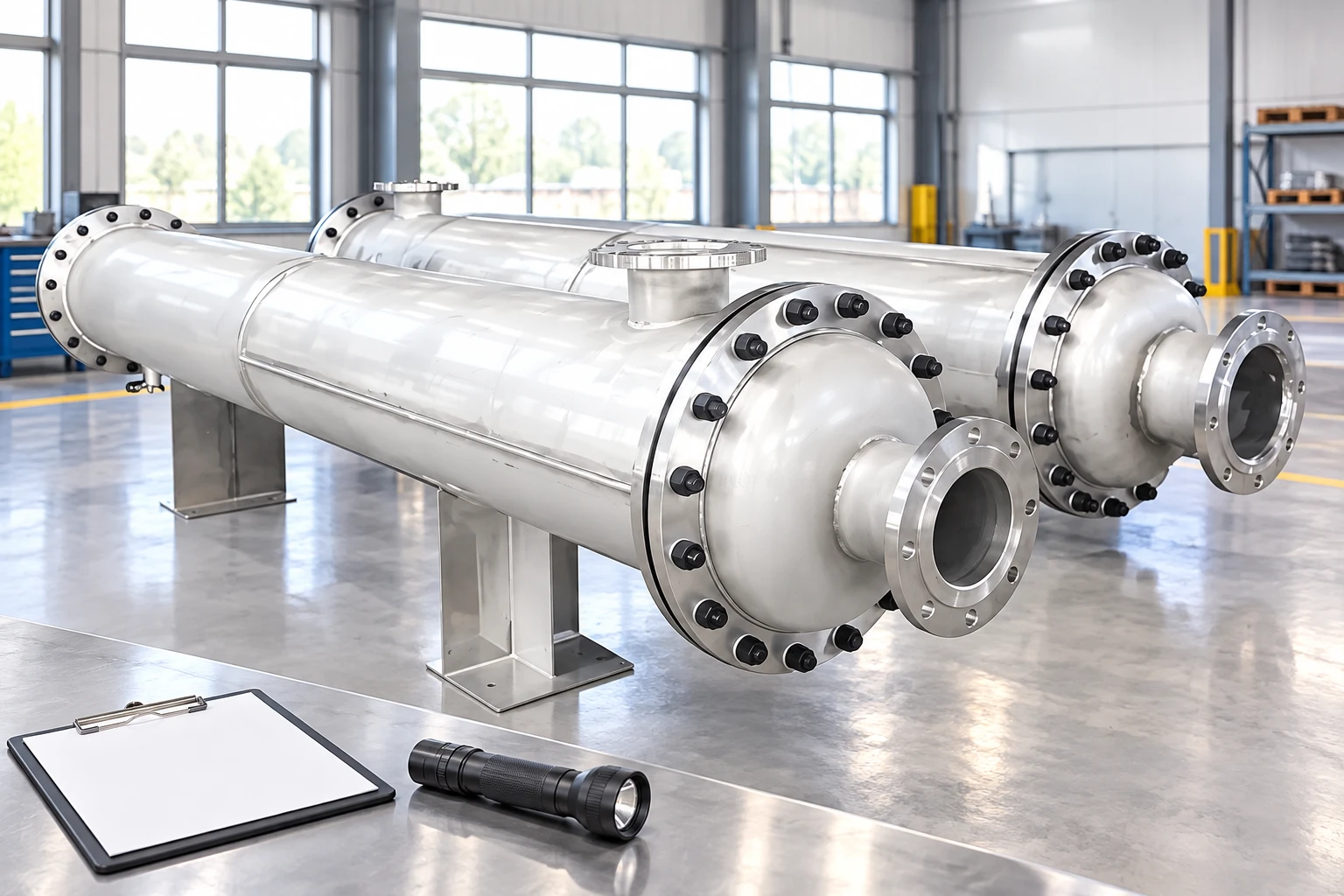
A shell-and-tube heat exchanger is chosen as much by bundle type as by heat duty: fixed tube sheet, U-tube, and floating-head constructions change whether the tube bundle can be pulled, how shell-side and tube-side cleaning are done, and how the unit absorbs thermal expansion. This article compares those three constructions for buyers, then places sanitary multi-pass and double-tubesheet options beside the rear-head decision.

What Bundle Type Decides for a Shell-and-Tube Buyer
Bundle type decides removability, cleaning access, and how differential expansion is handled between the shell and the tubes. The shell is the outer cylinder; the tube bundle is the set of tubes that transfers heat; tubesheets are the plates that hold tube ends and keep shell-side and tube-side fluids apart.
TEMA mechanical standards are a common industry reference for naming front-head, shell, and rear-head combinations. ASME Part UHX criteria treat U-tube, fixed, and floating-head tubesheet constructions as distinct mechanical cases. Letter codes such as BEM, BEU, or AES are configuration language, not a shortcut past duty data.
For adjacent service-planning detail on floating-head outages, see YIYI’s floating head heat exchanger maintenance article. For a basic definition of heat exchangers as a family, see What is a heat exchanger?.
Fixed Tube Sheet: Simplicity Versus Shell-Side Access
A fixed tube sheet heat exchanger keeps both tubesheets attached to the shell, so the tube bundle is not withdrawn as a removable core. That simple structure is why fixed constructions are often selected for clean shell-side utilities and modest expansion needs.

Process Heating’s TEMA overview states the practical limit clearly: when the bundle is not removable, the shell side cannot be cleaned easily by mechanical means. Tube-side ends may still be reached by removing channel covers, but the outside of the tubes stays boxed in by the shell.
From the field: In an r/ChemicalEngineering discussion, an engineer described silt from well water covering the outside of a fixed bundle for decades and cutting heat-exchanger performance in half. That is user language about shell-side lock-in, not a YIYI project result.
On Eng-Tips, practitioners note the opposite case: if the shell fluid is clean closed cooling water, removable-bundle access may not be worth the complexity. Match the fouling side to the construction before defaulting to either extreme.
YIYI’s Fixed Tube Sheet Shell and Tube Heat Exchanger describes a partition-type exchanger with a simple structure, materials such as carbon steel, stainless steel, and copper, and uses as heater, cooler, vaporizer, or condenser across chemical, oil, energy, petrochemical, mining, and pharmaceutical contexts.
U-Tube Bundles: Expansion Freedom and Bend Cleaning Limits
A U-tube heat exchanger uses tubes bent into U-shapes on a single tubesheet, so the tubes can expand with temperature differences without an expansion joint on the shell. The bundle can be removed for shell-side work, which is why U-tube sits between fixed simplicity and floating-head complexity.
The same bends that absorb expansion complicate tube-side mechanical cleaning. An Eng-Tips TEMA selection thread notes that U-tubes can be hydroblasted, yet the bend can block a thorough clean, and a fully plugged bend may leave few options compared with a straight tube that can be drilled.
Choose U-tube when shell-side access matters, tube-side fouling stays manageable, and expansion relief is a real duty need. If the dirty fluid must sit on the tube side and needs aggressive mechanical cleaning through every tube path, ask whether straight tubes—fixed or floating—fit the maintenance plan better.
Floating Head: Full Access With Higher Mechanical Complexity
A floating head heat exchanger lets one tubesheet move axially inside the shell, so the straight-tube bundle can expand and can be withdrawn for cleaning and inspection. Process Heating groups floating rear heads such as types P, S, T, and W as removable-bundle constructions without hard-to-clean U-bends.
That access is why floating-head designs show up in dirty process services where both shell-side and tube-side mechanical cleaning matter. The trade-off is construction complexity: more joints, more parts, and generally higher cost than fixed or U-tube alternatives for an equivalent duty conversation.
Use floating head when outage plans assume bundle pull, when both fluids can foul, or when expansion is severe enough that fixed construction would need special expansion features. For RFQ-level service boundaries—lifting route, isolation, documentation—use the dedicated floating-head service planning article rather than treating this comparison as an outage playbook.
How Buyers Compare Fouling, Expansion, and Outage Work
Compare constructions with the same three inputs: which side fouls, how large the temperature difference is, and what cleaning method the outage can actually run. Price alone does not answer those questions.
| Buyer input | Fixed tube sheet | U-tube | Floating head |
|---|---|---|---|
| Tube bundle removal | Generally no | Yes | Yes |
| Shell-side mechanical cleaning | Limited / chemical-oriented | Bundle can be pulled | Bundle can be pulled |
| Tube-side mechanical cleaning | Straight tubes accessible from ends | Harder at U-bends | Straight tubes, strong access |
| Thermal expansion handling | Limited without special shell features | Tube bends absorb movement | Floating tubesheet absorbs movement |
| Relative mechanical complexity | Lowest | Medium | Highest |
| Decision question | What to write down before quoting |
|---|---|
| Which fluid fouls more? | Shell side, tube side, or both |
| What cleaning method is realistic? | Chemical circulation, rods/lances, bundle pull, or a mix |
| Is differential expansion a duty concern? | Startup/shutdown swings and continuous ΔT |
| What clearance exists for bundle pull? | Straight removal length, crane path, staging |
| Is cross-contamination intolerable? | Whether double tubesheet isolation is required |
An Eng-Tips contributor put the shell-side rule in plant language: fixed tubesheet designs do not give access to the bundle, so chemical cleaning is often the remaining shell-side option. Treat that as a planning constraint, not a surprise during turnaround.
Double Tubesheet and Sanitary Multi-Pass Beside Bundle Type
Double tubesheet construction and sanitary multi-pass layout answer different buyer questions than rear-head type, but they often appear in the same RFQ package. Keep them as parallel decisions rather than substitutes for fixed, U-tube, or floating-head selection.

YIYI’s sanitary shell-and-tube multi-pass exchanger is described for food, beverage, pharmaceutical, and biotechnology hygiene contexts. The page points to 304L or 316L stainless steel, polished contact surfaces, multi-pass tube-side baffles, Tri-clamp connections oriented to CIP and SIP practice, and removable tube bundles for inspection and cleaning.

A double tube sheet heat exchanger uses SS304 or SS316L with an isolation chamber between the tube side and the shell side so a tube-to-tubesheet leak is less likely to mix process and utility fluids. Process Heating describes the same engineering idea as a secondary chamber that contains leaks before they reach the opposite side. Use it when purity or cross-contamination risk dominates the specification.
Recommended Starting Point: Fixed Tube Sheet Shell and Tube Heat Exchanger
Start with the Fixed Tube Sheet Shell and Tube Heat Exchanger when the shell-side fluid stays relatively clean, expansion needs are modest, and you want a simple stainless or carbon-steel shell-and-tube configuration for heating, cooling, vaporizing, or condensing duties. Bring sanitary multi-pass or double-tubesheet options into the same conversation when hygiene finish or leak isolation is part of the duty.

Do not force a fixed construction into a dirty shell-side service that needs mechanical bundle pull, and do not treat a product photo as proof of floating-head internals. Record fluids, fouling history, cleaning method, and access clearance first, then contact YIYI with those inputs for configuration discussion.
FAQs
What are the different types of shell and tube heat exchanger heads?
TEMA-style naming combines a front head, a shell letter, and a rear head letter. Rear-head families include fixed tubesheet arrangements, U-tube rear heads, and floating-head variants such as packed or split-ring designs. The head letters describe access and expansion behavior; they do not replace process duty data.
What is the purpose of a floating head in a heat exchanger?
A floating head lets one tubesheet move with tube expansion and supports removal of a straight-tube bundle for cleaning and inspection. Buyers specify it when thermal movement and both-sides mechanical access matter enough to accept higher construction complexity.
Can you clean the shell side of a fixed tube sheet exchanger mechanically?
Generally no. Because the bundle stays inside the shell, shell-side mechanical cleaning is limited and plants often fall back on chemical cleaning or accept difficult access. That is why dirty shell-side fluids push buyers toward removable-bundle constructions.
Why is cleaning a U-tube heat exchanger harder on the tube side?
The U-bends restrict rods and many mechanical tools. Shell-side cleaning can still benefit from bundle removal, but tube-side fouling at the bend needs flexible tools, chemical circulation, or a construction with straight tubes.
Which shell-and-tube design is the most efficient?
No construction is universally the most efficient. Heat transfer depends on the duty, velocities, fouling state, and maintenance that keeps surfaces clean. Bundle type should be scored on access and expansion first, not on a blanket efficiency ranking.
What is the 10-13-rule for heat exchangers?
That rule is outside the evidence collected for this article, so it is not used as a selection criterion here. Use documented fouling side, expansion need, cleaning method, and project standards instead of an unverified rule of thumb.
When does a double tubesheet matter if I already chose a bundle type?
Double tubesheet addresses cross-leak isolation between process and utility sides. It can appear with more than one rear-head style. Choose it when a tube-joint leak must be contained or detected rather than as a substitute for deciding fixed, U-tube, or floating head.
How often should a shell-and-tube heat exchanger be cleaned?
Cleaning interval depends on fluids, fouling rate, operating pattern, and plant procedure. No universal schedule is claimed here. Write the expected cleaning method into the RFQ so construction choice matches the outage plan.