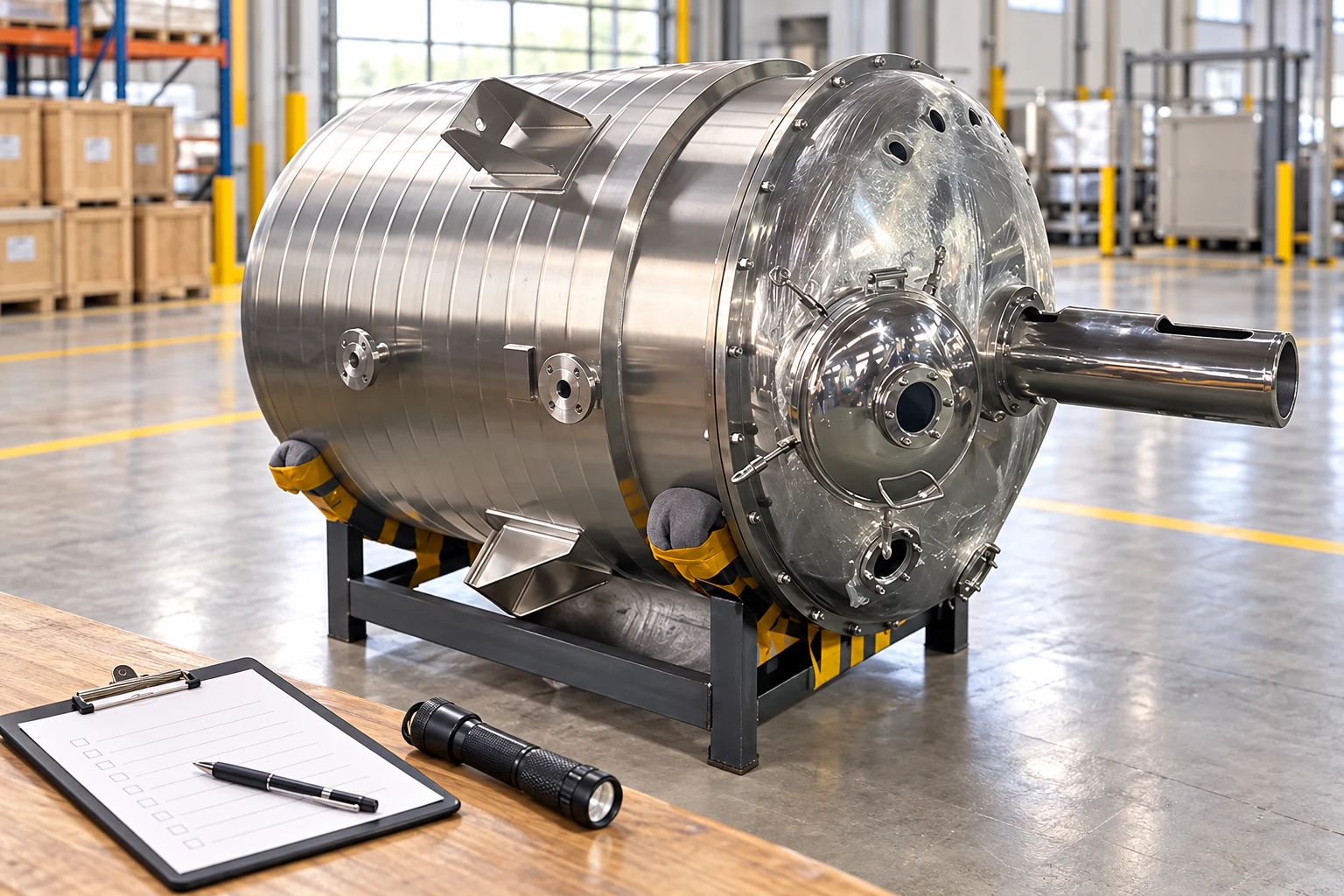
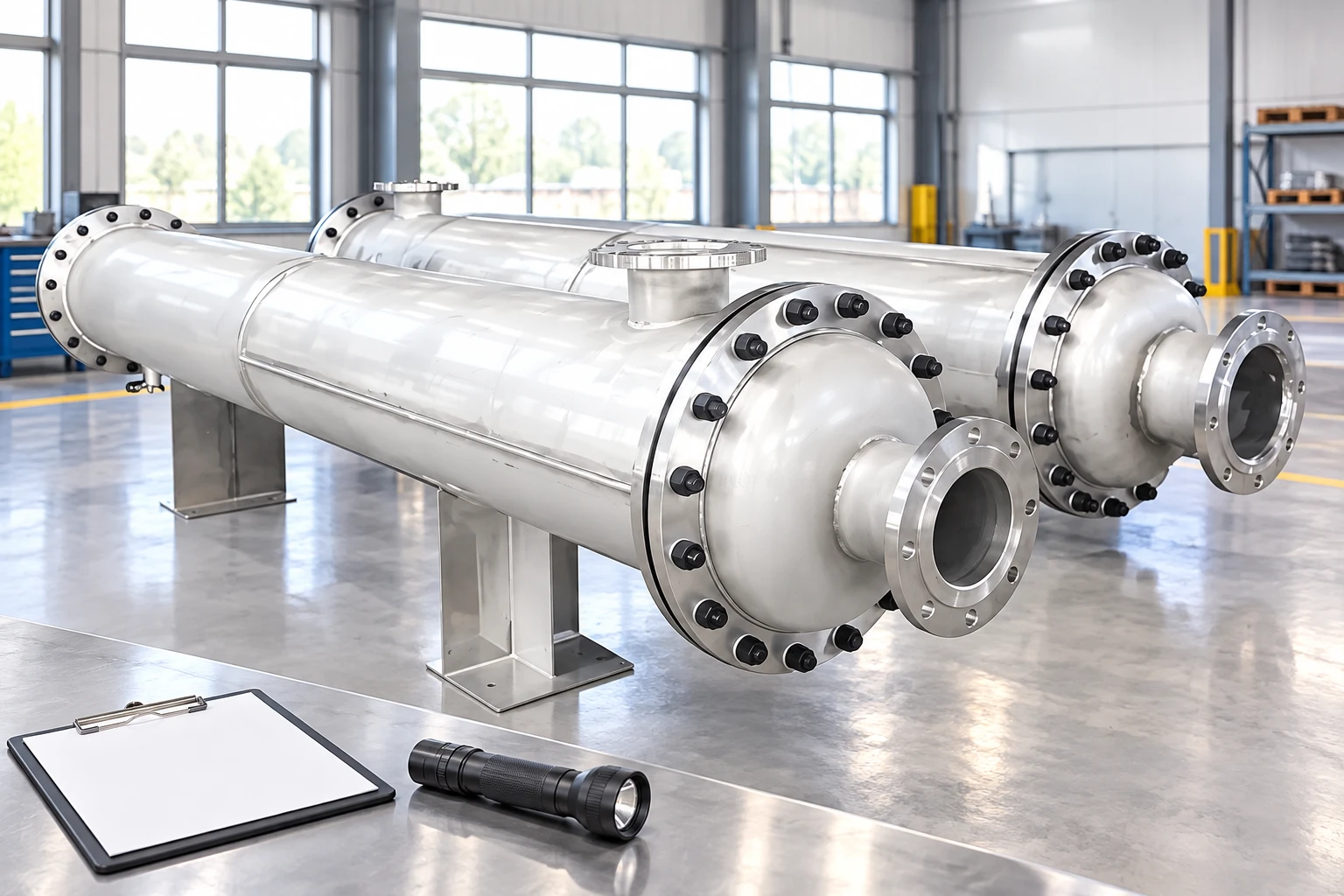
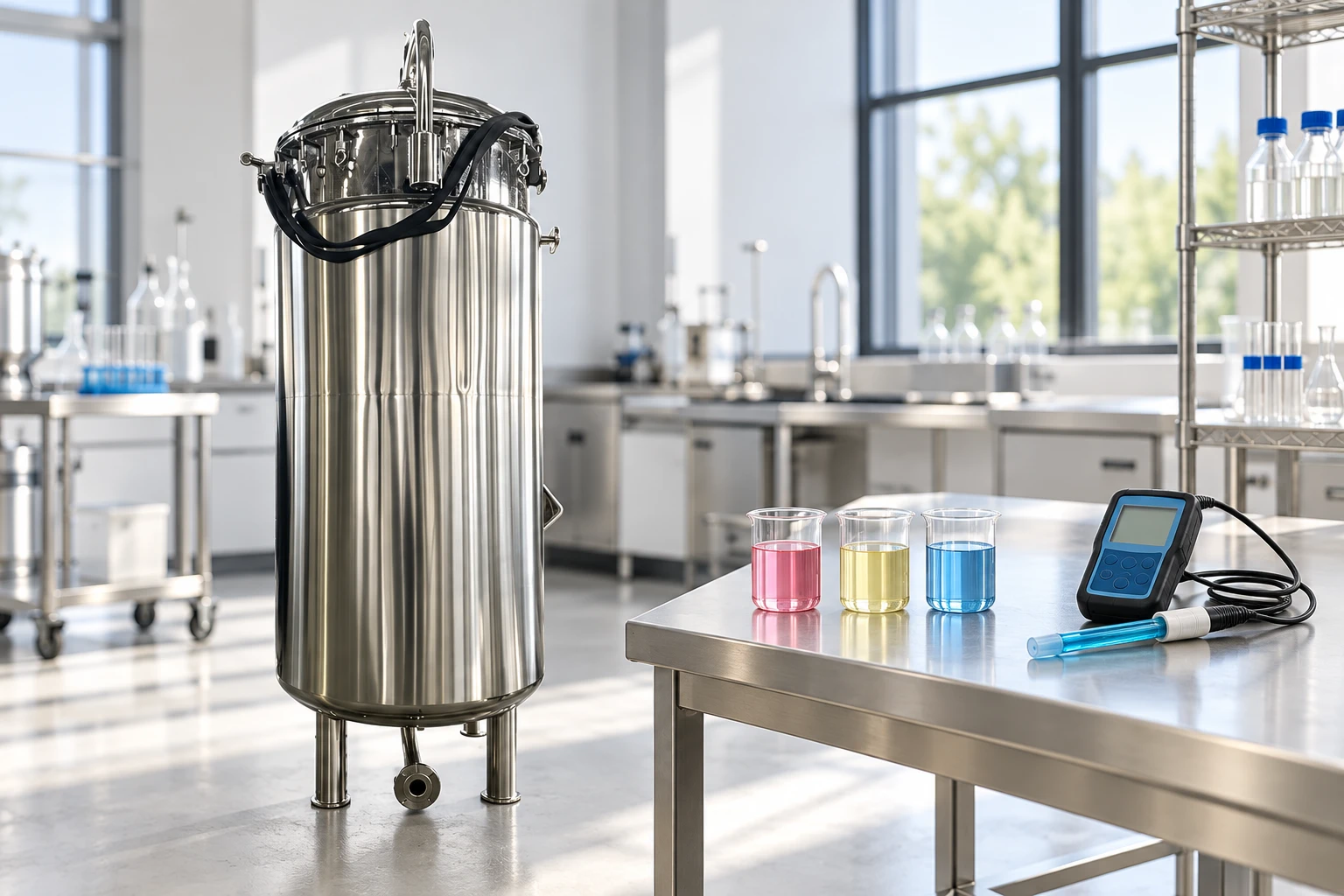
A jacketed magnetic reactor is a reaction vessel that heats or cools the batch through a utility jacket while a magnetic drive agitates without a rotating shaft seal through the vessel wall. This article covers jacket media and heat-transfer surface choices, exotherm control inputs, magnetic coupling limits, and how this reactor-focused RFQ differs from a general magnetic stirring reaction vessel guide.

What a Jacketed Magnetic Reactor Combines
A jacketed magnetic reactor joins two jobs that buyers often quote separately: thermal control through a heating/cooling jacket, and seal-free agitation through a magnetic drive.
The jacket is an outer shell that circulates steam, water, glycol, or thermal oil—the heat transfer fluid—around the vessel wall so heat moves in or out without mixing utility fluid into the product. Independent lab-equipment education describes that role clearly for both heat-releasing and heat-consuming reactions.
The magnetic drive places magnets outside a static containment boundary and magnets on the internal agitator shaft, so torque crosses the wall without a packing gland or mechanical shaft seal spinning on a shaft. That arrangement is why plants reach for magnetic agitation when rotating seals are a leak or elastomer problem—not because magnets replace every other nozzle gasket on the vessel.
Buyers comparing jacketed reactors for scale-up should keep the same framing: reaction temperature control plus contained agitation, not a generic mixer catalog pick.
Keep the word “reactor” honest. If the duty is only blending storage inventory, a magnetic mixing tank page is the better cluster. If the duty is reaction temperature control plus contained agitation, stay on reactor framing and size both systems against the same batch.
Jacket Media and Heat-Transfer Surface Choices
Jacket performance starts with the utility you actually have on site and the heat-transfer surface that can deliver it.
Choose jacket media against plant utilities:
- Steam for fast heat-up when condensate return and pressure control are available
- Hot water or thermal oil for wider temperature windows when steam is not practical
- Chilled water or glycol for cool-down and hold
Wrong fluid leaves the vessel unable to hit ramp rates even with a perfect agitator. Engineering community threads on high-temperature heating routinely ask when steam stops being practical and when hot oil or thermal fluid becomes the safer utility choice—state that same decision against your jacket design temperature.
Jacket construction changes how that fluid behaves.
Independent jacketed-reactor education commonly compares conventional plain jackets with half-pipe and dimple-style constructions that change flow path, pressure capability, and drainage behavior.
Spec the half-pipe / dimple jacket preference when your utility pressure, drainage, or cleanability depends on that geometry. YIYI magnetic stirring jar options also list heated or cooled dimple and half-pipe jackets as configuration choices, which is useful language when RFQs ask for jacket style rather than “heated vessel” alone.
| Jacket construction | Typical buyer question | Spec note |
|---|---|---|
| Conventional / plain | Is jacket utility pressure modest? | Simple shell; confirm flow path and venting of air pockets |
| Half-pipe / limpet | Need higher jacket pressure or positive drainage? | Good when jacket-side pressure drives design |
| Dimple | Need lighter shell and channelled flow? | Check pressure drop and cleanability for your fluid |

When a solvent batch must heat on steam and later cool on glycol, state both media, inlet/outlet sizes, design temperatures, and whether the jacket is single-circuit or dual-service. Catalog volume alone does not answer that question.
Exotherm Control Inputs for Thermal Duty
Exotherm control is a heat-removal problem first, not a motor-brand problem.
If a condensation or polymerization step releases heat faster than the jacket can remove it, temperature rises even while the agitator still turns. Independent jacketed-reactor education ties safe temperature control to jacket design, fluid properties, mixing that improves internal convection, and a temperature control unit that can move fluid fast enough for the duty.
Put the following inputs in the RFQ before comparing quotations:
- Expected heat release profile or worst-case temperature rise rate
- Required cool-down or hold temperature and time
- Available utility temperatures and flow
- Jacket construction and approximate heat-transfer area preference
- Agitation style needed to keep the batch homogeneous during the heat spike
Agitation and jacket duty belong on the same line item. Poor mixing creates hot spots next to a cold wall; oversized mixing with an undersized jacket still fails heat removal. Treat them as one thermal system.
Magnetic Coupling Limits on Seal-Free Agitation
Magnetic drive agitation removes the rotating shaft seal as a primary leak path, but it does not remove physics.
OEM magnetic-drive literature for stirred reactors emphasizes sealed magnet housings and often a water cooling sleeve on the drive to protect magnets from process heat. Engineering forum consensus on permanent-magnet couplings for seal-less pumps and agitators is equally direct: synchronous couplings do not “slip a little” in normal service—they run together until breakaway torque is exceeded, then they de-couple.
Important: If startup viscosity, solids load, or a process thickening step pushes torque past the coupling capacity, agitation can stop suddenly. Spec viscosity at the coldest operating temperature, impeller type, speed, and any expected torque spikes—not only “magnetic seal preferred.”
Field language also matters. On Eng-Tips, an engineer fighting aggressive vapors above 100°C that attacked fluoroelastomers in mechanical seals asked whether a mag-drive agitator without those elastomers was a workable path. That is a real reason to consider magnetic drive—not a guarantee that every viscous or abrasive duty fits a magnetic coupling.

Reactor Duty vs Magnetic Mixing Tank Pages
Keep cluster boundaries clean so procurement does not paste the wrong checklist into the RFQ.
Reactor duty here means chemical or process reaction with intentional heating/cooling and contained agitation. Magnetic mixing tank content on this site addresses seal-free blending for mixing vessels, including comparison and leak-prone media angles on their own posts. Those pages help when the vessel is primarily a mixer; they do not replace jacket exotherm inputs for a reaction vessel.
Use the reactor category when you need industrial reaction vessel configurations. Use mixing-tank magnetic articles when the buyer problem is mixing containment without reaction thermal duty.
How This Relates to the Magnetic Stirring Reaction Vessel Guide
The live magnetic stirring reaction vessel guide covers general procurement for magnetic stirring reaction vessels—materials, utilities, documentation, and RFQ breadth for that vessel class.
This page focuses on jacket thermal duty together with magnetic-drive limits on a reactor: jacket media, heat-transfer surface, exotherm control, and coupling torque/cooling stated in one specification set. Use the general guide for the broader vessel procurement frame; use this page when the missing piece is thermal and magnetic co-specification.

Choose Jacketed Reactor and Magnetic Agitation Options
Once jacket media, heat-transfer surface, exotherm inputs, and magnetic coupling limits are written down, open first-party reactor configurations rather than inventing ratings.
YIYI’s 3500L jacketed reactor configurations describe SS304 or SS316L construction, open or closed structures, and a vessel composition that includes a jacket for temperature control plus agitator and transmission options. Published family tables on that page list volumes and motor fields for the YRK series—use them as published mechanical context, not as invented pressure or magnetic torque ratings.
For seal-free agitation and jacket option language, the 50L magnetic stirring jar page documents magnetic coupling drive without mechanical seals and optional heated or cooled dimple or half-pipe jackets. That page is useful configuration context for magnetic + jacket options even when the primary vessel category for a large reaction duty remains the reactor hub.

| RFQ block | What to attach | Why |
|---|---|---|
| Jacket utilities | Media, inlet/outlet temps, available flow/pressure | Sets heat-up and cool-down capability |
| Heat-transfer surface | Jacket type preference; area or geometry notes | Matches construction to utility pressure and drainage |
| Exotherm / hold | Heat-release or ramp targets | Prevents under-sized cooling |
| Magnetic drive | Viscosity range, impeller, speed, torque spikes, drive cooling | Prevents de-couple surprises |
| Materials / access | 304 vs 316L, nozzles, instruments | Aligns with chemistry and sampling |
If the duty fits, review reactor SKUs on the hub and send the thermal-plus-coupling checklist through engineering contact. Do not treat marketing “zero leakage” phrases as a substitute for stating process limits.
FAQ
What does a jacketed reactor do?
It circulates heating or cooling fluid in an outer jacket so the batch temperature can be raised or lowered without mixing utility fluid into the product. That is the core thermal job before agitation style is chosen.
Is a jacketed magnetic reactor the same as a fusion magnetic reactor?
No. Search results sometimes mix process vessels with tokamak / fusion reactor pages. This article means a chemical or process reaction vessel with a heating/cooling jacket and magnetic-drive agitation.
Which jacket media should I specify for heating and cooling?
State the utilities you actually have—steam, hot water, thermal oil, chilled water, or glycol—plus inlet temperatures and available flow. Media choice sets whether the jacket can meet ramp and hold targets.
How do conventional, half-pipe, and dimple jackets differ?
They differ in jacket-side pressure capability, fluid velocity and pressure drop, and drainage behavior. Match construction to utility pressure and cleaning needs rather than treating jacket type as an afterthought.
Can a magnetic drive de-couple under high viscosity or startup torque?
Yes. Synchronous permanent-magnet couplings for seal-less agitators run together until breakaway torque is exceeded, then they can fully de-couple. Spec cold viscosity and startup loads early.
Why do magnetic drives need cooling near the coupling?
Drive heat and process heat can stress magnets and bearings. OEM magnetic-drive designs often include a cooling sleeve or equivalent provision—ask how the coupling is protected on your temperature duty.
How does this differ from a general magnetic stirring reaction vessel guide?
That guide covers general magnetic stirring reaction vessel procurement. This page focuses on jacket thermal duty and magnetic coupling limits specified together for a reactor RFQ.
What belongs in an RFQ for a jacketed magnetic reactor?
Include jacket media and temperatures, preferred jacket construction, exotherm or ramp targets, agitation viscosity and impeller needs, magnetic drive cooling expectations, materials, and nozzle/instrument lists—then compare vessels against that package.