Vacuum distillation changes the equipment conversation because absolute pressure becomes a design driver. Buyers who only send tank volume force suppliers to guess seal class, condenser load, and vacuum-pump interfaces. Those guesses create change orders and unsafe assumptions.
This guide maps process scope for a vacuum distillation tank RFQ: vessel duty, sealing, condenser connections, vacuum system boundaries, utilities, and controls. It does not promise cut purity, recovery percentage, or a guaranteed vacuum level on an untested feedstock.

Part 1. Define Vacuum Distillation Tank Duty
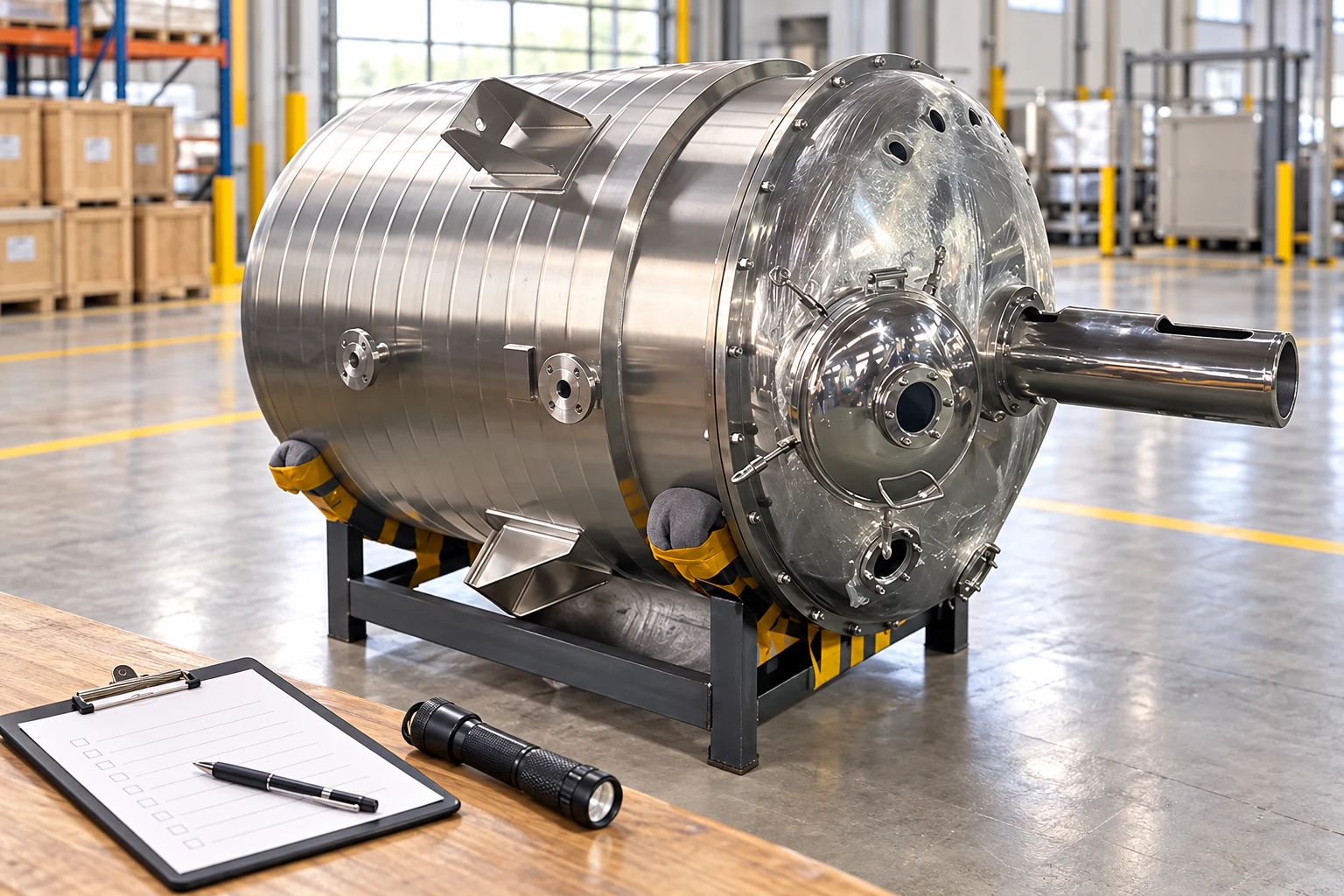
A vacuum distillation tank is a process vessel intended to support boil-up and vapor handling while the system operates below atmospheric pressure for part or all of the cycle. Typical buyer motives include lower boiling temperature for heat-sensitive materials, solvent recovery under reduced pressure, or campaign vessels that must switch between atmospheric and vacuum steps.
Write the duty in plant language. State whether vacuum is continuous or intermittent, whether liquid is batch charged, and whether vapor goes to a dedicated condenser train. If the project also involves fermentation or emulsification elsewhere in the plant, keep those vessels on separate briefs. The biological fermentation tank range remains useful for cellar equipment, not as a vacuum still substitute.
| Duty field | What to record | Risk if omitted |
|---|---|---|
| Absolute pressure band | operating and design targets | Wrong seal and shell class |
| Temperature envelope | hot and cold extremes | Undersized heating or cooling |
| Batch vs continuous | inventory and level control | Wrong nozzle set |
| Vacuum duration | hold time and cycles | Pump and trap mismatch |
| Product class | chemistry family without recipe | Material and gasket errors |
Part 2. Map Process Scope Across Tank, Seals, and Vacuum Skid
Scope confusion is the main quoting failure mode. Separate the tank shell, product-contact seals, condenser package, vacuum pump skid, traps, and control interfaces. Each can be bought from different vendors, but the tank RFQ must still list every connection and rating expectation.
Seals include manway gaskets, sight-glass gaskets, agitator seals if used, and flange facing standards that must hold vacuum. A vessel that looks identical at atmospheric pressure can fail leak tests when vacuum is applied.
Related process articles such as low-pressure reaction vessel scope, materials, and seals and electric heating reaction vessel temperature safety help buyers think about pressure and heating boundaries. Vacuum distillation still needs its own absolute-pressure statement and condenser plan.
Important: Do not treat marketing vacuum claims as a substitute for a stated absolute pressure band and leak-test method. Pressure-equipment practice such as ASME BPVC context may apply to rated components in the quoted scope; plant compliance remains the buyer’s responsibility.
Part 3. Capture Vacuum, Seal, and Utility RFQ Inputs

Build one sheet that suppliers can copy into their proposal. Vacuum fields should use absolute pressure units the plant already uses, plus whether the value is operating target or design limit. Seal fields should name expected gasket families and whether elastomer compatibility testing is buyer-owned.
Utility fields cover heating media for boil-up and cooling media for condensation. Electric heating projects should state available power quality and local panel boundaries; jacketed steam or thermal oil projects should state supply limits at the skid edge.
| Send with quote | Example entry |
|---|---|
| Absolute pressure band | operating target and design limit |
| Leak-test expectation | method and acceptance owner |
| Seal / flange class | manway, nozzles, agitator if any |
| Heating utility | steam, oil, electric, external exchanger |
| Cooling utility | condenser media availability |
| Vacuum skid scope | included, excluded, or interface-only |
Send with quote: pressure-temperature envelope, seal expectations, condenser interface sizes, vacuum pump interface or exclusion, materials list, and cleaning method.
Part 4. Align Condenser and Noncondensable Handling
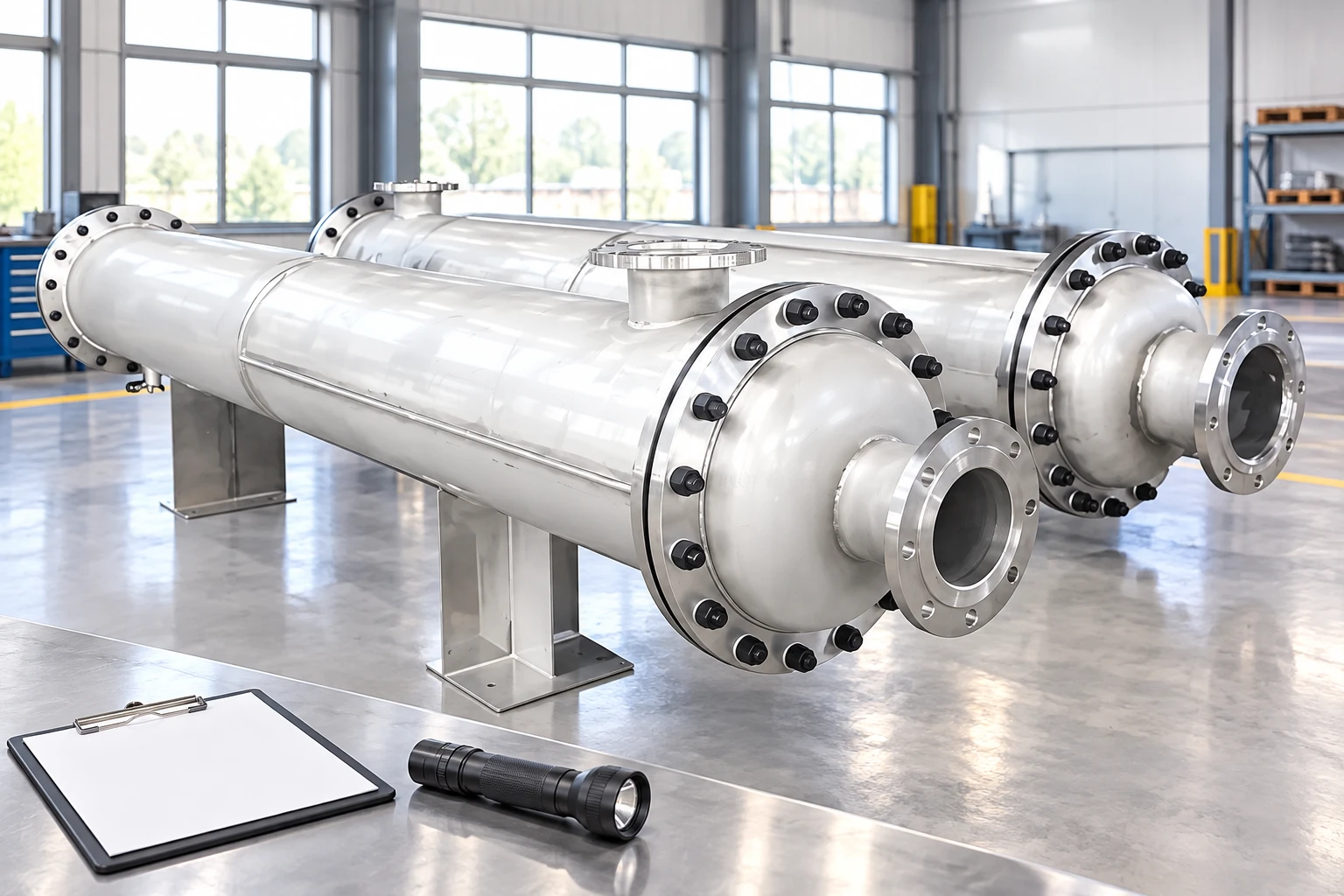
Condenser duty often limits vacuum distillation more than shell volume. Record expected vapor load qualitatively if exact rates are unknown, then provide cooling media temperature and flow availability. Ask suppliers whether mist knockout, reflux return, or receiver vessels are included.
Noncondensables accumulate under vacuum. The RFQ should say who owns vacuum pump selection, who owns traps or knockout pots, and where noncondensables vent according to site rules. Emissions and permitting remain plant responsibilities; equipment quotes only support the mechanical path.
If the condenser is existing, attach connection sizes and known performance limits. If it is new, request a clear exclusion list so tank vendors do not silently omit vacuum accessories.
Part 5. Select Materials and Cleaning for Vacuum Service
Materials must survive both product chemistry and vacuum seal requirements. Prefer stating alloy families and gasket constraints rather than copying an unrelated atmospheric tank bill of materials. Finish requirements should match cleaning method: sanitary polish is not automatically required for every solvent service, and chemical-resistant linings are not automatically required for every food-adjacent project.
Cleaning under vacuum service needs drainability and access. Coils, jackets, and vapor lines can trap residue. Describe CIP, solvent wash, or manual cleaning so suppliers do not assume brewery fermenter spray patterns.
Agitation is optional. If mixing is required during heat-up, state seal type expectations early because vacuum agitator seals are a frequent long-lead item.
Part 6. Set Instruments, Interlocks, and Control Limits
Instrumentation for vacuum distillation usually includes absolute or gauge pressure suitable for the vacuum band, liquid level, and temperature at liquid and vapor points. Confirm which transmitters mount on the tank and which stay on the vacuum skid.
Interlocks should be buyer-defined: low-level heater cutout, high-pressure abort, vacuum failure response, and condenser coolant loss response. Suppliers can provide contacts or local loops, but plant safety logic ownership must be explicit.
Avoid promising recipe automation in the first RFQ unless the control architecture is already approved. Mechanical and vacuum interfaces compare more cleanly when software scope stays bounded.
Part 7. Freeze Scope Boundaries and Send the RFQ
Freeze the absolute pressure band, seal class, condenser interface list, vacuum skid split, heating utilities, and materials before requesting prices. Compare bidders on identical exclusions. Published vacuum equipment pages are configuration references, not proof of distillation performance.
Use the vacuum process equipment configuration reference when discussing vacuum-capable process hardware boundaries, and keep fermentation browsing in the biological fermentation tank range. For adjacent agitation context, the emulsification reaction vessel batch agitation guide shows how batch vessel RFQs separate mixing from other duties. When the packet is ready, send vacuum distillation RFQ inputs for a configuration discussion.

FAQs
What belongs in vacuum distillation tank process scope?
Include the vessel, seal class, vacuum interfaces, condenser connections, heating utilities, materials, instruments, and a clear list of items owned by other vendors.
How should buyers specify vacuum level in an RFQ?
State an absolute pressure operating band and a design limit, plus who owns leak testing. Avoid vague phrases such as “high vacuum” without numbers the plant already uses.
Why are seals critical for a vacuum distillation tank?
Vacuum magnifies small leaks at manways, sight glasses, agitator penetrations, and flanges. Seal class and gasket chemistry must match both vacuum and product service.
Does deeper vacuum guarantee better separation?
No. Separation depends on feedstock, vapor-liquid contacting equipment, condenser performance, and operating recipe. Vacuum only changes the boiling temperature envelope.
What condenser inputs should accompany the tank quote?
Provide cooling media availability, connection preferences, whether the condenser is existing or new, and who owns noncondensable handling and vacuum pumps.
Can vacuum distillation and fermentation share one vessel RFQ?
Keep separate briefs. Fermentation and vacuum distillation impose different hygiene, pressure, and utility assumptions even when both use stainless vessels.