Creams, lotions, sauces, dressings, ointments, and many specialty chemicals share a manufacturing moment: two liquids that refuse to mix must become one stable product. The emulsification reaction vessel is where that happens, and its specification decides whether the result is silk or split batches.
Emulsification equipment fails quietly when bought by volume alone. The duty needs a defined shear step, bulk circulation that feeds it, a temperature story, and often vacuum — all sized around an honest batch logic. This guide turns those elements into RFQ inputs a fabricator can answer.
Part 1. Describe the Emulsion Duty
Name the phases and their ratio. An emulsion disperses one immiscible liquid in another — oil in water or water in oil — and the ratio, the continuous phase, and the emulsifier system shape every equipment decision that follows.
State the viscosity journey. Many emulsions start thin and finish thick, and some pass through a difficult intermediate stage; equipment sized for the final viscosity may still struggle in the middle. Record the range, not just the end point.
Define what “good” means for the product. Target droplet behavior, appearance, and stability expectations belong in the duty description as the buyer’s process goals; the fabricator supplies capability, while the formulation and validation stay with the buyer.
| Duty input | What to record | Why it matters |
|---|---|---|
| Phases and ratio | oil, water, dispersed fraction | Sets the mixing challenge |
| Viscosity range | start, intermediate, final | Drives agitator torque |
| Temperature profile | heating, emulsifying, cooling | Shapes jacket duty |
| Air sensitivity | tolerated or not | Decides the vacuum question |
| Product goal | droplet and stability targets | Buyer’s validation anchor |
Part 2. Fix the Batch Scale and Logic
Anchor the vessel to the batch logic. Production planning usually fixes a recipe size or a multiple of downstream filling; state the working volume, the minimum batch the same vessel must handle, and the headspace the process needs.
Minimum batch matters more than it looks. Shear heads and coils need coverage, so a vessel that emulsifies a full batch beautifully may fail at one-third fill; state the smallest honest batch and let bidders confirm coverage.
Treat pilot results as context. Mixing behavior changes with scale, and settings from a small unit rarely transfer arithmetically to production; record the pilot equipment and settings in the RFQ as background, and plan the buyer-side validation runs that scale-up needs.
Part 3. Combine Shear with Bulk Circulation
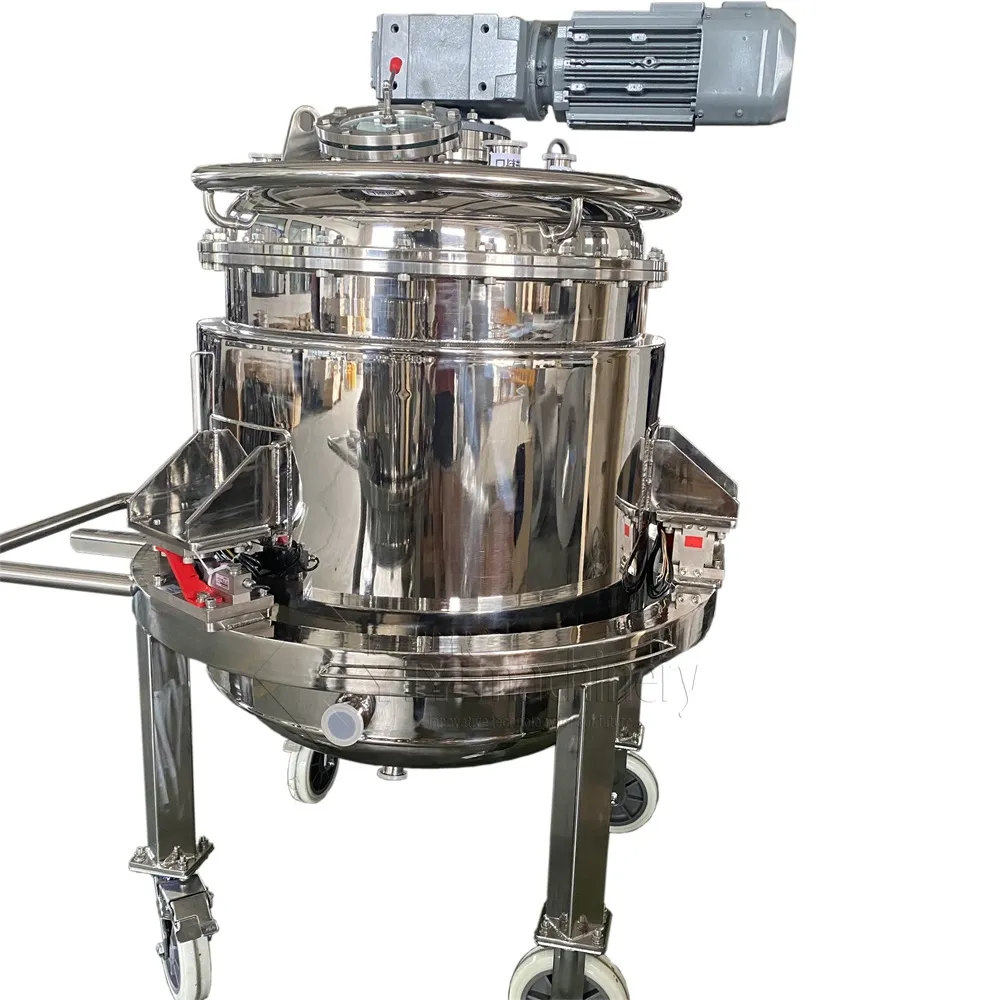
Two jobs, two devices. Intense droplet-breaking shear comes from a rotor-stator or similar head, applying homogenization energy locally; moving the whole batch through that zone is the circulation job, typically a slow sweep or gate agitator for viscous products.
Specify duties, not model numbers. State the viscosity range, the batch size, and the process steps (dispersing powders, combining phases, final homogenizing), and ask bidders to propose the shear device, its position, and the circulation impeller together.
Scraped walls earn their cost with thick products. Wall-scraping sweeps renew the thermal boundary layer and prevent burn-on against heated surfaces; related dispersion reasoning appears in the high shear mixing tank guide.
| Device | Job in the batch | Watch-out |
|---|---|---|
| Rotor-stator head | droplet-breaking shear | coverage at minimum batch |
| Sweep or gate agitator | bulk circulation | torque at final viscosity |
| Wall scrapers | heat transfer, no burn-on | blade and seal materials |
| External loop homogenizer | in-line shear passes | piping and cleaning scope |
Part 4. Control Temperature Through the Process
Emulsification is a thermal sequence. Typical recipes heat both phases, combine them hot, emulsify, and then cool under controlled agitation; each step has a temperature and a time, and the vessel’s jacket must serve all of them.
State the profile as numbers. Heat-up targets and times, the emulsification hold, and the cooling ramp let bidders size jacket area and utilities honestly; cooling is often the bottleneck for thick products, so name the acceptable cool-down time explicitly.
Watch the wall temperature with sensitive products. Heated surfaces above the product’s tolerance scorch thin films even when the bulk reads on target, so state a maximum contact temperature where the formulation needs one.
Part 5. Decide the Vacuum Question
Air is the invisible ingredient. High-shear devices whip air into the batch unless the design prevents it, and entrained air causes density drift, oxidation, foam, and appearance defects in many emulsion products.
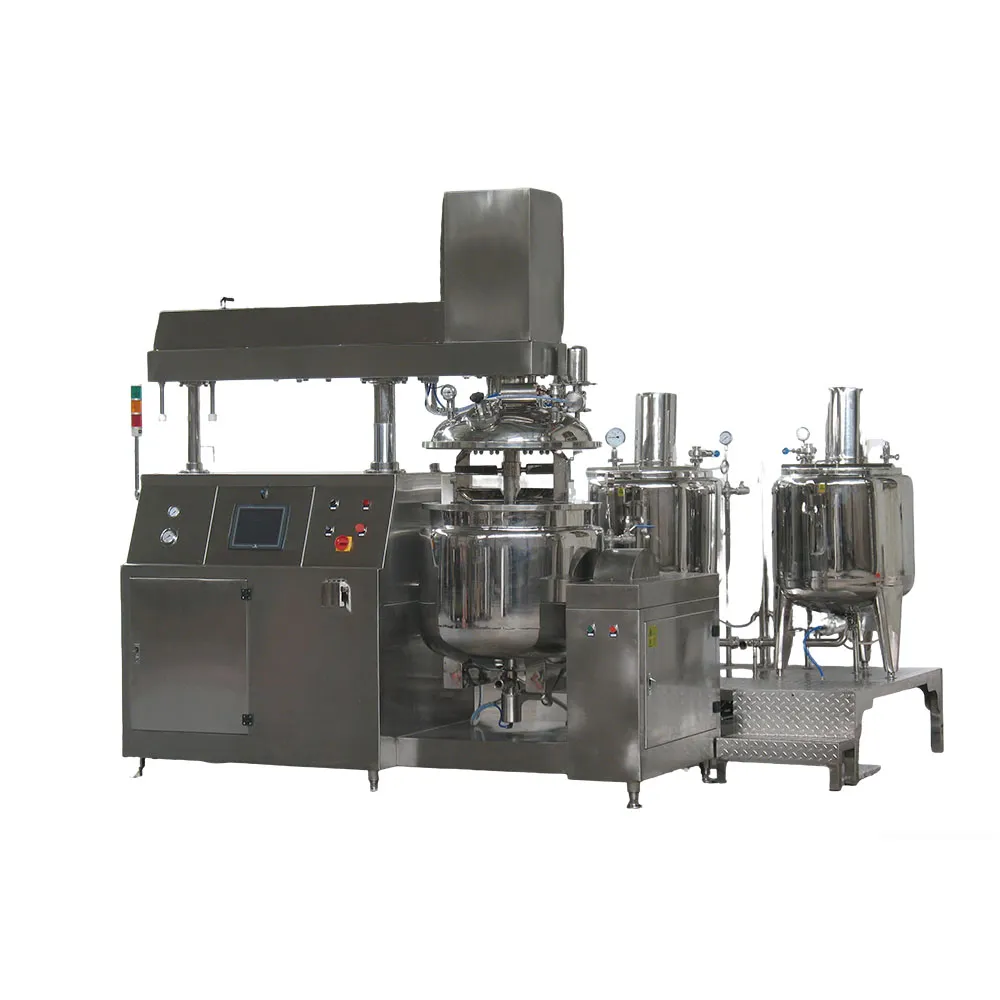
Vacuum operation answers most of it. Emulsifying under vacuum removes entrained air and supports deaeration at the end of the batch; whether the duty justifies the sealed vessel and vacuum system depends on the product’s sensitivity, so state it rather than defaulting either way.
Selection depth for that equipment class lives in the vacuum emulsifying mixer selection guide, which pairs with this reactor-side view: use it to compare configurations once the duty statement here is complete.
Part 6. Cover Hygiene, Instruments, and Connections
Hygiene follows the product category. Cosmetic, food, and pharmaceutical-adjacent emulsions need stated internal finishes, crevice-free product contact, documented gasket materials, and a cleaning method (manual, spray, or clean-in-place) with drainability to match.
Instrumentation supports the recipe. Product temperature in a representative location, agitator and homogenizer speed indication, vacuum level where fitted, and the interfaces to the plant control system belong in the RFQ as one list.
Connections mirror the process: phase-feed inlets, vacuum port, condenser or deaeration interface where used, sampling, discharge suited to the final viscosity, jacket media connections, and cleaning supply. Discharge deserves care — a thick emulsion that will not drain gracefully turns every batch into scraping work.
Part 7. Compare Emulsification Equipment and Prepare the RFQ
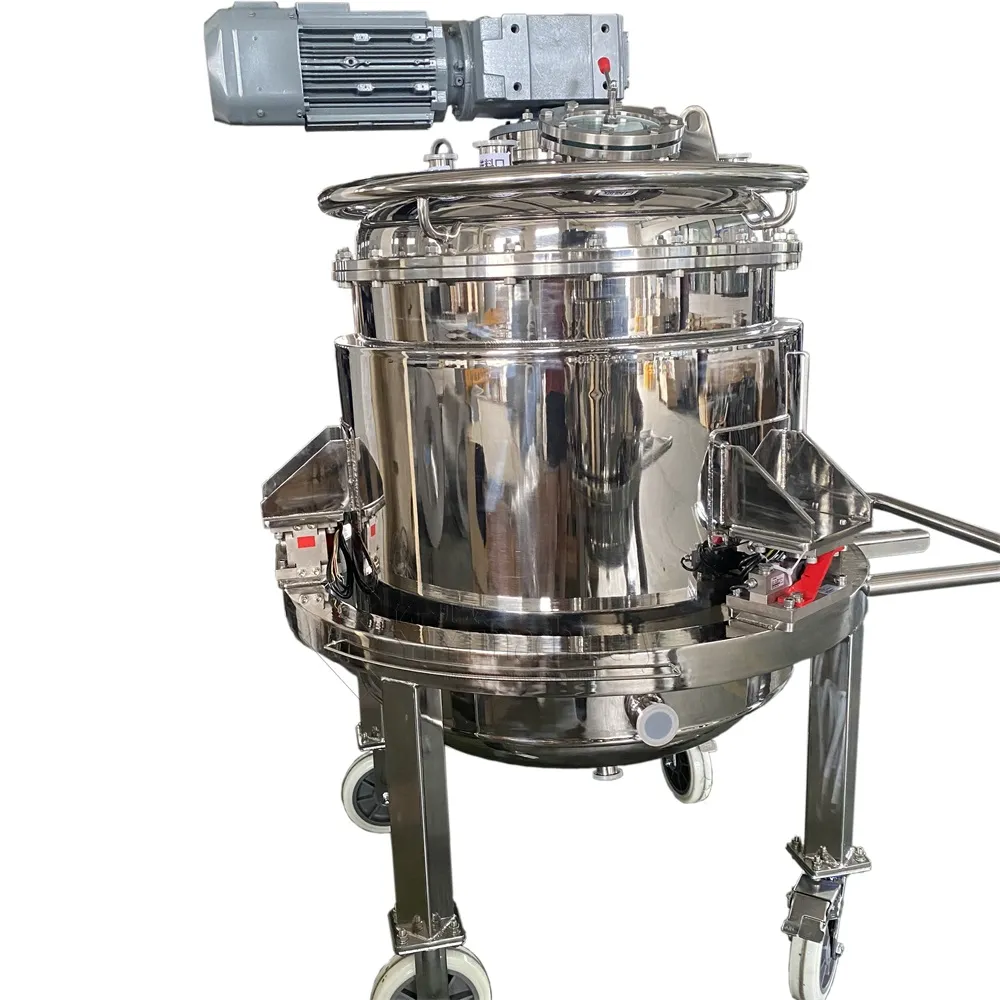
Published equipment anchors the configuration classes. The emulsification tank configuration shows an agitated emulsifying vessel, the vacuum emulsification homogenizer a sealed vacuum class, and the configurable reactor range provides the wider family. Product pages give configuration context; they do not guarantee droplet size or stability for your formulation.
Send one identical package to each bidder: phase description and ratio, viscosity range, batch scale and minimum batch, process steps with the temperature profile, shear and circulation expectations, vacuum decision, hygiene and cleaning requirements, instrumentation, connections, pilot context, and installation constraints.
Ask bidders to state coverage at minimum batch, cooling time at full batch, and their assumptions and exclusions. When the package is ready, send your emulsion duty for a configuration discussion and compare proposals against the same recipe story.
FAQs
What is an emulsification reaction vessel?
It is a process vessel that combines a high-shear device, bulk circulation, temperature control, and often vacuum to turn immiscible liquid phases into a stable emulsion batch.
What is the difference between an agitator and a homogenizer?
An agitator moves the whole batch and blends it; a homogenizer applies intense local shear that breaks droplets small. Emulsification duties normally need both, working together.
How does batch size affect emulsification?
Scale changes flow patterns, shear exposure, and cooling times, so pilot settings do not transfer arithmetically. State the production batch logic and plan validation runs at scale.
Do emulsification vessels need vacuum?
Products sensitive to entrained air — many creams, gels, and ointments — benefit strongly from vacuum operation and deaeration. Air-tolerant products can skip the sealed system.
Why does temperature matter for emulsification?
Recipes typically combine hot phases, emulsify, and cool under agitation, and droplet and stability outcomes depend on that profile. The jacket must serve heating, holding, and the cooling ramp.
Can pilot emulsification settings be copied to production?
Not directly. Record pilot equipment and settings as context in the RFQ, then validate at production scale, because mixing behavior shifts with geometry and volume.
What should an emulsification reaction vessel RFQ include?
Include phases and ratio, viscosity range, batch scale and minimum batch, temperature profile, shear and circulation expectations, vacuum decision, hygiene needs, instrumentation, connections, and installation limits.