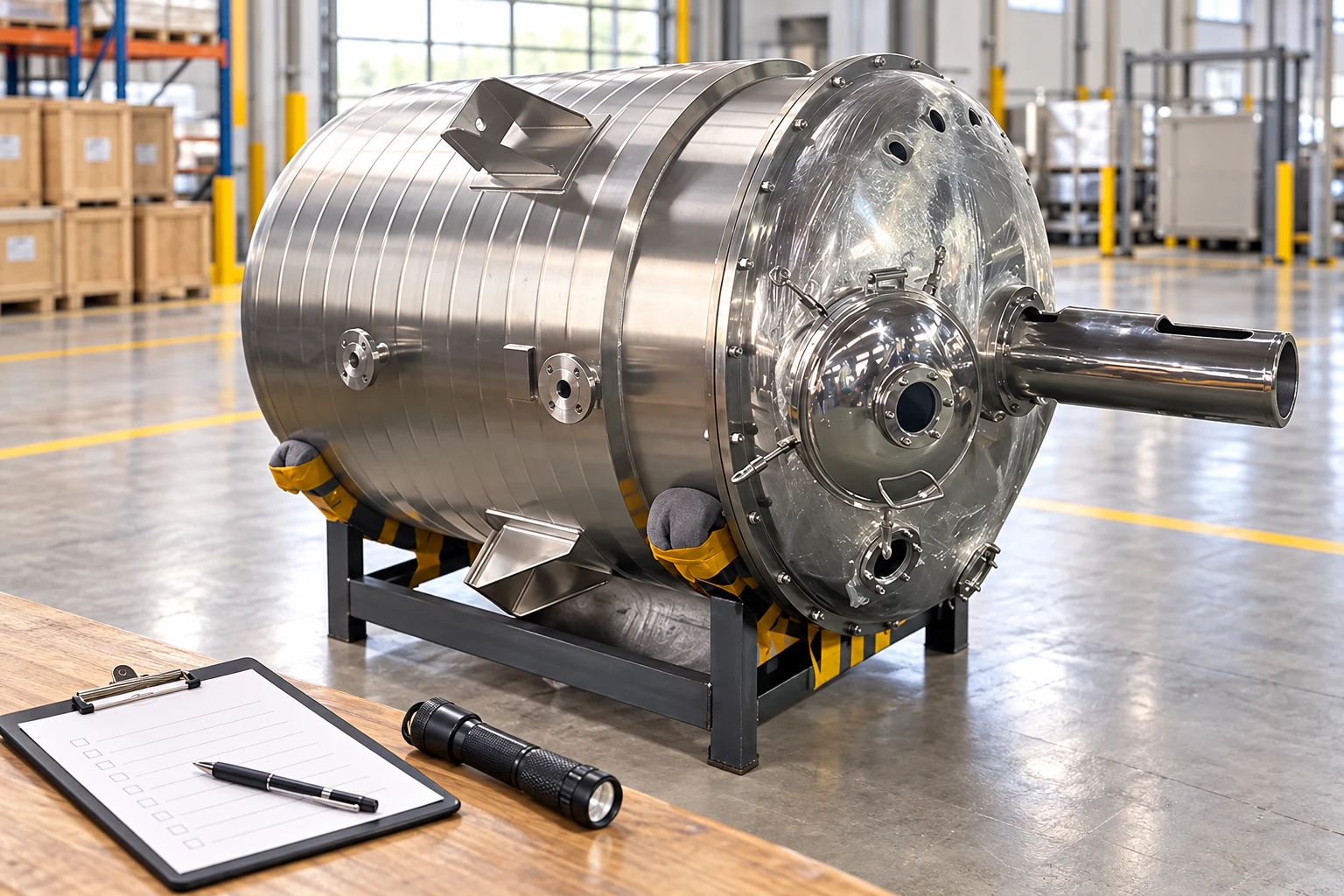
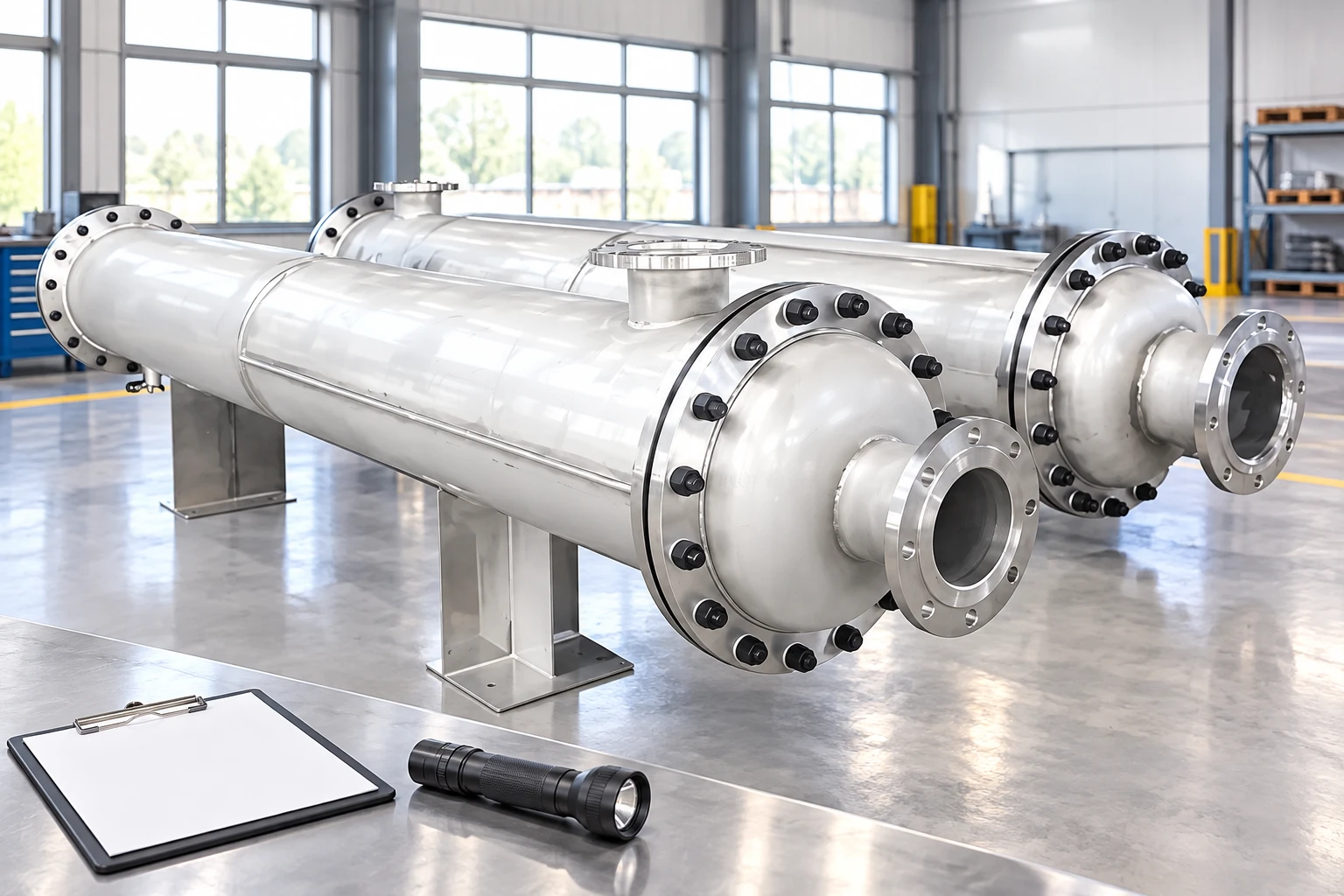
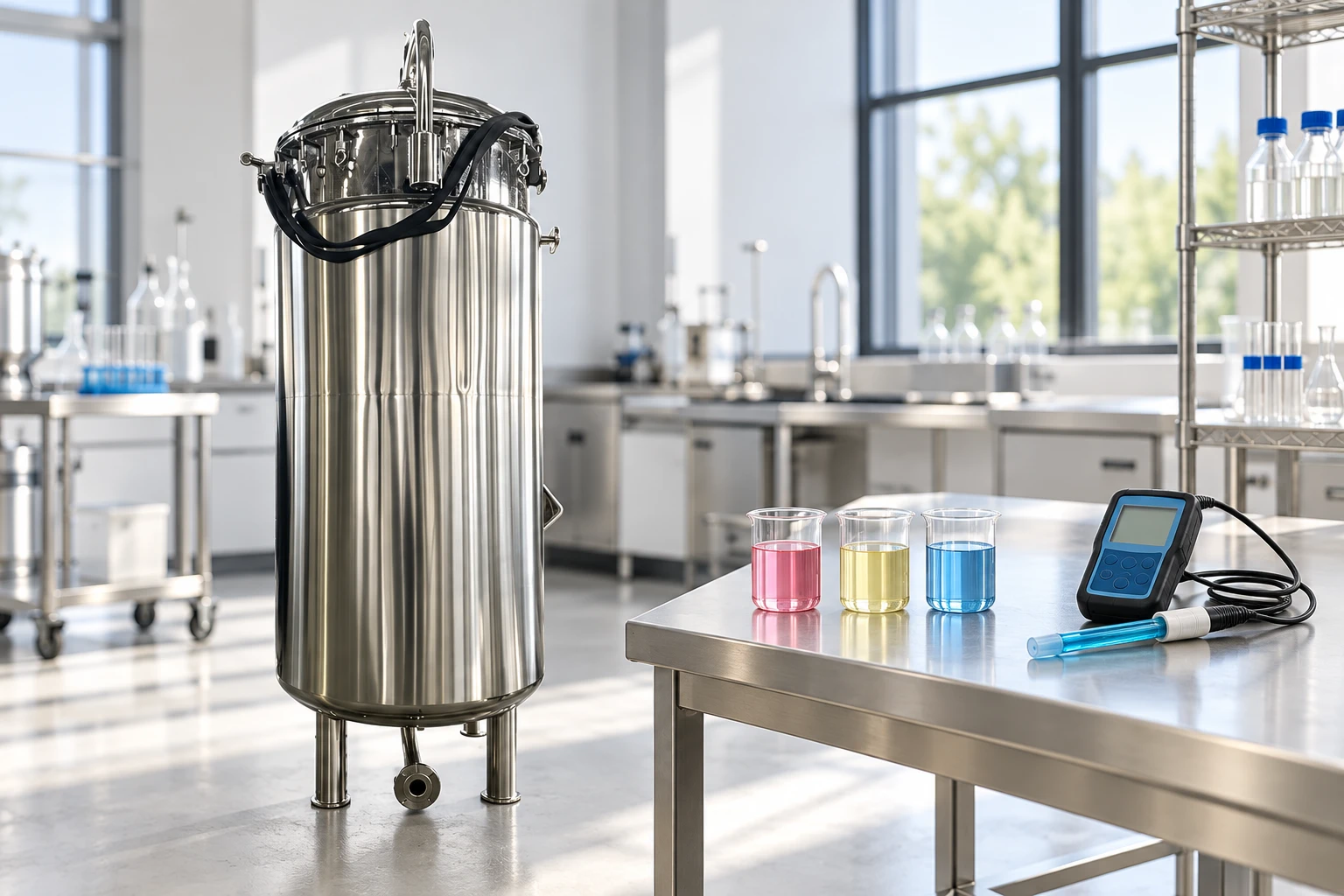
A high shear mixing tank is a process vessel fitted with a dispersion device that generates more intense local mixing than a conventional slow-speed propeller. Buyers use this equipment when powders do not wet out, agglomerates remain after batching, or two liquid phases need a more uniform dispersion. The tank, agitator, batch viscosity, and feed sequence have to be selected together; a fast motor alone does not guarantee a stable result.
This guide explains how to define a high-shear duty before requesting quotations. It uses published YIYI INTELLIGENT equipment pages as configuration context only. Product performance, motor power, particle-size targets, and compliance scope require confirmation on the project quotation.
Part 1. What is a high shear mixing tank?
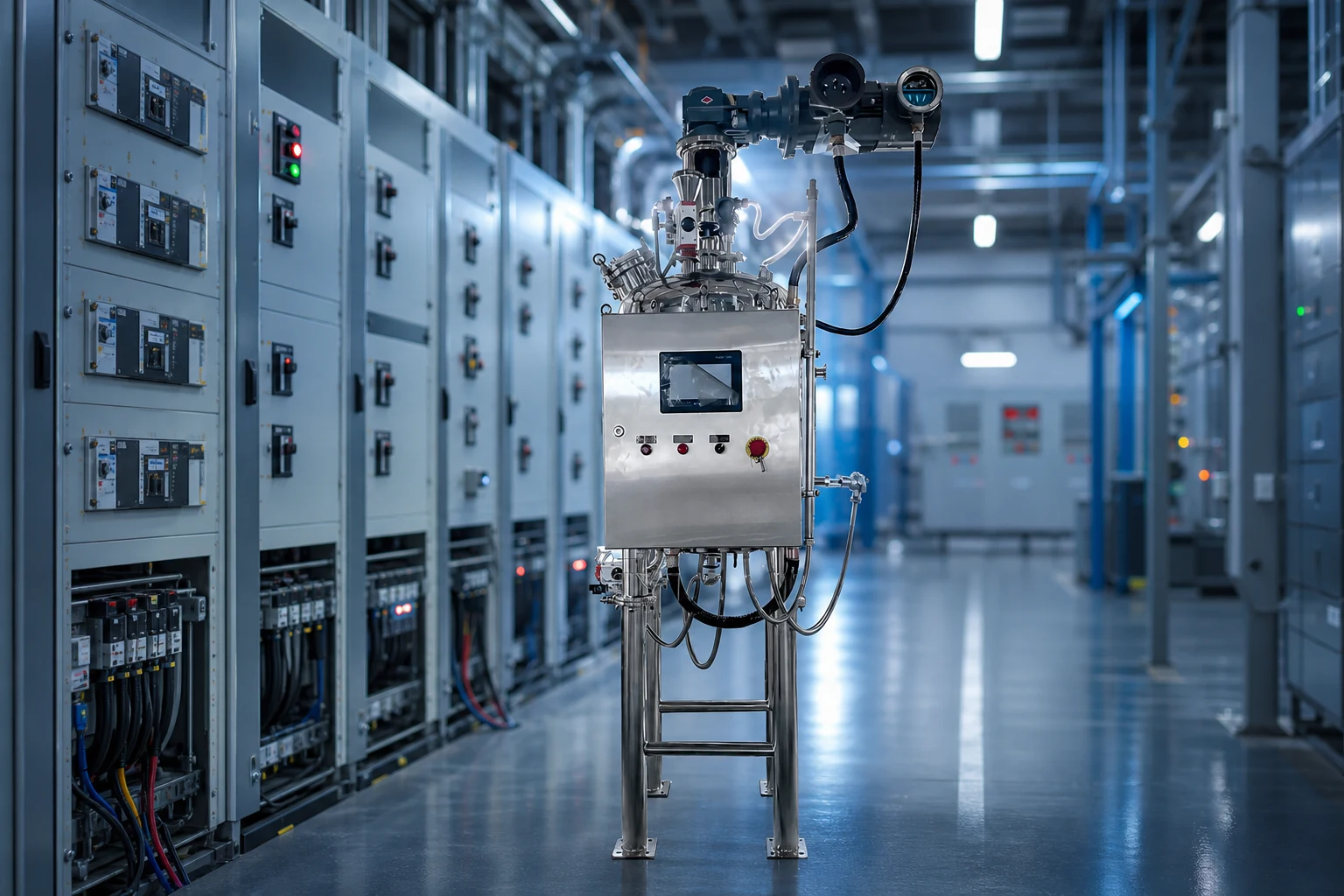
The phrase describes the process duty, not one fixed machine. A high-shear tank may combine a rotor-stator head, a high-speed disperser, an inline recirculation loop, and a slower anchor or sweep agitator. The high-shear device breaks down agglomerates and renews the interface between phases. The slower agitator keeps the full batch moving so material repeatedly reaches the high-shear zone.
| Element | Primary job | Buyer decision |
|---|---|---|
| Vessel | Contains batch and process interfaces | Working volume, headspace, discharge |
| High-shear head | Wet-out and dispersion | Rotor-stator, disperser, or loop |
| Slow agitator | Bulk circulation and wall sweep | Anchor, turbine, or propeller |
| Baffles | Reduce vortexing where appropriate | Product cleanability and viscosity |
| Jacket | Heat or cool during dispersion | Utility and heat-up requirement |
Start with the mixing tank category to establish vessel capacity, then define the dispersion result and product flow behavior.
Part 2. When is high shear actually needed?
High shear becomes useful when an ordinary stirred tank leaves visible powder clusters, oil droplets, or air-laden foam after an acceptable mixing time. It is common in emulsions, thick sauces, detergent bases, polymer additives, cosmetic intermediates, and slurry systems. However, it is not an automatic upgrade. Fragile particles, shear-sensitive proteins, and products that already blend uniformly may be harmed or unnecessarily heated by high intensity.
| Process signal | Conventional agitation risk | High-shear selection question |
|---|---|---|
| Powder floats on surface | Fish eyes and long wet-out time | Can powder be induced below surface? |
| Oil phase separates | Large droplet distribution | Is fine emulsification needed? |
| Viscous paste holds at wall | Incomplete circulation | Does an anchor need to feed the shear head? |
| Dispersion warms quickly | Product degradation | Is jacket cooling required? |
| Fragile solids break | Lost product texture | Is low-shear bulk mixing sufficient? |
For batches that additionally require air removal, the vacuum emulsifying mixer guide covers the distinct vacuum-homogenization duty.
Part 3. Which dispersion and agitator configurations are available?
A rotor-stator produces high velocity through a close-tolerance head. A high-speed disperser acts near the liquid surface and is often used for liquid/powder wet-out. Inline or bottom recirculation arrangements repeatedly pass material through a shear zone. Those choices are often paired with a lower-speed mixer because localized shear alone does not guarantee top-to-bottom turnover.
| Configuration | Best starting use | Limitation to check |
|---|---|---|
| Rotor-stator in vessel | Emulsions and moderate batch sizes | Minimum liquid level around head |
| High-speed disperser | Powder wet-out near surface | Vortexing and air drawdown |
| Inline recirculation | Repeatable pass count | Pumpability and line cleaning |
| Anchor + shear head | Thick creams and pastes | Torque and wall clearance |
| Turbine + shear head | Lower-viscosity blends | Residence time in shear zone |
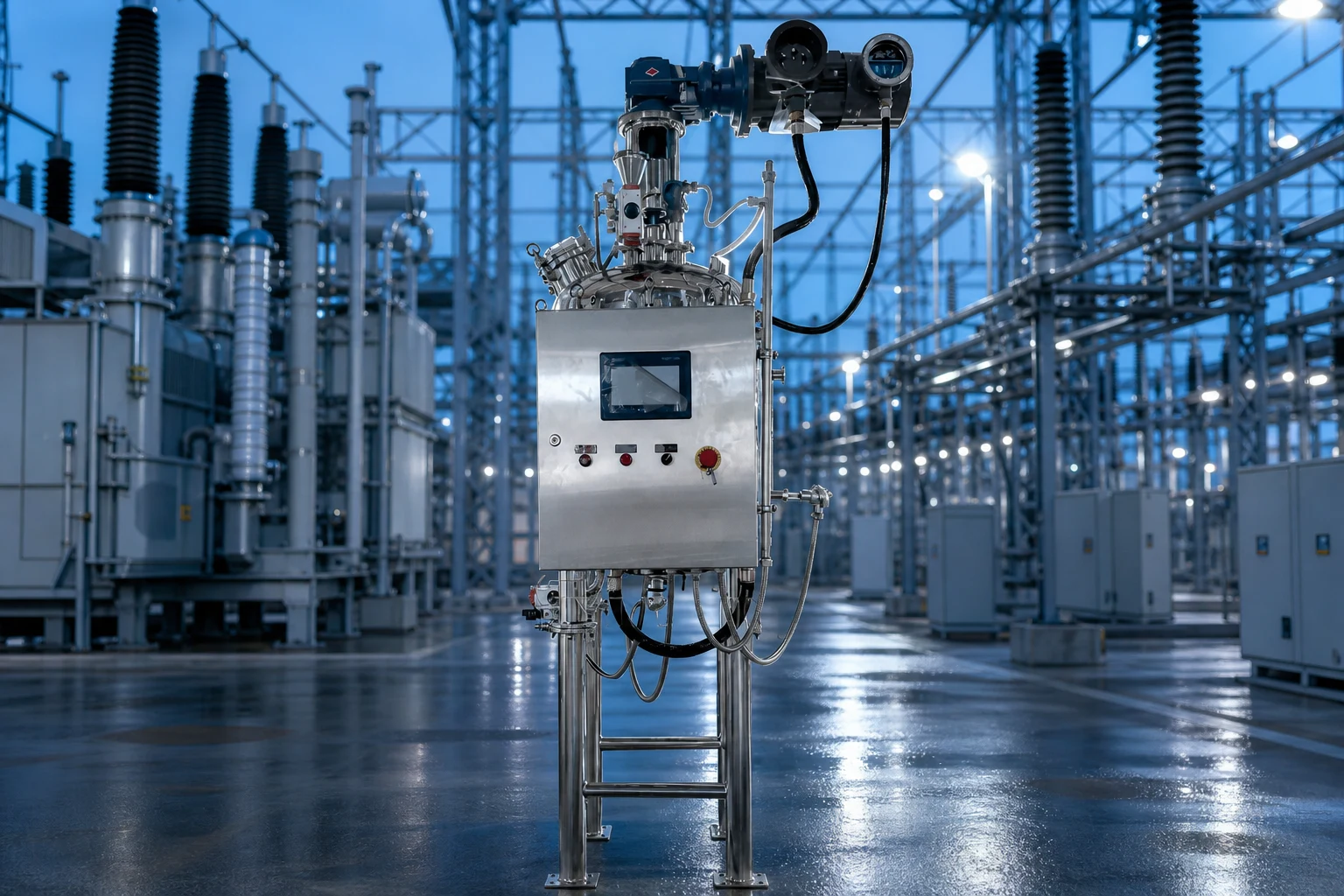
An emulsification tank is a relevant published product context for emulsion-oriented work. Confirm the exact head arrangement, batch range, and product-contact design before purchase.
Part 4. How do viscosity and powder addition affect selection?
Viscosity changes both circulation and the way powders are pulled into liquid. A water-like batch may develop a deep vortex that pulls in air; a thick paste may barely reach the shear zone without an anchor or ribbon. Ask formulation teams for viscosity at the actual addition temperature, not only the final cooled product.
| RFQ data | Why it changes design |
|---|---|
| Viscosity range at two temperatures | Determines torque and circulation |
| Powder type and loading rate | Determines wet-out and dust-control method |
| Particle sensitivity | Prevents over-shear |
| Batch time target | Defines pass count and heat removal |
| Solids content | Affects pumpability and dispersion head selection |
Powders should be added through a controlled feed point, eductor, or charging method agreed with the supplier. Dumping an entire bag into a vortex can trap dry material below a wet surface. For solids-heavy service, the published slurry mixing tank provides another product-family reference.
Part 5. Which materials and sanitary details matter?
Most food, cosmetic, and many chemical batches start with 304 or 316L stainless steel, but material selection must follow the product, cleaning chemistry, chlorides, and temperature. Food owners may specify sanitary welds, drainability, spray devices, and finish records in line with 3-A sanitary standards where applicable.
| Duty | Starting specification | Additional detail |
|---|---|---|
| Food sauce | 304 or 316L sanitary contact | CIP coverage and drain slope |
| Cosmetic cream | 316L common | Seal compatibility with fragrance |
| Chemical dispersion | Alloy per compatibility review | Venting and grounding scope |
| Abrasive slurry | Wear-aware wetted components | Replaceable wear parts if needed |
Part 6. What belongs in a high shear mixing tank RFQ?
An effective RFQ connects the desired product result to mechanical inputs. Send a sample formulation or a safe product surrogate when trials are needed.
| RFQ section | Inputs to provide |
|---|---|
| Product | Phase composition, solids loading, viscosity curve |
| Dispersion | Agglomerate concern, target result, allowable shear |
| Batch | Minimum and maximum working volume |
| Addition | Powder feed rate, liquid order, dust-control need |
| Thermal | Starting temperature, heat removal, jacket utility |
| Materials | Contact metal, seals, finish, cleaning chemistry |
| Controls | Speed ranges, recipe steps, alarms, data requirements |
| Documentation | Drawings, FAT scope, spare parts, test method |
Do not request a generic “high-shear mixer” without identifying whether the objective is wet-out, emulsification, dissolution, or deagglomeration. Each target can favor a different geometry.
Part 7. What quoting mistakes occur and which YIYI examples fit?
The common error is selecting a high-speed head for a product that cannot circulate to it. Another is specifying motor speed without product temperature, allowing the batch to overheat during long dispersion. Quote comparisons should therefore show both bulk circulation and localized shear scope.
| Mistake | Field symptom | Prevention |
|---|---|---|
| Head sized without viscosity | Dead zones or overload | Provide viscosity curve |
| No controlled powder feed | Lumps and air inclusion | State addition method and rate |
| Cooling excluded | Batch temperature drifts | Define heat removal duty |
| One speed for all products | Over-shear or poor wet-out | Request speed range and recipe control |
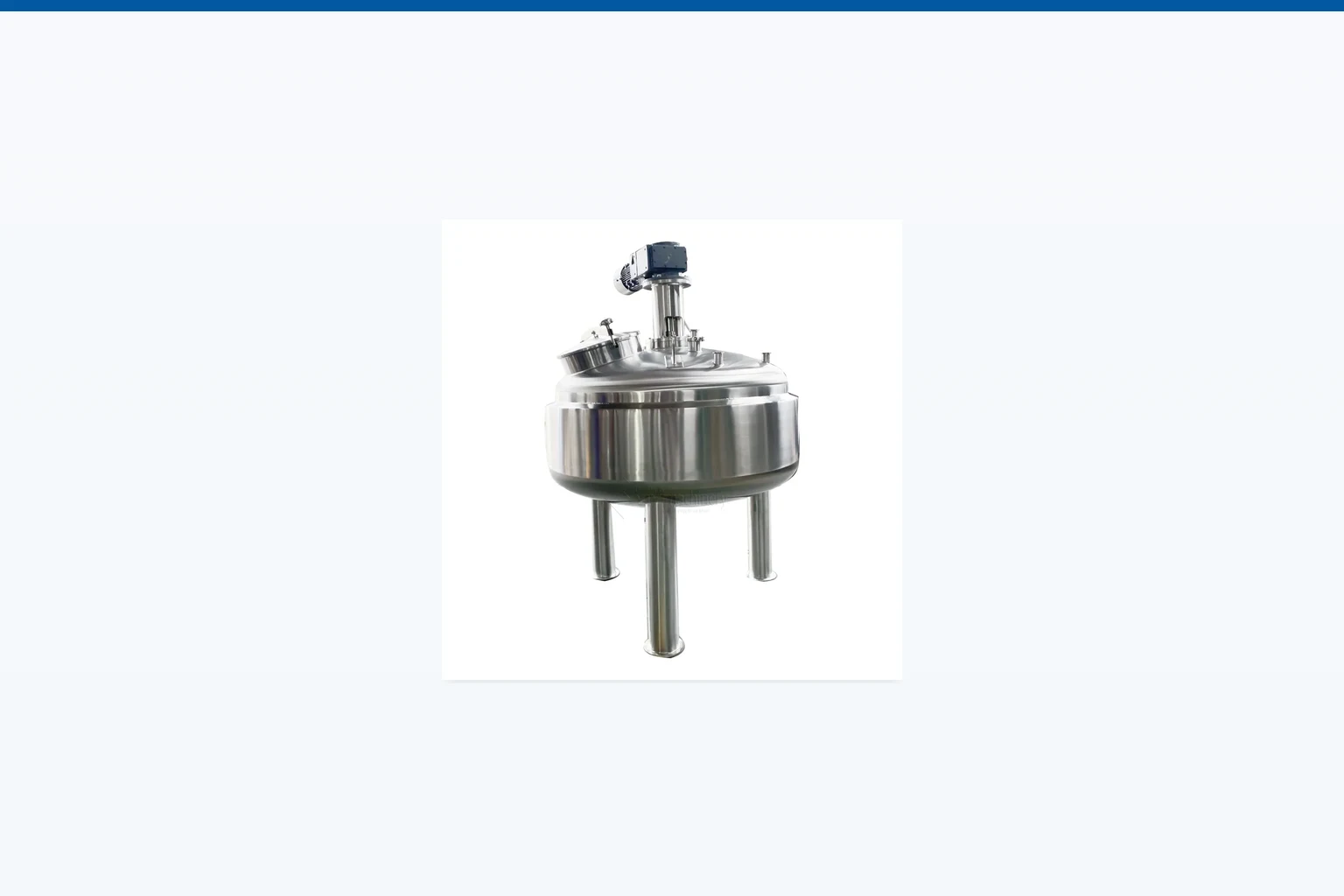
YIYI lists emulsification tank and slurry mixing tank examples within its broader process equipment range. They should be used as a starting point, not as evidence that every duty has the same configuration. Send the Part 6 inputs when you request a quote.
FAQ
What is a high shear mixing tank?
It is a tank that combines bulk mixing with an intensive dispersion device such as a rotor-stator, disperser, or recirculation loop.
Is high shear required for every powder addition?
No. Powders that dissolve or wet easily may only need controlled addition and conventional agitation.
What is the difference between a rotor-stator and an anchor agitator?
A rotor-stator creates localized high shear; an anchor moves viscous material around the vessel wall and through the batch.
Can high shear damage a product?
Yes. Excessive shear can change texture, entrain heat, or damage fragile particles. Define allowable shear in the RFQ.
What viscosity range should be provided?
Provide a range at process temperatures, especially the coldest and thickest point of the batch.
How should powders be introduced?
Use a controlled feed method appropriate to the powder, loading rate, and dust-control requirement; do not rely on an uncontrolled vortex.
Are sanitary high-shear tanks available?
They can be specified with sanitary materials, welds, and CIP features. The owner should state the required sanitary scope.
When should buyers use a vacuum emulsifying mixer instead?
Choose that route when emulsification also needs deaeration or foam reduction under controlled vacuum.
References
- 3-A Sanitary Standards — sanitary design expectations where required
- ASME BPVC — pressure-boundary scope when applicable
- IEC publications — electrical equipment requirements require project confirmation