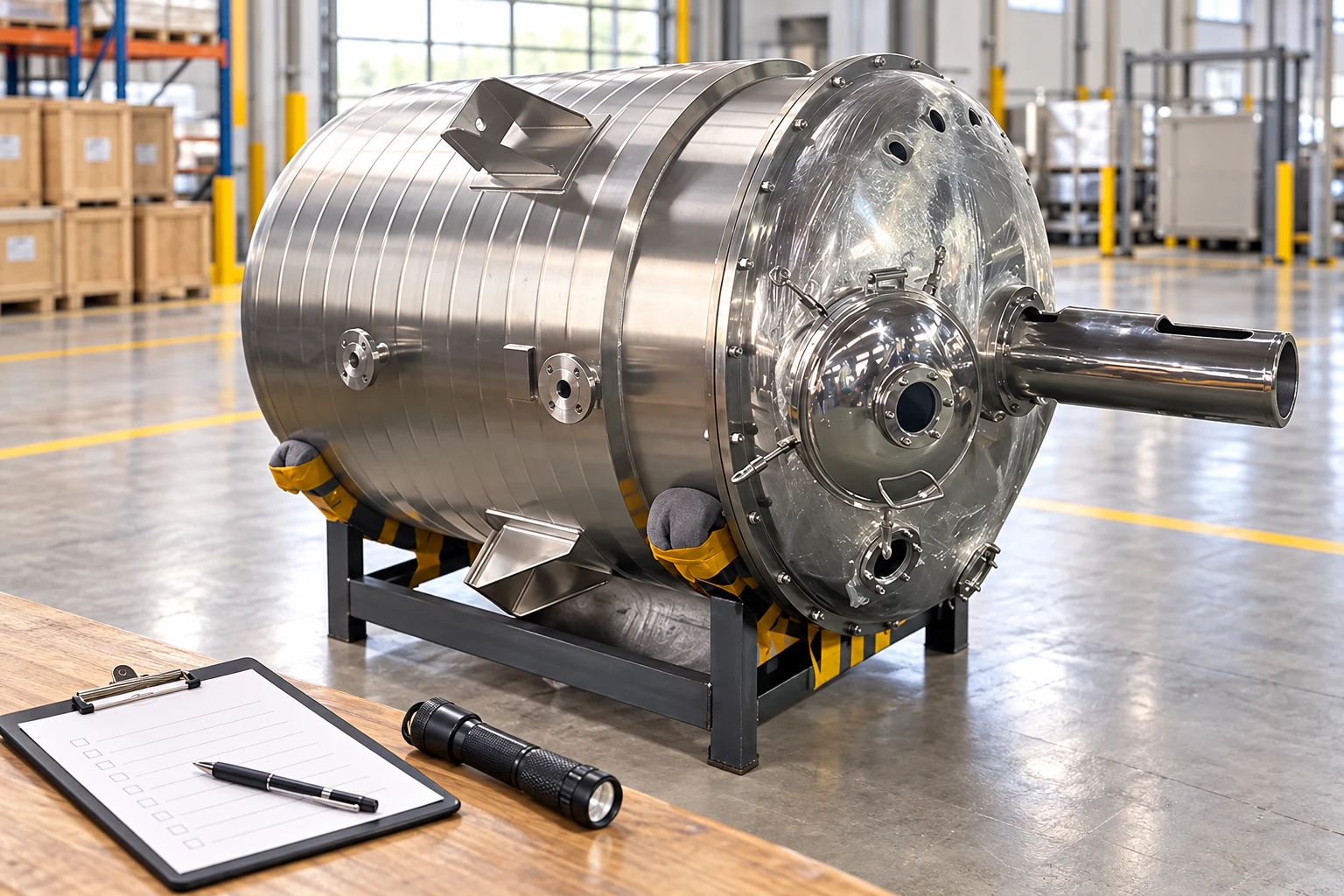
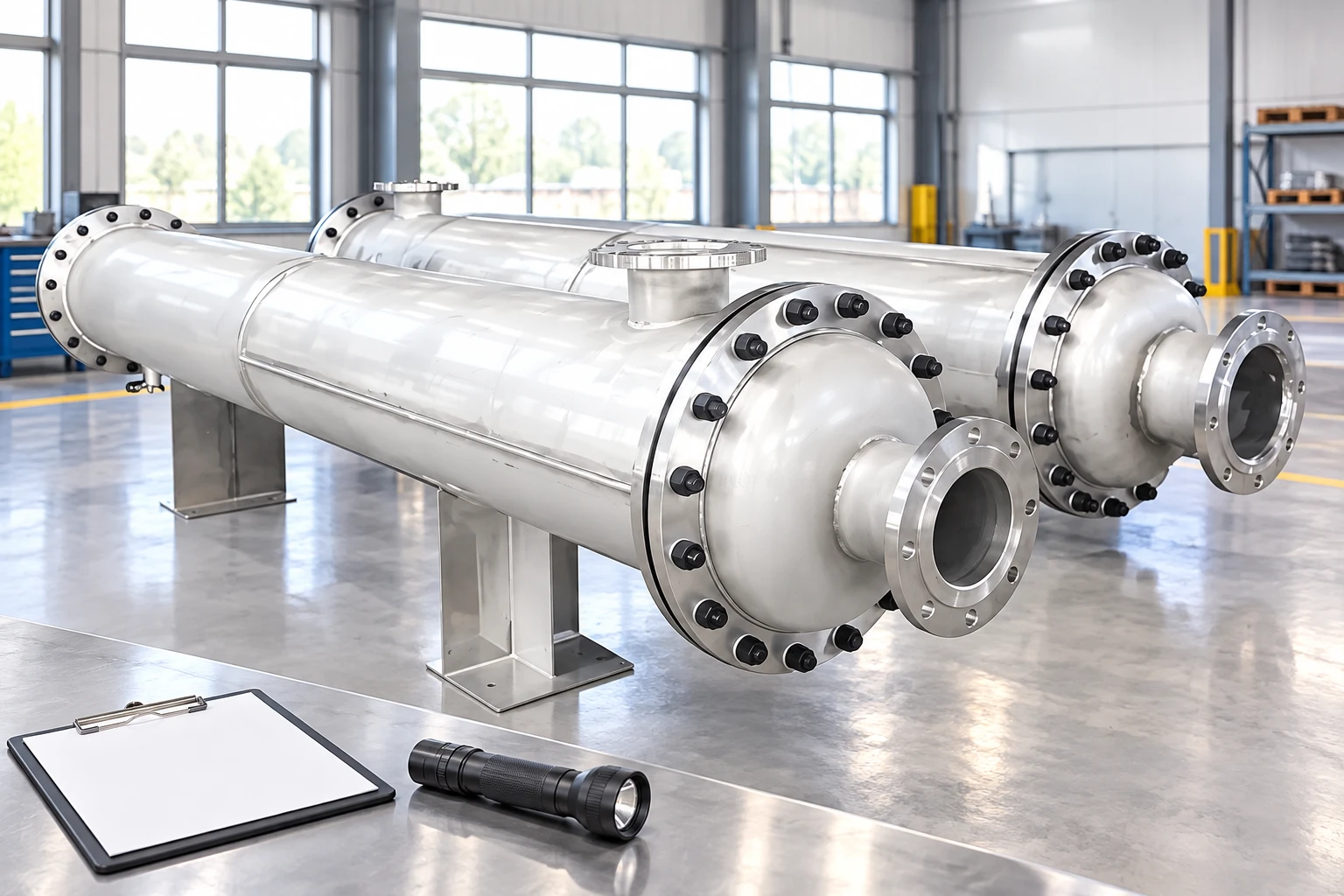
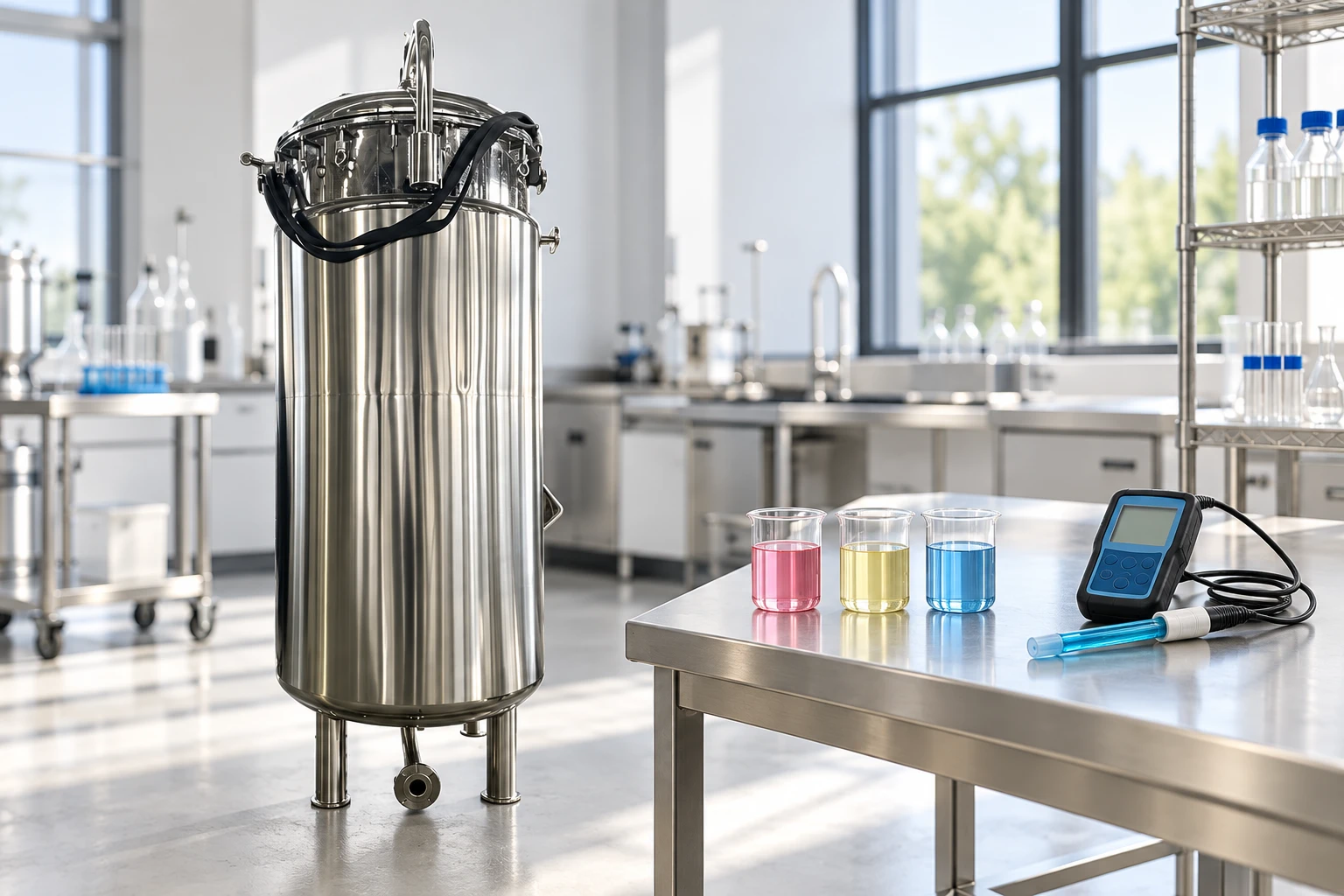
An industrial-grade stirrer tank is a production vessel selected around more than nominal litres. It must match the real working volume, viscosity, product compatibility, required circulation pattern, cleaning method, utilities, and documentation needed by the operating line. A tank that looks similar in a catalog can perform very differently when batch height, impeller diameter, torque, or discharge geometry changes.
This guide gives procurement teams a practical framework for writing an RFQ and comparing industrial stirred-tank quotations. The linked YIYI INTELLIGENT pages are published equipment examples only; actual capacity, materials, torque, pressure scope, and compliance must be confirmed on the project quotation.
Part 1. What makes a stirrer tank industrial grade?
“Industrial grade” should mean the tank is designed for a defined production duty rather than a generic vessel with a motor attached. The supplier needs to know what the tank holds, how often it runs, how it is cleaned, and what happens if the batch is at its thickest or coldest condition.
| Design area | Industrial question | Why it matters |
|---|---|---|
| Vessel | Working and gross volume | Prevents overfill and poor mixing at low fill |
| Agitator | Flow pattern, speed, and torque | Matches material movement to viscosity |
| Material | Product and cleaning compatibility | Avoids corrosion and contamination |
| Interfaces | Nozzles, manway, drain, sampling | Determines plant integration |
| Controls | Start-up, speed, alarms | Creates repeatable batch operation |
| Documentation | Drawings, tests, certificates | Supports acceptance and maintenance |
Use the mixing tank category to identify the general configuration family. Then translate the process into measurable requirements rather than selecting a tank by outer diameter or nominal capacity alone.
Part 2. How should working capacity and geometry be selected?
Gross capacity is the physical volume to the vessel top, while working capacity is the volume the plant can mix reliably. Headspace may be needed for foaming, powder addition, thermal expansion, or vacuum operation. The same nominal tank volume can have very different working ranges depending on diameter, straight-side height, bottom geometry, and impeller position.
| Input | RFQ information | Selection effect |
|---|---|---|
| Minimum batch | Lowest routine production volume | Sets minimum liquid level over impeller |
| Maximum batch | Largest routine production volume | Sets freeboard and motor loading |
| Product density | Density at processing temperature | Affects mass and support design |
| Foam behavior | None, moderate, or heavy | Determines headspace and venting |
| Cleaning method | CIP, manual, or product changeover | Determines access and spray coverage |
A pilot or seasonal formulation may only fill half the production batch. State that condition. An agitator that works at maximum volume can lose effective circulation at minimum fill.
Part 3. Which materials fit the process?
304 and 316L stainless steel are common starting points, but neither should be chosen only by industry label. Chlorides, acids, cleaning chemicals, temperature, and surface finish requirements all affect the specification. For food and dairy processes, owners may require sanitary fittings, drainability, and documented weld practices based on 3-A sanitary standards or their own quality system.
| Service | Material starting point | Further requirement |
|---|---|---|
| Food and beverage | 304 or 316L | CIP chemical compatibility and surface finish |
| Cosmetics | 316L common | Seal compatibility with fragrance and surfactants |
| General chemicals | 316L or higher alloy | Product compatibility review and venting |
| Abrasive slurry | Material per solids | Wear protection and service access |
If the design includes pressure or vacuum, describe that boundary explicitly. Codes such as ASME BPVC may become relevant only when the project scope requires them; do not assume a catalogue tank includes a particular code stamp.
Part 4. Which agitator suits the batch?
The most important question is not “How many kilowatts?” but “What movement must the batch achieve?” Propellers can create axial flow in thinner liquids. Turbines create radial flow and are useful in many blending duties. Anchors, paddles, and helical ribbons sweep larger areas of viscous product and can support heat transfer near the wall.
| Product condition | Starting agitator family | Buyer check |
|---|---|---|
| Thin liquid | Propeller or pitched blade | Vortex control and baffles |
| Medium viscosity blend | Turbine or pitched blade | Turnover time and suspension |
| Thick sauce or cream | Anchor or ribbon | Torque, wall gap, and scraper scope |
| Solids suspension | Turbine or axial-flow impeller | Settling velocity and bottom shape |
| Shear-sensitive product | Low-speed axial or anchor | Maximum allowable shear |
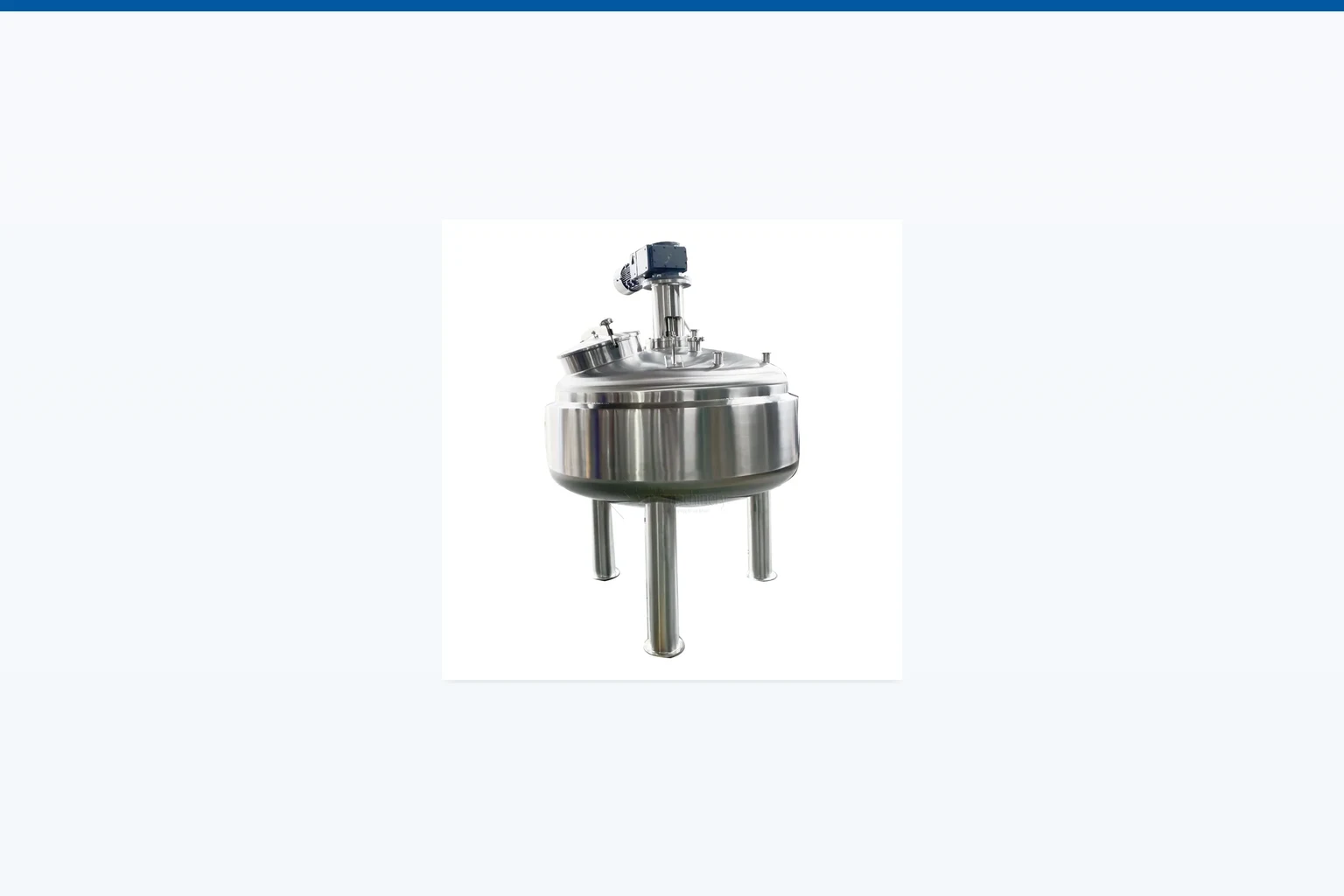
Baffles can prevent swirling in low-viscosity tanks, but they may complicate cleaning or offer little benefit in thick material. Tell suppliers whether the product tends to vortex, aerate, settle, or cling to walls.
Part 5. Which utilities and controls matter?
Production tanks often need heating, cooling, variable speed, level control, and safety interlocks in addition to an agitator motor. The RFQ should define the process reason for each utility. A jacket may heat, cool, or both; the fluid could be steam, thermal oil, hot water, glycol, or another site utility.
| Utility or control | RFQ input | Operational result |
|---|---|---|
| Jacket | Required temperature range and ramp time | Heater or cooling area selection |
| Motor control | Fixed speed or VFD range | Recipe repeatability |
| Instrumentation | Temperature, level, pressure, load | Batch monitoring |
| Electrical | Available voltage and area classification if any | Panel and motor selection |
| CIP | Flow, pressure, and chemical regime | Nozzle and spray-device scope |
For intense dispersion requirements, review the high shear mixing tank guide before treating a standard low-speed tank as equivalent.
Part 6. What belongs in an industrial stirrer tank RFQ?
A good RFQ enables suppliers to compare the same duty. It also exposes missing decisions before a purchase order, rather than during factory acceptance or site installation.
| RFQ section | Inputs to provide |
|---|---|
| Batch | Minimum, normal, and maximum working volume |
| Product | Density, viscosity curve, solids, foam, shear sensitivity |
| Vessel | Vertical or horizontal preference, headspace, discharge height |
| Agitation | Required result, speed range, impeller preference if known |
| Thermal | Heat/cool utility, initial and target temperatures |
| Materials | Product-contact metal, seals, finish, cleaning chemistry |
| Interfaces | Nozzle list, manway, sample port, load cells, access limits |
| Documentation | GA drawing, P&ID support, FAT, material records, spares |
Ask quote recipients to identify assumptions. If they calculate torque or heat-up time from a surrogate liquid, that assumption should appear on the technical offer.
Part 7. How should buyers compare quotations and published examples?
Do not compare only purchase price and nominal volume. A quote with a larger motor may still be unsuitable if the impeller is wrong for the product, and a polished vessel may still be difficult to clean if the bottom or nozzle geometry leaves a heel.
| Comparison item | What to verify |
|---|---|
| Working range | Minimum and maximum volume with stated impeller |
| Mixing duty | Flow pattern, speed range, torque basis |
| Materials | Wetted metal, gasket, seal, and finish |
| Utility scope | Jacket, pump, valve, insulation, control interfaces |
| Documentation | Design assumptions, drawings, test, and spare lists |
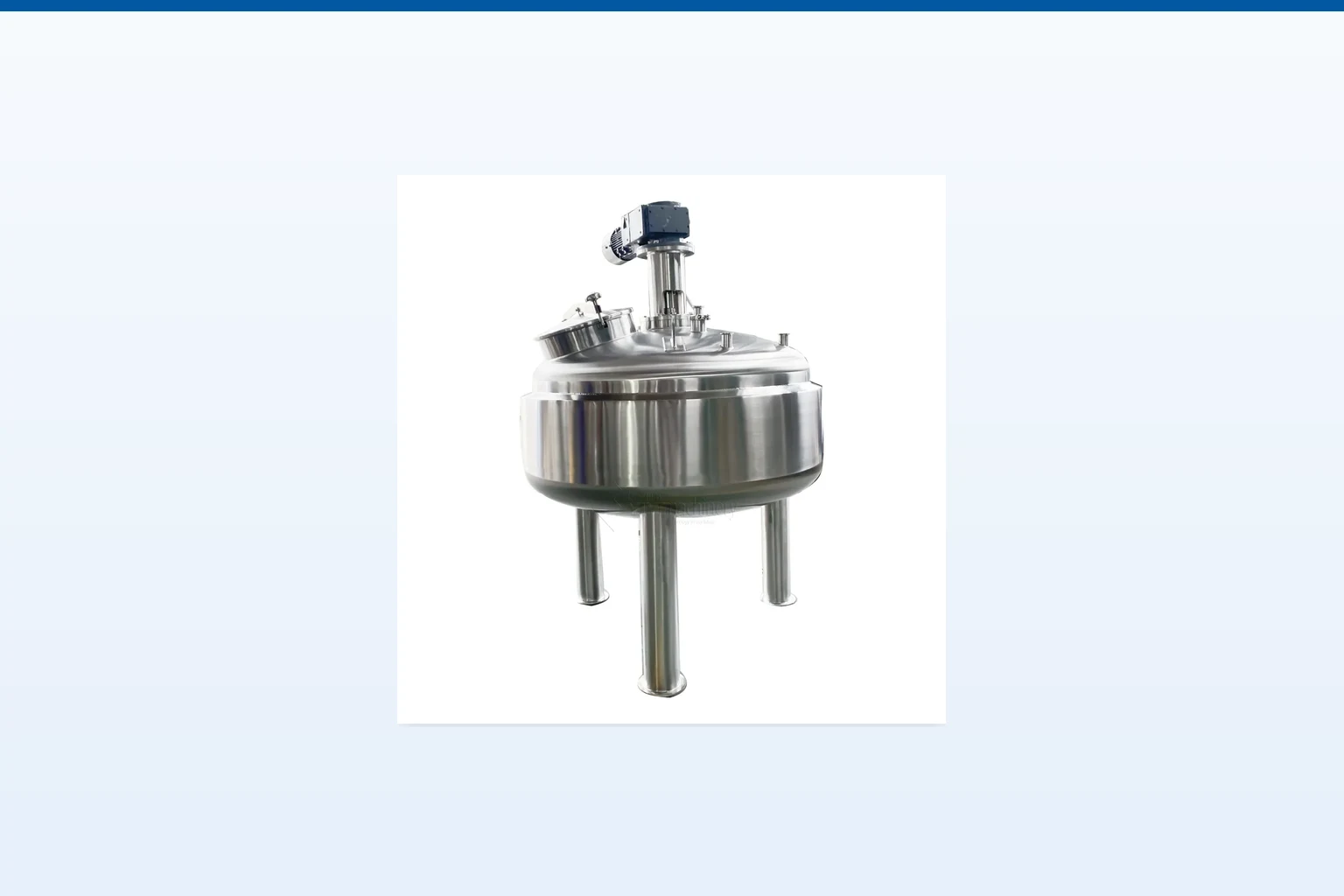
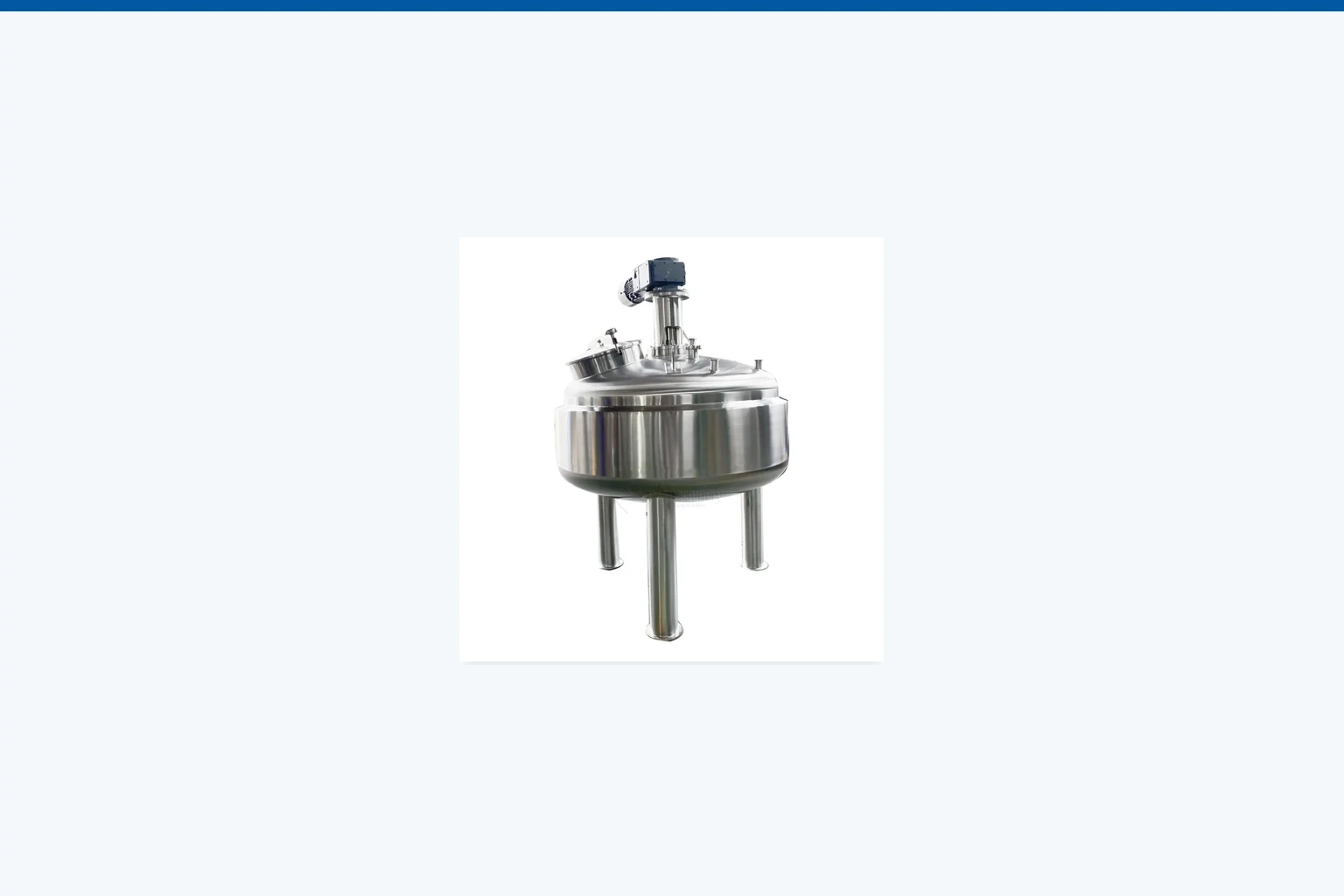
YIYI publishes 500L mixing tank, 800L mixing tank, and mixing tank with agitator examples. Use these pages for initial configuration discussion, then request project-specific confirmation. Submit the Part 6 data when you request a quote.
FAQ
What makes a stirrer tank industrial grade?
It is designed around a repeatable production duty, including working volume, material, agitation, interfaces, utilities, and acceptance documentation.
How do I choose working capacity?
State minimum, normal, and maximum batch volumes. The usable range must keep the agitator effective without overfilling or excessive foam.
Is 304 or 316L better?
Neither is universally better. Select material against product chemistry, cleaning chemicals, temperature, and owner quality requirements.
Which agitator suits thick batches?
Anchors and helical ribbons are common starting points for viscous product because they move material near the wall. Confirm torque against the real viscosity curve.
Do baffles always belong in a tank?
No. They can reduce vortexing in thinner liquid but may hinder cleaning or not help thick product.
What should an RFQ include?
At minimum: batch range, product properties, agitation goal, materials, utilities, interfaces, controls, and required documents.
Can one tank mix several products?
Possibly, but each product’s viscosity, cleaning requirement, and batch size must fall within the specified operating range.
Which documents should buyers request?
Request drawings, material and test documentation as applicable, controls information, FAT scope, spare parts, and stated design assumptions.
References
- ASME BPVC — project-specific pressure-boundary scope
- 3-A Sanitary Standards — food and dairy sanitary expectations
- ISO standards catalogue — quality and documentation context