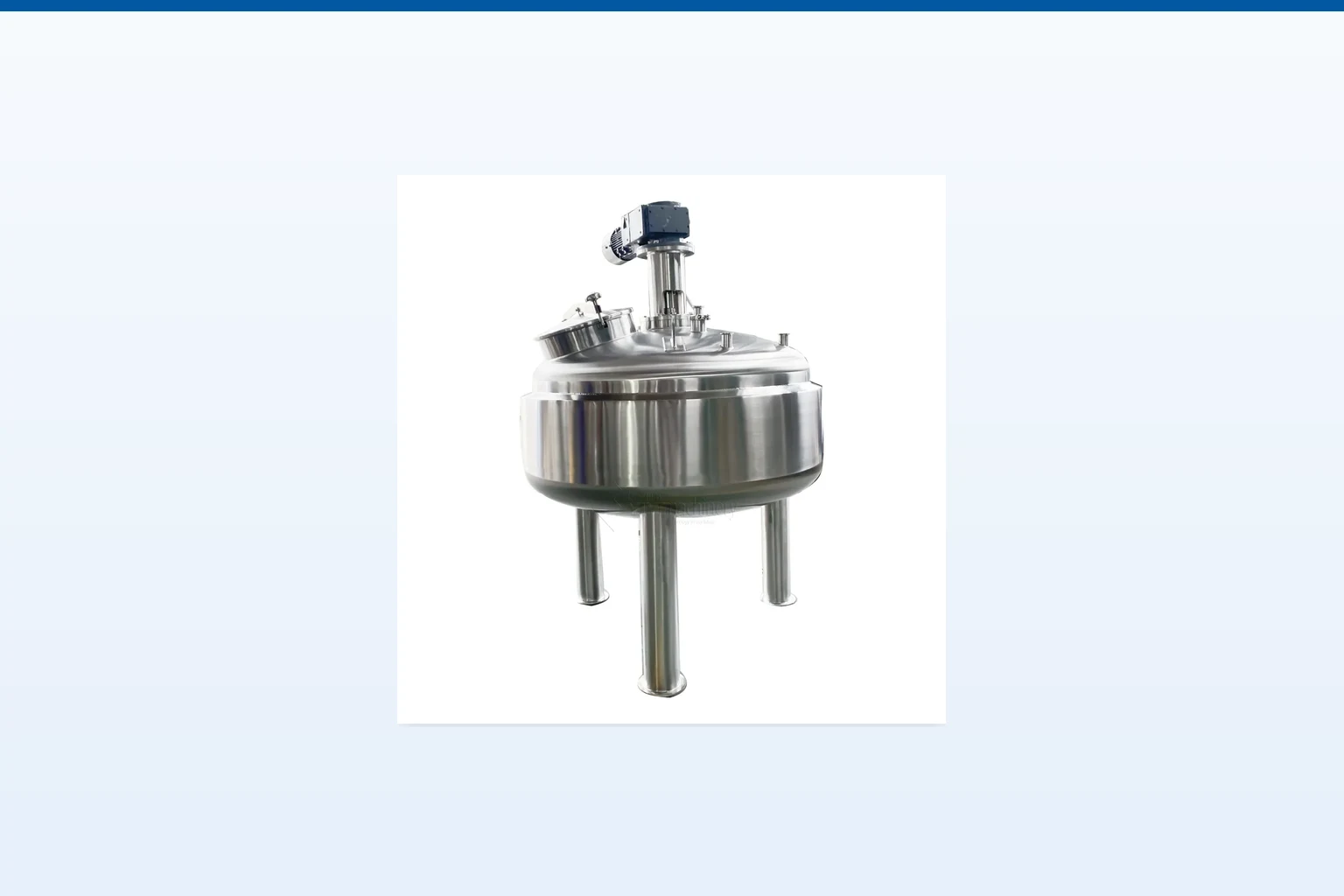
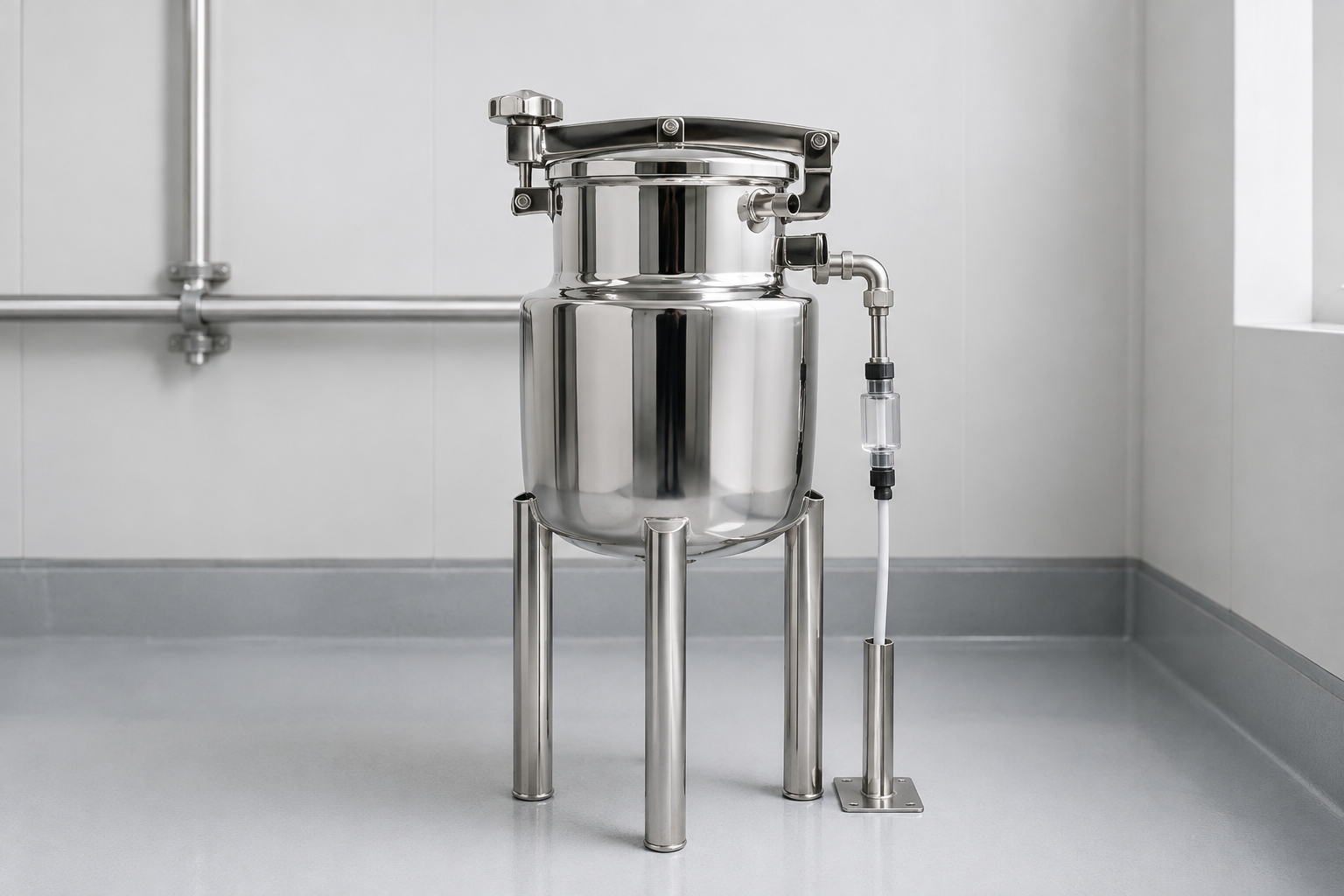
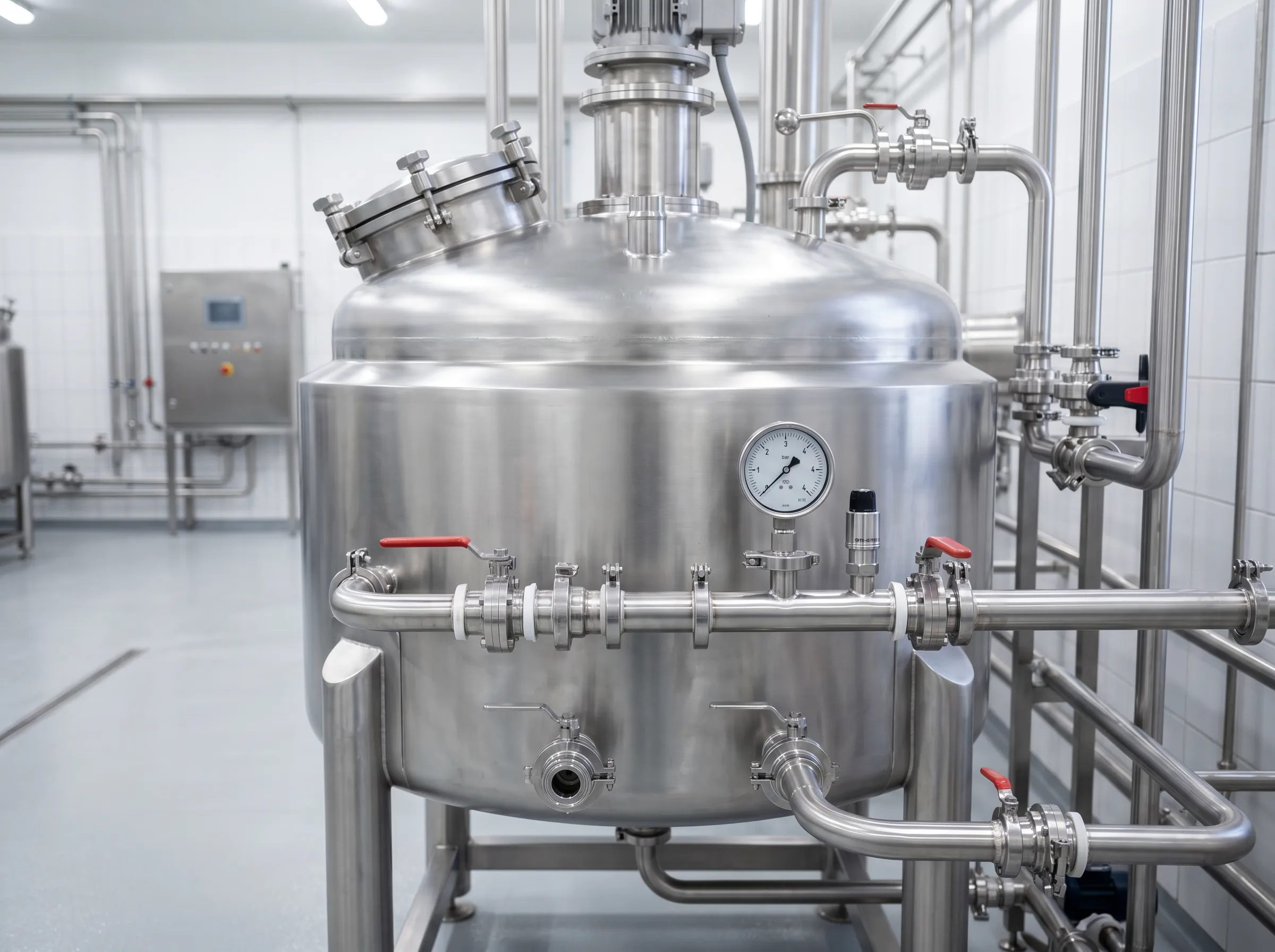
A jacketed mixing tank combines a stirred vessel with an outer chamber that carries a heating or cooling utility around the product wall. It lets a process team blend, heat, cool, or hold a batch in one controlled piece of equipment. The jacket is only one part of the duty: product viscosity, agitator pattern, utility temperature, heat-transfer area, insulation, and controls all determine whether the batch reaches its target consistently.
This guide explains the selection questions behind jacketed mixing tanks. Published YIYI INTELLIGENT product pages are configuration examples only; jacket geometry, pressure, capacity, controls, and thermal performance must be confirmed for the project.
Part 1. What is a jacketed mixing tank?
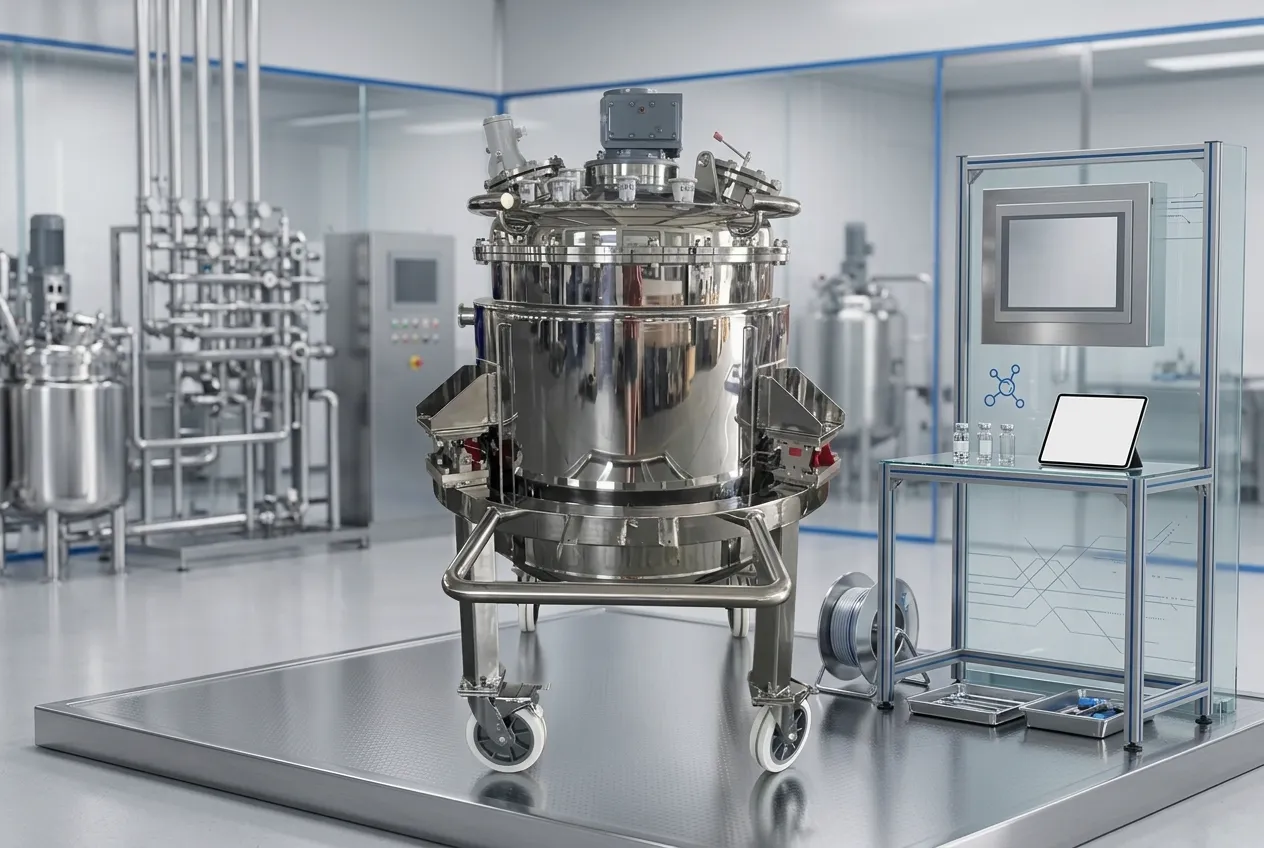
The main vessel contains product. A second wall, called the jacket, creates a channel for steam, thermal oil, hot water, chilled water, glycol, or another utility fluid. Heat crosses the product wall while the agitator circulates batch material. A jacket can be a full outer shell, a dimpled jacket, or a half-pipe arrangement depending on pressure, fabrication, and duty.
| Component | Job | Buyer question |
|---|---|---|
| Product vessel | Holds the batch | What are gross and working volumes? |
| Jacket | Transfers heat through the wall | Heating, cooling, or both? |
| Agitator | Moves product across the wall | What viscosity and flow pattern? |
| Insulation | Limits heat loss or gain | Is personnel protection required? |
| Controls | Holds temperature and sequence | Manual, PID, or recipe control? |
Browse the mixing tank category for capacity families before choosing a utility. The correct process question is not merely “Do I need a jacket?” but “What temperature change must occur at what batch volume and time?”
Part 2. How does a jacket heat or cool a batch?
The jacket fluid and product exchange heat through the vessel wall. Heating occurs when the utility is hotter than product; cooling occurs when it is colder. Agitation reduces the stagnant product layer at the wall and makes bulk temperature more uniform. Without adequate circulation, a tank can show a correct sensor reading near the wall while the center remains at a different temperature.
| Jacket type | General strength | Detail to confirm |
|---|---|---|
| Full jacket | Broad wall contact | Pressure boundary and drainability |
| Dimple jacket | Efficient passages and structural pattern | Utility pressure and fabrication scope |
| Half-pipe jacket | Robust channel design | Project pressure and cleaning boundary |
| Internal coil | Added surface inside vessel | Product cleanability and dead space |
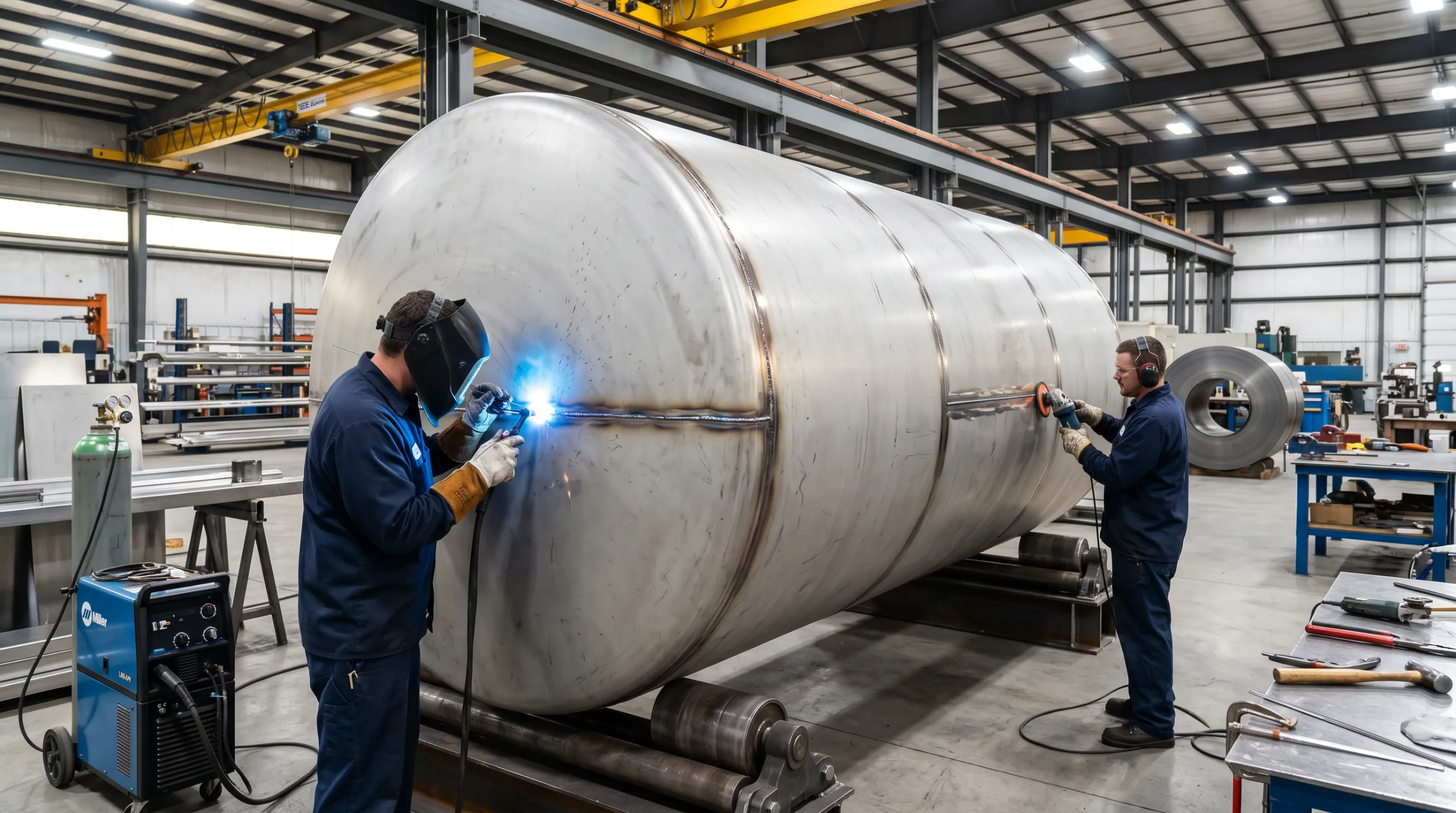
When a jacket is pressurized, define that boundary in the RFQ. Standards such as ASME BPVC apply only if the requested project scope includes them; a generic reference is not proof of compliance.
Part 3. Which utility fits heating and cooling duty?
Steam can heat quickly where a reliable plant header and condensate return already exist. Thermal oil can support stable high-temperature holding through a closed loop. Electric heating can suit isolated or moderate-duty lines. Chilled water and glycol are common cooling utilities; a product that requires very low temperature or rapid heat removal may need an external cooling loop in addition to the jacket.
| Utility | Typical fit | Interface to specify |
|---|---|---|
| Steam | Existing boiler plant, rapid heating | Supply pressure, traps, condensate return |
| Thermal oil | Stable heat holds, packaged loop | Fluid, heater, expansion and pump scope |
| Electric | Smaller isolated heating duty | Supply voltage, kW limit, control zones |
| Chilled water / glycol | Cooling and controlled batch hold | Supply/return temperature and flow |
For utility-specific selection, see the steam heating stirrer tank comparison and oil jacketed mixing tank procurement guide. A tank can be jacketed without being optimized for every utility.
Part 4. What controls and sensors should buyers specify?
Temperature control begins with defining where the process temperature should be measured. A probe near the jacket outlet can respond quickly but may not represent bulk product. A sensor in the recirculating product zone may better represent the batch. Larger tanks may need more than one measurement point or a verified mixing time before batch release.
| Control topic | RFQ input | Purpose |
|---|---|---|
| Setpoint range | Minimum and maximum product temperature | Defines utility/control range |
| Accuracy | Allowed temperature deviation | Selects sensor and controller |
| Control mode | On/off, PID, or recipe sequence | Determines batch repeatability |
| Alarms | High and low limits | Protects product and equipment |
| Interlocks | Low level, agitator, utility enable | Prevents dry heating or poor mixing |
| Records | Trend or batch log requirement | Supports quality review |
Part 5. How does agitation affect temperature uniformity?
The jacket provides surface area; the agitator makes that area useful to the full batch. Thin liquids may use a propeller or turbine. Thick sauces, creams, and adhesive mixtures may need an anchor or ribbon to sweep near the wall. The required speed also depends on whether the product is shear-sensitive.
| Product behavior | Starting agitator approach | Thermal concern |
|---|---|---|
| Thin liquid | Propeller or pitched blade | Vortexing and air drawdown |
| Medium blend | Turbine or pitched blade | Center-to-wall temperature difference |
| Thick product | Anchor or ribbon | Wall hot spots and long heat-up |
| Particulate batch | Axial-flow impeller | Settling during heating or cooling |
Food and dairy owners may request sanitary welds, cleanable geometry, and defined surface finish under 3-A sanitary standards where applicable.
Part 6. What belongs in a jacketed mixing tank RFQ?
Suppliers need process and utility data in one document. A quote based only on nominal volume cannot reliably state heat-up, cooling, or agitator performance.
| RFQ section | Inputs to provide |
|---|---|
| Batch | Minimum, normal, maximum working volume |
| Product | Density, viscosity curve, solids, foam tendency |
| Thermal | Starting and target temperature, ramp time, hold time |
| Utility | Steam, oil, electric, chilled fluid; supply/return data |
| Jacket | Heating only, cooling only, or dual duty |
| Agitation | Flow goal, shear sensitivity, speed requirement |
| Materials | Product-contact metal, seals, internal finish |
| Controls | Sensors, alarms, records, plant integration |
Part 7. What quote mistakes occur and which YIYI examples fit?
The recurring error is buying a jacketed vessel without defining how the utility will reach it, where condensate or coolant returns, or how product will circulate along the wall. Another is asking for a heat-up time without stating the batch’s initial temperature or viscosity.
| Mistake | Field symptom | Prevention |
|---|---|---|
| Utility interface omitted | Delayed installation | Include a utility line list |
| Agitation underspecified | Uneven product temperature | Provide viscosity and batch range |
| One sensor only | Misleading temperature reading | Define measurement and mixing sequence |
| Jacket duty assumed | Slow heat or cool cycle | State ramp and hold requirements |
YIYI publishes a heated mixing tank with sight glass jacket and a mixing tank with agitator as product contexts. Confirm exact scope before purchase, then request a quote with the Part 6 data.
FAQ
What is a jacketed mixing tank?
It is a mixing vessel with an outer jacket that carries a utility fluid to heat or cool product through the vessel wall.
Can a jacketed tank both heat and cool?
Yes, if the jacket, utility interfaces, and controls are specified for dual duty.
Which utility should be used in the jacket?
Choose based on site utilities, temperature range, cycle time, and maintenance capability.
Does every jacketed tank need agitation?
Not every storage duty does, but batch temperature uniformity often improves when product is circulated.
What jacket data belongs in an RFQ?
State fluid type, supply/return temperature, pressure, heat/cool ramp, and whether the duty is heating, cooling, or both.
Is a dimple jacket better than a full jacket?
Neither is universally better; jacket selection follows pressure, fabrication, utility, and process requirements.
Can food tanks use jackets?
Yes, with sanitary materials and cleanable design appropriate to the owner’s product and cleaning requirements.
When should buyers review steam or oil guides?
Review them when the main decision is the heating utility rather than the overall jacketed tank platform.
References
- ASME BPVC — pressure boundary scope when applicable
- 3-A Sanitary Standards — sanitary design context
- IEC publications — electrical and control requirements require project confirmation