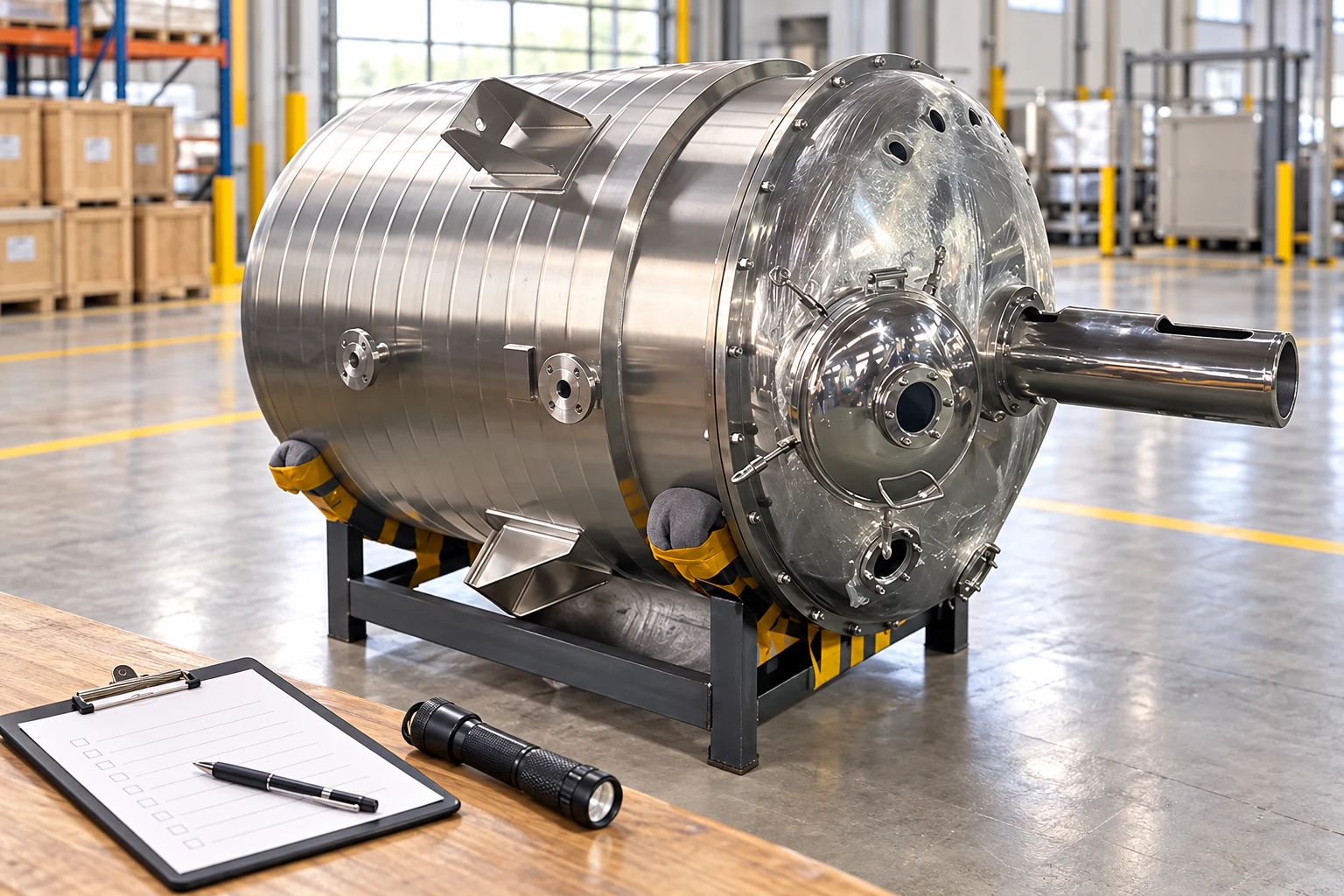
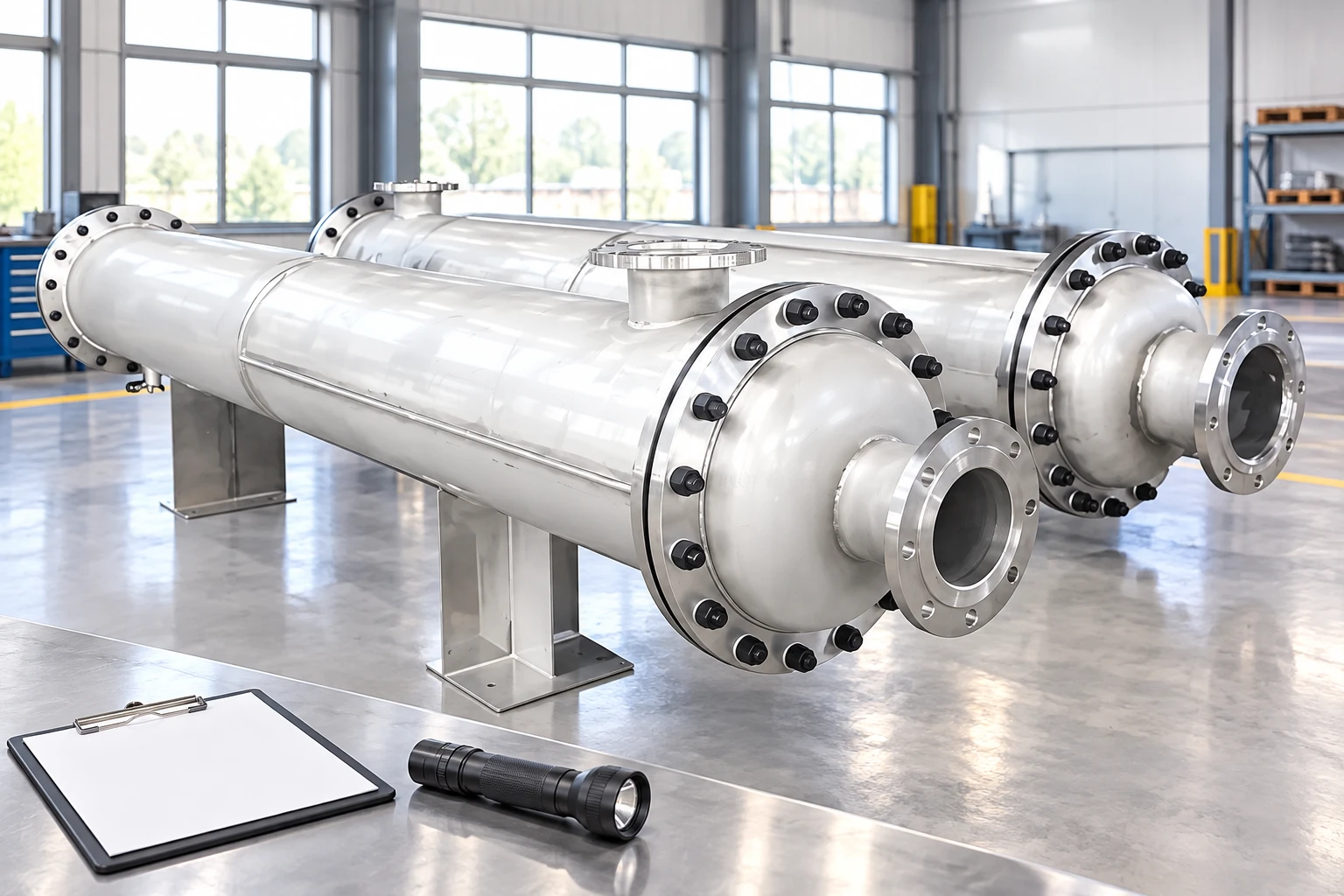
A cooling mixing tank is a stirred process vessel designed to remove heat from a batch through a jacket, internal coil, or external circulation loop. It is used when blending, dissolution, neutralization, crystallization, or reaction adds heat that must be controlled. Buyers must define not just the tank capacity but the heat load, coolant conditions, agitation pattern, and response time required to keep product inside its operating envelope.
This guide is a practical equipment-selection resource. It does not replace a process-hazard review or thermal calculation for reactive chemistry. Published YIYI INTELLIGENT pages provide configuration context only; cooling duty, jacket pressure, coolant flow, and controls require project confirmation.
Part 1. What is a cooling mixing tank?
The tank holds product while a cooling medium removes heat across a wall or an exchanger loop. The product-side agitator moves warmer material toward the cooled surface and helps prevent localized hot zones. Cooling systems may use chilled water, glycol, cooling water, brine, or a controlled secondary loop depending on the target temperature and site utilities.
| Component | Function | Buyer question |
|---|---|---|
| Vessel | Contains the batch | What are working and maximum volumes? |
| Jacket or coil | Transfers heat out | What cooling utility is available? |
| Agitator | Circulates product to cooling surface | What viscosity and shear limit? |
| Sensors | Measure product temperature | Where is representative bulk temperature? |
| Controls | Adjust coolant and sequence | How much overshoot is acceptable? |
The mixing tank category is the starting point for the vessel platform. Cooling selection begins with the heat balance, not with the vessel’s outside diameter.
Part 2. Why are exothermic batches difficult to control?
An exothermic batch releases heat as ingredients dissolve, react, crystallize, or neutralize. If heat is produced faster than the system removes it, product temperature can rise above the planned setpoint. The risk is not limited to chemical reaction: viscous mixing and high-shear dispersion can also add energy to the batch.
| Process signal | Cooling risk | Input needed |
|---|---|---|
| Rapid temperature climb | Setpoint overshoot | Peak heat release rate |
| Viscosity rises as product cools | Falling circulation | Viscosity versus temperature |
| Cold coolant causes wall freezing | Fouling at jacket wall | Product freezing or crystallization limit |
| Reaction changes speed with temperature | Escalating heat release | Defined process operating envelope |
| Foam or vapor develops | Level and vent issue | Headspace and vent sequence |
Important: Reactive or safety-critical exotherms require a documented hazard review and engineered relief/heat-removal strategy. General tank selection cannot establish a safe reaction limit; use specialist process-safety resources such as CCPS as part of the project framework.
Part 3. How does a cooling jacket remove heat?
Coolant enters the jacket colder than the product. Heat passes from product to the vessel wall and then into the coolant. The difference between product and coolant temperature provides the driving force, while jacket area, wall condition, coolant flow, and agitation govern the practical rate.
| Cooling method | Best starting use | Limitation to check |
|---|---|---|
| Jacketed vessel | Moderate batch cooling and temperature hold | Surface area may limit rapid exotherms |
| Internal coil | Additional surface in selected services | Cleaning and product-side fouling |
| External recirculation loop | High cooling duty or tight control | Pumpability, line cleaning, response delay |
| External heat exchanger | Large heat removal in recirculated product | Product shear and exchanger fouling |
A jacketed vessel may require design review if the jacket is pressurized. ASME BPVC is relevant only when the specified project boundary calls for it; ask suppliers to state the actual design basis.
Part 4. Which controls and coolant choices matter?
Cooling water can handle many moderate duties. Chilled water or glycol is used when lower product temperatures are needed, but the owner must state supply temperature, return-temperature expectation, available flow, and seasonal limits. A control valve may regulate coolant flow, while a PID loop responds to the representative product temperature.
| Control or utility | RFQ input | Reason |
|---|---|---|
| Coolant type | Water, glycol, brine, or secondary loop | Determines temperature floor and materials |
| Supply / return data | Temperature, pressure, available flow | Enables duty estimate |
| Product setpoint | Normal, alarm, and shutdown limits | Defines control range |
| Valve arrangement | Modulating, bypass, or on/off | Affects response and stability |
| Sensor location | Product zone, outlet, or multiple points | Avoids misleading readings |
| Alarm/interlock | High temperature, low flow, agitator status | Protects the batch |
For the general vessel and utility platform, see the jacketed mixing tank guide.
Part 5. How does agitation affect cooling performance?
Agitation is essential because it continually presents warmer product to the cooled wall. Low viscosity products can often use propellers or turbines. Thick products may require anchors or ribbons; otherwise a cold film can form at the wall while the center remains warm. Excessive speed can introduce air or add shear heat, so the target is controlled circulation, not maximum RPM.
| Product condition | Mixing approach | Cooling concern |
|---|---|---|
| Thin liquid | Propeller or pitched blade | Vortex and air entrainment |
| Medium viscosity | Turbine or axial-flow impeller | Bulk temperature uniformity |
| Thick cream/paste | Anchor or ribbon | Wall scrape and torque |
| Suspended solids | Axial-flow circulation | Settling and uneven cooling |
Temperature probes should be placed where they represent the batch, then verified during commissioning against mixing time. A single wall-adjacent probe can show coolant influence rather than actual average product temperature.
Part 6. What belongs in a cooling mixing tank RFQ?
The technical offer should show assumptions. Give suppliers enough data to calculate the cooling duty and identify uncertainty.
| RFQ section | Inputs to provide |
|---|---|
| Product | Density, heat capacity if known, viscosity, solids, freezing point |
| Batch | Minimum, normal, and maximum volume |
| Heat load | Expected exotherm or process energy input |
| Thermal target | Initial, peak, target, and allowable ramp times |
| Coolant | Type, supply temperature, pressure, flow, return limit |
| Agitation | Mixing objective, shear sensitivity, viscosity curve |
| Vessel | Materials, pressure/vacuum boundary, nozzle requirements |
| Controls | Sensors, alarms, shutdown actions, data records |
If the reaction or formulation data are incomplete, state that clearly and request a preliminary thermal assessment rather than treating a nominal jacket as a guaranteed cooling solution.
Part 7. What quote mistakes occur and when is external cooling needed?
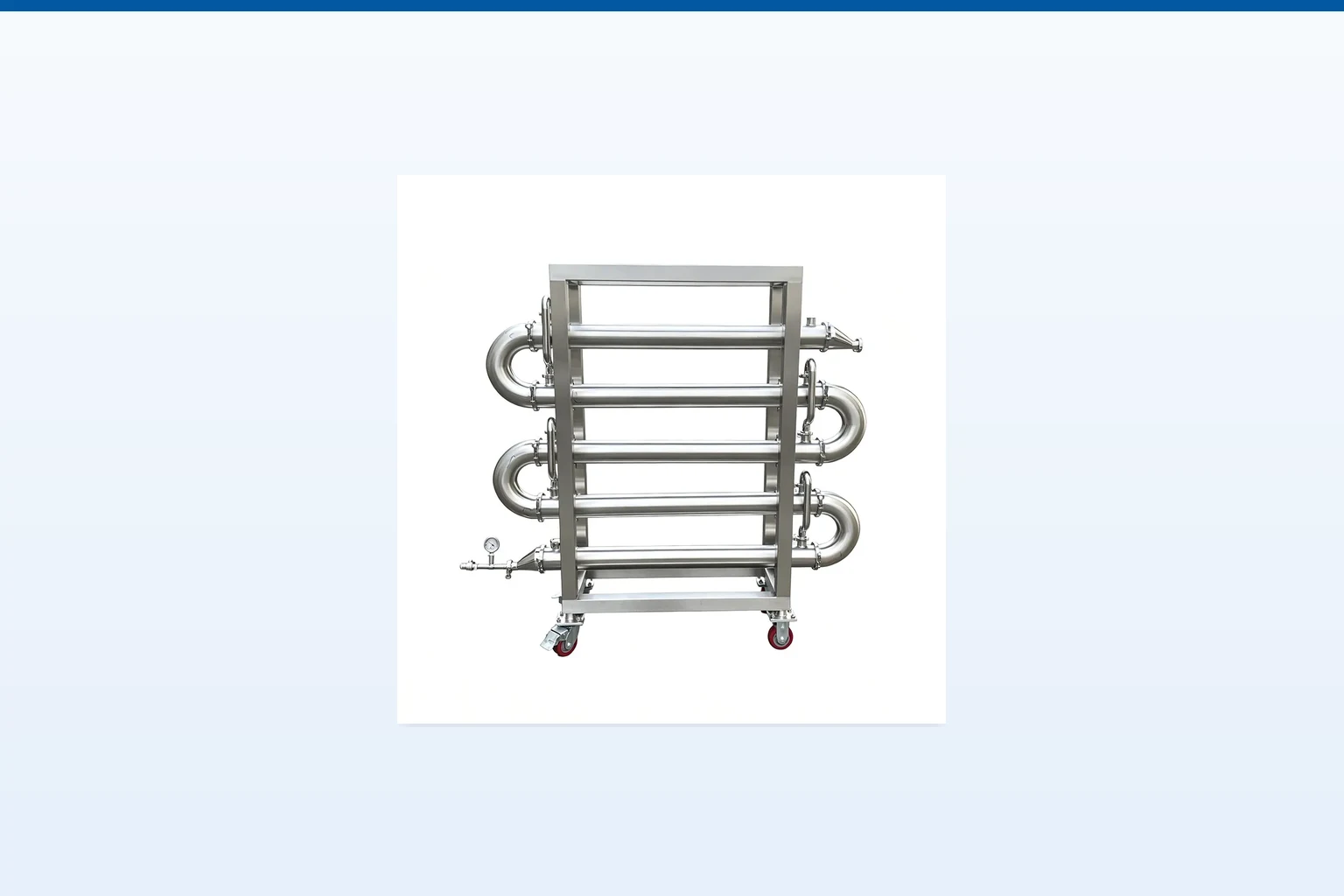
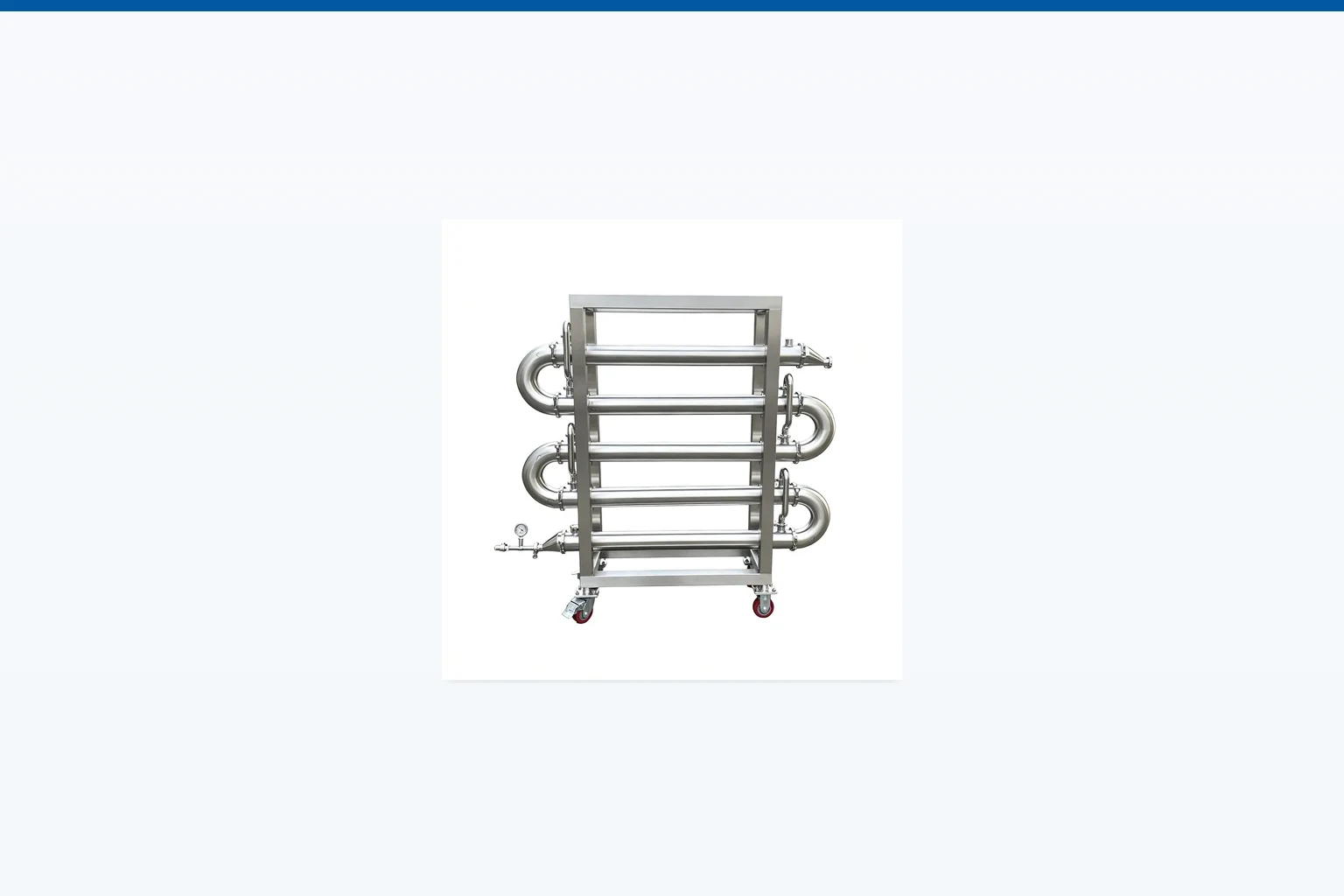
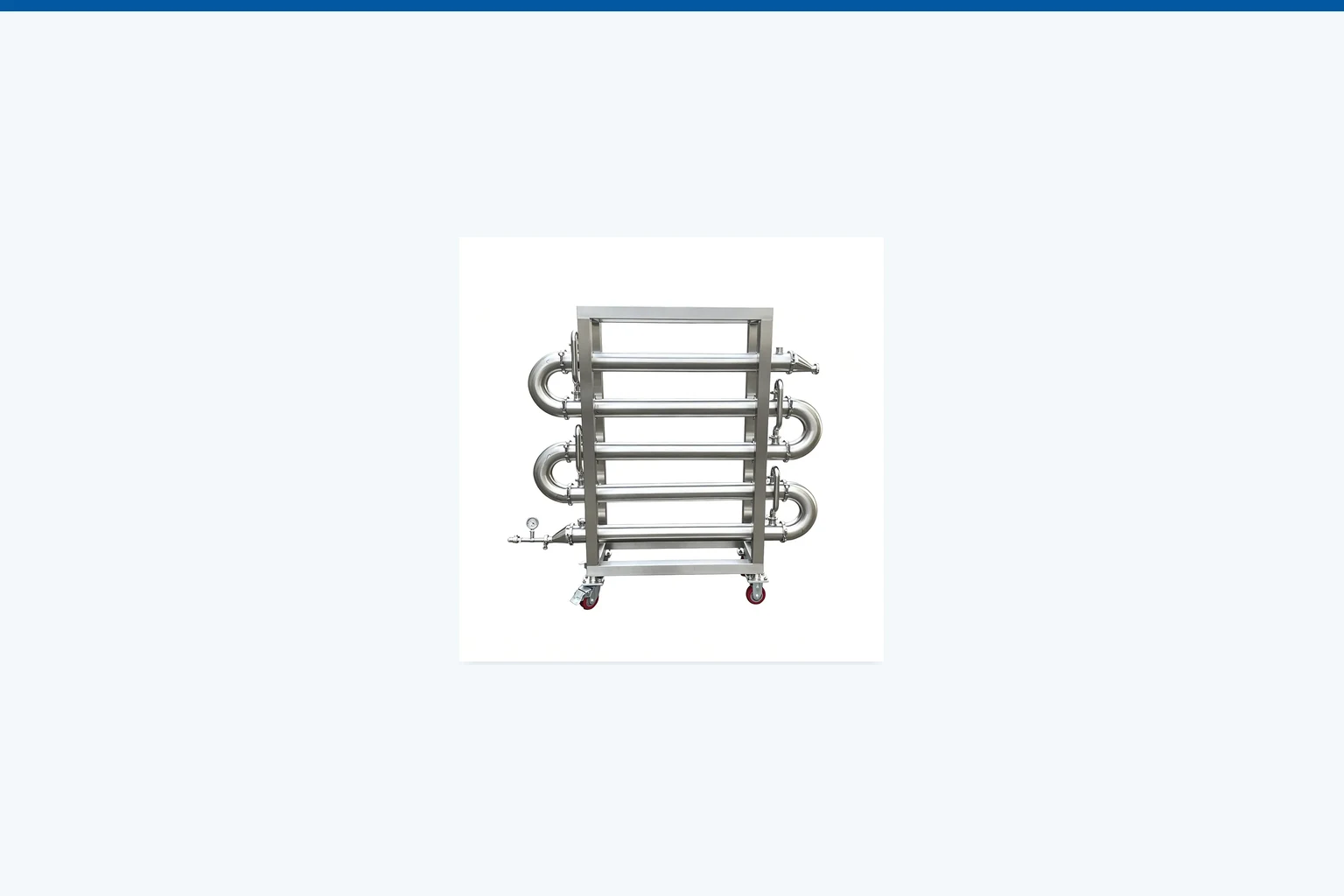
The most common mistake is specifying “cooling jacket” without defining the highest heat-release condition. Another is using colder coolant to compensate for poor circulation, which can worsen wall fouling. An external loop or fixed tube sheet shell-and-tube heat exchanger may be appropriate when the required heat removal exceeds jacket capability, provided product can be pumped and cleaned through the loop.
| Mistake | Field symptom | Prevention |
|---|---|---|
| No exotherm data | Unexpected temperature rise | Provide heat-release estimate |
| Coolant utility assumed | Long cool-down time | State supply/return and flow |
| Agitator sized for water | Warm center and cold wall | Provide viscosity profile |
| Sensor at wrong location | False temperature control | Define representative measurement |
YIYI publishes a mixing tank with agitator and fixed tube sheet shell-and-tube heat exchanger for product-family context. Confirm duty and interfaces on the exact quotation, then request a quote with the RFQ data above.
FAQ
What is a cooling mixing tank?
It is a stirred vessel that removes heat through a jacket, coil, or external loop while the product is mixed.
Can a jacketed tank cool a batch?
Yes, if utility temperature, flow, jacket area, and agitation meet the required cooling duty.
What makes an exothermic batch difficult?
The process can create heat faster than the equipment removes it, causing temperature overshoot.
Is chilled water always enough?
No. The answer depends on supply temperature, flow, heat load, batch size, and product-side heat transfer.
How does agitation affect cooling?
Agitation brings warmer product to the cooling surface and reduces temperature gradients; the wrong impeller can leave hot zones.
Where should temperature sensors be located?
Place sensors where they represent the mixed bulk product, not only near a cooled wall or utility outlet.
What data belongs in an RFQ?
Provide batch range, product properties, heat-release or energy input, target temperatures, coolant data, agitation duty, and control requirements.
When is an external exchanger needed?
Consider one when jacket area cannot remove the required heat at the available utility conditions and the product can be recirculated safely.
References
- CCPS — process-safety framework for reactive systems
- ASME BPVC — pressure boundary scope when applicable
- 3-A Sanitary Standards — sanitary design context