Industrial buyers often start a distillation tank search with volume alone. That input is incomplete. Distillation duty is defined by vapor generation, vapor-liquid contact or disengagement, condensate return, and the pressure-temperature envelope the shell must hold. Fermenter geometry, cooling jackets sized for biology, and brewery CIP habits do not automatically transfer.
Use this guide to map tank types to process boundaries, then assemble RFQ fields suppliers can price. Keep recipes and guaranteed cut purity out of the quote package unless your process team has already validated those targets on a defined feedstock.

Part 1. Define Distillation Tank Duty Versus Fermentation
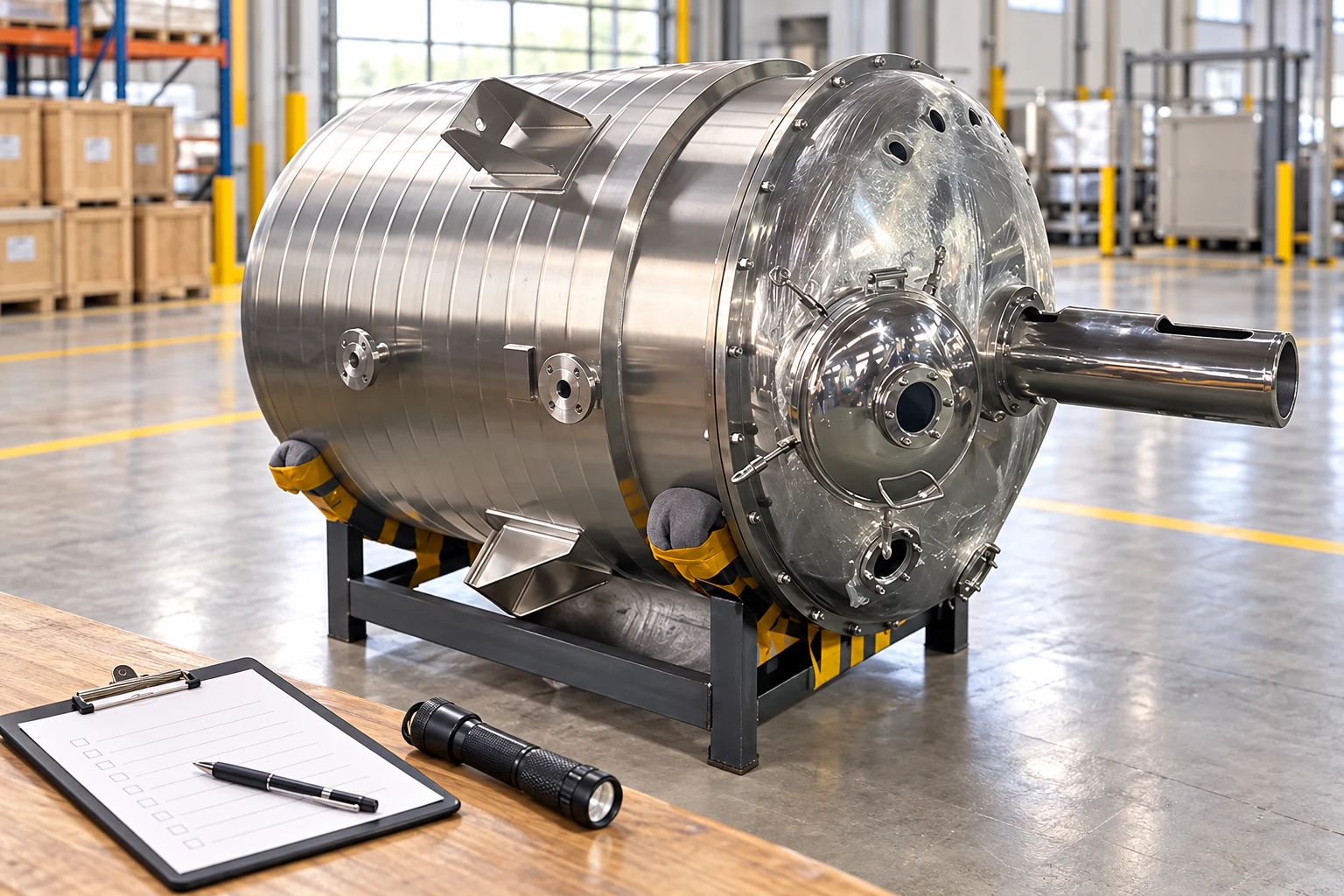
A distillation tank in industrial procurement language usually means a process vessel that holds boiling liquid, manages vapor disengagement, and connects to condensers, receivers, or column internals. The buyer must name the duty: batch still pot, continuous column sump or reboiler vessel, solvent recovery still, or a multi-purpose process tank that periodically runs distillation steps.
Fermentation vessels answer a different question. They manage biological activity, gas evolution, and temperature control for living cultures. The biological fermentation tank range and brewery guides such as brewery fermenter sizing and vertical fermentation tank vs conical fermenter help when the project is still in cellar planning. Distillation RFQs should not copy those cooling and headspace assumptions without a process review.
| Boundary question | Distillation RFQ answer | Why it matters |
|---|---|---|
| Primary duty | vapor-liquid separation support | Sets internals and nozzles |
| Biological activity | none expected | Avoids fermenter-only features |
| Pressure class | atmospheric, slight pressure, or vacuum | Changes shell and seal design |
| Heating role | boil-up or reboil | Defines jacket/coil/exchanger |
| Downstream link | condenser / receiver / column | Completes the package scope |
Start by writing one sentence that a supplier can quote against: what enters the vessel, what leaves as vapor and liquid, and which absolute pressure range applies during the hottest and coldest steps.
Part 2. Compare Common Distillation Tank Type Families
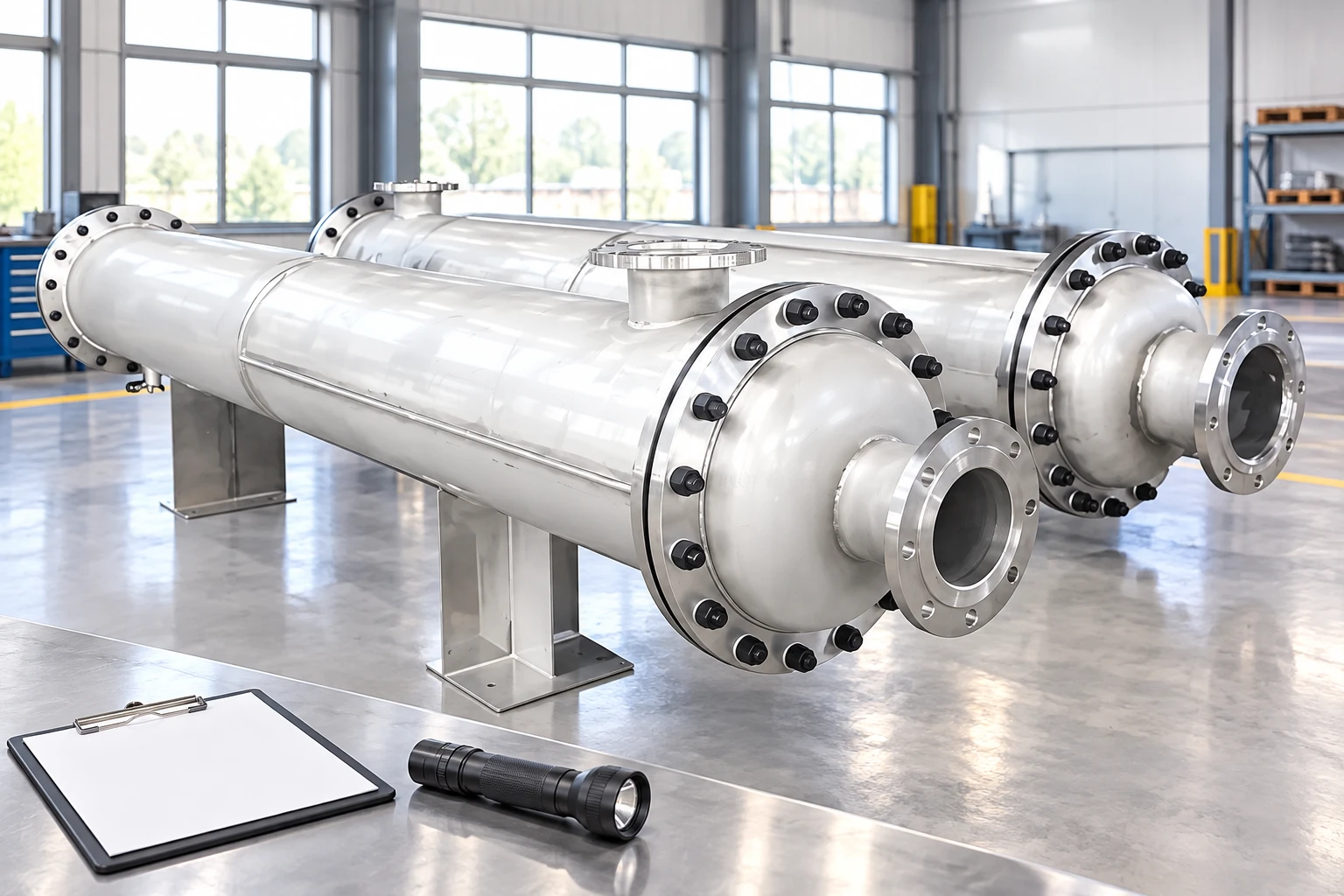
Type language should stay practical. Buyers typically compare batch still vessels, continuous bottoms or reboiler-linked tanks, vacuum-capable shells, and jacketed multipurpose process tanks used for distillation campaigns. Each family changes nozzle layout, heating surface, and inspection access.
Batch still vessels favor larger liquid inventory, clear vapor space, and easy manway access for cleaning between campaigns. Continuous duties emphasize stable liquid level control, reboiler return nozzles, and instrumentation that keeps boil-up measurable. Vacuum-capable shells add seal class, flange rating, and condenser vacuum interfaces that atmospheric tanks may omit.
Do not treat “stainless tank” as a type. Material grade is a specification layer on top of the duty family. Likewise, do not treat a conical fermenter as a distillation substitute because the cone helps yeast collection; that geometry does not define vapor path or heating duty for distillation.
When projects sit between brewery and process chemistry, keep the choose a suitable brewing tank article for cellar vessels and keep this RFQ focused on distillation boundaries.
Important: Pressure and vacuum boundaries belong in the RFQ before commercial comparison. Shell thickness, nozzle ratings, and relief strategy must follow the applicable pressure-equipment practice for the plant, such as guidance framed by ASME BPVC where that framework applies to the quoted scope. Equipment marketing pages do not replace code review.
Part 3. Capture Heating, Materials, and Seal Inputs

Heating is the most common missing RFQ block. Suppliers need to know whether boil-up comes from a steam jacket, thermal oil jacket, electric elements, internal coil, or an external heat exchanger loop. Provide available utility pressure or temperature, not only a preferred heater name.
Materials follow chemistry and cleaning agents. State preferred alloys, gasket families, and whether product-contact finish must support sanitary or chemical service. Seal inputs cover manway gaskets, agitator seals if mixed, and any vacuum flange classes.
| Send with quote | Example entry |
|---|---|
| Operating envelope | max/min temperature and absolute pressure |
| Heating media | steam / thermal oil / electric / external exchanger |
| Utility availability | supply limits at the skid edge |
| Materials | shell, internals, gaskets |
| Seal class | atmospheric vs vacuum-capable interfaces |
| Cleaning method | CIP circuit, manual, solvent wash |
Send with quote: feedstock class without proprietary recipe detail, batch size or continuous rate band, heating utility data, materials preferences, and whether vacuum steps occur in the same vessel.
Part 4. Align Vapor Path and Condenser Interfaces
A distillation tank rarely stands alone. Vapor nozzles, mist management, condenser inlet size, condensate return, vent paths, and receiver connections decide whether the quoted vessel can operate in the plant layout. Ask each bidder to show the vapor path on a simple sketch with elevations.
If the plant already owns a condenser, record its expected heat-rejection limit and connection sizes. If the condenser is in supplier scope, state cooling water or chilled media availability. Keep separation targets qualitative unless your process team supplies validated numbers; this article does not invent purity or recovery percentages.
Vacuum projects need an explicit interface list for vacuum pumps, traps, and noncondensable handling. Those items can be quoted separately, but the tank RFQ must still name the absolute pressure range and leak-tightness expectations.
Part 5. Plan Cleaning, Inspection, and Access
Cleaning between campaigns protects product quality and operator safety. Describe whether the vessel must drain completely, whether spray devices are required, and which solvents or detergents the plant will use. Horizontal runs, coil bundles, and vapor lines can trap residue if drainage is ignored.
Inspection access should cover manways, sight glasses, and removable internals. If operators need to enter the vessel, state confined-space and lockout expectations as plant responsibilities. Suppliers can support access hardware; they cannot assume your permit system.
CIP language from brewery fermenters is useful only when the distillation service is compatible with those chemistries. Do not paste fermenter CIP settings into a solvent still RFQ without review.
Part 6. Document Instrumentation and Control Boundaries
List the measurements the plant needs for safe boil-up control: liquid level, temperature at representative points, pressure or vacuum, and optionally vapor temperature. Clarify which instruments ship on the tank and which belong to plant PLC cabinets.
Control boundaries matter when heating is automated. State whether the supplier provides local loops, skid panels, or dry contacts only. Interlocks for low level, high pressure, or vacuum failure should be named as buyer requirements rather than assumed features.
Keep recipe automation out of the first RFQ unless the control philosophy is already fixed. Early quotes compare mechanical scope more reliably when software promises stay limited.
Part 7. Select a Type Boundary and Send the RFQ
Choose the type family from Part 2, then freeze the interface list from Parts 3–6. Compare proposals on the same duty sentence, the same utility sheet, and the same exclusion list. Published configuration pages are starting points for discussion, not proof that a model fits your feedstock.
Review the heated mixing tank configuration reference when jacketed process vessels are part of the conversation, and keep fermentation equipment browsing inside the biological fermentation tank range so those duties stay separate. When the RFQ packet is ready, send distillation tank RFQ inputs for a configuration discussion.

FAQs
What is a distillation tank in industrial buying?
It is a process vessel quoted for boil-up, vapor handling, and related interfaces that support distillation or solvent recovery duty, not a biological fermenter sized only for culture growth.
How does a distillation tank differ from a fermentation tank?
Distillation focuses on vapor-liquid duty, heating for boil-up, and condenser or vacuum interfaces. Fermentation focuses on biological control, gas evolution, and often different cooling and CIP assumptions.
Which distillation tank types should an RFQ name?
Name the duty family—batch still, continuous bottoms or reboiler-linked vessel, vacuum-capable shell, or multipurpose jacketed process tank—then attach pressure, heating, and interface data.
Can suppliers guarantee separation performance from tank type alone?
No. Separation results depend on feedstock, operating recipe, column or condenser design, and control. Tank type only frames mechanical and utility scope.
What heating data belongs in a distillation tank quote?
Provide heating method, utility availability, target temperature envelope, and whether an external exchanger is in scope. Volume alone cannot size heating surface.
Should vacuum capability be specified before ordering?
Yes, if any step runs below atmospheric pressure. Vacuum changes seals, ratings, condenser interfaces, and leak-test expectations, so it must appear in the RFQ early.