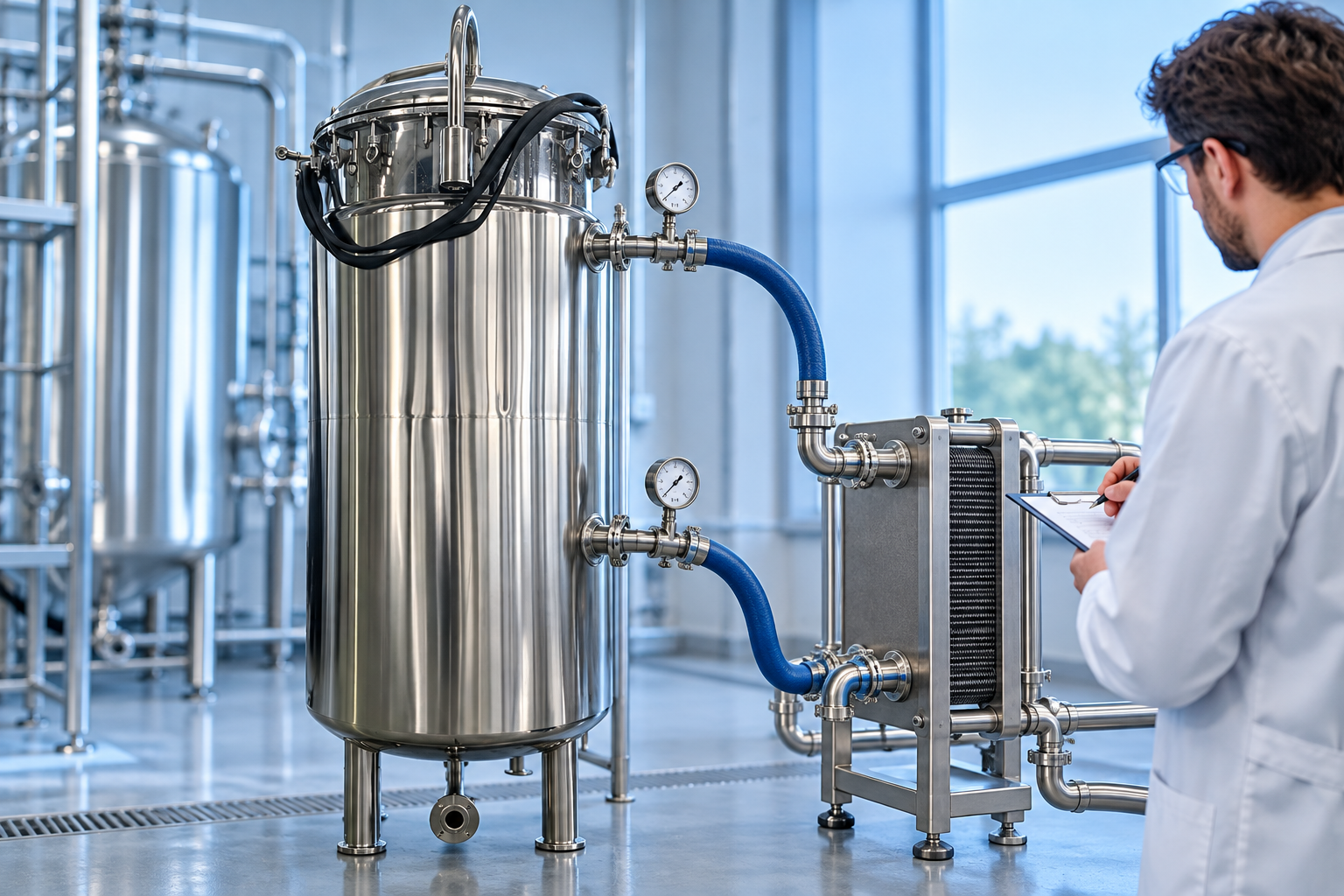
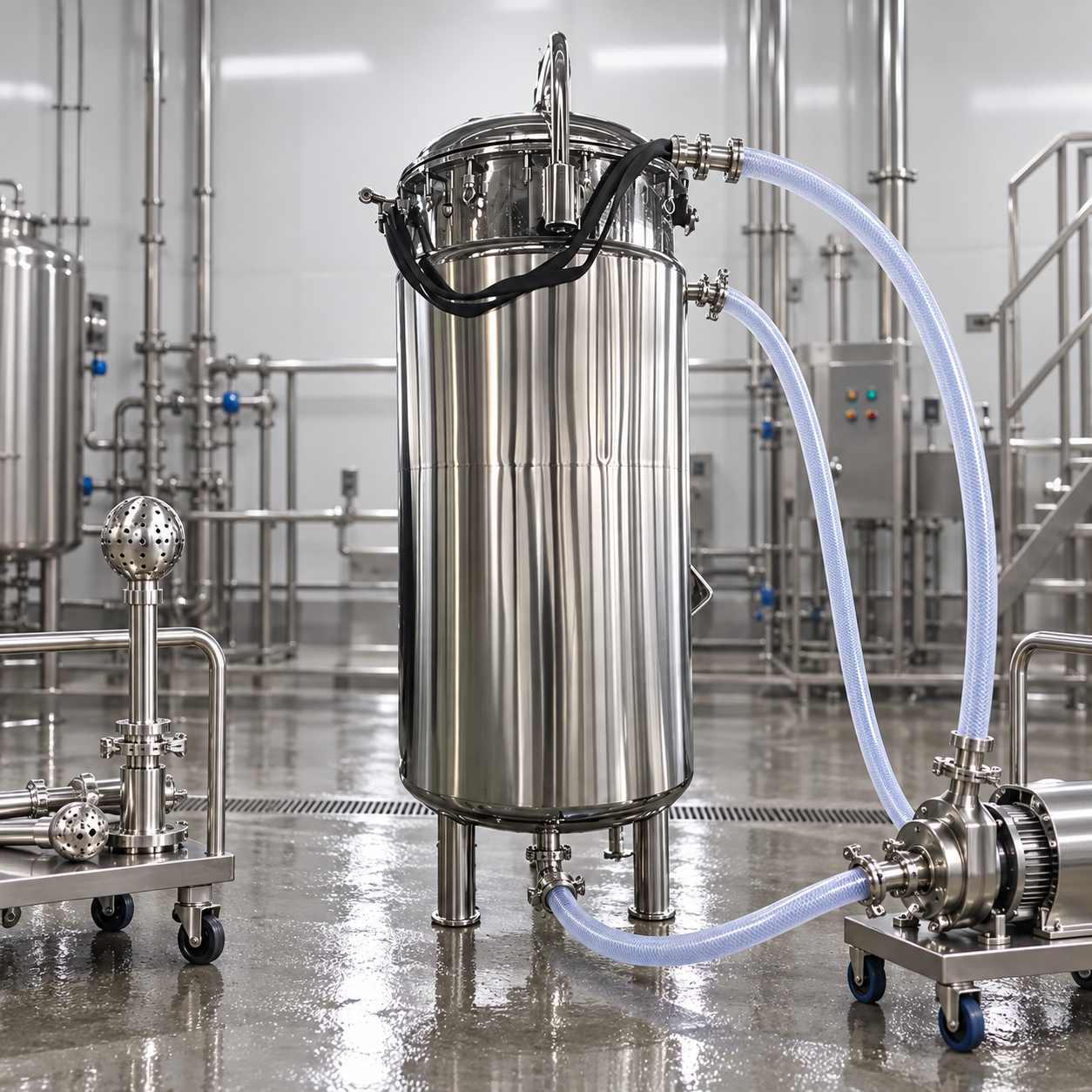
A reactor batch record should prove what happened during one specific batch: which materials were charged, who performed each critical step, which equipment and instruments were used, what the actual process conditions were, and how deviations were handled. It is not merely a blank recipe with signatures. A useful reactor batch record connects approved instructions to time-stamped evidence that reviewers can trace back to calibrated instruments and controlled source data.
This guide focuses on the equipment and data requirements that process engineers should define before a reactor is purchased or automated. It does not prescribe a universal regulated format; the owner must align records with the applicable quality system, product risk, and local regulations. For equipment options, see YIYI’s chemical reactor and broader reactor range.
What a reactor batch record must establish
The record should make the batch reconstructable. A reviewer should be able to identify the approved recipe version, equipment identity and status, input materials and lot numbers, actual quantities, sequence of additions, process values, samples, yields, holds, alarms, interventions, deviations, and final disposition. The U.S. FDA’s 21 CFR 211.188 lists batch production and control record expectations for drug manufacturing; other industries should use their own governing requirements.
The batch record should distinguish instructions from evidence. “Heat to the approved range” is an instruction. The start time, actual temperature history, alarm events, operator acknowledgement, and completion time are evidence. A paper record may capture selected readings, while an electronic system can preserve the underlying time series. Either approach needs defined ownership and review.
| Record element | Primary source | Minimum traceability question |
|---|---|---|
| Material addition | Weighing system, barcode or controlled manual entry | What material and lot, how much, when, and by whom? |
| Temperature and pressure | Qualified transmitters and historian | Which sensor, calibration status, sampling interval, and actual trend? |
| Agitation | Drive speed feedback and motor status | Was the commanded speed achieved for the required duration? |
| Process step | Recipe or procedural workflow | Which approved version and which completion evidence? |
| Sample and result | Sampler, laboratory or at-line analyzer | Where, when, by whom, and linked to which result? |
| Exception | Alarm, comment and deviation system | What occurred, who assessed it, and what disposition followed? |
Define equipment identity and status
Record the reactor asset number, working volume where relevant, product-contact configuration, control-system version, and any interchangeable parts that can affect the process. Agitators, filters, hoses, sample assemblies, load cells, and condensers may need their own identity when they are moved between vessels. Status should show that cleaning, line clearance, maintenance release, and calibration prerequisites were satisfied before charging.
Do not rely on an operator remembering which portable instrument was used. Scanning or selecting a controlled equipment ID is stronger than free text. If the wrong asset is selected, the workflow should warn or block the step according to risk. The same principle applies to recipe versions: the system should prevent obsolete instructions from being used accidentally.

Instrument data and measurement traceability
Critical measurements commonly include temperature, pressure, vacuum, mass, flow, pH, torque, speed, level, conductivity, dissolved oxygen, and utility conditions. For each one, define the tag, unit, range, accuracy requirement, calibration interval, data source, recording frequency, and behavior on sensor failure. NIST explains that metrological traceability belongs to a measurement result supported by a documented calibration chain, not simply to an instrument label.
A displayed value is not necessarily the retained source record. Define whether the authoritative record is the PLC tag, distributed control system, historian, balance controller, laboratory system, or signed manual entry. Where systems exchange data, preserve the original value, timestamp, unit, tag identity, and transfer status. Rounding and unit conversion rules should be documented so reviewers can explain differences between screens and reports.
Sampling frequency must match process risk. A one-minute interval may miss a rapid exotherm; a one-second interval may create unnecessary volume for a slow storage step. Event-based data can complement periodic recording: retain phase changes, set-point changes, alarms, interlock actions, manual overrides, and equipment starts or stops.
Manual entries and electronic records
Manual entries should be attributable, legible, contemporaneous, original or a verified copy, accurate, complete, consistent, enduring, and available. Electronic workflows can enforce required fields, timestamps, permissions, and sequence, but poor configuration can still create unreliable records. The FDA’s data integrity guidance addresses controls for CGMP data, and its Part 11 guidance explains the agency’s approach to electronic records and signatures.
Use controlled reason codes and comments for corrections. The system should retain the original value, revised value, author, time, and reason. Shared accounts undermine attribution. Administrator access, recipe-authoring access, operator execution, and quality review should be separated according to responsibility. Audit trails need review rules, not just storage.
Recipe phases and required evidence
Break the procedure into meaningful phases such as equipment preparation, charging, inerting, heating, reaction hold, sampling, cooling, transfer, cleaning, and closeout. Each phase should state its prerequisites, required values, permissible ranges, completion criteria, and exception path. Avoid turning every minor action into a signature; use signatures for accountable decisions and automated evidence for routine values.
Charging records should capture material identity, lot, target and actual quantity, tolerance, source container, and sequence. If a manual addition is allowed, define independent verification where risk warrants it. For nitrogen operations, connect the record to oxygen or pressure evidence described in reactor nitrogen purging. For samples, identify the point, time, batch condition, and result linkage as detailed in reactor sampling system design.
Alarms, holds, and deviations
An alarm list alone does not explain the batch. Retain alarm occurrence and clearance times, priority, acknowledgement, relevant process values, and operator action. Define which events automatically place a batch on hold and which require a formal deviation. Manual bypasses and interlock overrides should be especially visible, time-limited, authorized, and reviewed.
Do not allow a generic comment to replace investigation. The batch record can link to the quality or incident system rather than duplicate the entire investigation. The link must remain stable and show disposition. If a step is repeated, record why, who approved it, and which data set represents the repeated execution.
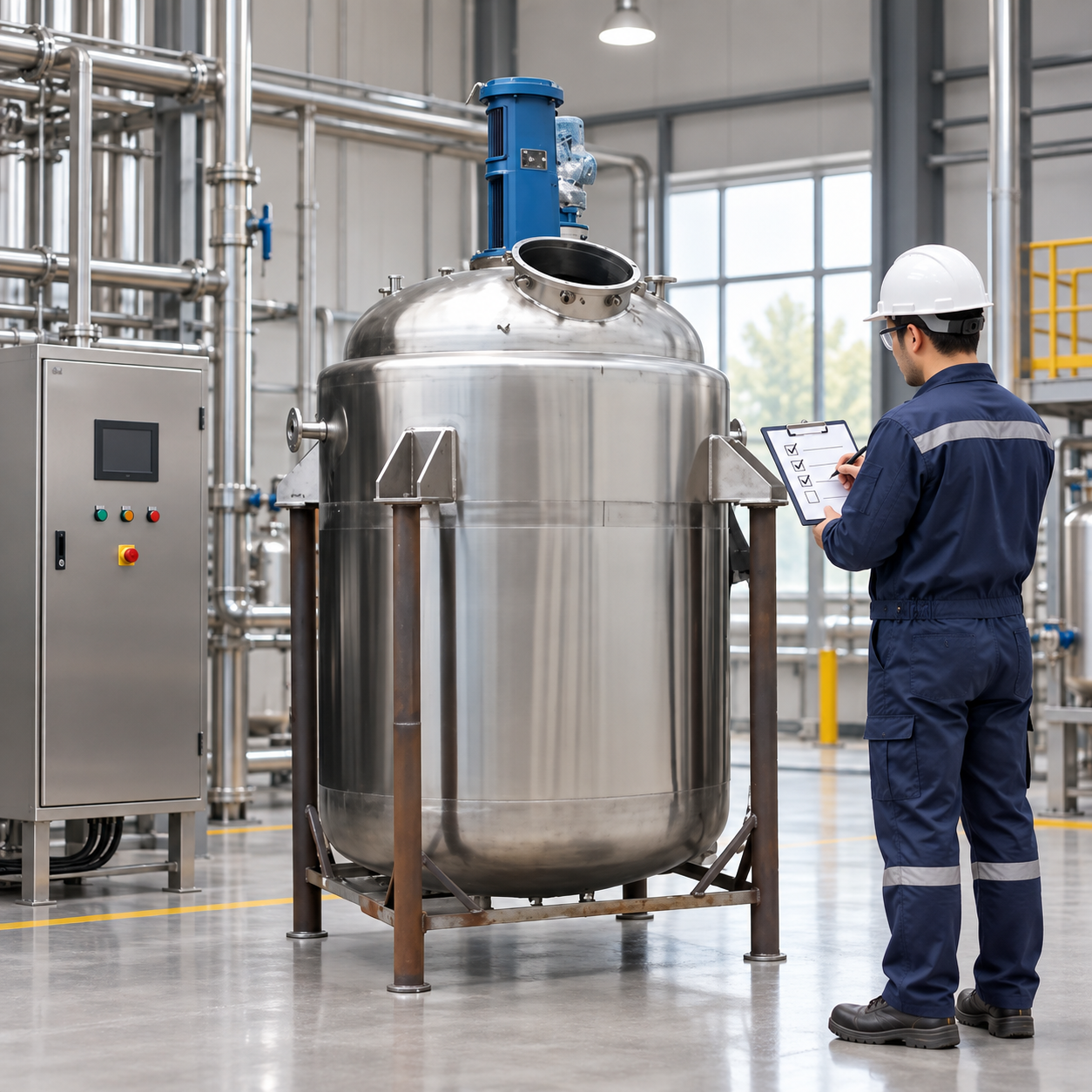
Review by exception without losing context
Electronic batch records often promise review by exception. That is valuable only when exception rules are complete and validated. A reviewer should see out-of-range values, missing data, late entries, changed values, failed transfers, overridden steps, alarms, and unresolved samples. The system should still provide access to normal trends and source records when context is needed.
Define who reviews production execution, who reviews laboratory results, and who gives final disposition. Completion checks should detect missing signatures, incomplete phases, unexplained discrepancies, and unapproved recipe changes. A dashboard that says “complete” must be driven by verified prerequisites, not a manually selected status.
Time synchronization, retention, and backup
PLC, historian, laboratory, weighing, and record systems must use synchronized clocks and a documented time zone. Daylight-saving changes and offline devices can create misleading sequences. Store sufficient timestamp precision for the process. If local time is displayed, retain an unambiguous reference such as UTC behind the display.
Specify retention period, backup, restoration testing, readable export, cybersecurity, and access after software upgrades. Data should remain available with metadata, audit trails, and units. A PDF summary alone may not preserve interactive trends or source detail. Retention and retrieval requirements should be written into the system specification and aligned with the applicable manufacturing and quality rules.
Supplier requirement checklist
Before approval, run a complete mock batch that includes a failed sensor, an out-of-tolerance addition, a communication interruption, a repeated step, a changed entry, and an emergency stop. Confirm that each event appears in the correct sequence and that authorized reviewers can reach the underlying evidence. This challenge test is often more revealing than demonstrating a perfect normal batch.
- List critical process parameters, instruments, units, ranges, recording rates, and data owners.
- Define recipe phases, permissions, electronic signatures, audit-trail behavior, and exception rules.
- Identify interfaces to weighing, laboratory, historian, maintenance, calibration, and quality systems.
- Specify time synchronization, backup, retention, export, cybersecurity, and disaster recovery.
- Require factory and site tests using realistic good-path and failure-path batch scenarios.
- Define deliverables: tag list, data map, configuration record, test evidence, manuals, and training.
The reactor manufacturer should provide consistent instrument connections, accessible sensors, control descriptions, and tested interfaces. The owner remains responsible for process validation and record governance. For related equipment selection, review batch reactor sizing and reactor cleaning between products.

Frequently asked questions
What is the difference between a recipe and a batch record?
A recipe contains approved instructions and targets. A batch record combines those instructions with actual, attributable evidence from one execution, including materials, process values, times, signatures, alarms, samples, and deviations.
Should every reactor value be recorded continuously?
No. Recording frequency should match process dynamics, risk, review needs, and system capacity. Critical fast events may need high-frequency trends, while stable phases can use slower intervals plus event records.
Can a PDF be the complete electronic batch record?
It can be a useful human-readable report, but it may not preserve source data, metadata, audit trails, or interactive trends. The system must retain all records required by the applicable quality and regulatory framework.