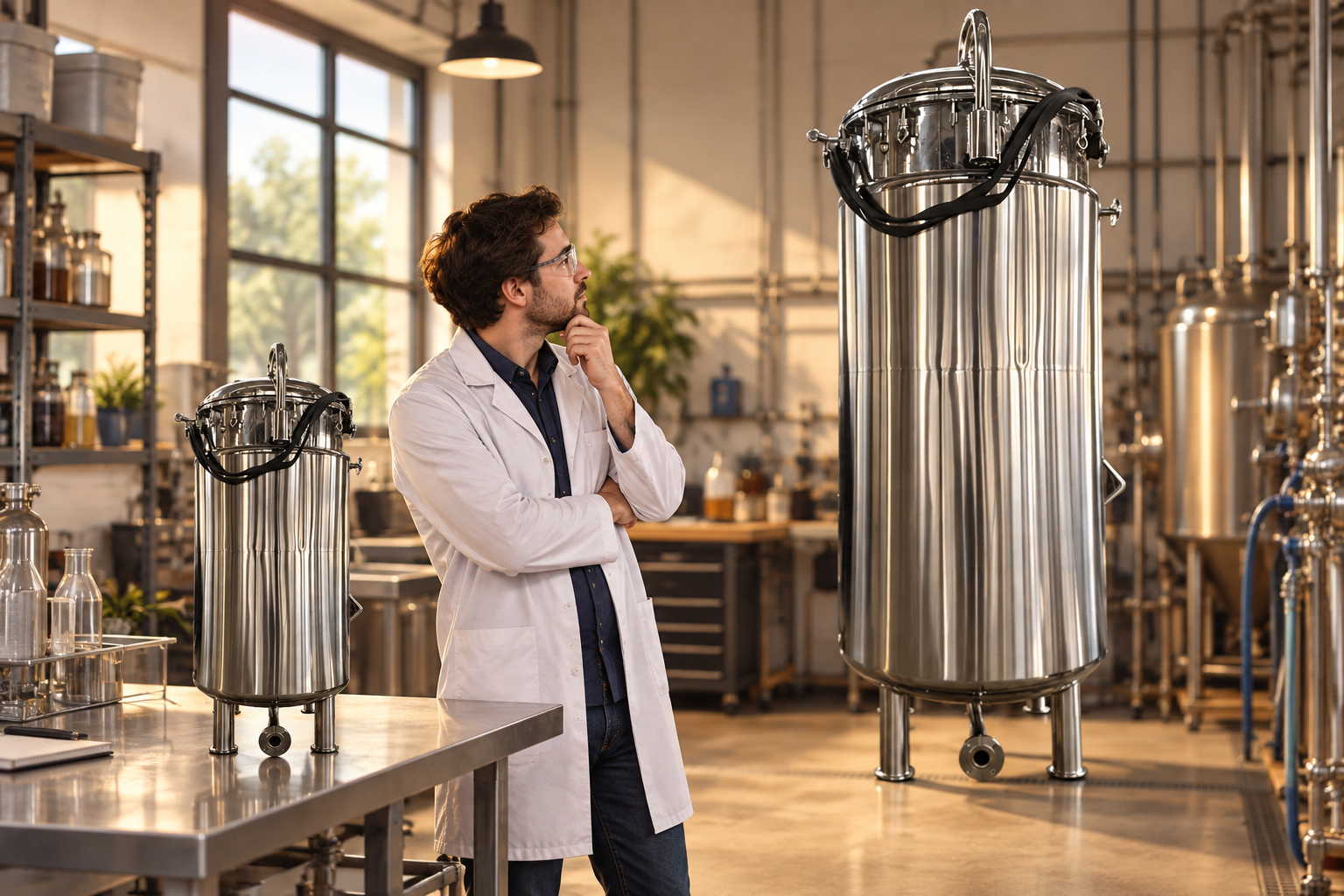
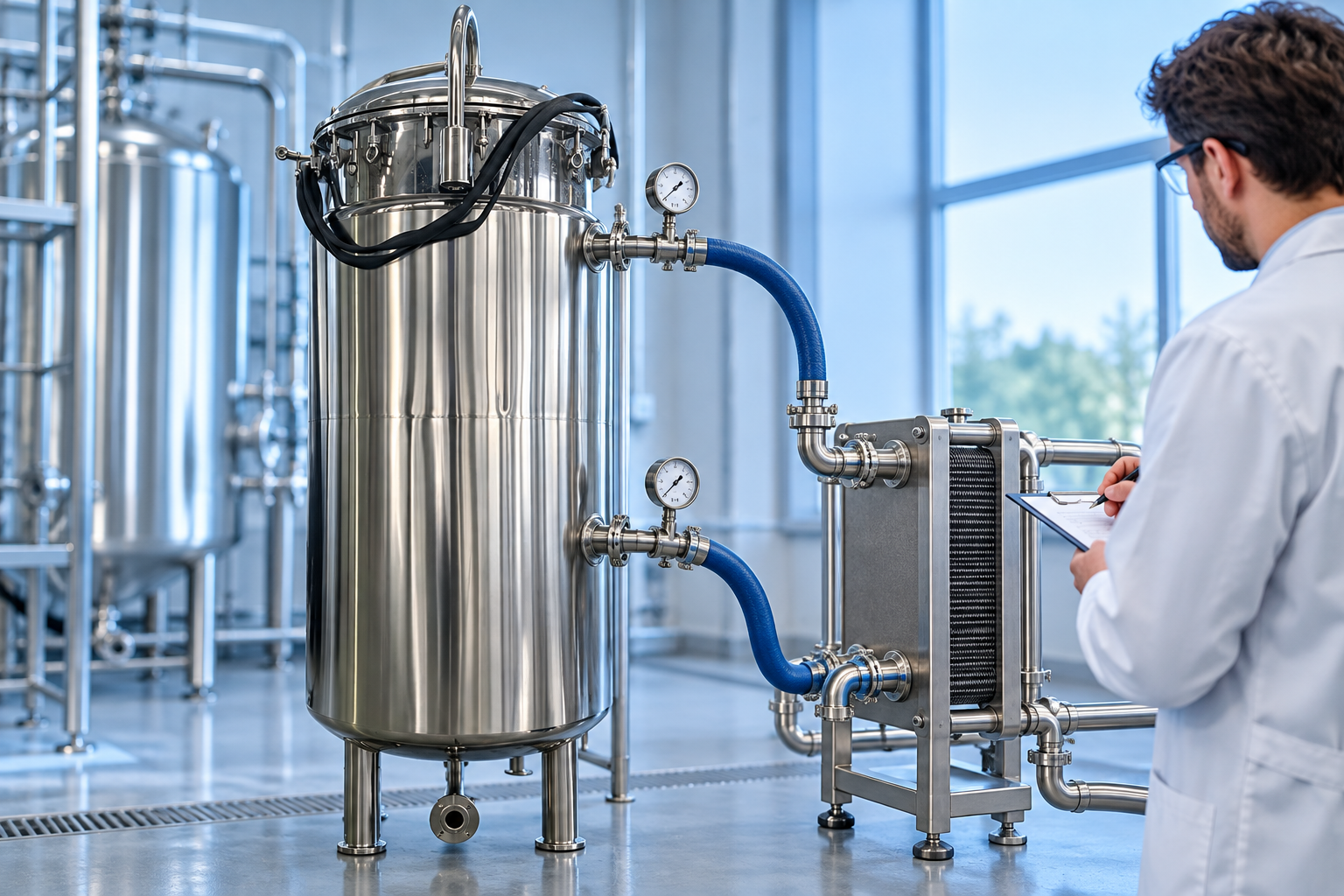
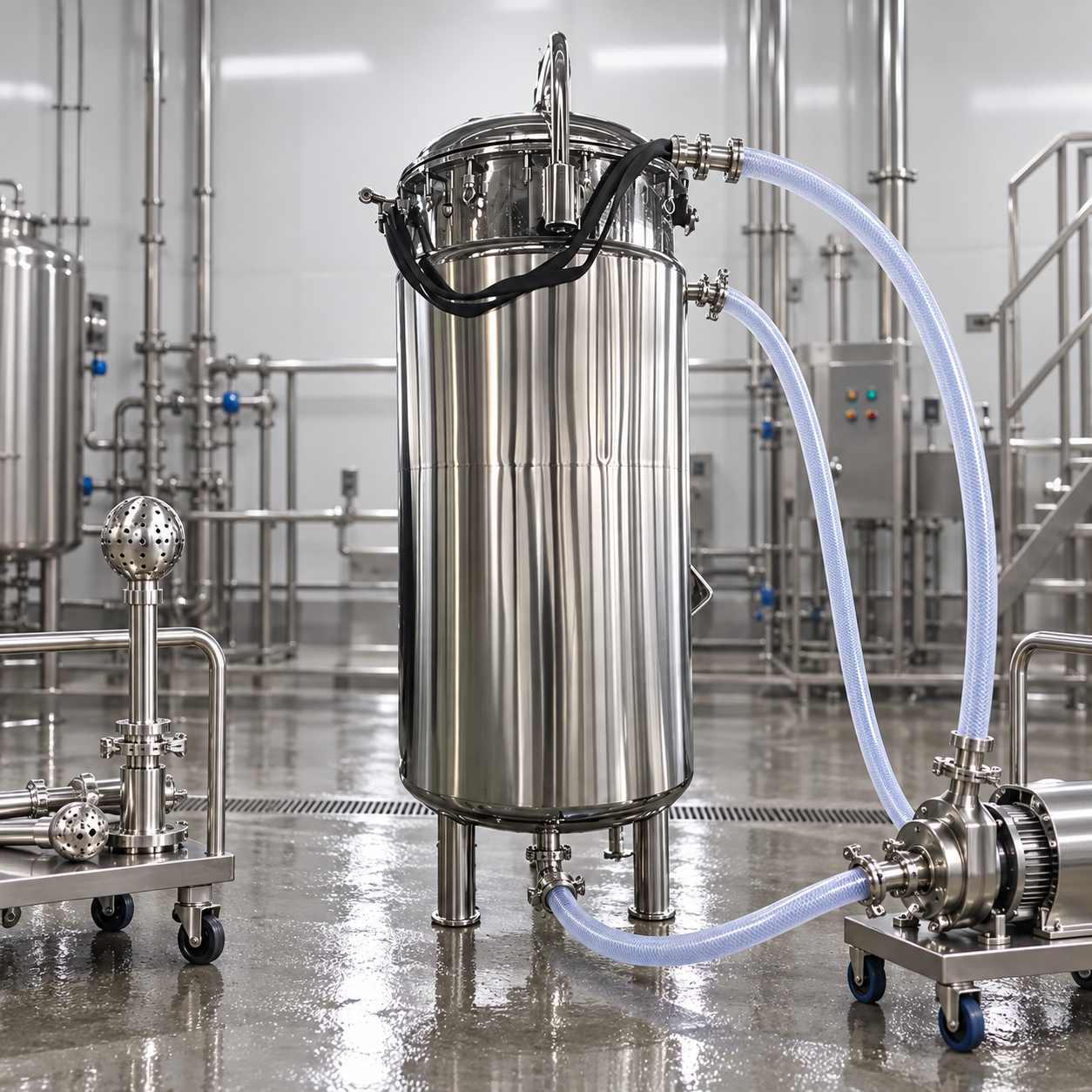
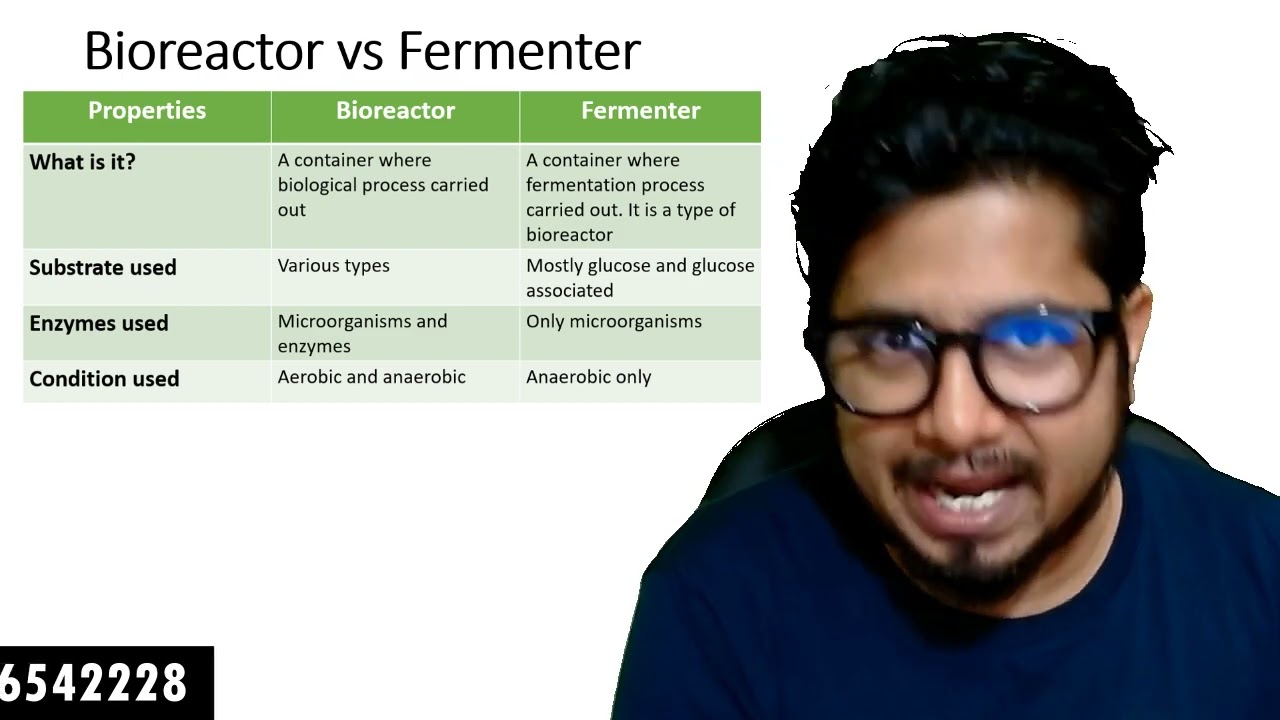
The terms bioreactor and fermenter overlap, but they are not always interchangeable in purchasing conversations. A bioreactor is the broader term for a controlled vessel that supports a biological process involving cells, enzymes, or tissues. A fermenter usually refers to a bioreactor used for microbial cultivation or fermentation. In practice, suppliers and industries use the names differently, so the process requirements—not the label—should determine the vessel, controls, aeration, sterility, and documentation.
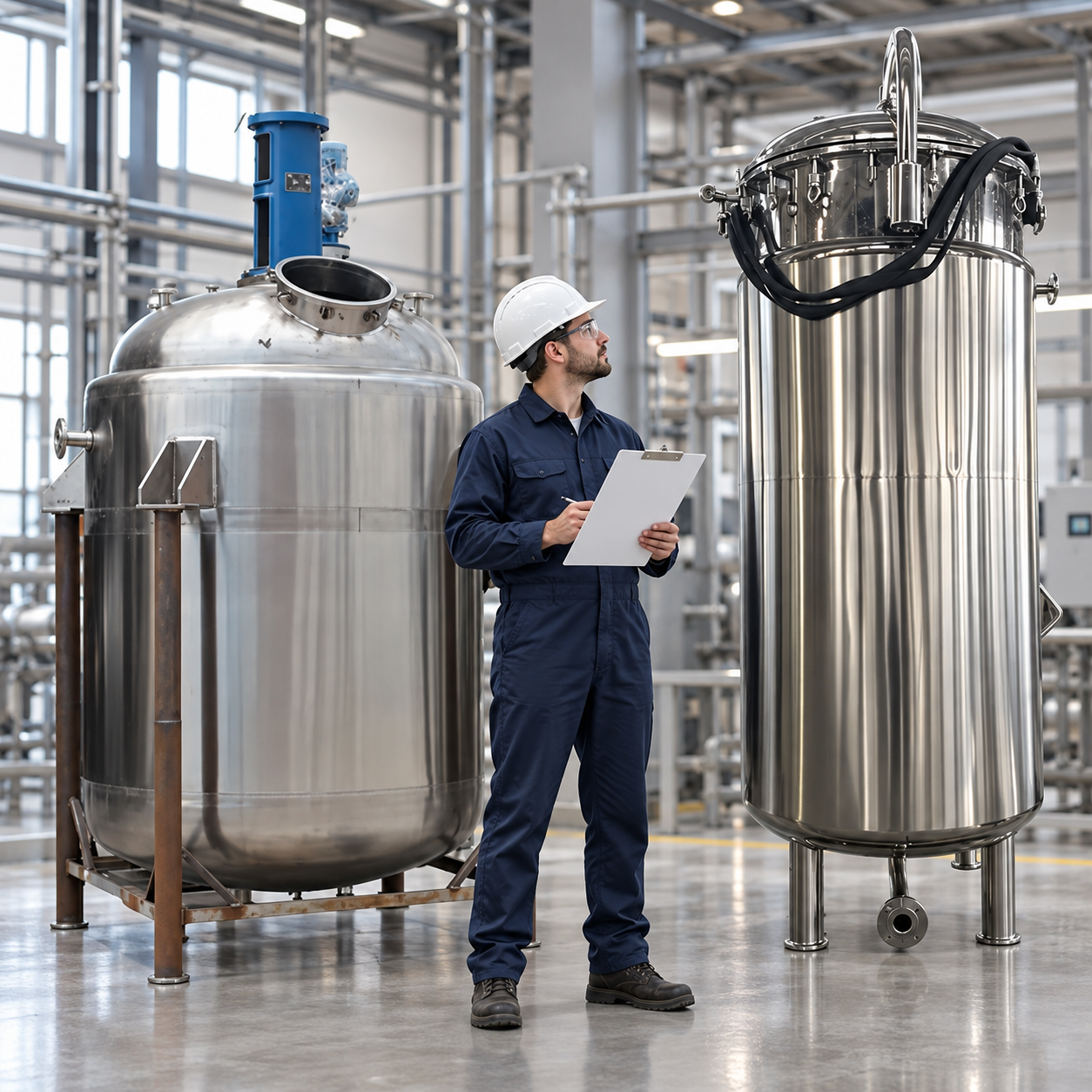
This comparison explains how to translate the “bioreactor vs fermenter” question into an equipment specification. It focuses on industrial stainless steel systems rather than disposable laboratory bags. For a representative product, see YIYI’s fermenter and broader biological fermentation equipment.
The practical distinction
Bioreactor is an umbrella term. It may cover microbial fermentation, mammalian or insect cell culture, plant cells, immobilized enzymes, anaerobic digestion, or other biologically driven conversions. Fermenter is commonly used for microbial systems producing biomass, metabolites, enzymes, food ingredients, beverages, or chemicals. Some organizations call every stirred biological vessel a fermenter; others reserve “bioreactor” for cell culture. Neither naming convention is sufficient for design.
The U.S. FDA’s Process Analytical Technology framework emphasizes understanding and controlling manufacturing processes rather than relying only on end testing. The National Center for Biotechnology Information’s bioprocessing overview provides scientific context for cultured biological systems. Applicable requirements vary by product and jurisdiction.
| Decision area | Typical microbial fermenter emphasis | Typical cell-culture bioreactor emphasis |
|---|---|---|
| Biological system | Bacteria, yeast, fungi or mixed cultures | Mammalian, insect, plant or other shear-sensitive cells |
| Oxygen demand | Often high; strong agitation and aeration may be needed | Often lower, with tighter shear and gas-composition limits |
| Mixing | Rapid mass transfer, suspension and heat removal | Uniform conditions with low cell damage |
| Foam | Frequently significant and actively controlled | May occur, but antifoam and gas handling can affect cells |
| Containment and sterility | Depends on organism, product, and process class | Often stringent aseptic design and contamination control |
| Harvest | Broth, cells, or secreted product | Cells, viral vector, protein, or clarified supernatant |
Process organism and product come first
Start with the organism or biological agent, its growth rate, oxygen uptake, carbon dioxide evolution, heat generation, shear sensitivity, morphology, and contamination risk. A fast-growing aerobic bacterium can demand intense oxygen transfer and cooling. Mammalian cells generally require gentler handling, precise dissolved gas control, and careful management of bubbles and shear. Filamentous fungi can change broth viscosity and wrap around probes or impellers.
The target product changes the vessel strategy. Biomass production prioritizes cell concentration and harvesting. A secreted metabolite may require feed control and rapid removal of heat. Intracellular products depend on consistent cell growth before downstream disruption. A product damaged by high temperature, oxygen, or proteases needs tighter control and shorter exposure. Define the critical quality attributes and process parameters before comparing vessel names.
Aeration and gas control
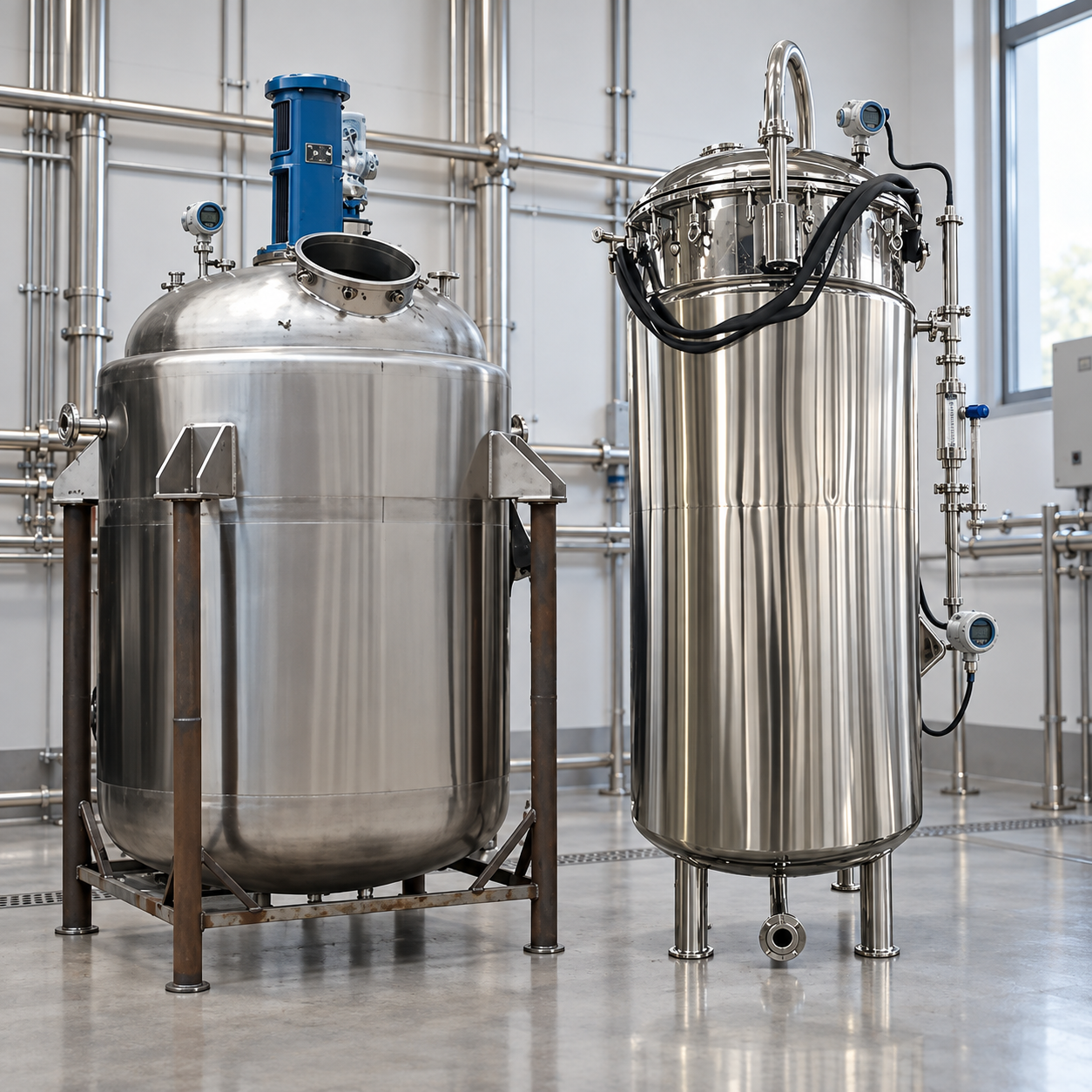
A microbial fermenter often uses sterile compressed air through a sparger, with agitation dispersing bubbles and supporting oxygen transfer. The specification should define oxygen uptake demand, gas-flow range, inlet pressure, sterile filtration, sparger type, exhaust handling, foam behavior, and the method used to estimate or test mass-transfer capacity. A high gas rate is not automatically better: flooding, foaming, entrainment, and filter pressure drop can limit operation.
Cell-culture bioreactors may use air, oxygen, carbon dioxide, nitrogen, or blended gases to control dissolved oxygen and pH while limiting bubble damage. Surface aeration, microsparging, membrane transfer, or overlay gas may be considered. Gas control needs safe pressure regulation, sterile barriers, condensate management, and off-gas routing. The specific method depends on the cell line and process evidence.
Agitation and shear
Agitation provides bulk blending, suspension, heat transfer, and gas dispersion. The same impeller speed can produce very different results at different scales and geometries. Compare tip speed, power per volume, circulation, mixing time, and oxygen-transfer performance rather than copying rpm. Impeller diameter, number, type, clearance, and baffles are part of one mixing system.
Microbial fermenters commonly tolerate higher power input than cell-culture systems, but there are exceptions. Large bubbles, bursting foam, pumps, valves, and sample paths can also damage sensitive cells. For engineering context, review agitator selection and the dedicated guide to fermenter baffle design.
Temperature and heat removal
Biological activity generates heat, while agitation and gas compression add more. The cooling system must handle the peak rate under worst credible ambient and utility conditions. Define broth volume, growth phase, maximum heat generation, allowable temperature deviation, cooling-water temperatures, fouling allowance, and control response. A jacket may be sufficient at small scale; larger or high-rate processes may need coils or an external loop after a contamination and cleaning review.
Heating requirements include sterilization, startup conditioning, and sometimes controlled temperature ramps. The vessel and jacket must be rated for utility pressure, vacuum, and thermal cycling. Sterilization temperature and hold time cannot be selected from the vessel alone; they must come from a validated process and temperature-distribution evidence.
pH, dissolved oxygen, and feeding
Both fermenters and bioreactors can use pH and dissolved-oxygen probes, but range, response, sterilization resistance, drift, and maintenance access matter. Control may cascade through agitation, airflow, oxygen enrichment, backpressure, feed rate, and temperature. The order and limits of that cascade should be documented to prevent one loop from driving another variable into an unsafe region.
Fed-batch systems need accurate low-flow addition, sterile or contained connections, check valves, and a strategy for verifying the actual delivered mass. Multiple feeds may interact chemically before they enter the broth; separate ports or dip-tube locations can reduce local extremes. Record the feed source, lot, set point, actual amount, time, and alarm status in the batch record.
Sterility, containment, and cleaning
Aseptic design minimizes crevices, stagnant branches, non-drainable pockets, and hard-to-clean seals. Product-contact surfaces, gaskets, probes, sample valves, exhaust filters, and addition lines all belong to the contamination-control boundary. A vessel described as sanitary is not automatically suitable for every sterile process. Define surface finish, weld treatment, drainage, clean-in-place coverage, steam-in-place boundary, and test method.
Microbial production may prioritize preventing release of the production organism as well as protecting the batch from contamination. Cell culture may emphasize viral safety, adventitious-agent control, and closed processing. The U.S. CDC’s Biosafety in Microbiological and Biomedical Laboratories resources support facility risk assessment, but the applicable containment level must be set by qualified biosafety personnel.
Control, automation, and data
A laboratory bioreactor may have sophisticated software but limited utility capacity; an industrial fermenter may have a robust PLC and plant historian. Define required recipe phases, alarms, permissives, trends, audit trails, electronic signatures, sampling, data retention, and integration. Critical sensor failure needs a safe response. Manual fallback should be designed, not improvised.
For regulated or traceability-critical work, map each process decision to its source data. The article on reactor batch record data provides a practical instrument and record checklist. For scale-up, preserve the variables that matter to the organism; no single scale-up rule works for every process.
Batch, fed-batch, perfusion, and continuous modes
Batch starts with a defined charge and finishes after a cultivation period. Fed-batch adds nutrients or other materials during operation to control growth or product formation. Perfusion retains cells while exchanging medium. Continuous fermentation maintains inflow and outflow around a steady operating point. Each mode changes level control, sterility exposure, sensor duration, harvest connections, and automation.
A vessel that is suitable for a batch process may not have pumps, filters, cell-retention equipment, feed turndown, or long-duration reliability for perfusion. State the operating mode and campaign length in the request for quotation. Include startup, shutdown, contamination recovery, and cleaning—not only normal production.
Procurement checklist
Ask suppliers to state which performance claims are calculated, which are based on water testing, and which require confirmation with the actual culture. This distinction prevents a mechanical acceptance test from being mistaken for proof of biological yield, cell viability, sterility, or product quality.
- Organism or cells, biosafety needs, product location, broth rheology, and shear sensitivity.
- Working-volume range, batch mode, feed strategy, growth time, and expected heat load.
- Air and gas composition, peak flow, pressure, sparger, sterile filters, off-gas and foam control.
- Agitator type, speed range, baffles, mixing and oxygen-transfer acceptance tests.
- Temperature, pH, dissolved oxygen, level, pressure, weight, exhaust and analytical instruments.
- CIP/SIP boundary, cleaning chemistry, sterilization basis, drainage, sampling and aseptic connections.
- Control recipes, alarms, data records, remote support, documentation, FAT and site tests.
YIYI can configure stainless steel vessel geometry, jackets, ports, agitation, instrumentation and controls around a documented process requirement. Final biological performance must be demonstrated with the user’s organism, medium, operating strategy, and qualification plan.
Frequently asked questions
Is every fermenter a bioreactor?
In broad technical usage, a fermenter is a type of bioreactor used for fermentation or microbial cultivation. Industry naming varies, so the required process functions should be written explicitly.
Why can’t I select equipment from volume alone?
Biological performance also depends on oxygen transfer, mixing, heat removal, shear, gas handling, sterility, feed control, sampling, and cleaning. Two vessels with the same volume can behave very differently.
Which system needs more instrumentation?
Neither term determines instrument count. Instrumentation follows the organism, product risk, control strategy, regulatory needs, and process mode. Sensitive cell culture and high-rate microbial fermentation can both require extensive measurement.