Cleaning a reactor between products is a controlled changeover, not simply a wash until the vessel looks clean. The right method depends on what must be removed, what the next product can tolerate, how the reactor is built, and how cleanliness will be verified. A good program combines an understood residue, accessible equipment, a repeatable cleaning cycle, and evidence that the acceptance criteria were met.
This guide compares clean-in-place (CIP), solvent washing, and manual inspection for a multiproduct batch reactor. It helps process engineers and buyers define a practical reactor cleaning between batches requirement. For configurable vessel construction, review YIYI’s chemical reactor and the complete reactor range.
Start with the changeover risk
The cleaning target is determined by the next use. Residue may create a quality defect, an unwanted reaction, an allergen or active-ingredient carryover, corrosion, color contamination, odor, catalyst poisoning, or a microbial risk. List the previous product, next product, intermediate residues, cleaning agent, construction materials, and waste restrictions. The hardest-to-clean and highest-risk sequence should drive development.
For regulated manufacturing, cleaning procedures and evidence must fit the applicable quality system. The U.S. FDA’s Guide to Inspections of Validation of Cleaning Processes describes important principles: identify residues, establish rational limits, show the method is effective, and use suitable analytical methods. Food operations can also consult the FDA’s current good manufacturing practices.
Map every product-contact surface
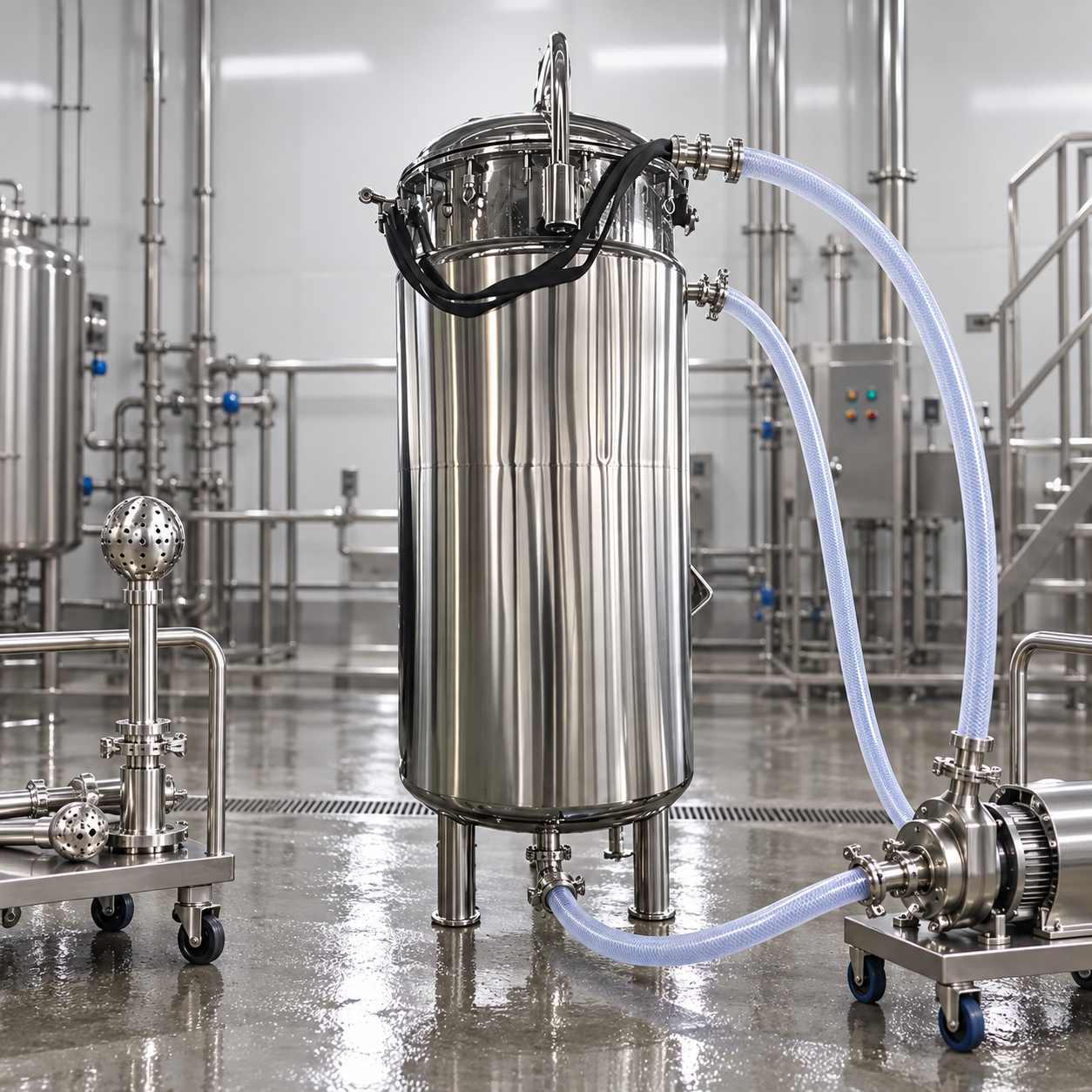
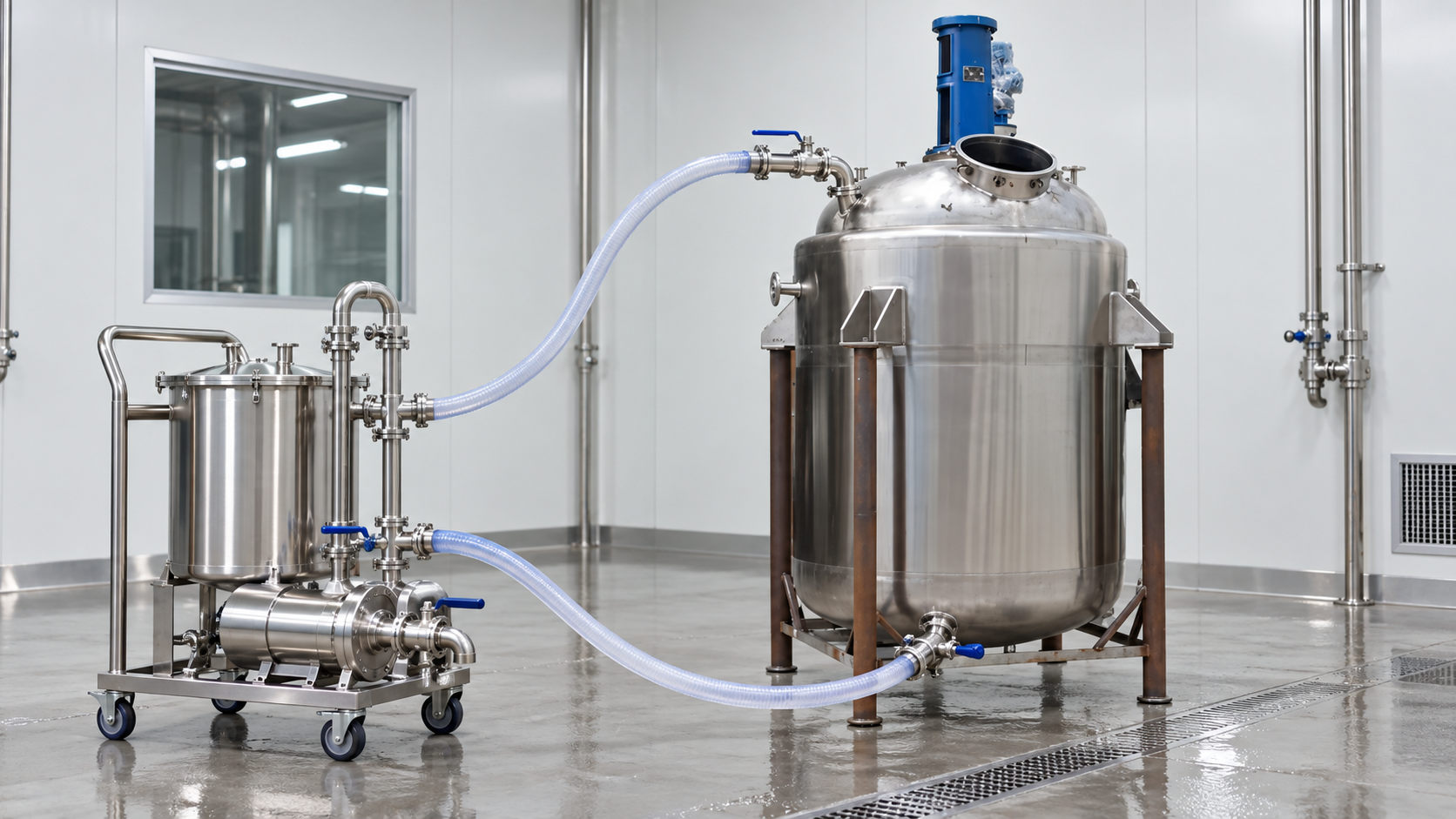
A polished shell does not make the whole system cleanable. Include the agitator blades and shaft, mechanical seal, baffles, thermowell, dip pipe, bottom outlet, sample valve, spray device, vent line, condenser, transfer hose, pump, and return piping. Gaskets and valve cavities often retain more residue than the open vessel wall. A changeover boundary drawing helps prevent connected equipment from being forgotten.
Record surface finish, weld condition, drainability, gasket material, crevices, dead legs, and access for inspection. A cleaning problem that repeats at the same nozzle is often a design problem rather than an operator problem. Where equipment is still being specified, use a hygienic bottom outlet, minimize stagnant branches, provide appropriate spray coverage, and make high-risk parts removable when CIP cannot reliably reach them.
| Method | Best suited to | Main limitation | Typical verification |
|---|---|---|---|
| Water-based CIP | Water-soluble or emulsifiable residue and repeatable closed systems | Poor performance on insoluble films without suitable chemistry | Cycle records, rinse result, swab or product-specific test |
| Solvent wash | Resins, oils, polymers, or actives with known solvent solubility | Fire, exposure, compatibility, recovery, and emissions | Solvent clarity plus specific residue analysis |
| Manual cleaning | Accessible equipment, occasional heavy deposits, removable parts | Variability and worker-entry hazards | Visual inspection plus targeted swabs |
| Hybrid method | Complex internals or a difficult worst-case residue | More steps to control and document | Combined cycle, inspection, and analytical evidence |
Design a repeatable CIP cycle
CIP performance is governed by time, temperature, chemistry, and mechanical action. Increasing one factor may compensate for another only within tested limits. Excessive temperature can bake protein or polymer films onto the surface; a stronger chemical can attack seals or stainless steel; excessive flow can overwhelm the return. The recipe should specify ranges rather than vague instructions such as “rinse thoroughly.”
A typical sequence may include product recovery, pre-rinse, alkaline or formulated wash, intermediate rinse, acid step where justified, final rinse, sanitization where required, drying, and protected hold. Not every reactor needs every step. Choose chemicals using residue solubility tests and compatibility data, then challenge the proposed cycle on the real equipment.
Spray-ball or rotary-jet selection depends on vessel diameter, geometry, residue strength, available pressure and flow, and obstructions. Confirm that the device can wet the underside of the agitator, baffles, head nozzles, and upper vapor space. A rotating device may deliver higher impact but needs a suitable strainer, verified rotation, and operating pressure. Coverage tests are useful during commissioning, but coverage alone does not prove residue removal.
When to use a solvent wash
A solvent wash is justified when the residue is poorly soluble in water and a selected solvent can dissolve or swell it effectively. Laboratory screening should compare candidate solvents at realistic temperatures, concentrations, and contact times. Check compatibility with elastomers, sight glasses, coatings, instruments, and the mechanical seal. Consider whether water introduced by an earlier rinse changes solvent performance or creates a two-phase residue.
Flammable-solvent cleaning requires engineered controls: bonding and grounding, inerting where the safety basis requires it, closed transfer, ventilation, hazardous-area electrical equipment, pressure and vacuum protection, and an approved recovery or disposal route. The sequence must prevent mixing incompatible cleaning agents. OSHA’s flammable liquids standard provides regulatory context, while the site hazard review must address the actual process.
Recovering reusable solvent may reduce waste, but do not recycle it indefinitely without a defined quality limit. Water, dissolved residue, and degradation products accumulate. Specify a test or replacement rule rather than judging solvent by appearance alone.
Manual cleaning and safe access
Manual cleaning may be needed for hardened deposits, shadowed surfaces, or removable parts. First determine whether any person must enter the vessel. Entry into a reactor can meet the definition of a permit-required confined space and may involve toxic vapor, oxygen deficiency, moving equipment, heat, and stored energy. Isolation, lockout, atmospheric testing, ventilation, permits, attendants, and rescue arrangements must be established by the owner. OSHA’s confined-spaces resources are an essential starting point.
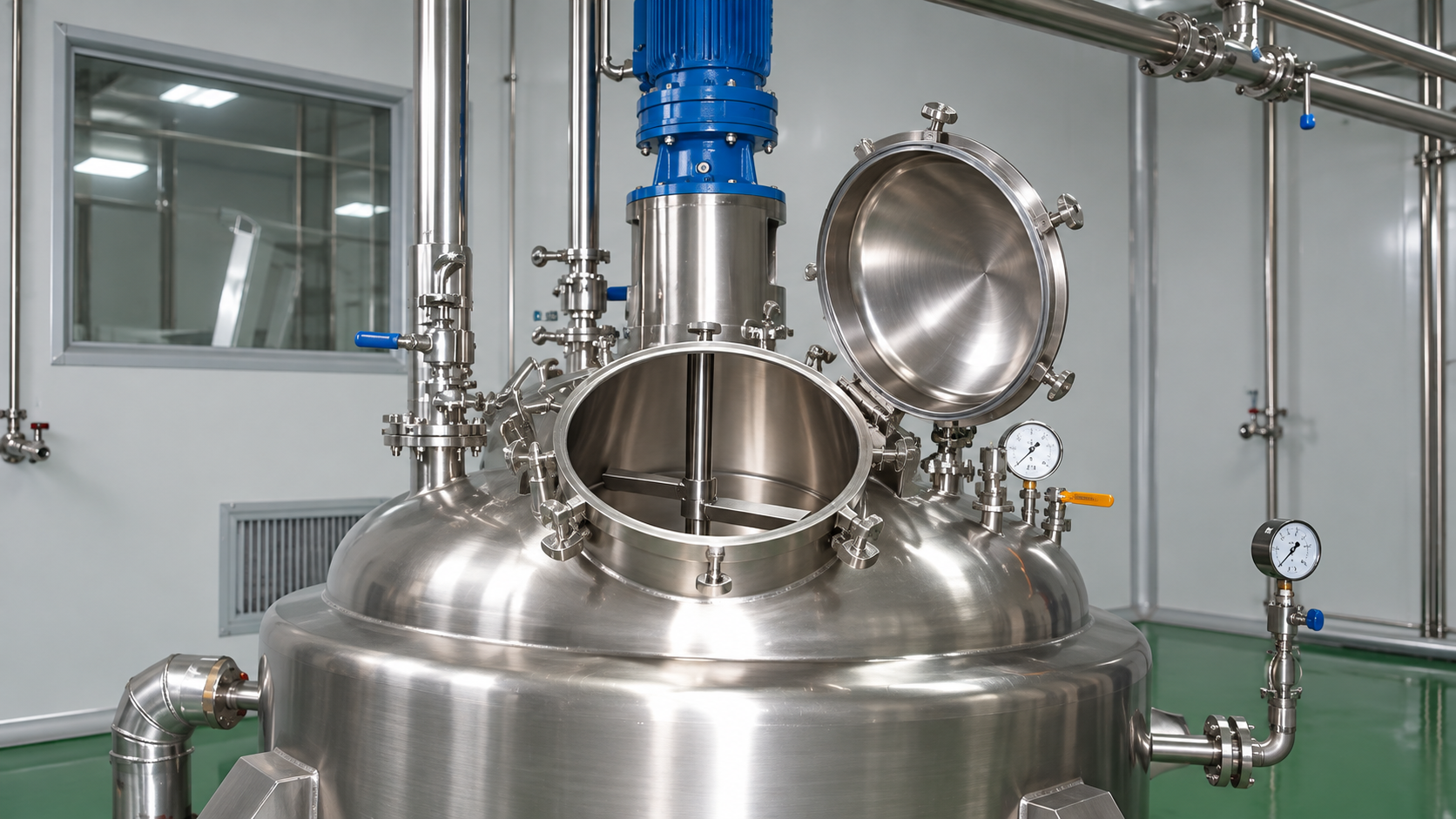
Whenever possible, inspect from outside through the manway using lighting, mirrors, or a camera. Use tools that will not damage the surface finish. Scratches, damaged passivation, and embedded iron can create future contamination and corrosion sites. If an abrasive is necessary, document its material and restoration steps.
Define acceptance criteria before cleaning
“Visually clean” is valuable but insufficient when an invisible residue can affect the next batch. A complete acceptance strategy can combine visual inspection, rinse sampling, direct surface swabs, conductivity, pH, total organic carbon, allergen tests, microbial tests, or a product-specific analytical method. The method must be sensitive enough at the established limit and recover residue from the chosen surface.
Swab the hardest-to-clean and most consequential locations, not only the easiest flat shell. Typical targets include the lower agitator surface, shaft-seal area, bottom valve, gasket interface, baffle attachment, and sample port. Rinse samples cover broad inaccessible areas but can dilute a local residue; they complement rather than automatically replace targeted swabs.
Set limits using a documented scientific and risk basis appropriate to the industry. Do not copy a generic limit from another facility. Include cleaning-agent residue where it matters. The approved protocol should state sample locations, methods, acceptance values, handling, deviations, and re-cleaning rules before the run begins.
Build the standard operating procedure
- Identify the changeover. Confirm previous and next products, selected recipe, equipment boundary, and status labels.
- Recover and drain. Remove as much product as practical; good recovery reduces cleaning time and wastewater load.
- Isolate safely. Control energy, pressure, heating/cooling services, agitation, and connected process lines.
- Run the validated cycle. Record actual time, temperature, flow, pressure, concentration, and return condition.
- Disassemble defined parts. Clean seals, gaskets, filters, hoses, or valves as the procedure requires.
- Inspect and sample. Use defined lighting, locations, tools, and analytical methods.
- Review results. Investigate excursions; do not average a failing location into a passing result.
- Dry, close, and protect. Prevent recontamination and define the clean-hold time.
For multiproduct projects, review multi-product batch reactor selection before purchase. Agitator geometry strongly influences drainability and spray shadows, so the reactor agitator selection guide is also relevant. If nitrogen is used during drying or solvent changeover, establish it through a separate reactor nitrogen purging procedure.
Validate, monitor, and improve
Initial validation should cover the worst credible residue and hard-to-clean locations under controlled parameters. Routine operation then confirms that every cycle stayed inside the accepted ranges. Trend rinse conductivity, cleaning time, chemical use, repeated failures, and problem locations. A gradual change can reveal a worn spray device, blocked strainer, failing heater, damaged gasket, or incorrect recipe before a quality failure occurs.
Reassess the process after a product, formula, batch size, equipment, detergent, temperature, software, sampling method, or acceptance-limit change. Also review unexpected residue, maintenance work, prolonged dirty hold, or repeated deviations. Validation is evidence for a defined state; it is not permanent permission for every future change.
Information to give the equipment supplier
- Previous and next product families, residue characteristics, allergens or potent materials, and required limits.
- Cleaning agents, concentrations, temperatures, contact times, and compatibility restrictions.
- Available CIP supply pressure and flow, return arrangement, heating capacity, and wastewater route.
- Required surface finish, weld treatment, drainability, spray devices, removable parts, and inspection access.
- Sample locations, instrumentation, recipe control, data recording, and qualification documents.
A useful supplier discussion starts with the cleaning challenge, not with a preferred spray-ball model. YIYI can adapt nozzle locations, internal geometry, surface finish, outlet design, and control interfaces around a defined changeover requirement.
Frequently asked questions
Is visual inspection enough after reactor cleaning?
Not when invisible carryover could affect safety or quality. Visual inspection should be combined with risk-based rinse, swab, or product-specific testing at defined locations and limits.
When is solvent washing better than water-based CIP?
It may be better when laboratory work shows that the residue is poorly water-soluble and a compatible solvent removes it effectively. Fire, exposure, recovery, materials, emissions, and waste controls must also be acceptable.
How can a reactor be made easier to clean?
Minimize dead legs and crevices, use drainable connections and suitable surface finishes, provide spray coverage around internals, select cleanable valves and seals, and make unavoidable high-risk parts accessible or removable.