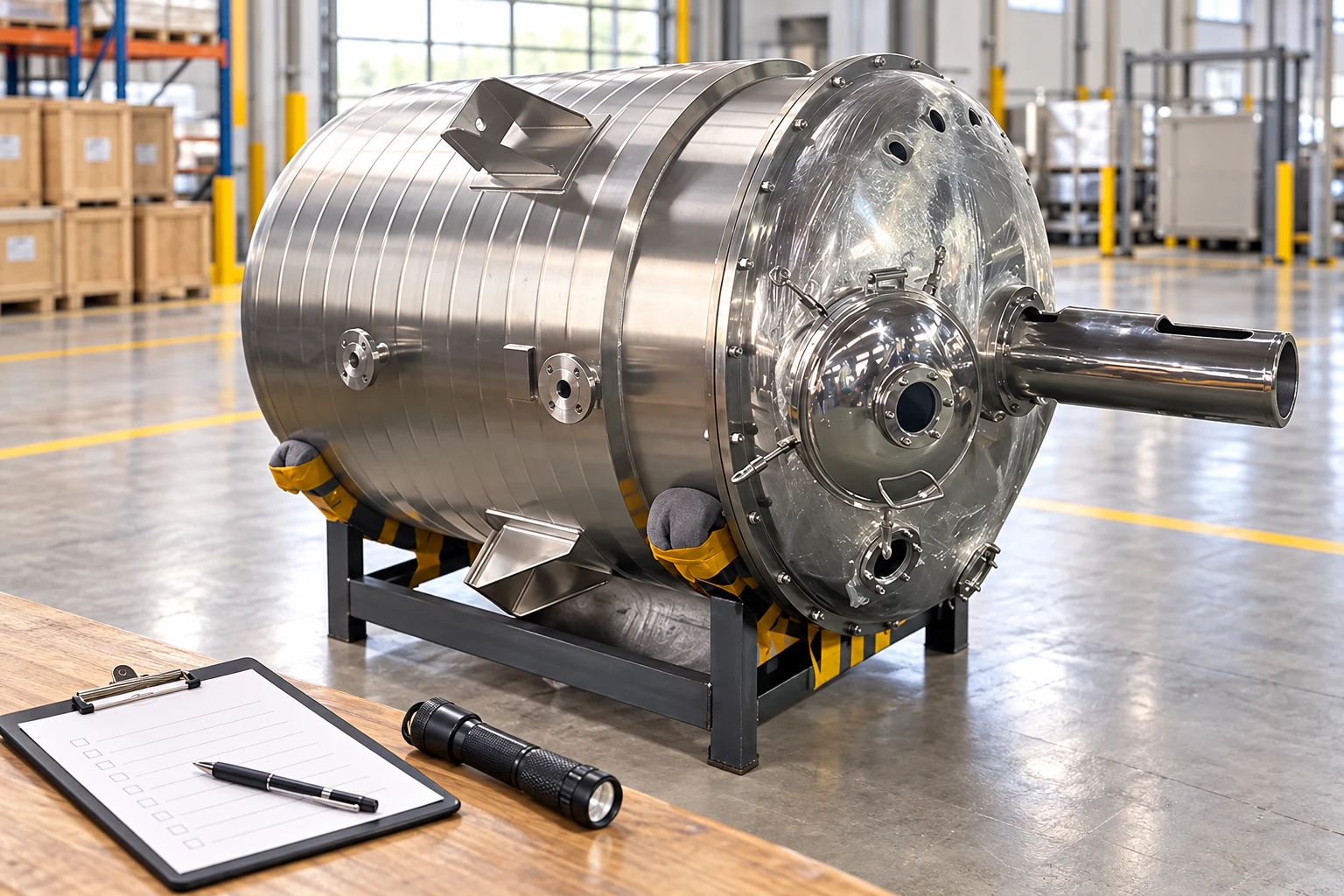
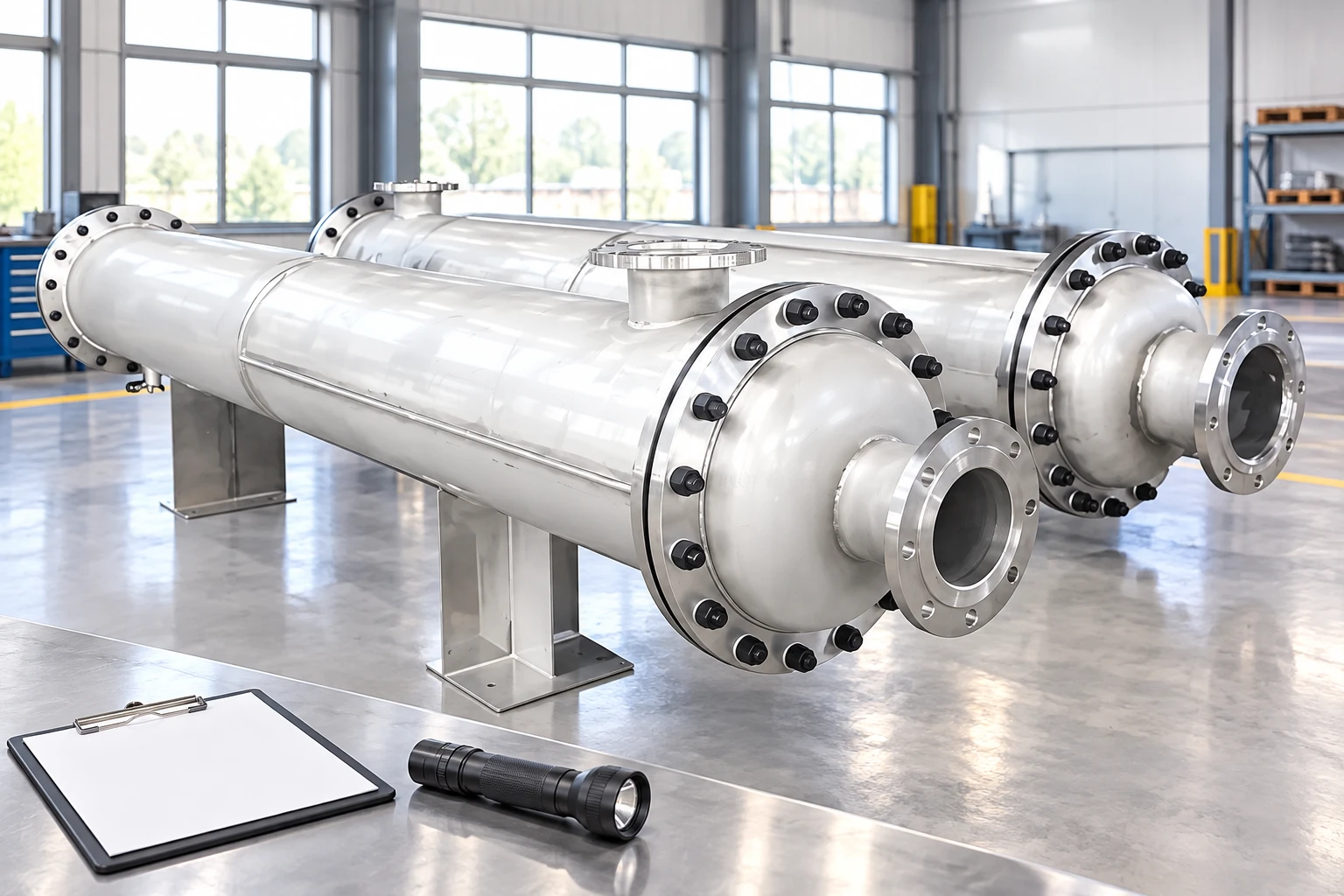
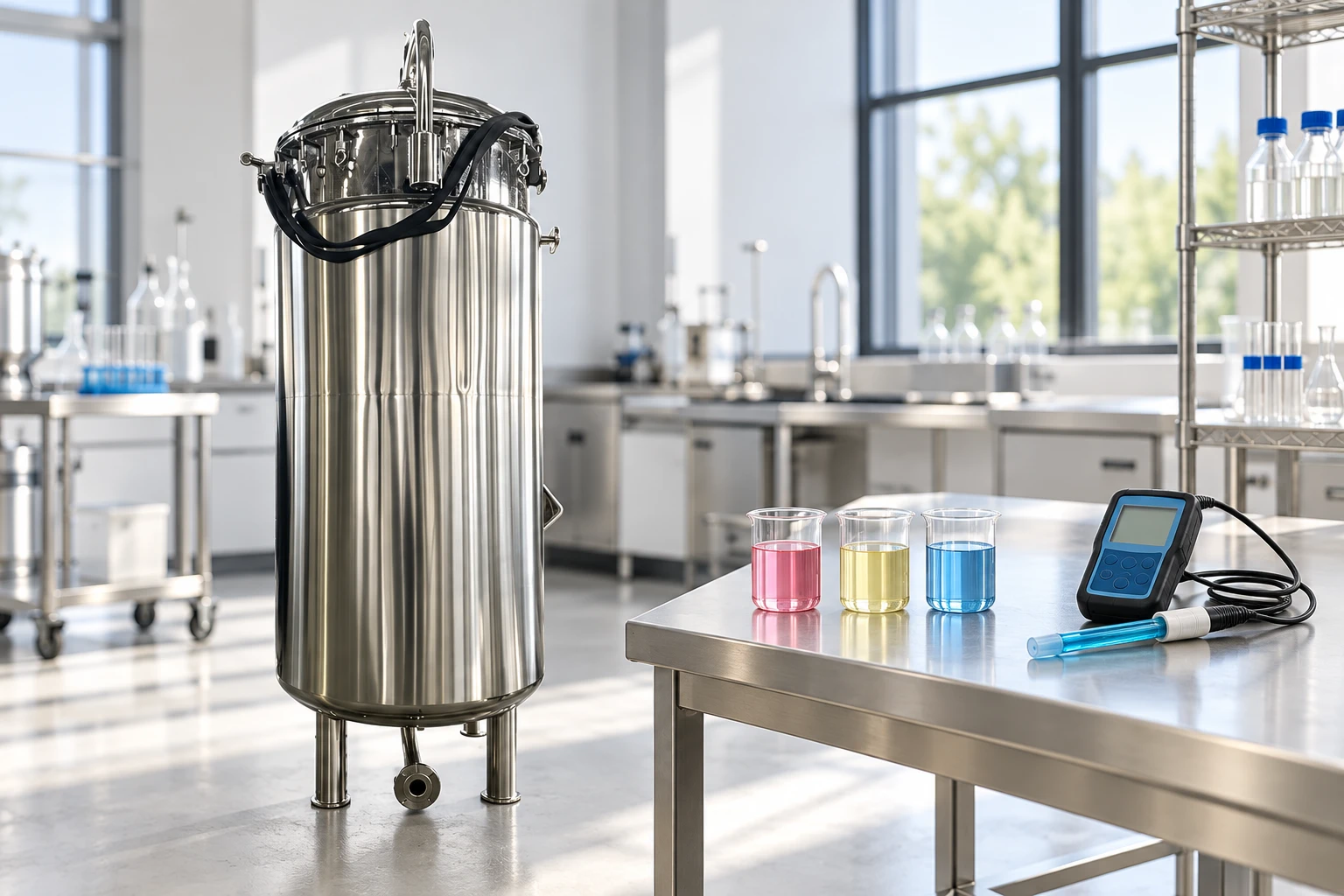
An essential oil distillation tank is a process vessel used to heat botanical charges, generate vapor, and connect to condenser and separator equipment so volatile fractions can be recovered. Buyers should treat the tank as a specification package—materials, heating, condenser interfaces, and optional vacuum—rather than as a catalog promise of oil yield or aroma quality.
The RFQ should describe duty and utilities, not only nominal volume. Record charge size, heating media available on site, condenser cooling conditions, separator preferences, and whether vacuum service is required. That turns a still concept into quotations engineers can compare without inventing recovery rates.

Part 1. Define the Essential Oil Distillation Tank Duty
An essential oil distillation tank holds the botanical charge and provides controlled heat so vapor can leave through a defined outlet path. The phrase describes a vessel role inside a distillation train, not a finished fragrance process. Buyers must still define how plant material is loaded, how condensate returns or is diverted, and how spent charge is removed.
Start with the process story. Identify whether the project uses water distillation, steam distillation, or a hybrid approach the plant already validates. State the botanical form—whole herb, chopped material, or other prepared charge—and the expected fill range. Avoid treating laboratory flask recipes as industrial vessel specifications.
| Duty input | What to record | Why it matters |
|---|---|---|
| Charge size | mass or volume per batch | Sets working volume |
| Charge form | whole, cut, or prepared | Affects internals and loading |
| Distillation mode | water, steam, hybrid | Defines steam and drain paths |
| Batch time window | heat-up and hold expectations | Influences heating duty discussion |
| Downstream path | condenser and separator type | Sets nozzle schedule |
Related batch heat-transfer thinking appears in the cooling and batch heat-transfer planning article; keep this RFQ focused on distillation vessel interfaces.
Part 2. Select Materials and Product-Contact Finish
Most industrial still vessels use stainless steel for corrosion resistance and cleanability. Specify grade, weld finish, gasket materials, and whether product-contact surfaces must meet a buyer-defined sanitary finish. If botanicals or cleaning chemicals are aggressive, note those chemistries so suppliers do not assume a default elastomer.
Internal fittings matter as much as shell grade. Baskets, perforated supports, steam spargers, sight glasses, and sample ports each create cleaning and sealing details. List every product-contact accessory in the nozzle and internals schedule rather than adding them after award.
Important: Food and cosmetic projects remain responsible for process hygiene and applicable requirements such as the FDA Food Code when that framework applies. Equipment finish supports those goals but does not replace site-specific sanitary design or regulatory review.
Part 3. Specify Heating Method and Utility Limits

Heating options commonly include steam jackets, direct steam injection where the process allows it, electric heating elements, or thermal-oil jackets. Choose from utilities the plant can supply continuously, not from marketing preference. Provide available pressure, temperature, and connection location at the skid edge.
Do not invent heating power numbers when the botanical moisture and condenser load are still unknown. Instead, send heat-up expectations and maximum allowable metal or product temperatures so suppliers can propose a heating arrangement against the same boundary. If the plant already measures steam condensate return or electrical feeder capacity, include those constraints so the heating proposal stays installable.
| Send with quote | Example entry |
|---|---|
| Heat source | steam jacket with plant steam supply conditions |
| Utility data | pressure, temperature, condensate return path |
| Temperature limits | maximum product or jacket temperature |
| Insulation | required or not, cladding preference |
| Controls | local thermostat vs plant PLC interface |
Chemical plant buyers who already document jacket utilities in mixing projects can reuse that discipline from the chemical mixing tank guide for industrial buyers.
Part 4. Align Condenser and Separator Interfaces
The tank is only useful when vapor can be condensed and oil/water phases can be separated under controlled conditions. Specify condenser type preference if the buyer has one, cooling media available, inlet temperature range, and whether condensate returns to the still or routes to a separator.
Separator preference should be explicit: florentine-style receivers, settling vessels, or other buyer-standard arrangements. Provide connection elevations and drainage needs so piping does not trap condensate. Ask suppliers to show vapor outlet size, condenser inlet matching, and how non-condensables are vented if applicable.
Send with quote: cooling media identity, available flow and temperature range, preferred condenser orientation, separator sketch or description, and drain/vent philosophy. Avoid quoting oil kilograms per charge; that figure depends on botanicals and process validation outside the vessel datasheet.
Part 5. Decide When Vacuum Service Is Optional
Vacuum distillation can lower boiling temperature for heat-sensitive materials, but it is not mandatory for every botanical project. Treat vacuum as an optional design branch. If vacuum is required, state the target absolute pressure or vacuum depth, the pump preference if any, and seal types the plant accepts.
Vacuum changes vessel design, sight-glass selection, gasket compression, and instrumentation ranges. If the project will operate only at atmospheric pressure, say so clearly so suppliers do not price unnecessary vacuum hardware. When vacuum is used intermittently, document both atmospheric and vacuum operating cases.
Pressure-equipment boundaries, when applicable to the quoted scope, should be reviewed against practice such as ASME BPVC Section VIII. The RFQ should state design pressure, design temperature, and vacuum design requirement rather than assuming catalog defaults.
Part 6. Document Instruments, CIP, and Safety Interfaces
List the instruments the operator needs on the tank: temperature, pressure or vacuum, level or sight indication, and any safety interlocks tied to heating. Clarify whether the supplier provides local controllers or only sensors for a plant PLC.
Cleaning must reach baskets, spargers, and vapor lines that see condensate. Describe CIP or manual cleaning chemistry, temperature limits, and whether spray devices are required. Include manway size for charge loading and spent material removal. Heat-loss and insulation expectations for adjacent hot tanks are discussed in the insulated heated storage tank heat-loss guide; apply the same clarity to still insulation scope.
Safety interfaces include relief paths, vacuum breakers if used, emergency stop of heat input, and lockout access. State who designs and stamps any pressure-relief device so scope is not ambiguous.
Part 7. Compare Proposals and Send the RFQ
Use the biological fermentation tank range as category context for stainless process vessels, then compare distillation proposals against one duty brief. Published pages do not certify oil yield or replace a site process review.
Ask each bidder for general arrangement drawings, material list, heating duty statement, condenser and separator interface list, vacuum design limits if applicable, instrument list, CIP provisions, insulation scope, and exclusions. Keep comparison tables aligned to identical Incoterms and identical utility assumptions so price deltas reflect scope rather than hidden omissions. When the brief is ready, send distillation duty data for a configuration discussion.

FAQs
What is an essential oil distillation tank?
It is a process vessel that holds botanical charge, supplies controlled heat, and connects to condenser and separator equipment so volatile fractions can be recovered. It is specified by duty and interfaces, not by fragrance formulas.
Which materials should buyers specify first?
Start with product-contact stainless grade, weld finish, gasket materials, and any sanitary finish the project requires. Add internals and elastomers after the cleaning chemistry is known.
How should heating method be chosen?
Choose steam jacket, electric, thermal oil, or allowed direct steam based on utilities the plant can supply, plus maximum temperature limits. Do not select heating from yield marketing claims.
What condenser data belongs in the RFQ?
Include cooling media, available temperature range, preferred condenser arrangement, vapor outlet expectations, and how condensate routes to a separator or return path.
Is vacuum distillation always required?
No. Vacuum is optional and should be quoted only when the process needs lower boiling temperature. If required, state vacuum depth and seal expectations explicitly.
What should be sent with a distillation tank RFQ?
Send charge size and form, materials, heating utilities, condenser cooling data, separator preference, optional vacuum limits, instruments, CIP method, and installation constraints.