mixing vessel in a batch formulation plant is the working container where ingredients are combined, temperature is managed if required, and the batch is released to filling, reaction, or storage. Buyers who only quote nominal liters often receive proposals that omit agitation coverage at minimum fill, CIP drainability, or nozzle space for multi-ingredient charging. This guide turns formulation practice into a specification field list that suppliers can price consistently.
The angle is deliberate. A chemical mixing tank buyer overview explains why plants need mixers in chemical service. Here the question is narrower: which mixing vessel fields belong on the RFQ for batch formulation, and how those fields interact before drawings are issued.

Part 1. Define the Mixing Vessel in Formulation Plants
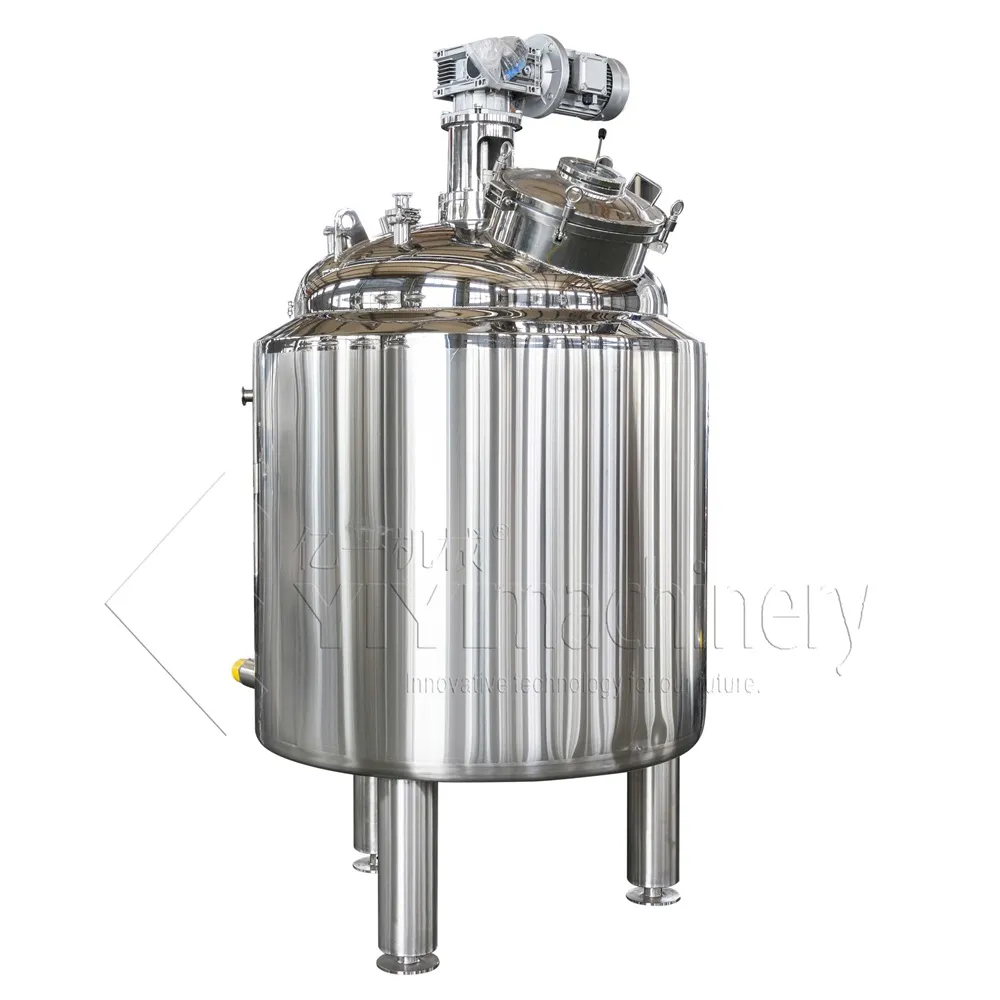
A mixing vessel is the formulation plant vessel that receives metered liquids, powders, or premixes and delivers a batch that meets composition, viscosity, or appearance targets. It may be atmospheric or jacketed, single-impeller or multi-motion, and it may share a room with weigh modules and CIP skids. The mixing tank product family provides configuration context for these vessels.
Start the RFQ with the formulation story: which ingredients enter, in what order, at what temperatures, and which quality checks gate transfer. Do not begin with a catalog model number. Model numbers become useful only after working fill, agitation goal, and cleaning method are written down.
Formulation plants often run campaign changes. Document whether the same mixing vessel handles fragrance-sensitive blends one week and abrasive slurries the next. Campaign breadth drives finish, elastomer selection, and whether dedicated vessels are cheaper than long CIP windows.
| Formulation input | What to record | Why it matters |
|---|---|---|
| Batch identity | product families on this vessel | Sets hygiene and changeover |
| Ingredient classes | liquids, powders, premixes | Sets charging ports |
| Target properties | viscosity, assay, appearance | Defines acceptance language |
| Release path | fill, react, or store | Sets outlet design |
| Campaign breadth | how many recipes share the vessel | Affects CIP and materials |
Part 2. Record Capacity and Working-Fill Fields
Capacity fields must separate nominal volume, working fill, minimum agitating level, and headspace. Formulation batches foam, expand with temperature, or require freeboard for powder additions. Quoting only a round tank size forces suppliers to guess.
State the largest and smallest batch the vessel must run. Minimum fill often controls impeller immersion and baffle effectiveness. Maximum fill controls freeboard and overflow protection.
If weigh cells or load cells are planned, note whether the vessel sits on load cells or receives metered feeds from upstream weigh modules.
| Capacity field | Example entry |
|---|---|
| Nominal volume | total geometric volume |
| Working fill | maximum process fill |
| Minimum agitating level | lowest safe impeller immersion |
| Headspace allowance | foam or powder charge freeboard |
| Batch range | min and max batch mass or volume |
Send with quote: preferred diameter or height constraints from the room, manway preference, and whether future volume expansion is expected. Room constraints often matter more than a theoretical optimal aspect ratio.
Part 3. Specify Agitation Coverage and Drive Fields

Agitation fields describe the job, not only the motor. Record whether the goal is suspension, dissolution, mild emulsification, or high-viscosity homogenization.
Provide viscosity at process temperature, density, and solids percent. If powders are wetted in the vessel, describe induction method and dust control expectations.
List preferred impeller families when the plant has standards, but allow suppliers to propose alternatives against the same duty. Include shaft seal type preference, gearbox access, and whether dual-speed or variable-frequency drives are required. For heated batches, note how viscosity drops during heat-up so motor sizing is not locked to cold start alone.
Cross-link heat-transfer decisions to the jacketed mixing tank heating and cooling guide when jacket duty is central, and to the cooling mixing tank exothermic batch guide when heat removal dominates. Keep this article focused on the field list that must appear on every formulation RFQ.
| Agitation field | What to record |
|---|---|
| Duty goal | suspend, dissolve, emulsify, homogenize |
| Viscosity and density | values or curves vs temperature |
| Solids data | percent and particle size band |
| Fill range for agitation | min and max immersion |
| Drive preferences | VFD, seal type, access |
Part 4. Document Jacket and Heat-Transfer Fields
Jacket fields become mandatory when formulation recipes include heat-up, cool-down, or isothermal holds. Record available utilities: steam pressure, hot water temperature, glycol conditions, or electric capacity. State target ramp rates and hold tolerances so suppliers can comment on jacket area and control valves.
Sight glasses, insulation, and cladding should be listed as explicit fields. A heated mixing vessel without insulation can create operator hazards and unstable holds. If pressure-rated jackets or heads are in scope, note design pressure and temperature and review against applicable pressure-equipment practice such as ASME BPVC Section VIII when those boundaries apply to the quoted scope.
Do not treat jacket selection as a later option. Missing utility data is a common cause of incomplete mixing vessel quotations in formulation plants.
Part 5. Select Materials and Finish Fields
Materials fields should name alloy preference, weld finish, and gasket families compatible with both product and CIP chemistry. Formulation plants that switch between food-contact and technical blends need clear campaign rules. Use the stainless steel 304 vs 316 mixing tank guide for corrosion trade-offs, then return to this checklist for the RFQ table.
Internal finish affects cleanability and residue risk for sticky or pigmented formulas. Record Ra targets if the plant has sanitary standards, and list whether electropolish is required. Exterior finish and cladding color are secondary but should still be stated to avoid drawing revisions.
Important: Formulation teams remain accountable for hygiene programs when product-contact surfaces are involved, including guidance published in the FDA Food Code. Mixing vessel specifications help procurement compare scope; they do not certify a plant cleaning validation package.
Part 6. Complete CIP, Nozzle, and Instrument Fields
CIP fields include chemistry, temperature, spray devices, drainability, and whether the vessel must clean while adjacent vessels stay in production. Formulation residue can be sticky; ask suppliers to identify low points and shadow areas around baffles and dip pipes.
Nozzle schedules prevent incomplete drawings. List ingredient inlets, vents, overflow, outlet, CIP supply and return, sample valves, thermowells, and instrument ports.
Multi-ingredient charging often needs more top nozzles than a generic chemical mixer drawing assumes. Include preferred flange standards and whether sanitary clamps are required.
Instrument fields should name level, temperature, pressure if applicable, power monitoring, and any in-line analyzers. Controls boundary must state whether the supplier provides a local panel or only dry contacts to the plant PLC.
| Send with quote | Example entry |
|---|---|
| CIP method | spray ball, chemistry, temperatures |
| Nozzle list | inlet, outlet, vent, sample, instruments |
| Flange or clamp standard | plant preference |
| Instruments | level, TT, densitometer if used |
| Controls boundary | skid panel vs plant PLC |
Part 7. Assemble the RFQ and Compare Proposals
Assemble one controlled RFQ revision that includes every field from Parts 2 through 6. Ask bidders for GA drawings, nozzle schedules, agitator data sheets, jacket duty statements, material certificates scope, CIP devices, controls summary, and exclusions. Use the heated mixing tank configuration page as a discussion reference when heat transfer is part of the formulation duty.
Published product pages do not replace a mixing vessel duty review or certify batch results. When the field list is complete, contact YIYI with working-fill data, agitation goals, utilities, and nozzle preferences for engineering review.
Score proposals on field completeness first. A lower price that omits CIP devices or minimum-fill agitation commentary is not comparable to a complete quotation.
FAQs
What is a mixing vessel in a batch formulation plant?
It is the process vessel where formulation ingredients are combined under controlled agitation and, when required, temperature control, before the batch is released downstream.
Which capacity fields belong in a mixing vessel RFQ?
Record nominal volume, working fill, minimum agitating level, headspace, and the batch size range the vessel must support.
What agitation data should formulation plants send?
Send duty goal, viscosity and density data, solids loading, fill range for impeller immersion, and drive or seal preferences.
When do jacket fields become mandatory?
Jacket and utility fields are mandatory whenever recipes require heat-up, cool-down, or isothermal holds that the vessel must deliver.
How should CIP and nozzles be documented?
List CIP chemistry and devices, drainability expectations, and a full nozzle and instrument schedule so drawings are not guessed.
How is this different from a chemical mixing tank overview?
A chemical mixing tank overview explains buyer context for chemical service. This guide is a specification field checklist for batch formulation mixing vessel RFQs.