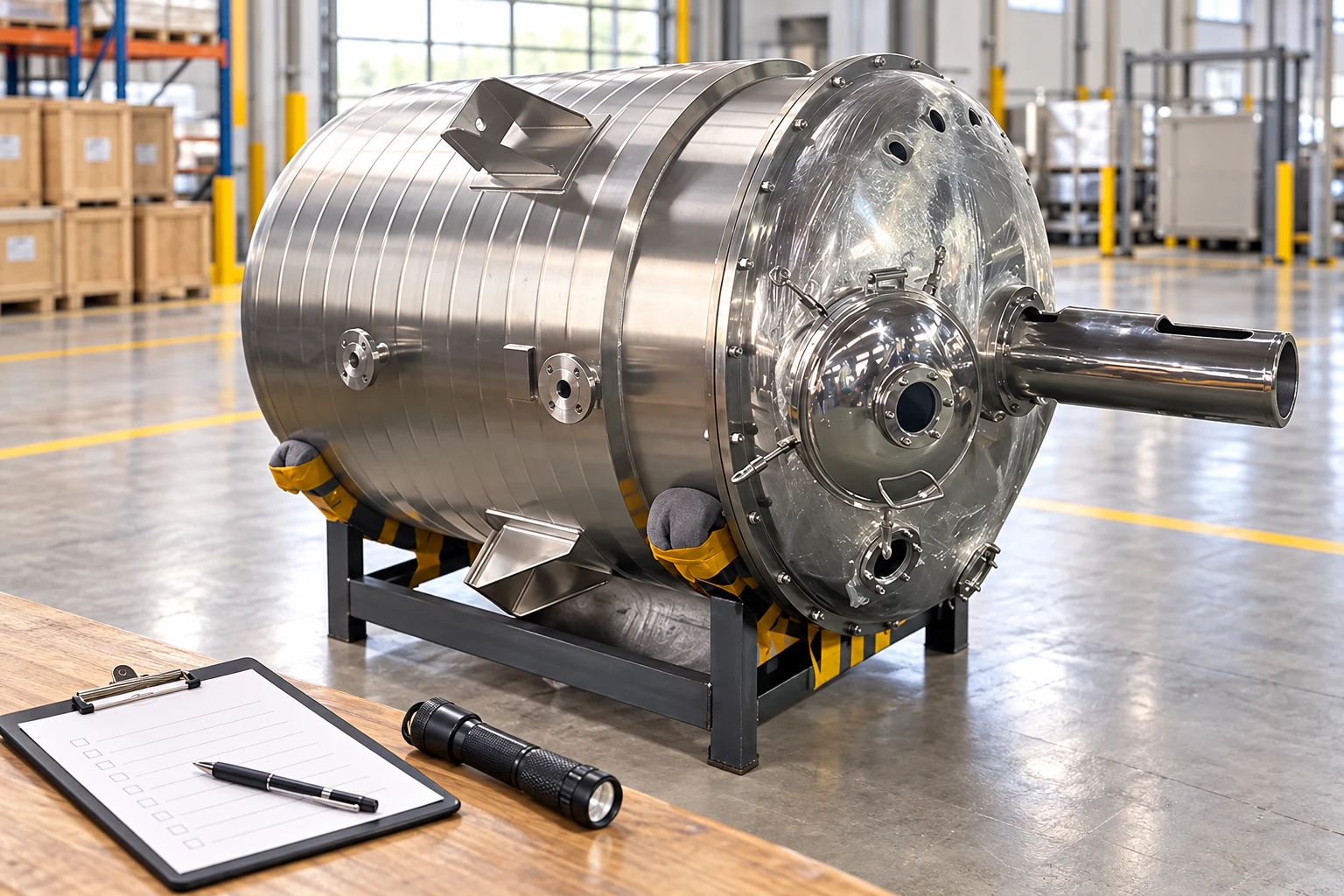
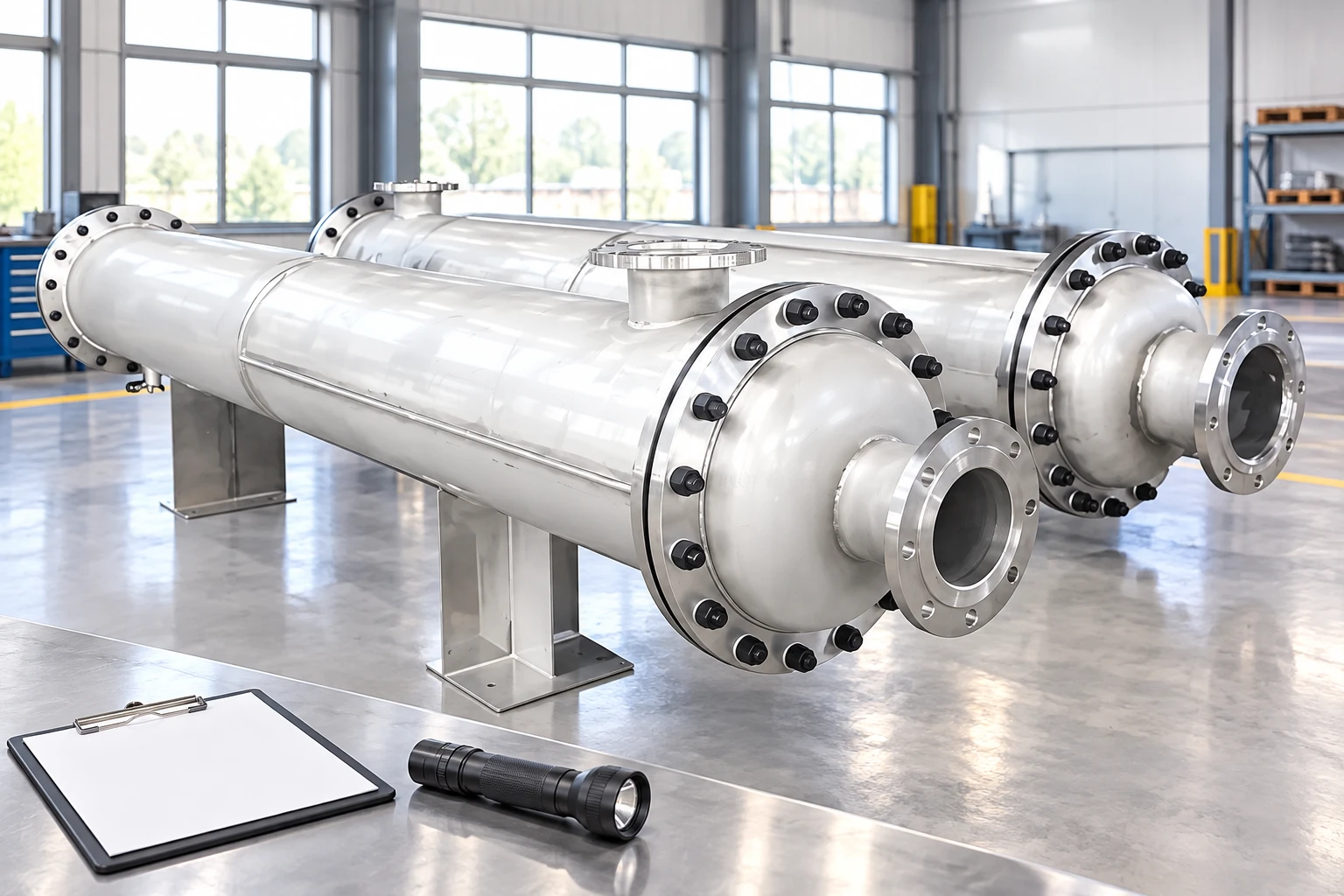
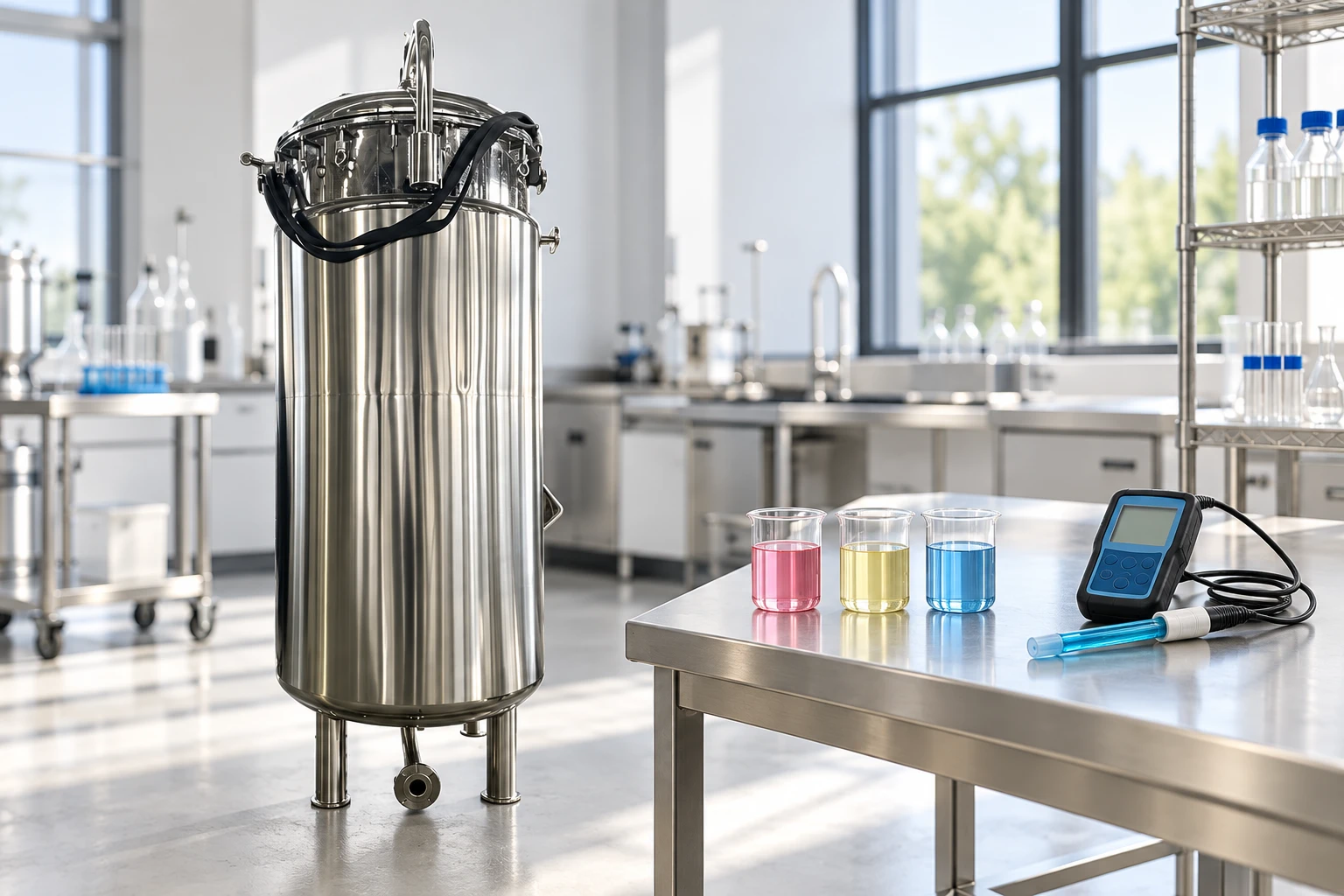
blending tank and a mixing tank are often named interchangeably in catalogs, yet buyers who run multi-step batch lines need a clearer split: which vessel homogenizes compatible liquids at moderate energy, and which vessel must deliver dispersion, dissolution, or higher shear. The naming difference matters only when it changes nozzle schedules, agitator duty, CIP segregation, and how many vessels appear on the GA drawing.
Start from the process story, not the product brochure. List each addition sequence, the uniformity metric the plant uses, whether solids enter any stage, and whether cleaning chemistry must stay isolated between steps. Those inputs decide when one vessel is enough and when separate vessels make sense for a blending tank line.
Part 1. Define the Blending Tank Role
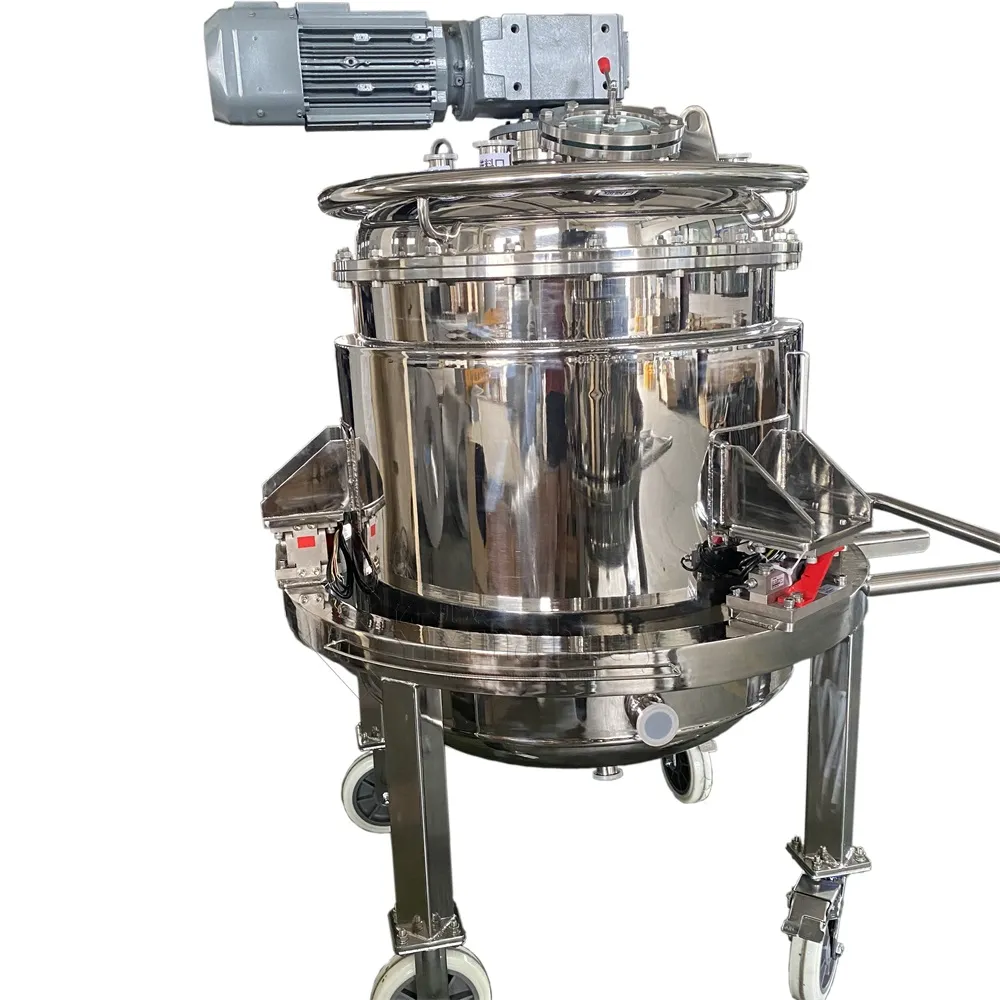
A blending tank is typically specified to combine compatible liquid streams until composition or property targets are reached across the working volume. Duties often include ratio blending of two or more miscible liquids, gentle recirculation after dilution, or holding a pre-blend before filling or reaction. Energy intensity is usually moderate; the goal is uniformity without unnecessary shear that can degrade sensitive components or entrain excess air.
Document what uniform means for the plant. Some buyers track density or refractive index; others sample for assay or color.
The RFQ should state the acceptance method and sampling locations so suppliers do not assume a generic well-mixed claim. Link this role discussion to the broader what is a mixing tank overview when stakeholders need terminology context, then keep this article focused on vessel-role separation.
Blending tank procurement also needs clear inlet strategy. Metered feeds, top-entry additions, and bottom recirculation return lines create different nozzle maps.
If two concentrates enter at different temperatures, record both temperatures and whether the blend must stay within a defined band during the entire charge. Insulation and jacket notes belong here when temperature drift would invalidate the uniformity metric.
| Blending input | What to record | Why it matters |
|---|---|---|
| Stream list | components and ratios | Sets inlet nozzles and metering |
| Viscosity range | min and max at process temperature | Selects impeller and motor duty |
| Uniformity metric | density, assay, color, or RI | Defines acceptance language |
| Air sensitivity | allowed entrainment | Guides baffles and fill level |
| Hold time | maximum residence before transfer | Affects volume and insulation |
| Temperature band | target and tolerance during blend | Sets jacket or insulation scope |
Part 2. Contrast the Mixing Tank Duty
A mixing tank is the broader procurement label for vessels that dissolve solids, wet powders, disperse immiscible phases, or support higher shear and longer duty cycles. The mixing tank product family covers many of these configurations. When the duty includes powder induction, emulsion formation, or viscous paste work, buyers should not assume a blending-style low-shear agitator will finish the job.
Use sibling guides for specialized duty modes rather than duplicating them here. Dispersion and impeller selection are covered in the high shear mixing tank dispersion guide.
Vacuum degassing is a different decision path in vacuum mixing articles. Material and corrosion questions belong with stainless grade guides. This article only asks whether the mixing duty should share a vessel with blending or sit alone.
Mixing tank RFQs usually carry higher risk language around dead zones, solids settling, and heat of dissolution. If the plant previously quoted a chemical mixing line, reuse media compatibility notes but rewrite the vessel-role section so blending steps are not buried inside a general chemical overview.
Important: Plants that blend food-contact liquids remain accountable for hygiene programs and applicable guidance such as the FDA Food Code. A blending tank or mixing tank quotation supports those programs but does not substitute for validated cleaning procedures or regulatory review.
Part 3. Decide When One Vessel Is Enough

One vessel is often enough when media are compatible, CIP chemistry is the same across steps, and the energy intensity of the hardest step does not damage earlier stages. Example pattern: dissolve a soluble salt, then blend two liquid concentrates in the same tank with a single impeller package sized for the worst-case viscosity.
Send with quote: whether the plant accepts staged recipes in one body, the worst-case viscosity and solids load, and the cleaning method after each recipe. If the plant already operates a chemical mixing tank buyer workflow, reuse that media and utility list so blending and mixing duties are scored on the same sheet.
Single-vessel economics look attractive until changeover time is measured. If every recipe requires a full CIP before the next blend, a dedicated blending tank that stays on mild chemistry can protect schedule even when capital cost rises. Capture changeover minutes and batch calendar pressure in the RFQ narrative so bidders understand why vessel count is open.
| Send with quote | Example entry |
|---|---|
| Recipe stages | dissolve then blend; times per stage |
| Worst-case viscosity | value and temperature |
| Solids load | mass percent and particle size band |
| CIP chemistry | caustic and acid cycles, temperatures |
| Single-vessel preference | yes or no with hygiene constraints |
| Changeover target | minutes between recipes |
Part 4. Identify When Separate Vessels Make Sense
Separate vessels make sense when at least one of these conditions is true: CIP segregation is mandatory between allergen or solvent classes; blending must run while the mixer is still in a long dispersion cycle; energy intensity differs so much that a high-shear head would over-process a sensitive blend; or transfer quality requires a dedicated polish-blend tank after primary mixing.
Treat vessel count as a plant layout decision. Two smaller vessels can raise capital cost but cut waiting time and reduce cross-contamination risk.
Ask operations for parallel-run needs before defaulting to a single large mixer. Record whether transfers use pumps, gravity, or mobile totes so nozzle elevations stay consistent across both RFQs.
A common industrial pattern places the mixing tank upstream for dissolution and dispersion, then transfers to a blending tank for ratio finishing and QC sampling. Another pattern keeps a blending tank for continuous feed of miscible solvents while a batch mixer handles intermittent powder charges. Either pattern needs two GA drawings and a shared interface list so piping fabricators do not invent connections.
Part 5. Specify Agitation and Energy Intensity
Agitation language should be duty-based. For a blending tank, state preferred impeller style such as propeller, hydrofoil, or anchor for higher viscosity, plus baffling, working fill range, and whether recirculation loops assist homogeneity. For a mixing tank, add solids wetting method, tip-speed or shear expectations if known, and any scrape-surface or dual-motion needs.
Do not copy a motor kilowatt from a previous project without media data. Provide density, viscosity curve if available, and fill height so suppliers can comment on torque and impeller diameter. If jackets or pressurized heads are in scope, note design pressure and temperature boundaries and review against applicable pressure-equipment practice such as ASME BPVC Section VIII when those boundaries apply to the quoted scope.
Energy intensity also affects instrumentation. Blending tanks often need densitometers or in-line analyzers; mixing tanks may need power monitoring or temperature sensors near the impeller. List instruments per vessel so control scope is not assumed identical.
Part 6. Align CIP and Transfer Interfaces
CIP often decides vessel count more than mixing theory. If caustic residues from a heavy mixer clean would contaminate a fragrance or food blend, separate vessels with dedicated CIP return paths are the safer procurement path. Describe spray devices, drainability, and whether each vessel must clean independently while the other stays in production.
Transfer interfaces belong in the same brief. List which vessel feeds which, expected transfer rate, whether lines must remain drainable, and how samples are taken.
Shared manifolds can erase the hygiene benefit of two vessels if dead legs are not designed out. Include valve types, drain points, and whether portable hoses are allowed during campaign changes.
For food-contact blending tanks, surface finish and gasket materials should match the cleaning chemistry documented earlier. For chemical service, confirm elastomer compatibility with solvents used in both vessels so spare-parts lists stay consistent.
Part 7. Select Vessel Scope and Send the RFQ
Use the mixing tank configuration reference as a starting point for discussion, then compare proposals against the same role brief: blending duty, mixing duty, or both. Published pages do not replace a multi-vessel duty review or certify blend results.
Ask each bidder for GA drawings, nozzle schedules, agitator data, materials, jacket duty if any, CIP scope, controls boundary, and exclusions for each vessel. When the role split is documented, contact YIYI with media data, uniformity metrics, and transfer sequence for engineering review.
Keep the RFQ revision controlled. If marketing labels both vessels as mixing tanks, add a role column so engineering and purchasing score the same scope. Separate line items for blending tank and mixing tank prevent accidental omission of polish-blend features such as sample valves or densitometer ports.

FAQs
What is a blending tank in industrial service?
It is a process vessel used primarily to homogenize compatible liquid streams to a composition or property target, usually at moderate agitation energy.
How does a blending tank differ from a mixing tank?
A blending tank emphasizes uniform combination of compatible liquids. A mixing tank is specified when dispersion, dissolution, solids wetting, or higher shear defines the duty. Catalog names overlap; the RFQ should state the duty.
When should blending and mixing use separate vessels?
Separate vessels help when CIP segregation, cycle overlap, or energy intensity differences would force compromises in a single body, or when a polish-blend step must stay downstream of primary mixing.
Can one vessel handle both blending and mixing?
Yes, when media and cleaning chemistry are compatible and the agitator package can cover the hardest stage without damaging earlier stages. Document staged recipes and worst-case viscosity in the RFQ.
What agitator data belongs in a blending tank RFQ?
Provide viscosity range, density, working fill, preferred impeller family, baffling, uniformity metric, and any limits on air entrainment or shear for sensitive components.
What should be sent with a multi-vessel RFQ?
Send media lists per vessel, transfer sequence, CIP segregation rules, jacket needs, materials, nozzle preferences, controls boundary, and whether vessels must run in parallel or only in series.