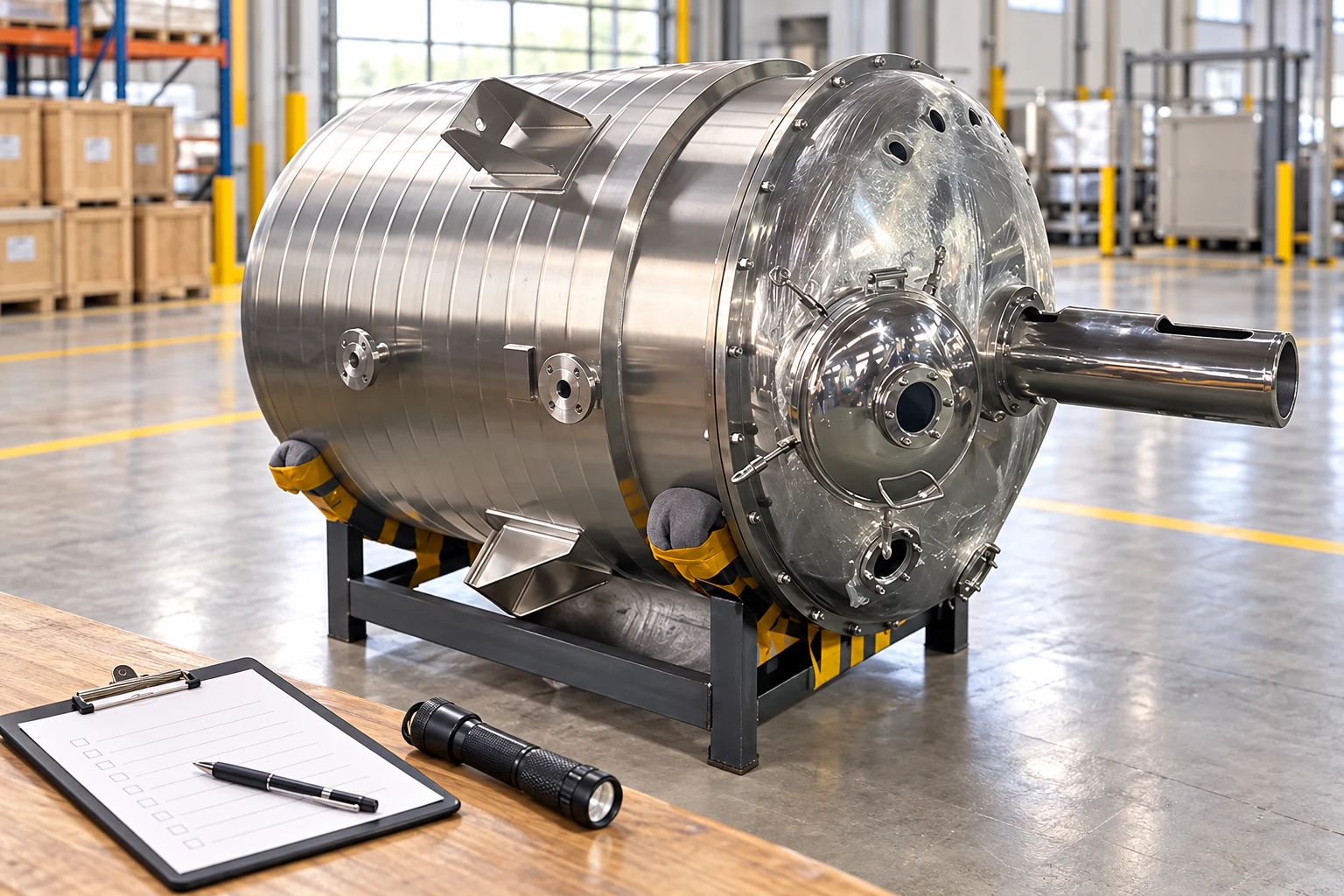
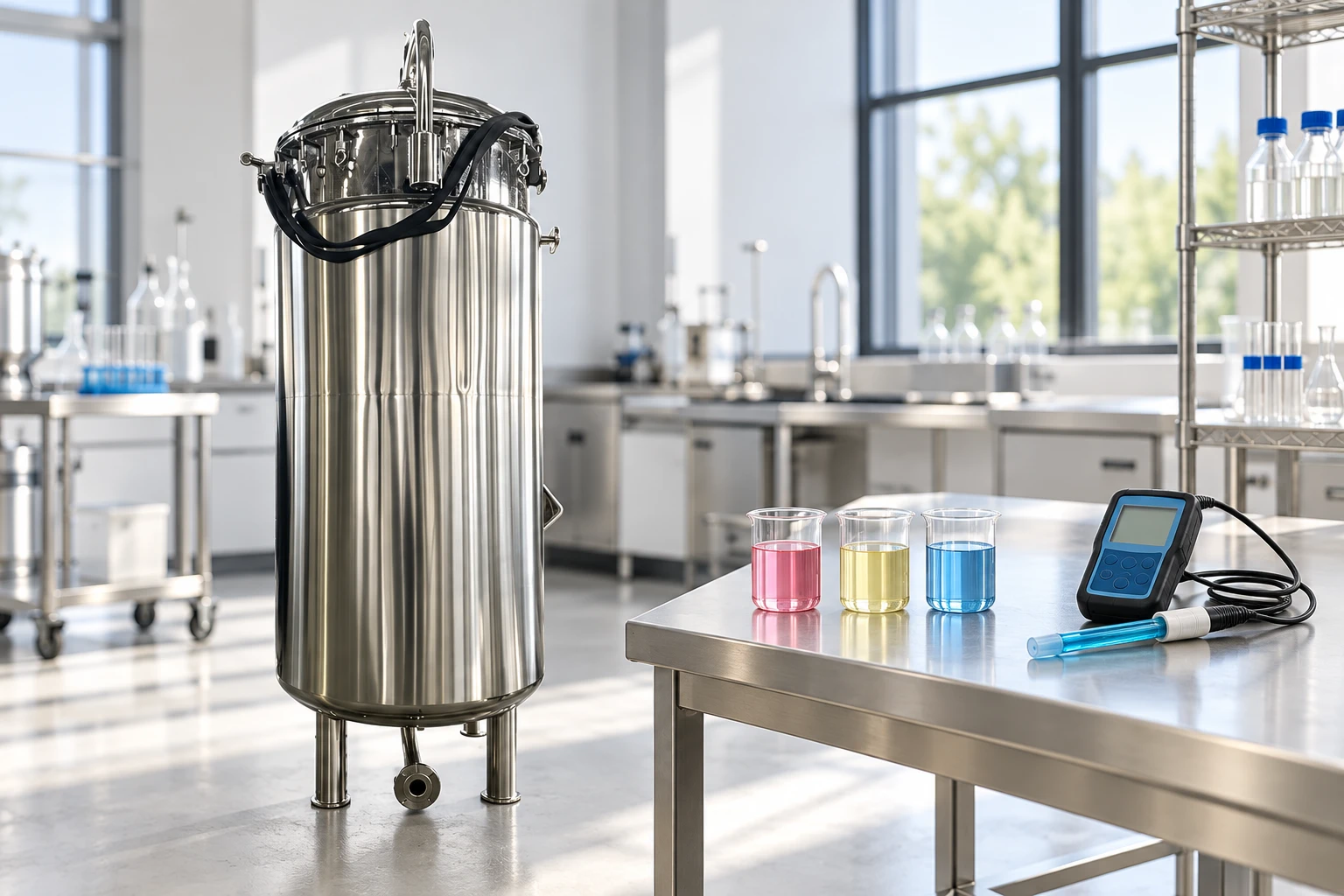
A vertical saccharification tank concentrates mashing duty into a tall vessel where heat transfer surface, agitator placement, and working volume interact directly. Buyers specify this geometry when footprint is limited, when mixing intensity must be delivered at a defined liquid depth, or when the brewhouse already routes transfers vertically.
Efficiency in this context means predictable temperature control and homogeneous mash conditions, not a guaranteed laboratory extract figure. The RFQ should therefore state the mashing program, agitation need, heat source, material requirements, and how wort leaves the tank.

Part 1. Define the Vertical Saccharification Duty
A vertical saccharification tank is a mashing vessel with a tall cylindrical geometry used to convert starches under controlled temperature and agitation. The tank may stand on the floor or on a platform, but the vertical aspect changes how heat is applied and how the agitator works at different fill levels.
Document the brewhouse transfer pattern first: single infusion, step mashing, or decoction-style transfers if applicable. Note whether the same vessel receives grist and liquor or whether premixing occurs upstream. Link to the choose a suitable brewing tank article for general vessel selection context while keeping this RFQ focused on mashing efficiency inputs.
| Duty input | What to record | Why it matters |
|---|---|---|
| Grist load | mass per batch | Sets solids handling |
| Liquor ratio | water to grist | Affects fill height |
| Temperature program | rests and ramps | Defines heating duty |
| Agitation goal | suspension vs shear | Selects impeller type |
| Transfer out | to lauter or whirlpool | Sets outlet and time |
Part 2. Relate Vessel Geometry to Mashing Efficiency Inputs
Mashing efficiency discussions often confuse extract yield with equipment fit. Equipment suppliers can address heat transfer rate, temperature uniformity, dead zones, and agitator coverage at the planned working fill. Those factors influence whether the brewery can hold a rest near target temperature across the mash bed or liquid phase.
Vertical geometry can improve mixing at a given impeller diameter because liquid depth increases axial circulation paths. It can also expose more jacket area relative to footprint on some designs. Ask suppliers to identify the working fill range, impeller location, and how temperature is measured during each rest.
Important: Do not exceed the vessel’s stated design temperature and pressure. Mashing programs that include rapid heating or unexpected overpressure from blocked vents require engineering review against applicable pressure-equipment practice such as ASME BPVC Section VIII when those boundaries apply to the quoted scope.
Part 3. Specify Heat Transfer and Temperature Control

State the heat source: steam jacket, direct steam injection where allowed, electric heating, or external circulation through a heat exchanger. Provide supply conditions and the maximum ramp rate the process expects. If the brewery uses step mashing, list each rest temperature and hold time so bidders can comment on controllability.
Send with quote: insulation requirement, cladding finish, sensor locations, and whether the brewery expects automatic step control or manual operator adjustment.
| Send with quote | Example entry |
|---|---|
| Heat source | steam jacket 3 bar supply |
| Target rests | 52 °C, 63 °C, 72 °C holds |
| Ramp expectation | degrees per minute target |
| Measurement | tank average vs spot sensor |
Part 4. Select Materials and Internal Finish
Saccharification tanks are usually stainless steel for food-contact service. Specify grade, weld finish, and any sanitary connection standard the project uses. If the brewery cleans with caustic and acid cycles, note concentrations and temperature limits so gasket and surface selections align.
Internal fittings such as spray balls, thermowells, and sample valves should be listed in the nozzle schedule. Avoid adding accessories without defining their cleaning path.
Part 5. Plan Wort Transfer and Downstream Interfaces
Identify whether mash pumps to lauter tun, whether gravity transfer is expected at end of mash, and the allowable time window. Vertical tanks may require bottom outlets or side rakes depending on false bottom or lauter design; state the preferred outlet elevation and whether the tank drains completely.
Cross-link fermentation planning with the conical fermenter selection guide after saccharification scope is fixed, so cellar vessels are not sized on incomplete mashing data.
Part 6. Size Working Volume and Agitation
Request nominal volume and working fill separately. Include headspace allowance for foam or boil-over during heating if applicable to the process. For agitation, describe impeller type preference, minimum liquid level for safe operation, and motor duty.
Solids addition method matters: top-mounted manways, side ports, or premix vessels change how grist enters and how dust is controlled. Include those details so agitator torque and inlet layout are quoted consistently.
Part 7. Select a Vertical Tank and Send the RFQ
Review the biological fermentation tank range for related brewery equipment, then use the saccharification system tank configuration page as a configuration reference. Published pages do not replace a vertical-tank duty review or certify brewing results.
The RFQ should request GA drawing, material list, jacket duty statement, agitator data, nozzle schedule, insulation, controls scope, and exclusions. Submit layout and utility data through contact YIYI when ready for quotation.

FAQs
What is a vertical saccharification tank?
It is a tall mashing vessel used for starch conversion under controlled temperature and agitation, usually with jacket or external heating.
How does geometry affect mashing efficiency?
Geometry influences heat transfer area, agitator coverage, and working fill behavior. Suppliers can address those factors when the mashing program is documented.
What heat transfer options are common?
Steam jackets, electric heating, and external circulation loops are common. The RFQ should state supply conditions and required temperature rests.
What volume should be quoted?
Quote working fill and nominal volume separately, including headspace and minimum agitation level.
How does vertical saccharification relate to platform systems?
A vertical tank may sit on the floor or on a platform. The vessel RFQ stays the same; platform projects add structural and routing scope separately.
What should be sent with a saccharification tank RFQ?
Send grist and liquor data, temperature program, agitation needs, heat source, materials, outlet routing, CIP method, and installation constraints.