Choosing a 304 vs 316 mixing tank is a materials decision tied to product chemistry, cleaning chemicals, temperature, chloride exposure, weld quality, and required documentation. Although 316 or 316L is often chosen when corrosion resistance demands are higher, it is not a universal upgrade. A tank material should be selected against the actual process, not only the industry name or an assumed “best” grade.
This guide gives B2B buyers a framework for comparing stainless steel mixing-tank material options. YIYI INTELLIGENT product pages are equipment examples only. The final grade, finish, weld treatment, passivation, and documentation scope must be confirmed for the project.
Part 1. What is the practical difference between 304 and 316 mixing tanks?
Both 304 and 316-family stainless steels are widely used in process equipment. The practical comparison is not a simple ranking. 304 may be a suitable starting point for many defined food, beverage, cosmetic, and general-process duties. 316 or low-carbon 316L is often considered when the process or cleaning environment creates a stronger corrosion challenge. Buyers should ask for the exact grade and product-contact scope rather than accepting a generic “stainless steel” label.
| Topic | 304 starting position | 316 / 316L starting position |
|---|---|---|
| General duty | Common for many defined services | Considered for more demanding corrosion exposure |
| Cleaning chemistry | Requires compatibility review | Also requires compatibility review |
| Chloride exposure | May need further review | Often considered where corrosion concern is higher |
| Welding/documentation | Define project scope | Define project scope |
| Price decision | Lower alloy content may affect cost | Do not select solely by price or name |
For basic construction context, read what is a stainless steel mixing tank. This article addresses the material decision before a purchase order.
Part 2. Which process conditions change the material decision?
The supplier needs the product’s composition and operating conditions. Acids, salts, chlorides, cleaning agents, product temperature, residence time, and rinse quality can all influence corrosion risk. The same material can behave differently in a cold, low-concentration liquid than in a hot, concentrated or stagnant solution.
| Process input | Why it matters |
|---|---|
| Product composition | Identifies possible corrosive constituents |
| Chloride level | Can change corrosion risk and material review |
| Temperature | Often accelerates chemical attack |
| Concentration | Dilute and concentrated solutions differ |
| Cleaning chemistry | Caustic, acid, and sanitizer compatibility |
| Hold time / stagnation | Crevices and retained liquid can be more severe |
| External environment | Washdown, coastal air, and utility leaks matter too |
Important: Material selection is conditional engineering. A chemical name alone is insufficient; provide concentration, temperature, cleaning regimen, and exposure duration. Reference frameworks such as ASTM International define material standards but do not select the alloy for a specific batch.
Part 3. How do chlorides and cleaning chemicals affect selection?
Chlorides are frequently raised in 304 vs 316 discussions because they can increase corrosion concern in some service conditions. Cleaning chemistry can have the same effect. The correct action is not to make a blanket claim that one grade eliminates corrosion; it is to document the chemistry and require a supplier or materials specialist to state the material assumption.
| Exposure | Buyer action |
|---|---|
| Salt-containing product | State salt type, concentration, and temperature |
| Chlorinated water or cleaner | State formulation and contact duration |
| Acid cleaning | State acid, concentration, temperature, and frequency |
| Alkaline CIP | State caustic concentration and rinse sequence |
| External washdown | State environment and splash exposure |
Hidden locations deserve attention. A gasketed port, poor drain, rough weld, or unpassivated heat-affected area can become more vulnerable than a smooth, fully drained product surface. Material grade alone does not solve poor geometry or maintenance.
Part 4. Why do surface finish, welds, and passivation matter?
Material selection continues after the alloy is chosen. Product-contact finish affects cleanability and deposit removal. Weld procedures and post-weld treatment affect the local surface condition. Passivation scope, inspection, and material traceability should be part of the technical offer when the owner requires them.
| Fabrication item | RFQ question |
|---|---|
| Surface finish | What product-contact finish is supplied? |
| Welds | How are internal welds finished and inspected? |
| Passivation | Is it included, and what is the documented scope? |
| Material records | Which certificates cover wetted components? |
| Nozzles and fittings | Are their grades and gaskets identified? |
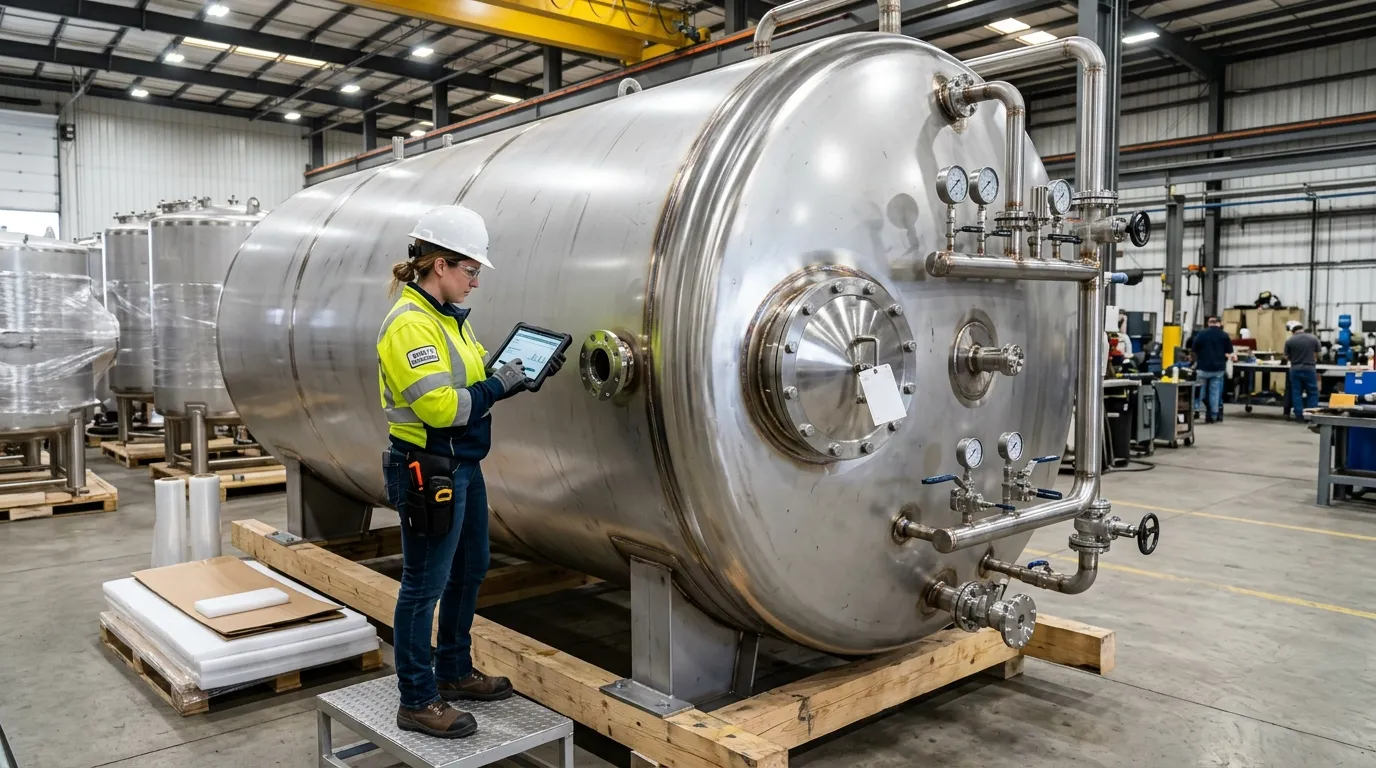
For food or dairy owners, hygienic requirements may include cleanable welds and fitting geometry under a project’s interpretation of 3-A sanitary standards. Those requirements should be written into the RFQ rather than inferred from the selected steel grade.
Part 5. How do food and chemical services differ?
Food service often focuses on hygienic design, cleaning validation, and product-contact finish. Chemical service often places more emphasis on corrosion compatibility, venting, seals, and temperature. Some sites have both concerns, such as acidic food ingredients cleaned with strong chemicals.
| Service | Material-selection emphasis |
|---|---|
| Dairy / beverage | Sanitary finish, CIP chemistry, drainage, certificates |
| Cosmetic | Fragrance, surfactant, and cleaning compatibility |
| Food acid or brine | Salt/acid concentration and temperature review |
| General chemical | Full product and cleaning compatibility review |
| Abrasive slurry | Wear, solids, and service-access requirements |
The chemical mixing tank guide can help define chemical-process information, but it does not replace a material-compatibility review.
Part 6. What belongs in a 304 vs 316 mixing tank RFQ?
Material decisions are easier when buyers provide operating and cleaning information in a structured form.
| RFQ section | Inputs to provide |
|---|---|
| Product | Composition, concentration, chloride/salt content |
| Process | Temperature range, batch time, pressure/vacuum if any |
| Cleaning | Chemicals, concentration, temperature, frequency |
| Materials | Preferred grade, finish, weld/passivation documentation |
| Seals | Product and cleaning compatibility requirements |
| Geometry | Drain, nozzles, gaskets, fittings, dead-leg limits |
| Documentation | Material certificates, inspection, FAT, spare list |
Ask suppliers to list any materials assumptions in their offer. A transparent assumption is easier to review than an unqualified claim of “316 stainless.”
Part 7. What quote mistakes should buyers avoid?
The biggest mistake is selecting 316L by default while omitting the actual product and cleaning data. Another is treating material certificate, finish, and weld work as included when they were never stated. Compare quotations on the same inputs and documentation scope.
| Mistake | Consequence | Prevention |
|---|---|---|
| Grade named without chemistry | Incomplete corrosion review | Provide process and CIP data |
| “Stainless” without exact grade | Ambiguous product-contact scope | Request wetted material list |
| Finish omitted | Cleaning uncertainty | State finish and inspection need |
| Weld treatment omitted | Local surface-risk uncertainty | Request documented scope |
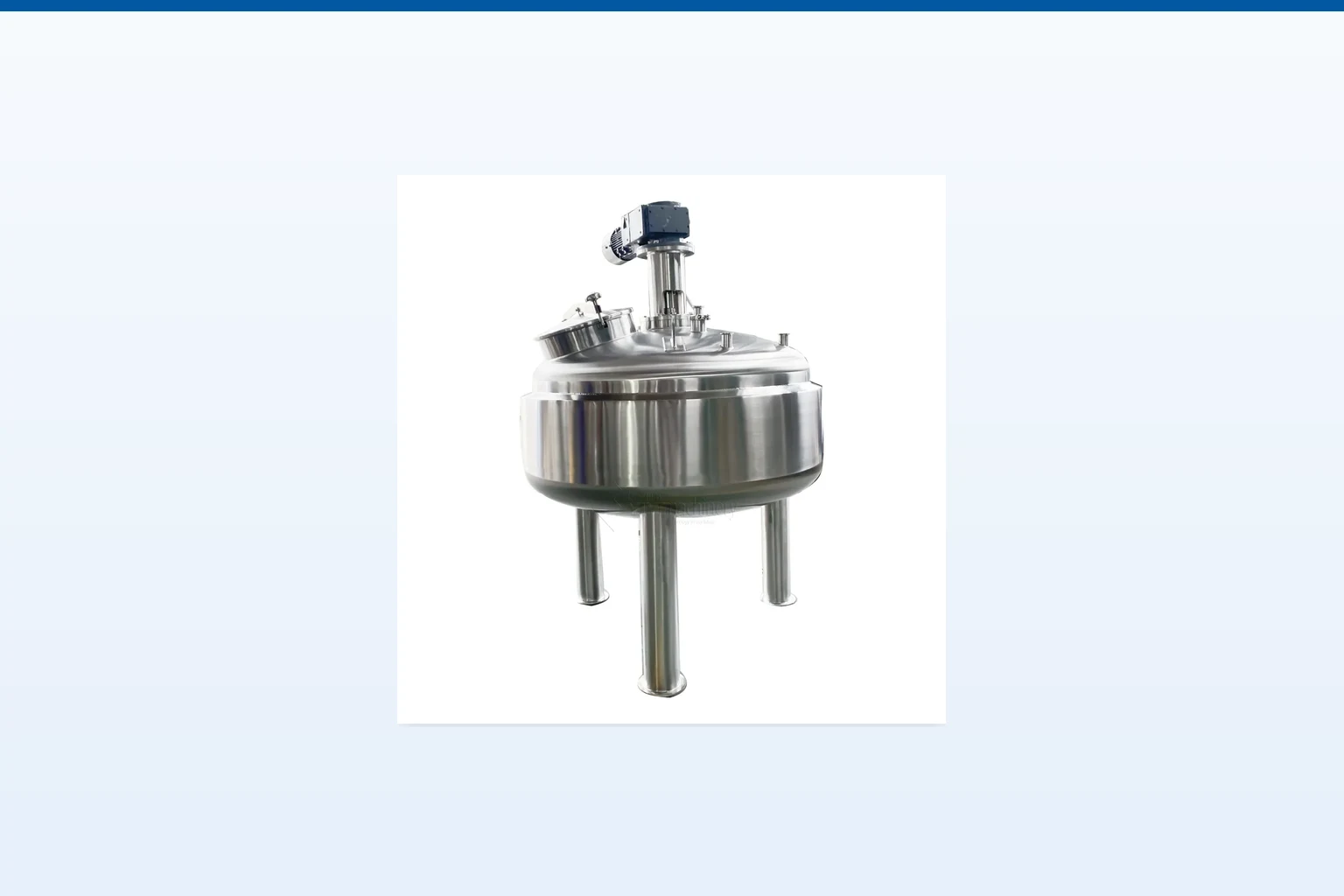
YIYI publishes an 800L mixing tank and stainless steel mixing tank with agitator as equipment context. Confirm the exact material and documentation in the quote, then request a quote with the Part 6 information.
FAQ
What is the difference between 304 and 316 mixing tanks?
They are different stainless families used in process equipment. The correct selection depends on chemistry, temperature, cleaning, and required documentation.
Is 316L always better?
No. It may be appropriate for certain corrosion concerns, but cost and material choice should follow the actual service conditions.
Do chlorides require 316L?
Chlorides require a process-specific review. Concentration, temperature, exposure time, and geometry all matter.
Does surface finish matter?
Yes. Finish affects cleanability, deposits, and hygienic inspection expectations.
Can 304 be used for food?
It can be used in defined food duties. The owner should specify product, cleaning chemistry, finish, and sanitary requirements.
What documents should buyers request?
Request wetted material records, finish and weld scope, passivation scope if required, drawings, and stated technical assumptions.
How should welds be specified?
State product-contact finish, inspection, post-weld treatment, and any hygienic design requirement.
When is an alloy review needed?
Use a project-specific review when product or cleaning chemicals, salts, acids, temperature, or corrosion history create uncertainty.
References
- ASTM International — material-specification framework
- 3-A Sanitary Standards — hygienic equipment context
- ISO standards catalogue — quality/documentation context