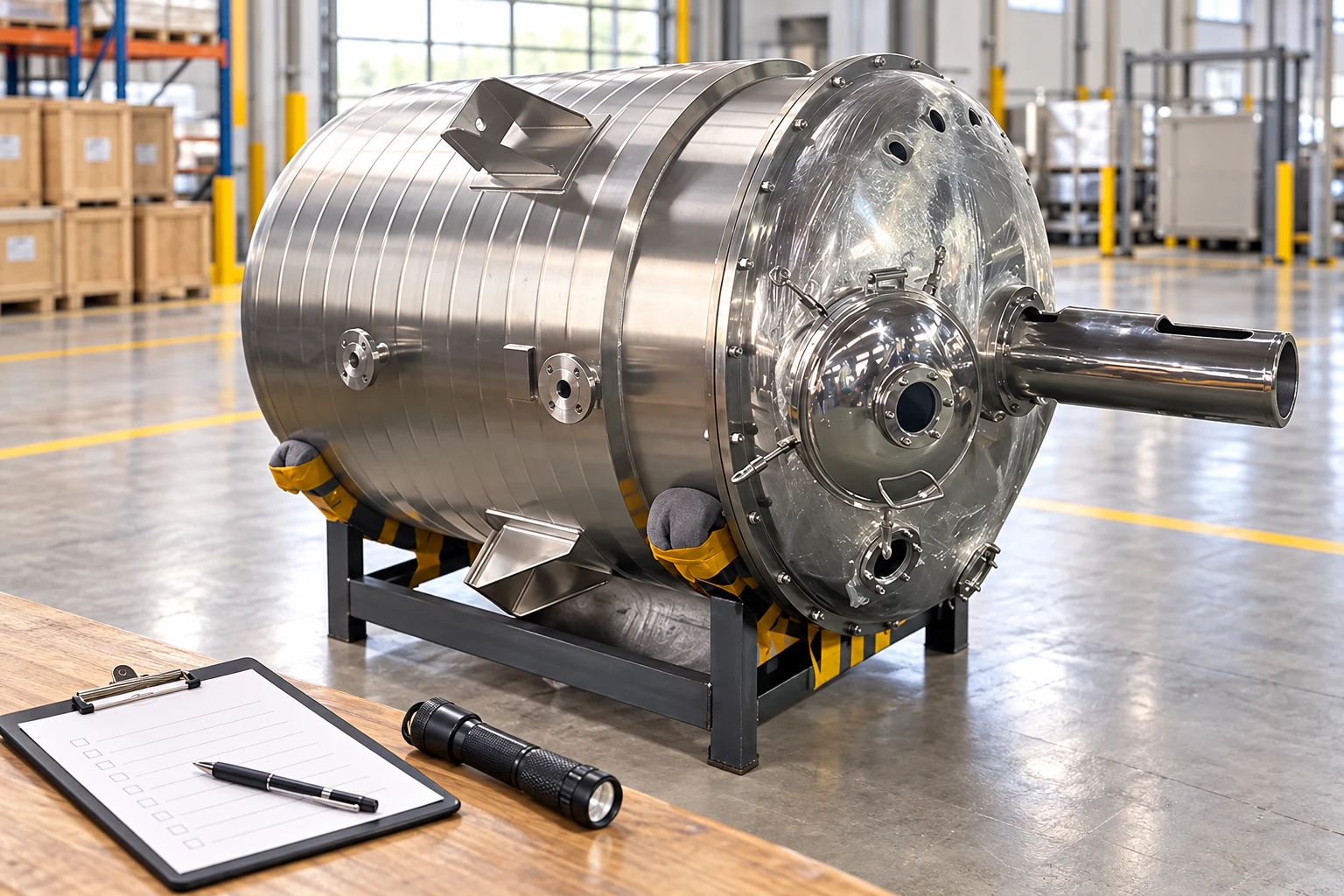
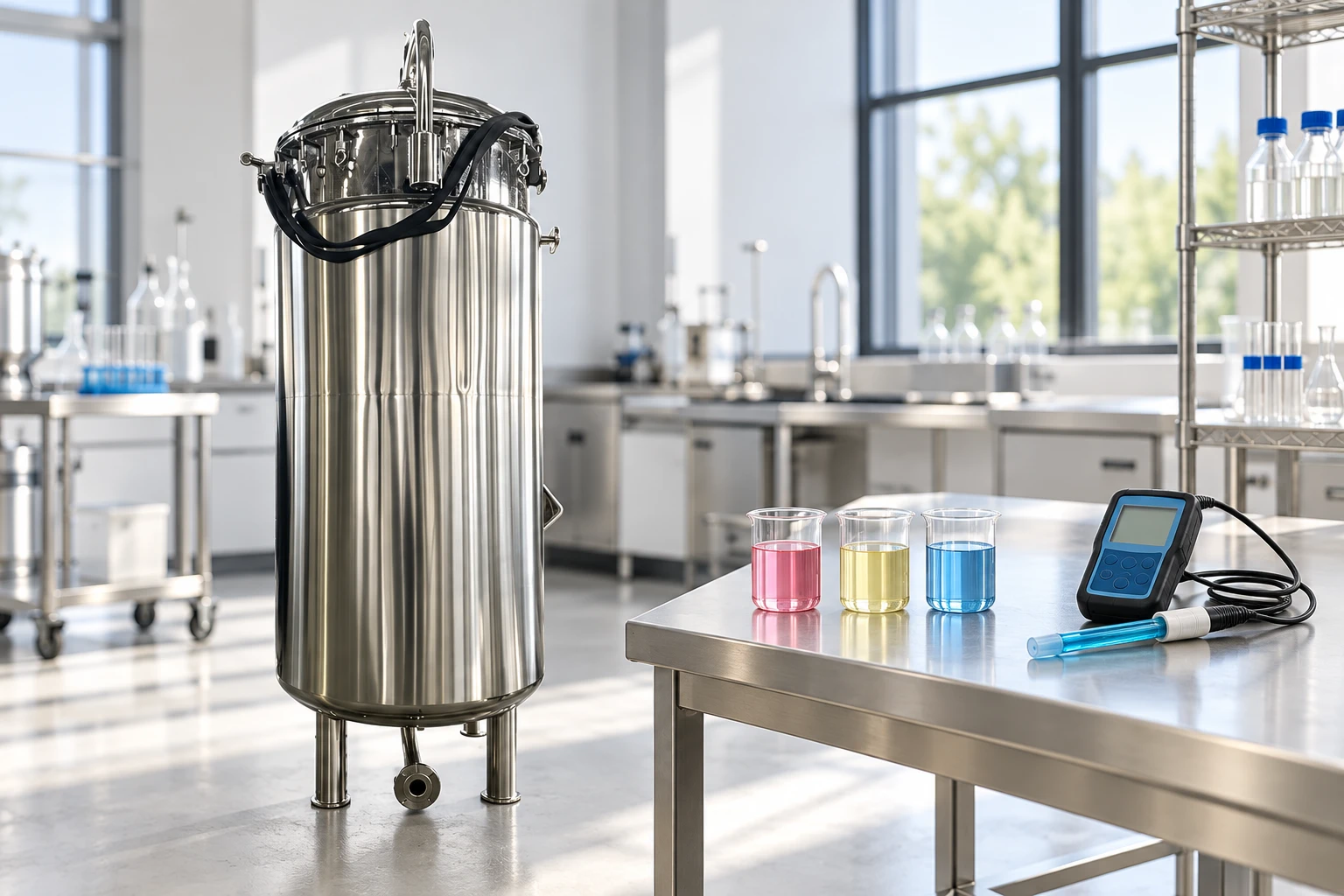
A vacuum emulsifying mixer homogenizes oil and water phases into stable droplets while the vessel headspace is held below atmospheric pressure. The combination reduces entrained air, improves surface finish on creams and sauces, and supports repeatable emulsion quality for gels that would foam or oxidize in open tanks.
This guide covers selection for creams, sauces, and gels: shear stages, vacuum hold, materials, and RFQ lines. Product examples reference published YIYI INTELLIGENT SKUs; homogenizer pressure, tip speed, and certification must be confirmed on the quotation.
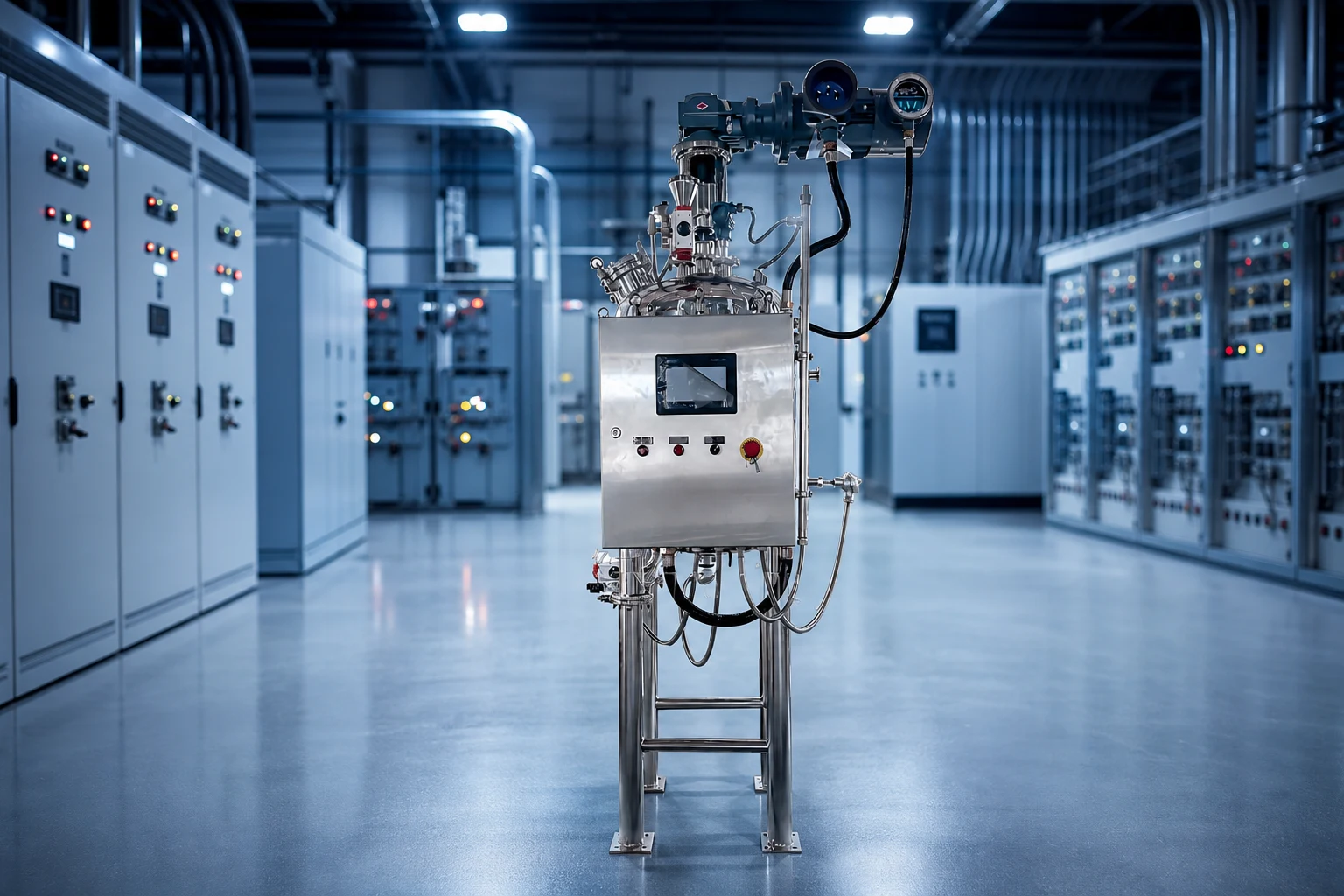
Part 1. What is a vacuum emulsifying mixer?
The system typically includes a jacketed or heated vessel, low-speed anchor or sweep agitation, high-shear homogenizer or rotor-stator, and a vacuum pump that pulls headspace during emulsification and deaeration steps. Creams and gels often need two-speed mixing: slow sweep for heat transfer and fast homogenizer for droplet size reduction.
Vacuum emulsifying mixers differ from general vacuum mixing tanks, which may target degassing without fine homogenization—see the vacuum mixing tank guide for that comparison. They also differ from magnetic stirrer tanks used for low-shear laboratory-style duty.
| Component | Function | Buyer question |
|---|---|---|
| Vessel | Contains phases during emulsification | Working volume and headspace? |
| High-shear head | Creates fine droplets | Immersed vs inline homogenizer? |
| Low-speed agitator | Scoops viscous walls | Anchor or ribbon? |
| Vacuum package | Deaerates during emulsification | Target pressure and hold? |
| Temperature control | Melts fats, controls viscosity | Jacket fluid and setpoints? |
Start with the mixing tank category, then narrow to emulsification-capable equipment with published vacuum scope.
Part 2. Why emulsify creams, sauces, and gels under vacuum?
Air entrainment shows up as grainy texture, post-fill collapse, or package swelling in sensitive emulsions. Vacuum during homogenization lowers the gas partial pressure in headspace so fewer bubbles survive shear and cooling.
| Quality risk | Atmospheric emulsification symptom | Vacuum emulsification benefit |
|---|---|---|
| Air in cream | Whipped appearance, density drift | Finer, denser texture after hold |
| Sauce foam | Fill-line inconsistency | Collapsed foam before hot fill |
| Gel oxidation | Color shift over shelf life | Reduced oxygen during mix |
| Water-in-oil sauces | Phase instability | More repeatable droplet distribution |
Tip: Run pilot batches with the same cooling curve as production. Vacuum benefits disappear if hot fill reintroduces air—document fill temperature and headspace vent steps (3-A sanitary practices for food owners).
Background on stainless construction appears in what is a stainless steel mixing tank.
Part 3. How do product types change shear and vacuum requirements?
Creams, sauces, and gels sit on different parts of the viscosity and phase-volume curve. RFQs should name the continuous and dispersed phases, not only the marketing product name.
| Product type | Phase notes | Typical shear and vacuum emphasis |
|---|---|---|
| Cosmetic creams | High oil phase, shear-sensitive actives | Moderate vacuum hold; controlled homogenizer passes |
| Food sauces (emulsion) | Water continuous with oil droplets | Higher homogenizer duty; hot emulsification |
| Fruit gels and pectin bases | Viscosity rises on cool | Vacuum before cool-down; anchor agitation |
| Thick dressing | Particulates present | Avoid excessive homogenizer passes on solids |
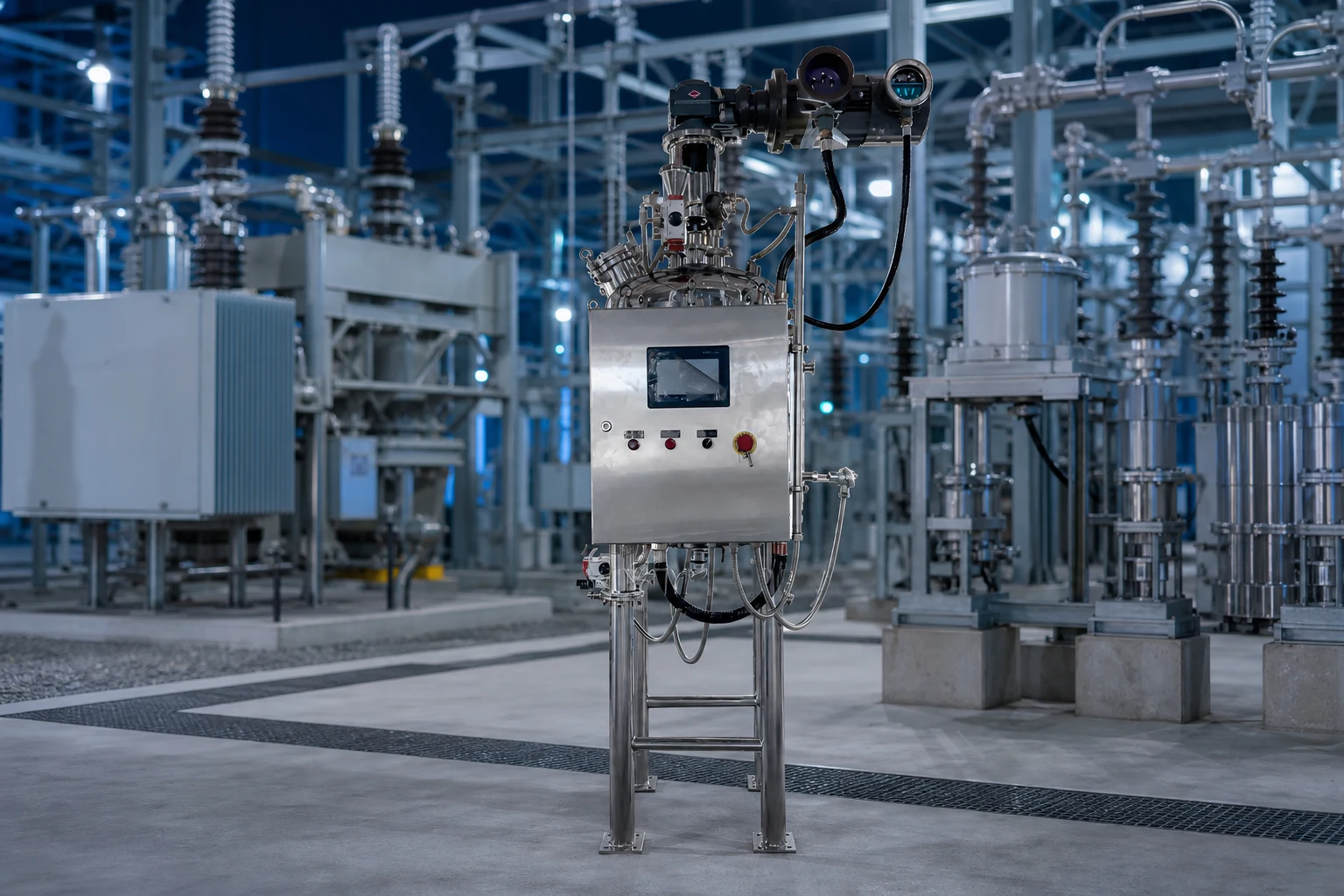
Heated emulsions may still require jacket specification—cross-check oil jacketed mixing tank procurement inputs when stable jacket temperature is part of the same RFQ.
Part 4. What vessel features and agitator stages matter?
Buyers should list homogenizer location (top, bottom, or side), whether multiple shear stages are required, and how vacuum interlocks with homogenizer start.
| Feature | RFQ detail | Risk if vague |
|---|---|---|
| Homogenizer type | Rotor-stator, colloid mill class | Wrong droplet size |
| Pass count | Single or recirculation loops | Over-shear of actives |
| Anchor speed | RPM band for wall scrape | Burn-on on heated creams |
| Vacuum sequence | Pull before or during homogenization | Persistent foam |
| Discharge | Press-out vs gravity | Shear after emulsification |
Important: Hazardous-area ratings and pressure equipment codes such as ASME BPVC Section VIII apply only when the project includes those boundaries—state them on the RFQ rather than assuming default compliance (see vessel scope notes in the magnetic stirrer tank guide for related seal topics).
Part 5. Which materials and CIP design fit sanitary batches?
Food and cosmetic emulsions need cleanable surfaces, sanitary fittings, and elastomers that survive CIP chemistry and vacuum cycles.
| Service | Material starting point | CIP and design notes |
|---|---|---|
| Food emulsion sauces | 316L sanitary | CIP spray balls, sloped bottom, drainable homogenizer loop |
| Cosmetics | 316L | Fragrance-compatible seals; polished product contact |
| Chemical gels | Alloy per compatibility chart | Solvent venting under vacuum |
| Shared multi-product lines | 316L + validation scope | Cleaning validation protocol in RFQ |
Request internal surface finish, drain point locations, and whether homogenizer heads are tool-free removable for inspection.
Part 6. What belongs in a vacuum emulsifying mixer RFQ?
Procurement packages should connect formulation data with mechanical scope.
| RFQ section | Example inputs |
|---|---|
| Formulation | Oil %, water %, solids, melting points |
| Process | Emulsification temperature, cool-down profile |
| Vacuum | Target pressure, hold time, vent sequence |
| Shear | Homogenizer model class, pass count limits |
| Batch size | Minimum and maximum working volume |
| Materials | 304 vs 316L, elastomer list |
| Utilities | Steam, oil jacket, or electric heat; vacuum pump power |
| Documentation | Droplet size target (if lab method exists), FAT checklist |
Reference published equipment classes such as the vacuum emulsification homogenizer or emulsification tank when describing desired configuration—not as a substitute for project-specific sizing.
Part 7. What quoting mistakes appear, and which YIYI lines fit?
Quotes fail when homogenizer power is sized for water, when vacuum pump ignores solvent vapor load, or when minimum batch volume sits below homogenizer immersion depth.
| Mistake | Field symptom | Prevention |
|---|---|---|
| One-speed shear for all products | Separated phases or damaged actives | List viscosity vs temperature curve |
| No vacuum hold step | Foam after fill | Define hold pressure and duration |
| Jacket undersized | Long heat-up; burnt wall | State fat melt temperature and batch mass |
| CIP not matched to geometry | Residue in homogenizer loop | Request CIP diagram with RFQ |
Fit boundary: Vacuum emulsifying mixers fit stable emulsion targets for creams, sauces, and gels. Simple single-phase blending without emulsion quality requirements may not justify the equipment complexity.
YIYI publishes the vacuum emulsification homogenizer and emulsification tank in the mixing tank range. Confirm published capacity and configuration on the SKU page before purchase. For project layouts, request a quote with Part 6 data.
FAQ
What is a vacuum emulsifying mixer?
It is a vessel system that homogenizes emulsions while headspace is held under vacuum to limit air entrainment.
Why emulsify under vacuum?
Vacuum reduces dissolved and entrained gas, which improves texture and stability in many creams, sauces, and gels.
Can one mixer handle creams and thin sauces?
Sometimes, if homogenizer speed and pass count are adjustable. State both products in the RFQ so suppliers confirm shear range.
What is high-shear vs low-shear in the same vessel?
Low-speed anchor mixing moves viscous walls; high-shear homogenizer reduces droplet size. Sequence and timing matter.
What batch size should buyers list?
Minimum and maximum working volume, including whether the homogenizer remains submerged at minimum fill.
How is this different from a vacuum mixing tank?
Vacuum mixing tanks may focus on degassing with moderate shear. Vacuum emulsifying mixers target fine emulsion droplets under vacuum.
What documentation should cosmetic buyers request?
Surface finish records, elastomer compatibility statements, CIP validation scope, and homogenizer maintenance instructions.
Which YIYI product pages apply?
See the vacuum emulsification homogenizer and emulsification tank for published examples.
References
- ASME BPVC Section VIII — Pressure Vessels — pressure boundary scope when applicable
- 3-A Sanitary Standards — sanitary equipment expectations for food and dairy owners
- FDA Food Code reference materials — general food production hygiene framing for emulsion lines