An electric heating stirrer tank heats and mixes product in one vessel using electric resistance elements—often in a jacket, through immersion heaters, or in a mobile heating module—instead of relying on plant steam or a thermal oil loop. Buyers specify these tanks when they need controlled batch temperature, uniform agitation, and a compact heating source at moderate temperature ranges.
This guide explains heater layouts, control expectations, material choices, and RFQ lines for process plants comparing electric, steam, and thermal oil options. Product examples reference published YIYI INTELLIGENT mixing tank lines; project-specific ratings must be confirmed on the exact quotation.
Part 1. What is an electric heating stirrer tank?
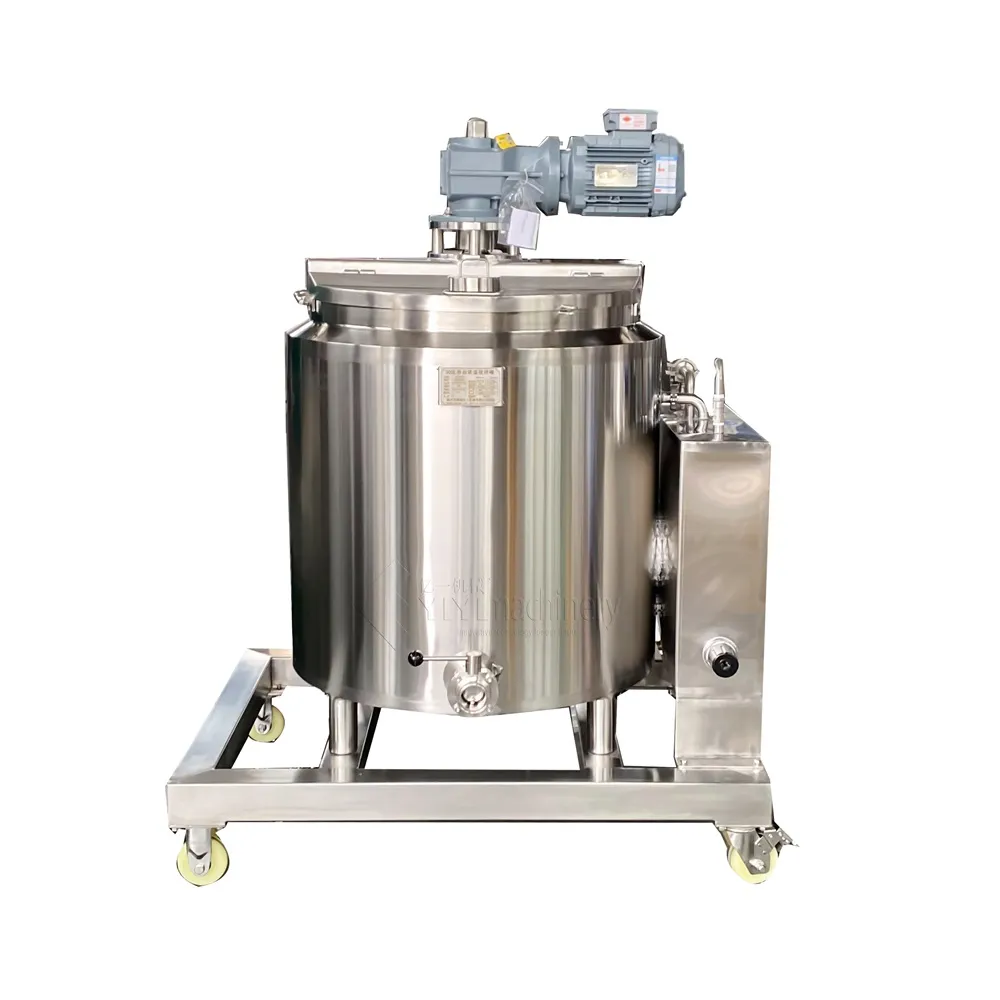
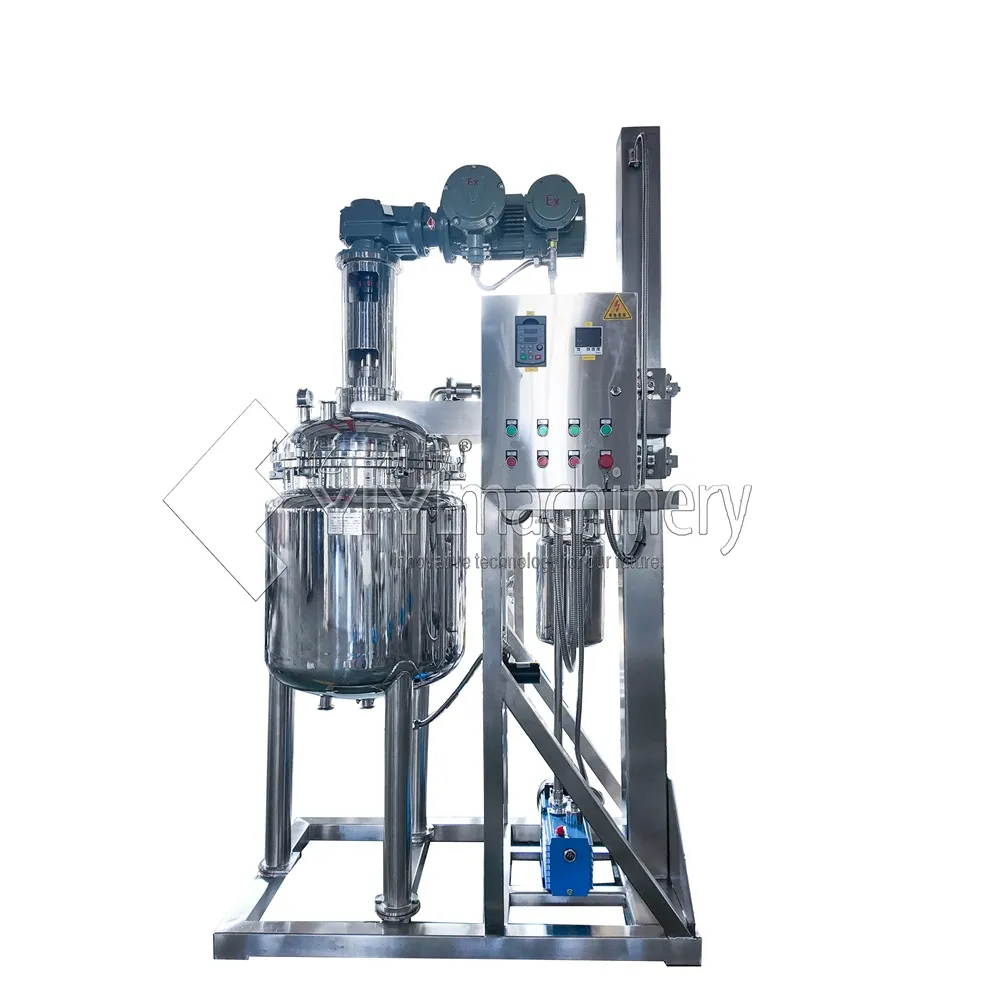
The vessel performs two jobs at once: agitation for blending, suspension, or heat transfer at the liquid surface, and electric heating to raise or hold batch temperature. The stirrer may be top-entering, side-entering, or bottom-mounted depending on viscosity and cleanability targets.
Electric heated stirred tanks appear in food sauces, dairy preparation, cosmetic emulsions, pharmaceutical intermediates, and chemical batches where adding a steam boiler or thermal oil system is unnecessary or uneconomical for that line.
| Component | Function | Buyer question |
|---|---|---|
| Vessel shell | Contains product and pressure boundary | What volume and head space are required? |
| Agitator | Blending and heat distribution | Which impeller type matches viscosity? |
| Electric heater | Adds thermal energy | Jacket, immersion, or mobile module? |
| Temperature control | Holds setpoint | PID panel, zones, or simple thermostat? |
| Seals and ports | Charging, sampling, CIP | How many nozzles and sight glasses? |
Browse the stainless steel mixing tanks category for capacity and configuration families before narrowing heater type.
Part 2. How do electric heater layouts work in stirred vessels?
Buyers first choose how heat crosses the boundary into product: through the wall, through submerged elements, or through a packaged mobile module. Each path changes cleaning, response time, and maintenance.
| Layout | How heat enters the batch | Typical use | Limitation |
|---|---|---|---|
| Jacket with electric heaters | Heat transfers through vessel wall | Viscous or sanitary batches where immersion is undesirable | Slower response than direct immersion |
| Immersion elements | Heaters submerged in product or thermal well | Faster heat-up in low-viscosity fluids | Cleaning and coating compatibility must be checked |
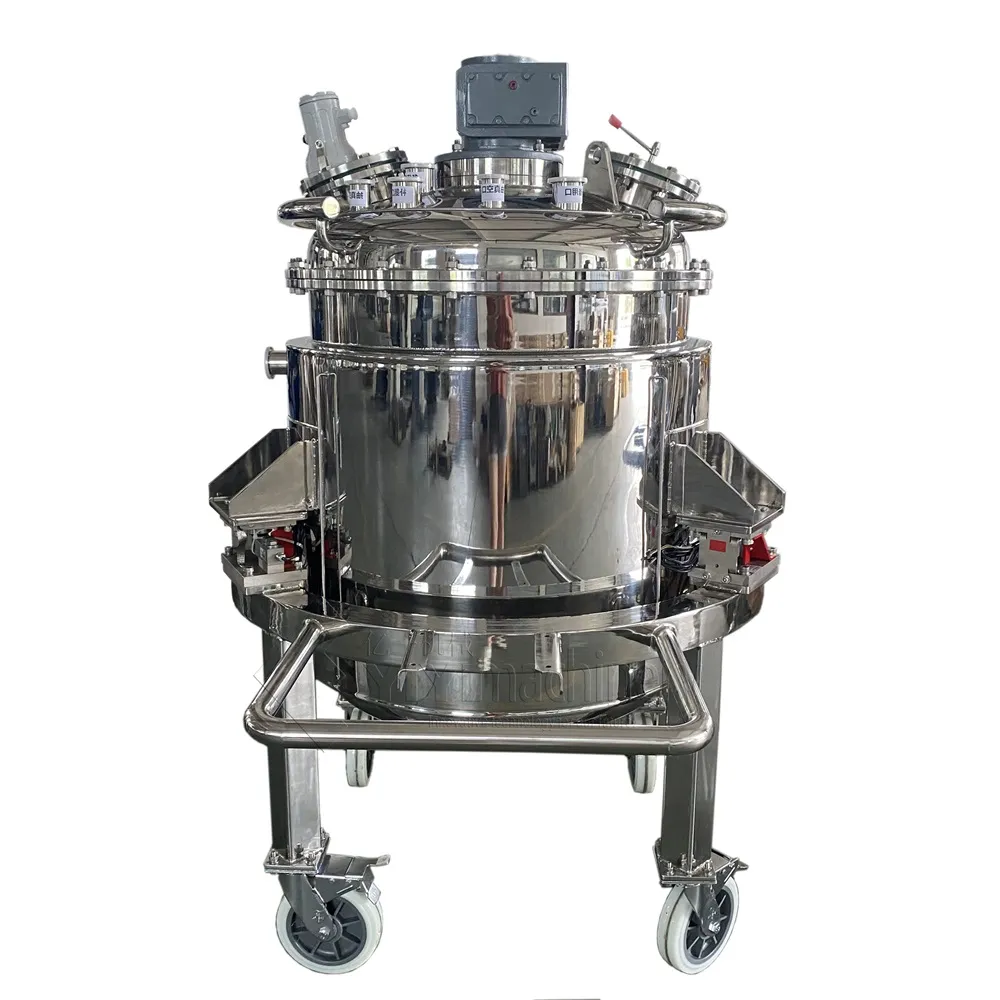
| Mobile electric heating module | Packaged unit paired with portable tank | Pilot batches, multi-product lines | Verify mobility and connection standardization |
Moving fluid across heated surfaces reduces wall hot spots. Viscous batches usually need anchor or helical ribbon agitators; low-viscosity blends may use turbine or propeller impellers instead. Match agitator speed to whether the product tolerates shear heating.
Tip: Ask suppliers to state whether heaters are removable for inspection and whether spare elements are included in the quotation (IEC 60519 industrial electroheat scope).
Part 3. When is electric heating preferable to steam or thermal oil?
Electric heating is attractive when no steam header is available, when temperature setpoints stay in a moderate band, or when installation simplicity matters more than the lowest operating energy cost at very high duty.
| Factor | Electric heating stirrer tank | Steam jacket (see steam jacketed mixing tank guide) | Thermal oil jacket |
|---|---|---|---|
| Utility on site | Electrical supply only | Steam boiler and condensate handling | Thermal oil loop and expansion tank |
| Response | Good with immersion; moderate with jacket | Fast with well-sized jacket | Stable for high-temperature hold |
| Maintenance | Element replacement | Traps, condensate, corrosion checks | Fluid analysis, loop leaks |
| Best fit signal | New line, pilot plant, moderate T | Steam already standard | High or uniform jacket temperature |
Electric is not automatically cheaper to run at every duty cycle. Compare connected kW, batch cycle time, and standby losses against your utility tariffs. If your plant already runs steam for other units, a steam jacket may integrate better even though electric remains valid for isolated lines.
General background on combined heating and agitation appears in the article on heating and stirring tanks.
Part 4. What temperature control and safety features should buyers specify?
Temperature control ranges from simple thermostats to multi-zone PID panels with chart recorders for batch traceability. Food and pharmaceutical buyers often request over-temperature protection, sensor redundancy, and alarm outputs to the plant DCS.
| Control topic | Minimum RFQ detail | Why it matters |
|---|---|---|
| Setpoint range | Min/max operating temperature | Sizes heater and insulation |
| Control accuracy | ±°C band required | Defines sensor and controller class |
| Zones | Single or divided jacket zones | Large tanks may need multiple loops |
| Interlocks | High-limit cutout, low-level heater enable | Prevents dry firing on jacketed units |
| Documentation | Wiring diagram, sensor locations | Speeds site acceptance |
Important: Hazardous-area electrical ratings, ATEX/IECEx classifications, and pressure-vessel codes such as ASME BPVC Section VIII apply only when the project scope includes those boundaries—state them explicitly in the RFQ rather than assuming default compliance.
Part 5. Which tank materials and finishes fit food vs chemical batches?
Stainless steel 304 and 316L are the common shell materials for electric heated mixing tanks. 316L is often selected for chlorides, certain acids, or cleaning chemicals; 304 may suffice for many food and cosmetic duties when the supplier confirms compatibility with your product and CIP chemistry.
| Service | Material starting point | Finish and design notes |
|---|---|---|
| Food, dairy, beverage | 304 or 316L with sanitary welds | Sloped bottom, CIP spray balls, 3-A sanitary expectations where required by owner |
| Cosmetic / personal care | 316L common for aggressive surfactants | Verify seal elastomers against fragrances and solvents |
| General chemical | 316L or higher alloy per compatibility chart | Grounding, venting, and seal materials per MSDS |
| Pharmaceutical intermediate | 316L + documented surface finish | Request supplier quality documentation scope |
Internal polish, passivation, and drainability affect both cleaning time and heating uniformity. A stagnant heel below the agitator can overheat near electric jackets if drainage is poor.
Part 6. What belongs in an electric heated mixing tank RFQ?
A usable RFQ turns catalog photos into testable quotations. Include process data, electrical constraints, and mechanical interfaces in one package.
| RFQ section | Example inputs |
|---|---|
| Process | Product name, viscosity range, batch volume, fill level |
| Thermal | Target temperature, heat-up time, hold time, ambient conditions |
| Agitation | Required tip speed or torque band, shear sensitivity |
| Electrical | Available voltage/phase, desired kW envelope, control protocol |
| Mechanical | Nozzle schedule, sight glass, manway, mobility requirements |
| Materials | 304 vs 316L, gasket elastomer, internal finish |
| Standards | Sanitary, pressure, electrical area classification (if any) |
| Documentation | P&ID support, FAT checklist, spare heater list |
Attach a single-line diagram showing how the tank connects to charging, discharge, and CIP if those systems already exist. Suppliers can then confirm whether a heated mixing tank with sight glass jacket class unit fits or whether a dedicated electric module tank is simpler.
Part 7. What sizing mistakes appear in quotes, and which YIYI lines fit?
Quotes fail in the field when heat-up time is calculated at minimum fill but the plant runs at maximum fill, when agitator power is sized for water-like viscosity but product is non-Newtonian, or when heater kW is quoted without stating available supply voltage.
| Mistake | Field symptom | Prevention |
|---|---|---|
| Undersized kW | Batch never reaches setpoint on cold start | State initial product temperature and heat-up minutes |
| Wrong impeller class | Poor blending or excessive shear | Provide viscosity curve or cup measurement |
| Jacket-only on thick product | Hot spots at wall | Consider anchor agitator and longer cycle |
| Missing mobility needs | Installation mismatch | Specify casters, lifting lugs, or fixed skid |
Fit boundary: Electric heated stirred tanks fit moderate-temperature batch lines without site steam. They are a weak default for very high continuous duty where thermal oil is already standardized, or for hazardous electrical areas without verified classifications.
YIYI publishes examples such as the electric heating mobile tank for portable electric heat applications and jacketed heated units in the mixing tank range. Confirm capacity, kW, and certification on the exact SKU page before purchase. For project-specific layouts, request a quote with the RFQ sections in Part 6.
FAQ
What is the difference between an electric heating stirrer tank and a standard mixing tank?
A standard mixing tank may have no heat source. An electric heating stirrer tank adds resistance heating and the controls needed to hold batch temperature while agitating.
Can electric heated mixing tanks replace steam jackets?
They can when temperature duty is moderate and electricity is the preferred utility. Plants with existing steam often still choose steam jackets for integration and duty cost—compare both for your tariff and batch cycle.
Do immersion heaters always heat faster than electric jackets?
Immersion generally gives faster response because heat enters the fluid directly. Jackets protect product from direct element contact and can be easier to clean in sanitary designs.
What voltage should buyers list in an RFQ?
State available phase, voltage, and any site limitation on connected load. Suppliers size elements and panels to that supply.
Are electric heating stirrer tanks suitable for viscous sauces?
Yes when agitator type and jacket surface area match viscosity. Very high viscosity may need anchor or ribbon agitators and longer heat-up times—state viscosity in the RFQ.
What documentation should food plants request?
Surface finish records, material certificates, sanitary weld scope, and control calibration checks. Map requests to owner standards such as 3-A sanitary practices where applicable.
How does this relate to stainless steel mixing tank basics?
Start with general construction in what is a stainless steel mixing tank, then return here for electric heat specification.
When should buyers also review thermal oil heating?
If jacket temperature must stay high and stable across long holds, review thermal oil heated options in a dedicated selection guide for viscous products once published in the mixing tank cluster.
References
- ASME BPVC Section VIII — Pressure Vessels Division 1 — pressure boundary scope when applicable
- 3-A Sanitary Standards — sanitary equipment expectations for food and dairy owners
- IEC 60519 industrial electroheat publications — industrial electric heating equipment safety framing