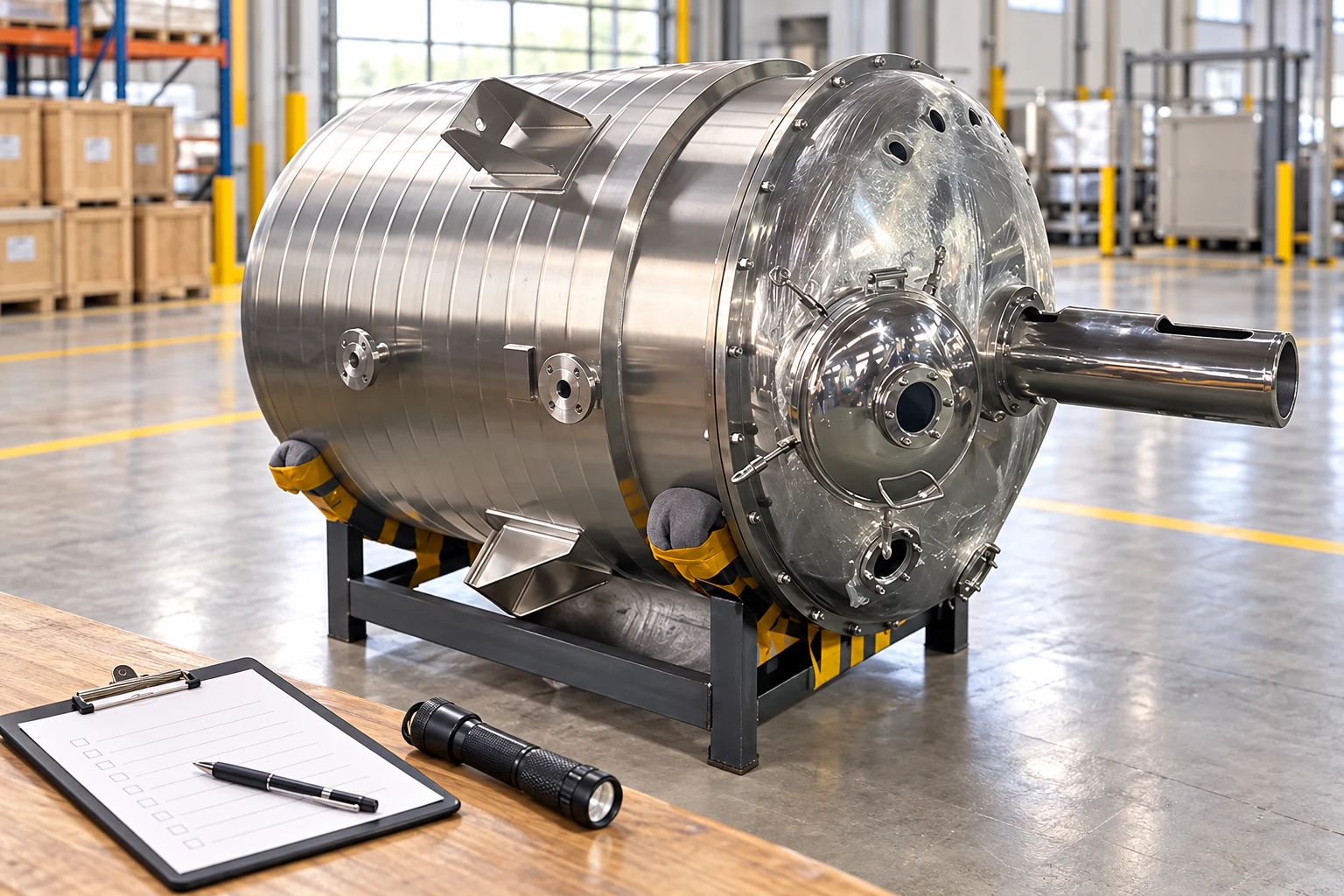
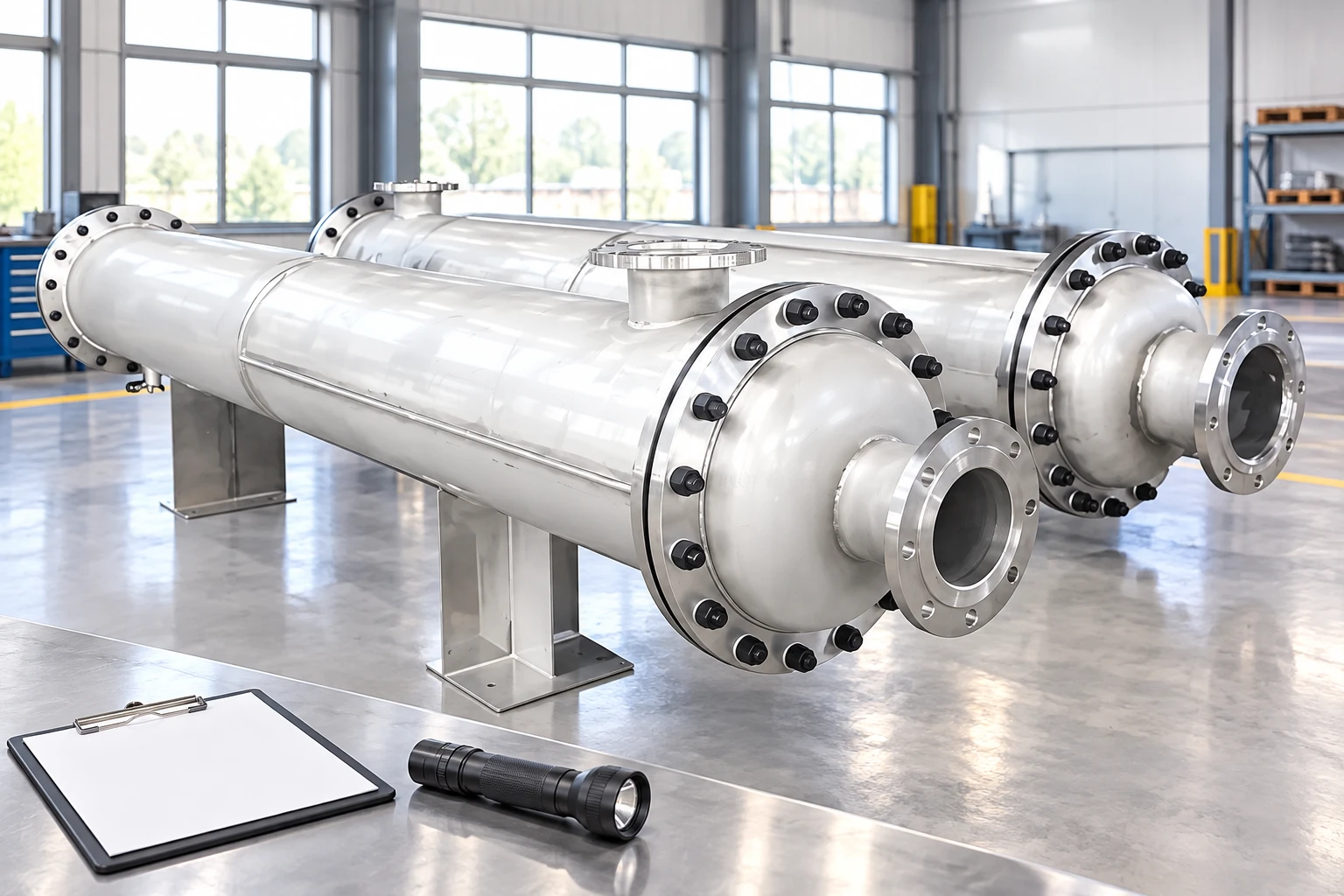
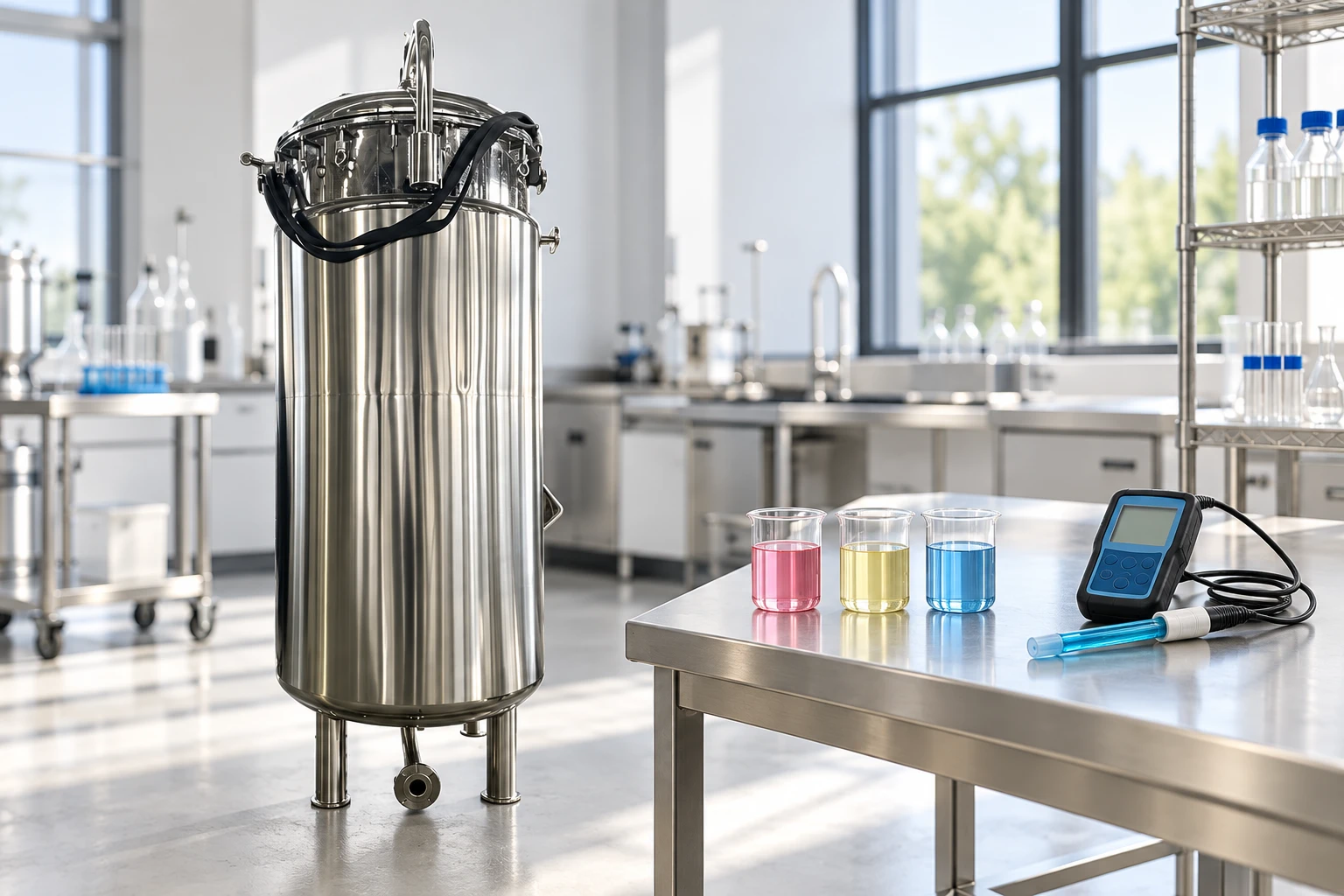
A hot water buffer tank stores usable water so generation and variable demand can be managed as separate parts of a utility loop. Its useful size depends on the draw profile, temperature range, recovery source, recirculation, losses, controls, and acceptance method. A nominal tank volume alone does not prove a CIP result, a recovery time, or a temperature-hold outcome.
This guide gives process buyers a practical way to prepare a hot-water buffer-tank RFQ. For a broader utility vessel overview, read the industrial water storage tank guide. Insulation questions are expanded in the heated storage tank heat-loss article.

Part 1. What Role Does a Hot Water Buffer Tank Play?
A buffer tank provides stored water between a heat source and changing demand. In a CIP or process-heating loop, that storage can help a system address a short draw without assuming the heater must instantaneously match every peak. The vessel is only one part of the arrangement: heater, recirculation, distribution piping, valves, controls, insulation, and point-of-use requirements still need their own scope.
Define the intended role in plain language. Is the tank meant to bridge a short cleaning draw, smooth intermittent consumption, provide a reserve before a batch, or support a controlled temperature hold? The answer changes the information a supplier needs.
| Duty question | Record for the RFQ | Why it matters |
|---|---|---|
| Demand event | Start time, duration, flow expectation, and repeat frequency | Identifies peak and repeated draws |
| Water temperature | Supply, return, target, and permitted range | Defines the thermal-control question |
| Recovery source | Heater type, available utility, and assumed recovery period | Prevents an unstated generation assumption |
| Loop arrangement | Recirculation, distribution, and point-of-use sequence | Shows where storage sits in the system |
| Acceptance method | Temperature check, draw test, or approved plant procedure | Replaces a generic performance promise |
Part 2. Which Utility Inputs Define the Duty?
The most useful RFQ describes the duty as a time sequence. State what happens before the draw, during it, and between draws. A single daily total can hide the difference between a steady demand and several short high-demand events. Include the number of users or stations only when it is paired with their actual operating sequence.
Water quality and cleaning method also belong in the record. Minerals, treatment chemicals, sanitising agents, and any required cleaning procedure can affect material, drain, access, and maintenance questions. A storage-tank category page is configuration context, not evidence that a particular loop is hygienic or validated.
| Utility input | Buyer question | Evidence to request |
|---|---|---|
| Draw pattern | What is drawn at each event and for how long? | Plant demand schedule |
| Temperature range | Which values are nominal and which are limits? | Operating and cleaning profile |
| Water condition | Is treatment, hardness, or chemical exposure relevant? | Plant water and cleaning information |
| Location | Indoor/outdoor, ambient conditions, and access constraints? | Installation boundary |
Part 3. How Should Demand and Recovery Be Compared?
Compare stored energy and recovery over the same operating window. A buffer tank can contribute while the heater recovers, but neither should be assessed in isolation. Ask the project team to identify the largest event, the time until the next event, the normal return temperature where applicable, and whether multiple users can draw at once.
Avoid a universal sizing formula in a catalog discussion. Heat loss, product or water temperature, heater output, controls, stratification, recirculation, piping losses, and operating discipline all change the result. A supplier proposal should state the assumptions it used and leave room for the plant to confirm them.

| Comparison item | Ask before quotation | Reason for the question |
|---|---|---|
| Peak demand | Which draw is largest and can draws overlap? | Establishes the critical event |
| Recovery window | How long exists before the next demand event? | Links storage to generation |
| Thermal losses | What insulation and piping conditions apply? | Avoids assuming perfect temperature hold |
| Control sequence | Which device starts heating, circulates, or alarms? | Clarifies automation responsibility |
Part 4. Which Temperature, Insulation, and Circulation Details Matter?
State the required temperature range and the permitted operating variation, then identify where temperature is measured. A temperature sensor at one point does not automatically describe conditions throughout an entire loop. Recirculation arrangement, pipe routing, insulation, ambient exposure, and draw timing can all influence what arrives at a point of use.
Insulation is a system decision as well as a tank decision. Specify whether the tank, connections, valves, and external piping are inside the supplier scope. If access, removable insulation, or a washdown environment matters, include that in the RFQ rather than treating it as a later site detail.
Important: Hot-water utility work introduces burn and hot-surface risks. Define guarding, access, isolation, and the plant’s operating procedure rather than assuming a vessel alone resolves those risks (OSHA heat-exposure resources).
Part 5. What Hygiene, Drain, and Control Boundaries Need Evidence?
For CIP-related service, document drainability, low points, access, product-contact scope, spray or cleaning interface where relevant, and the exact cleaning procedure the plant expects to execute. EHEDG offers terminology for hygienic-design conversations, but it does not certify a specific tank or cleaning loop.
Controls should name measured variables, alarms, records, and exclusions. Temperature, level, heater enable, recirculation status, and overflow protection may be part of the system, yet the RFQ should identify who supplies each item and who validates the sequence. If a project has a defined code or pressure boundary, request the applicable documentation instead of inferring it from the term “buffer tank.”
Part 6. What Belongs in a Hot-Water Buffer-Tank RFQ?
Use the stainless steel storage tank family and a storage tank configuration reference as starting points. Then send the hot-water utility duty sheet to YIYI with the actual project inputs.
- Draw schedule, overlap scenario, temperature range, and acceptance method.
- Water condition, cleaning chemicals, drainage, hygiene, and access expectations.
- Heating source, available utility, recovery window, recirculation, insulation, and external piping boundary.
- Working volume, location, connections, instruments, alarms, records, and requested documents.
- Any pressure-relevant scope, safety interfaces, installation responsibility, and exclusions.

FAQs
What is the purpose of a hot water buffer tank?
It stores usable water between a heat source and changing demand. Its role and size must be matched to the actual draw and recovery sequence.
Is a buffer tank the same as a water heater?
No. A buffer tank provides storage; a heater provides energy. A project may combine them, but their capacities, controls, and boundaries should be specified separately.
How is hot water buffer volume selected?
Selection starts with the largest draw, repeat frequency, supply/return temperatures, recovery source, losses, controls, and acceptance method. Ask the supplier to document the assumptions.
Can a buffer tank guarantee CIP temperature at every use point?
No. Point-of-use temperature depends on the complete loop, including generation, recirculation, piping, losses, controls, and the validated plant procedure.
Why is insulation important for a hot-water buffer tank?
Insulation affects heat loss and personnel protection, but its result also depends on connections, valves, external piping, ambient conditions, and operating time.
What should a supplier quote include?
Request the vessel scope, material assumptions, connections, instruments, insulation boundary, cleaning and drain details, documents, exclusions, and the utility duty assumptions used.
References
- EHEDG — hygienic-design terminology for cleanability and utility interfaces.
- OSHA heat-exposure resources — public safety context for hot water and hot surfaces.
- ASME codes and standards — useful source for identifying applicable code questions in a defined hot-water utility boundary.