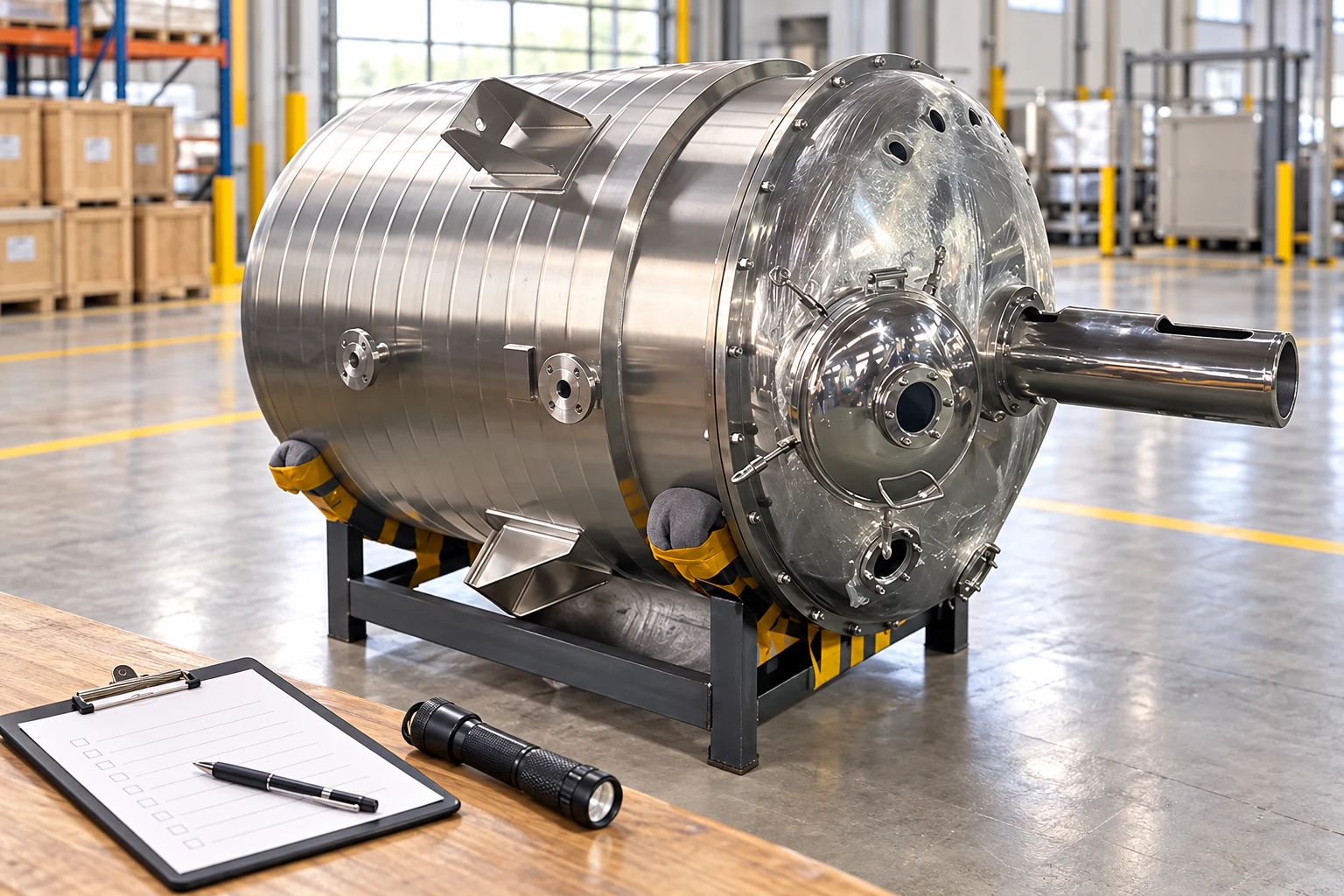
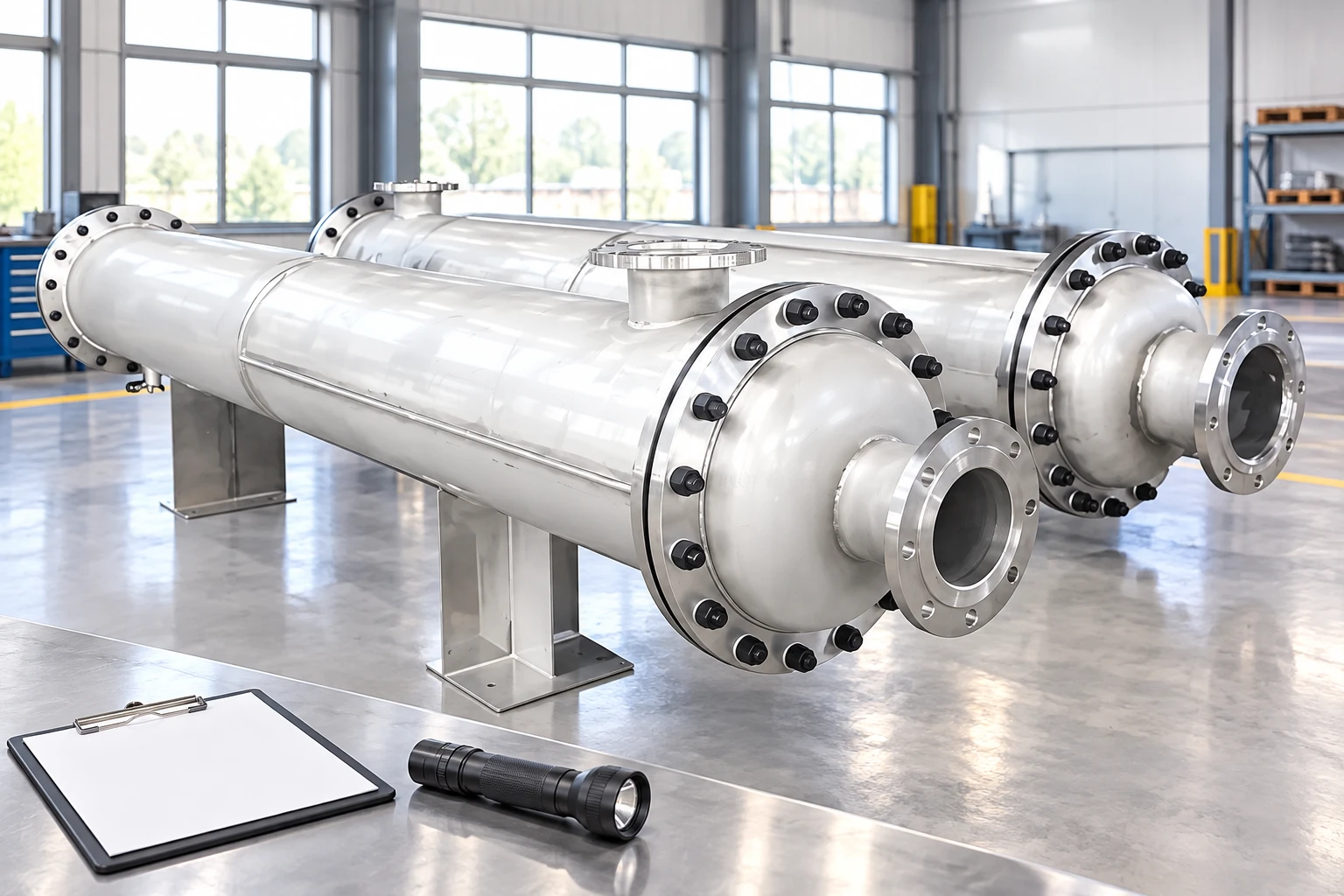
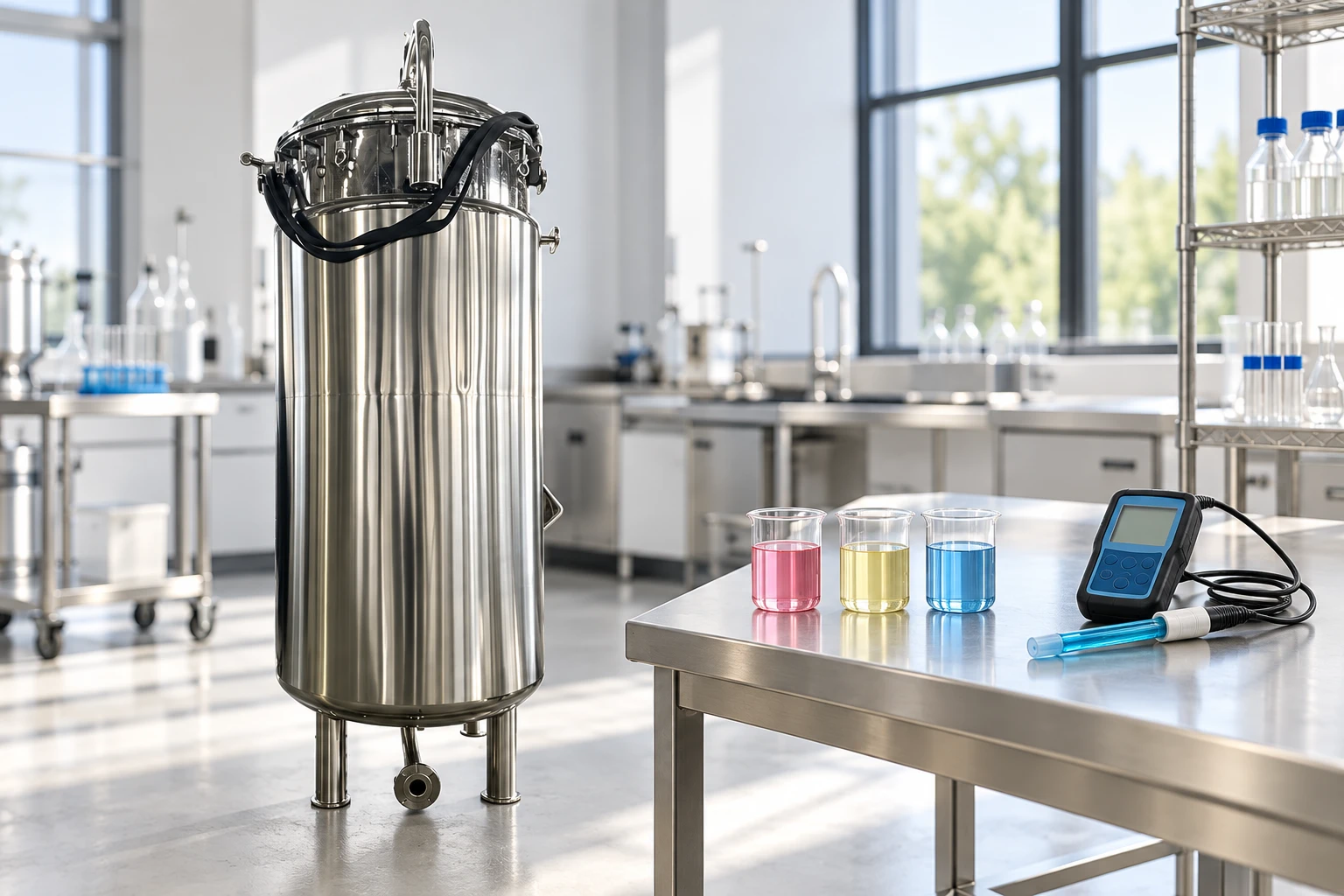
An industrial water storage tank is rarely selected by volume alone. The water may be process water, rinse water, utility water, treated water, or another defined service, and each duty changes the questions about capacity, material, turnover, access, and controls. A useful RFQ describes the operating role before it asks for a tank size.
Begin with the demand profile. Identify how water enters the tank, how it leaves, the highest and lowest expected demand, and the time the vessel must bridge a supply interruption or batch event. Those facts create a basis for usable capacity and the level-control narrative.

Part 1. Classify the Water Service
The phrase water storage tank covers several duties. A vessel supplying washdown water may have different cleanliness, turnover, material, and connection requirements from one holding treated process water or utility water. Identify the source, intended use, treatment status, expected temperature, and whether the water contacts product or equipment with a defined hygienic requirement.
Describe the tank’s place in the system. It may provide a short supply buffer, collect intermittent flow, support a batch sequence, feed a pump, or hold water before a downstream treatment step. Each function changes the consequences of low level, high level, and extended residence time.
The water source matters as much as the name. Provide available analysis data, including relevant dissolved solids, chlorides, pH, treatment chemicals, solids, and biological-control considerations where applicable. If the data is unavailable, state that it is pending rather than assume ordinary water service.
| Service question | What to record | Why it matters |
|---|---|---|
| Water source | municipal, treated, recovered, or process | Establishes quality baseline |
| Intended use | utility, rinse, process, or other | Sets cleanliness boundary |
| Temperature | normal, maximum, and minimum | Affects materials and controls |
| Demand pattern | steady, batch, or intermittent | Drives storage window |
| Downstream user | pump, washer, process unit, or header | Defines interfaces and alarms |
This classification should be agreed by operations, process engineering, and the group responsible for water quality. A supplier can then quote a vessel against a stated duty instead of guessing the service from its capacity.
Part 2. Calculate Nominal and Usable Capacity
Nominal capacity is the physical volume of the tank. Usable capacity is the volume available between the operating limits after allowing for low-level protection, high-level reserve, freeboard, and any level-control band. The two values can be materially different.
For a preliminary supply buffer, calculate the expected net demand over the event duration. If demand is higher than supply, the tank level falls by the difference multiplied by the event time. If supply is higher, the level rises. Use consistent units and record the assumptions around pump ramps, operator response, and recovery time.
Avoid treating one peak event as the whole design basis. Review normal demand, peak demand, refill time, planned shutdowns, supply interruptions, and whether the system needs a reserve for another function. The result should state the desired nominal volume and the intended usable operating range.
| Capacity term | Meaning | RFQ value |
|---|---|---|
| Nominal capacity | physical vessel volume | Envelope for quotation |
| Normal operating volume | inventory around the setpoint | Routine control basis |
| Usable volume | space between permitted levels | Supply-buffer capability |
| Low-level reserve | volume kept above protection point | Prevents pump or process upset |
| High-level reserve | volume below overflow or shutdown | Absorbs inflow variation |
For a broader orientation, why choose a vertical storage tank explains how installation geometry can affect a storage conversation. Geometry still needs to be checked against access, footprint, and maintenance requirements.
Part 3. Match Material to Water and Operating Conditions
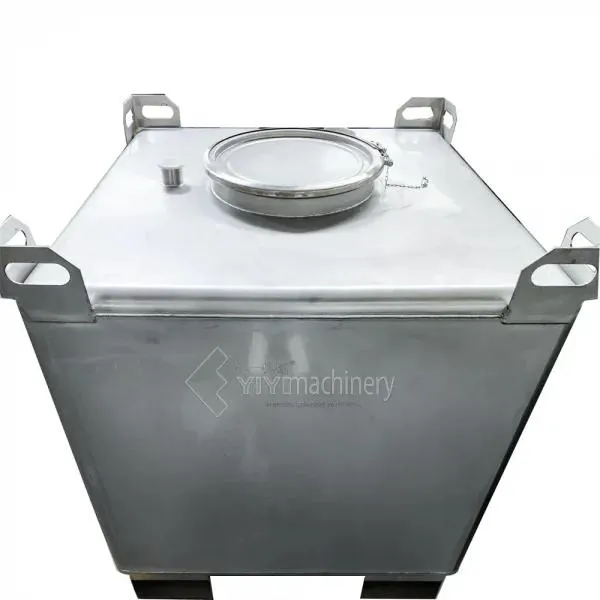
Material choice cannot be finalized from a generic description such as stainless steel water tank. Water chemistry, temperature, concentration changes, cleaning agents, external environment, weld and finish requirements, and the intended service all influence the review. Provide the most current water data and note expected changes during operation.
Corrosion questions should be made visible early. Ask whether the water is treated, recycled, chlorinated, softened, hot, stagnant, or exposed to contaminants from the process. Also define whether the tank is indoors or outdoors and whether it will see washdown, coastal air, insulation, or a corrosive surrounding atmosphere.
The supplier should be asked to state the material basis and assumptions, not to certify water compatibility from a brief description. When a material grade is proposed, keep the decision linked to the stated water analysis and operating range. A future change to chemistry or temperature may require another review.
| Material-review input | Why it belongs in the RFQ |
|---|---|
| Water analysis | Identifies relevant compatibility factors |
| Temperature range | Changes corrosion and sealing conditions |
| Cleaning agents | May affect internal surfaces and gaskets |
| External environment | Influences external protection scope |
| Required finish | Links cleanliness and maintenance needs |
The YIYI Mixing Tank category can support an initial discussion about configurable vessels and connections. It does not determine the correct material grade for a water-storage service.
Part 4. Define Controls, Overflow, and Turnover
Water storage requires an operating narrative as well as a vessel. Specify the normal level, low and low-low actions, high and high-high actions, instrument type, pump or valve response, overflow routing, and the responsible system for alarms. This makes the usable volume meaningful in operation.
Rather than treating overflow as capacity planning, define where water goes if the intended operating range is exceeded and what condition triggers a controlled response before it occurs. Include drainage, containment, and site requirements in the project scope.
Turnover deserves its own operating decision. Some services tolerate long hold periods; others need a defined replacement or circulation routine. The CDC water-management resources are useful for understanding that water management is a system responsibility. They do not provide a one-size-fits-all tank cleaning interval.
State how the tank will be inspected and cleaned. Include access openings, drainability expectations, isolation points, venting, and maintenance clearance. A water tank that is difficult to inspect may create a long-term operations issue even when it fits the capacity calculation.
Part 5. Set the Quality and Fit Boundary
Water quality is service-specific. The WHO drinking-water guidance is an authority reference for drinking-water quality, but it does not approve this tank for a particular potable-water application. Similarly, a process-water vessel should not be described as suitable for product-contact or sanitary duty without the relevant project requirements.
This guide does not establish a potable-water approval, fire-water design, treatment process, corrosion allowance, structural foundation, or water-management program. Projects where water quality, health, production quality, or emergency supply depends on the system should be reviewed by the responsible specialists.
Read different uses of storage tanks for a wider storage context. The final selection still depends on the specific water service, physical installation, and operating controls.
Part 6. Prepare a Comparable RFQ
Give each bidder the same requirements. Include water source and analysis, intended service, nominal capacity, usable level range, demand profile, supply profile, temperature, pressure or vacuum conditions if any, installation location, footprint, height limits, and connection schedule.
Add the controls and maintenance information: level instrument preferences, alarm and interlock actions, overflow route, vent, drain, access openings, cleaning method, insulation or heating needs, external environment, surface expectations, documentation, and inspection requirements. Identify the required standards and responsible party for site compliance.
Ask bidders to separate supplied scope from assumptions. Their proposal should state nominal and usable volume assumptions, material basis, connection details, instrument allowances, exclusions, and information still needed. Use request a configuration discussion once this operating data is ready.
FAQs
How is water storage tank capacity calculated?
Start with supply and demand over the required event or operating period, then allow for normal control range and reserves. Report both nominal volume and the usable level range.
What material is best for an industrial water storage tank?
There is no universal answer. Select material after reviewing water chemistry, temperature, cleaning agents, external environment, and the service requirements.
Is nominal tank capacity the same as usable capacity?
No. Usable capacity is limited by the low and high operating levels, reserve volumes, freeboard, and control strategy.
What water data is needed for material selection?
Provide the available water analysis, treatment method, temperature range, expected contaminants, cleaning chemicals, and any planned changes to the water source.
Does a water storage tank need an overflow?
The system should have a defined high-level and overflow approach where applicable. Its routing, containment, and actions must be set by the project.
How often should an industrial water tank be cleaned?
The interval depends on the water service, turnover, contamination risk, access, and water-management requirements. Define the cleaning and inspection method in the operating plan.
What should be included in a water storage tank RFQ?
Include the service definition, capacity and level range, water data, material basis, temperature, connections, controls, overflow, access, installation limits, documentation, and acceptance needs.