Powder storage is often treated as a capacity question. In practice, the useful question is whether the stored material will arrive at the downstream process at the required rate, in an acceptable condition, and with a manageable cleaning and safety scope. A powder storage tank can be a compact vessel, while a silo may be a larger installation, but both must be considered with the discharge path.
Start the specification with the material and the operating event. Record what the powder is, how it behaves after storage, how much must be delivered, and what happens when it does not flow. That turns a generic vessel request into a basis for a supplier discussion.
Part 1. Define Storage and Discharge Together
A powder storage tank holds material between receiving and use. A silo is often used for a larger bulk-storage installation, but the names do not establish the discharge performance. The same vessel volume can behave very differently with a free-flowing granule and a cohesive powder.
Describe the complete route: receiving connection, storage volume, hopper or outlet, isolation device, feeder, and downstream receiver. Identify whether the line needs a steady metered feed, intermittent batch discharge, or only gravity transfer. The required refill interval and minimum inventory should be included as well.
Capacity should be expressed in mass and volume. A nominal cubic volume does not reveal the mass stored unless the bulk density range is known. It also does not reveal the usable volume if the material has a repose angle, cannot be emptied below a certain level, or must be kept away from a filter, vent, or high-level device.
| Input | What to state | Why it matters |
|---|---|---|
| Required inventory | normal, minimum, and maximum stock | Sets the storage window |
| Throughput | average, peak, and batch rate | Defines discharge duty |
| Refill method | pneumatic, mechanical, bag dump, or other | Affects connections and venting |
| Operating pattern | continuous, batch, or campaign | Affects emptying and cleaning |
| Downstream equipment | feeder, mixer, packer, or reactor | Determines delivery interface |
Do not define a silo by headline capacity alone. A vessel that cannot supply the intended downstream equipment is not a complete solution, even if the available storage is adequate.
Part 2. Build the Material Data Set
Good powder specifications start with the actual material rather than a generic category such as flour, mineral, resin, or additive. Record bulk density at the expected condition, particle-size information if available, moisture sensitivity, temperature, tendency to compact, dustiness, and whether the powder has previously formed stable arches or channels.
Flow properties can change after transport, storage time, vibration, temperature changes, or exposure to humidity. Ask the operating team what happens in the current package, hopper, or vessel. A short description of a recurring blockage is more useful than an unsupported instruction to add a particular device.
Material compatibility belongs in the same data set. State whether the product is abrasive, corrosive, hygroscopic, food-contact sensitive, or prone to contamination. Include the acceptable residual material after a campaign and whether mixed batches are permitted.
| Material question | Example evidence | Specification use |
|---|---|---|
| Bulk density range | receiving or lab record | Converts mass inventory to volume |
| Flow history | notes, photos, or test report | Flags bridging or ratholing risk |
| Moisture response | storage and seasonal observations | Influences sealing and cleaning |
| Abrasion or corrosion | product data and service history | Supports material review |
| Dust behavior | safety assessment or product data | Defines project safety scope |
If available, attach a representative sample plan or formal flow-property test result to the RFQ. The supplier can then identify assumptions instead of treating an uncertain material as free flowing.
Part 3. Address Flow Problems at the Outlet
Bridging occurs when powder forms a stable arch over the outlet. Ratholing describes flow through a central channel while material remains along the vessel wall. Both terms describe symptoms; they do not by themselves select a cone angle, vibrator, aeration system, or screw feeder.
First determine where the interruption occurs. A blocked outlet, a poorly matched feeder, an isolated downstream receiver, and an overfilled transfer line can look similar to an operator. State the observed event, its frequency, the material condition, and the recovery method.
The hopper outlet, wall finish, transition geometry, and feeder interface are related. An outlet that is acceptable for batch dumping may not provide a stable feed to a dosing screw. Conversely, a mechanical aid that helps restart flow can be unsuitable if it damages product, separates components, or creates excessive dust.
Use this decision sequence in a preliminary review:
- Confirm the desired mass rate and accuracy at the downstream point.
- Collect evidence of existing flow problems and material condition.
- Define the outlet and feeder interface before naming an aid.
- Ask the responsible engineering and safety teams to review any active device.
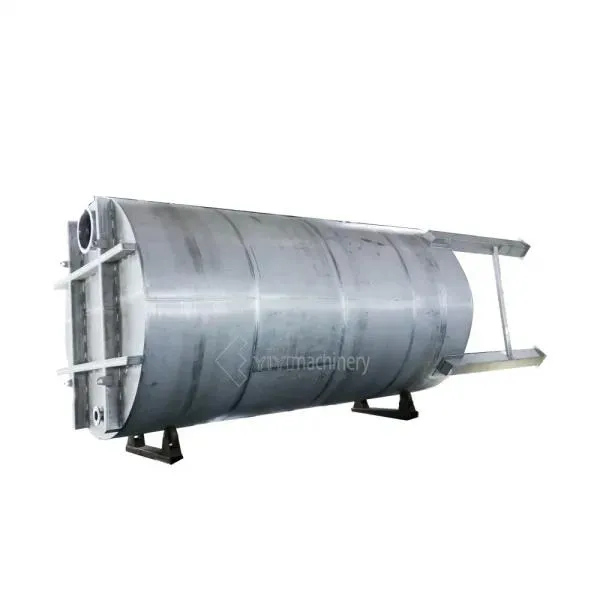
The YIYI Mixing Tank category provides configurable vessel context for a broader equipment conversation. It does not establish flow performance for a powder silo.
Part 4. Plan Cleaning and Access
Cleaning is a process requirement, not a final accessory list. Specify whether the vessel is emptied between products, whether dry cleaning is acceptable, how access is gained, where residual powder may collect, and whether water or cleaning chemicals are permitted. A design that is convenient for one powder may create unacceptable carryover during frequent changeovers.
Access openings must support the intended inspection and cleaning method while preserving the required containment and operating safety. Record the need for internal inspection, filter service, instrument maintenance, and safe isolation. The RFQ should also say whether cleaning must occur in place or after opening the vessel.
For hygienic or sensitive applications, state the accepted cleaning evidence and residual limit rather than simply calling the vessel sanitary. The cleaning method, material compatibility, drainage behavior, and validation responsibility remain project decisions.
| Cleaning topic | RFQ question |
|---|---|
| Campaign changeover | Which products can follow one another? |
| Residual material | What residue is acceptable after discharge? |
| Access | Which openings are needed for inspection and cleaning? |
| Cleaning medium | Is dry, wet, vacuum, or manual cleaning allowed? |
| Maintenance | How are filters, sensors, and feeders isolated? |
Part 5. Set the Safety and Fit Boundary
Fine powders can create a dust hazard under some conditions. The OSHA combustible dust guidance and HSE fire and explosion guidance are useful starting points for recognizing that the scope must be assessed. They do not assign a hazard classification or prescribe a final protection system for this project.
Place the responsibility clearly in the RFQ: identify whether the material has a current safety assessment, which installation authority governs the site, and who will define venting, isolation, grounding, containment, and housekeeping requirements. Avoid describing generic equipment as dust-safe without that evidence.
This guide is not suitable as a substitute for powder-flow testing, explosion-protection engineering, structural design, or local compliance review. Escalate a project where material uncertainty, combustible dust, health exposure, or high-consequence blockage affects the operating concept.
For general vessel context, see why choose a vertical storage tank and different uses of storage tanks.
Part 6. Assemble an RFQ That Can Be Compared
An RFQ should give each bidder the same functional picture. Include powder name, bulk-density range, expected flow behavior, required inventory, peak and normal throughput, refill method, duty cycle, outlet size, feeder interface, acceptable residual amount, cleaning method, and installation limitations.
Add mechanical and project information: preferred material, finish where relevant, available utilities, height and footprint constraints, support concept, access platform needs, instrumentation, load-cell expectations, controls interface, documentation, and inspection requirements. Include drawings or photographs of the existing transfer point when replacing equipment.
Ask suppliers to state assumptions and exclusions. The quotation should distinguish nominal capacity from usable capacity, identify the proposed discharge concept, describe any material data still needed, and state the basis for the feeder or outlet interface. Use request a configuration discussion when the operating data is ready for review.
FAQs
What is the difference between a powder storage tank and a silo?
The terms often indicate scale or plant language, not a guaranteed engineering distinction. Define the storage volume, discharge duty, material behavior, and installation interface before selecting either term.
Why will powder not discharge from a silo?
Possible causes include bridging, ratholing, material compaction, moisture changes, outlet geometry, or a mismatched feeder. Document the actual symptom and material condition for engineering review.
What data is needed to size a powder storage tank?
Provide inventory in mass, bulk-density range, throughput, refill interval, usable-volume limits, installation constraints, and the required discharge pattern.
Should a powder silo include a vibrator or fluidizing aid?
Not automatically. An active aid must match the material, outlet, process, and safety scope. Ask for a recommendation based on representative material data.
How should a powder storage tank be cleaned?
Specify the changeover requirement, acceptable residue, cleaning medium, access method, and validation responsibility. The suitable method depends on the material and service.
What should be included in a powder silo RFQ?
Include the material data, storage and discharge duty, cleaning scope, safety information, interfaces, dimensions, instrumentation, documentation, and required acceptance criteria.
Does a powder storage tank need dust-explosion protection?
That depends on the material and installation. The responsible safety team should establish the hazard assessment and required safeguards before final equipment selection.