A sight glass pressure rating must apply to the complete assembly at the specified temperature and operating conditions. Glass type or thickness alone cannot establish the allowable duty. Check housing, seals, connections, vacuum exposure, thermal changes, fluid compatibility and the manufacturer’s installation instructions. Distinguish an operating limit from a factory test pressure, and verify that the rating identifies the exact supplied model and configuration. The correct selection defines an envelope for production, cleaning and shutdown; it does not combine unrelated maximum pressure and temperature figures from different components.
Start with the vessel’s operating envelope
List normal pressure, maximum credible pressure, minimum pressure or vacuum, normal temperature and the hottest and coldest conditions. Include cleaning, heating, cooling and shutdown exposures. A viewing assembly can experience a demanding condition while the main process is stopped, so the production set point alone is insufficient.
Specify the material inside the vessel or line, including vapour, solids and cleaning chemicals. Describe whether the assembly is used for process observation, flow indication or level indication. The function influences placement and maintenance, while the mechanical rating must cover the actual pressure boundary.
Identify the expected frequency and speed of temperature changes. A slow warmup and a sudden cold rinse into a hot assembly are different duties. Do not invent a universal permitted temperature step; ask the supplier for the applicable limit and procedure for the selected assembly.
Read the rating as a combined condition
Request a model-specific pressure-temperature table, curve or written duty confirmation. Check whether the pressure is gauge or absolute and whether the statement applies to liquid, gas or another defined condition. Confirm whether vacuum is included. A positive-pressure rating does not automatically establish suitability for every external-pressure condition.
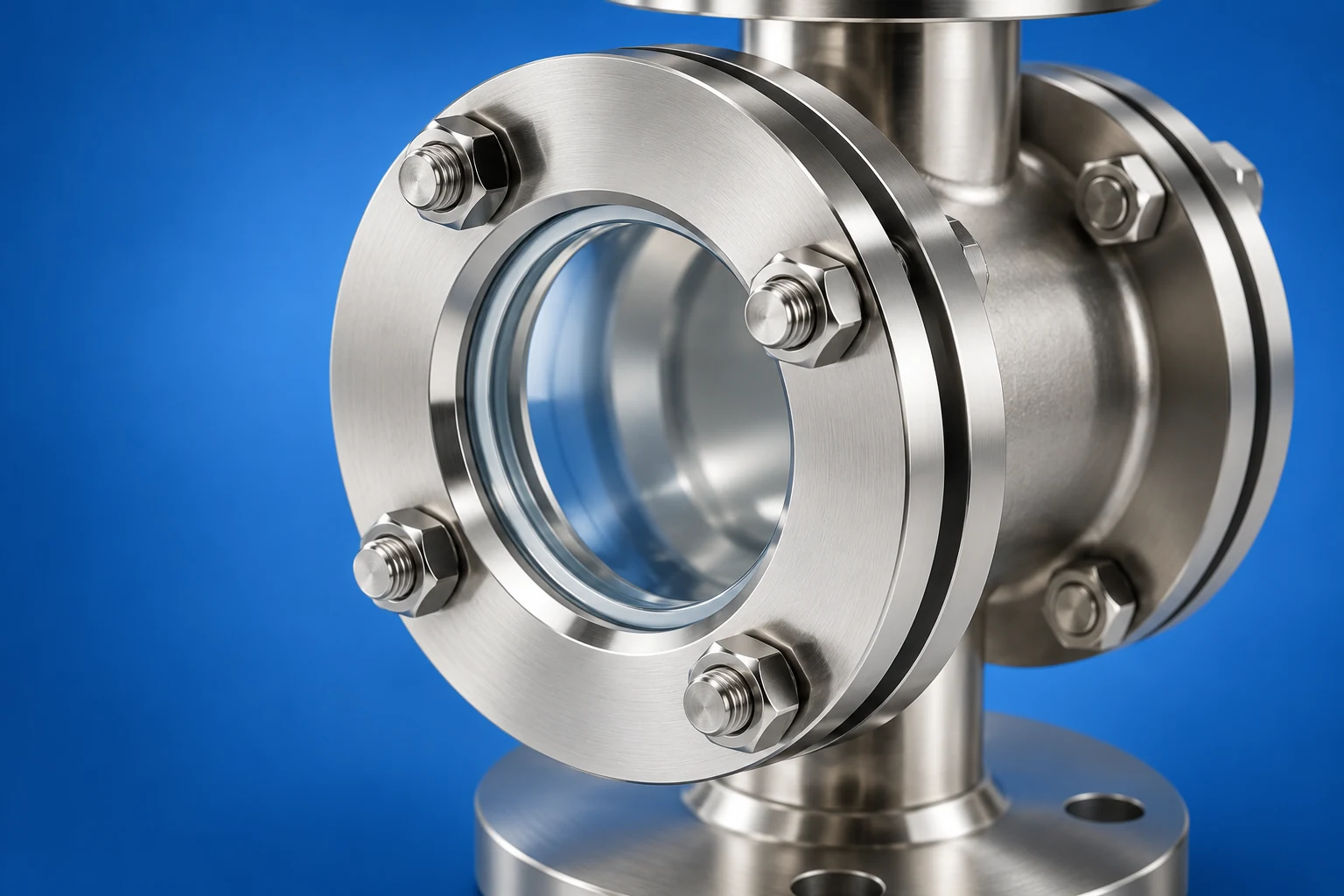
The rating should identify glass or window type, housing material, seal configuration and connection details. Ask which component limits the envelope. A drawing showing several optional materials needs to specify the option actually quoted; an unresolved option can conceal a different allowable duty.
The HSE introduction to pressure equipment provides a general safety framework for considering equipment under pressure. Use it alongside the project’s applicable design and legal requirements. The product’s documented assembly limits and the installed-system review remain essential.
Separate test pressure from service pressure
A pressure test verifies specified aspects of an assembly under defined conditions. It does not establish continuous operation at that test pressure, nor does it prove performance with every temperature, fluid or thermal cycle. Request the test method and record separately from the operating envelope.
Clarify whether a test applies to the complete offered assembly or to a sample component. A glass coupon test, housing test or demonstration video is not automatically a qualification of the assembled product. Identify the exact model, configuration, medium and acceptance criteria behind the test claim.
Do not extrapolate a dramatic burst test into an allowable operating rating. Failure pressure and safe service limits answer different questions. If a supplier uses a test video as evidence, ask for the corresponding engineering documentation and the basis of the published service rating.
Review glass, housing and fastening together
Glass material and geometry are important, but their support and sealing arrangement also affect the assembly. Request the manufacturer’s specified replacement glass and seals. A part that appears to fit can still differ in material, dimensions or intended support condition.
Check the housing and connection materials for the fluid and external environment. Include cleaning chemicals and any expected deposits. A metal grade mentioned in the catalogue does not describe every wetted component. Ask for an itemised material list where compatibility is important.
Use the documented fastening method, sequence and torque where specified. Avoid treating tightening as a way to increase the rating. Uneven loading or an improvised gasket can change the assembly condition. Installation should follow supplier instructions and the project’s approved procedure rather than a generic tightening rule.
Use a rating-review table
| Required check | Document or information to request | What it must resolve |
|---|---|---|
| Pressure at temperature | Complete assembly operating envelope | Permitted pressure-temperature combinations |
| Vacuum duty | Explicit external-pressure or vacuum suitability | Whether the proposed arrangement covers minimum pressure |
| Thermal changes | Supplier transition limits and procedure | Heating, cooling and cleaning exposure |
| Materials | Glass, housing, gasket and connection specification | Product and cleaning compatibility |
| Installation | Drawing and fastening instructions | Fit, orientation, support and assembly requirements |
| Testing | Model-specific method and records | What was tested and what the result demonstrates |
| Service | Inspection and replacement instructions | How the approved condition will be maintained |
These entries are document checks, not universal values. The final review should state the exact assembly and the limiting condition. A collection of component maxima is insufficient when no document confirms the combined operating envelope.
Consider thermal shock and temperature gradients
Rapid thermal change can create uneven expansion within a viewing assembly. The severity depends on glass, geometry, support, sealing and the exposure. Ask the supplier how cleaning and startup transitions should be managed, and include those instructions in the plant’s sequence.
Do not infer that a glass advertised for high temperature can tolerate any sudden temperature change. Steady-temperature capability and resistance to a transient are separate questions. Likewise, a cool outer surface does not establish that all parts of the assembly have reached the same temperature.
Describe steam, cold rinse, external washdown or jacket exposure where present. Determine whether the arrangement can be exposed to different temperatures on its two sides. The supplier needs this information to confirm suitability; it should not be discovered only after a crack or leak appears.
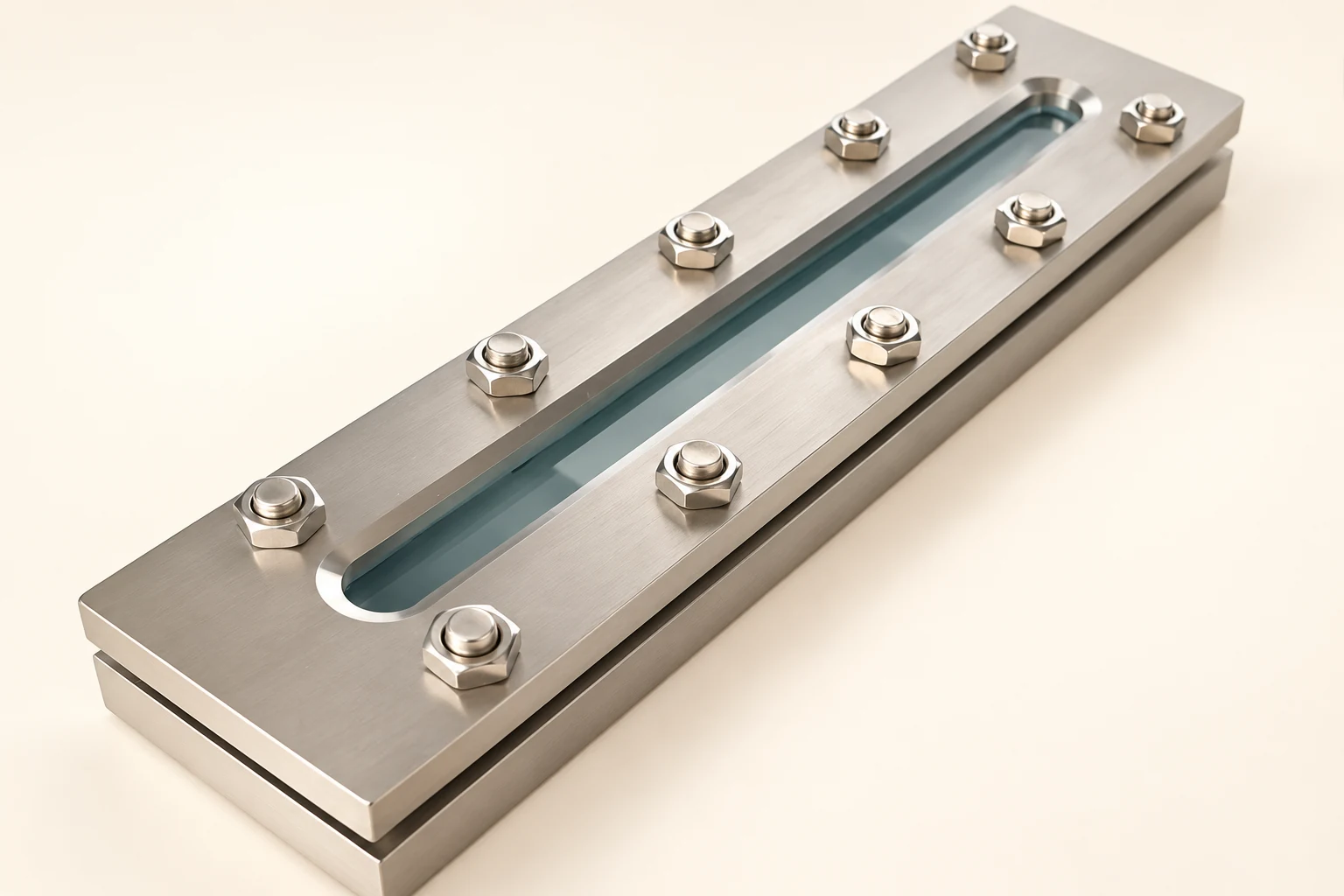
Review placement and external loads
A viewing assembly must fit the actual vessel or pipe connection. Check mating standards, dimensions, seals and surface condition. Similar nominal dimensions do not establish interchangeability. Avoid forcing misaligned pipework into a viewing section or using an assembly as a structural support.
Identify vibration, impact and nearby maintenance activities. A window beside moving equipment or a working access route can need an additional layout review. A protective guard may be useful in some settings, but its design should retain visibility and safe service access rather than conceal a deteriorating assembly.
For a level gauge, include its connected pipework and isolation components in the review. The complete installed arrangement can have a limiting connection or valve even when the glass housing is suitable. For an inline viewing section, review the piping support and intended orientation with the supplier.
Define inspection and replacement criteria
Maintain the supplier’s inspection instructions and specify how poor visibility, leakage, surface damage or another abnormal condition will be assessed. Do not keep using a damaged window because it still appears transparent. The decision to continue service should follow the approved procedure and competent assessment.
Plan isolation and verification of safe condition before service. The HSE guidance on safe isolation of plant and equipment provides a useful framework for maintenance planning. Follow the facility’s applicable procedure for pressure, temperature, chemicals and stored energy rather than assuming that a closed valve alone makes the assembly safe.
Retain identification of replacement glass, gaskets and fasteners. Record the assembly and any required checks after replacement. A later substitution can alter the approved configuration even when the housing and nominal dimensions remain unchanged.
Verify the supplied and installed assembly
At receipt, compare model identification, materials and configuration with the approved selection. Check for transport damage and missing documentation. If the delivered product differs from the selected option, resolve the discrepancy before commissioning rather than accepting a similar appearance.
During installation, confirm fit, fastening, support and visibility. Use the agreed inspection or test procedure for the assembled system. The HSE pressure-testing safety publication is a useful reference for considering the hazards of testing; test design and execution require the project’s competent personnel and approved method.
Include any thermal transition or vacuum duty that needs installed verification. List the conditions not demonstrated during the initial check. A successful cold-water test cannot be used to claim that all hot production and cleaning conditions have passed.
Prepare a rating-focused enquiry
For an initial discussion, see the website’s sight glass and viewing-window range. Send the exact pressure and temperature combinations, minimum pressure, fluid and cleaning exposure, connection drawing and thermal-cycle description. Ask for a confirmed complete-assembly envelope.
The stainless sight glass selection guide, flow indicator working principle, and storage tank leak-testing guide cover complementary selection and checking questions. None supplies an independent rating for the pictured product.
Further learning
The educational video below explains pressure-testing principles and the difference between test approaches. It helps place test records in context. It is not a qualification test of the website’s sight glasses and does not replace a manufacturer-confirmed service envelope.
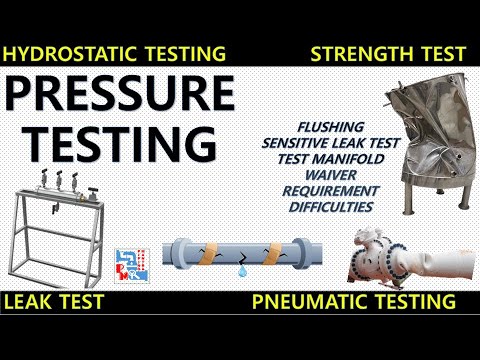
Watch Pressure Testing | Hydrostatic Test | Pneumatic Test | Piping Mantra by Piping Mantra
Frequently asked questions
Can pressure rating be calculated from glass thickness alone?
Not reliably for purchasing or operating a complete assembly. Glass, support, housing, seals, connections and service conditions all matter. Request a documented model-specific operating envelope rather than assigning a rating from a photograph or isolated dimension.
Does a high-pressure test prove high-temperature suitability?
No. A test demonstrates the specified result under its defined conditions. Service pressure at temperature, thermal transitions and fluid compatibility need their own documented assessment for the complete assembly.
What information is essential for replacing a sight glass?
Identify the original model, glass and seal specification, dimensions, connection, operating envelope and assembly instructions. Verify that the replacement preserves the approved configuration and complete the required checks before returning it to service.