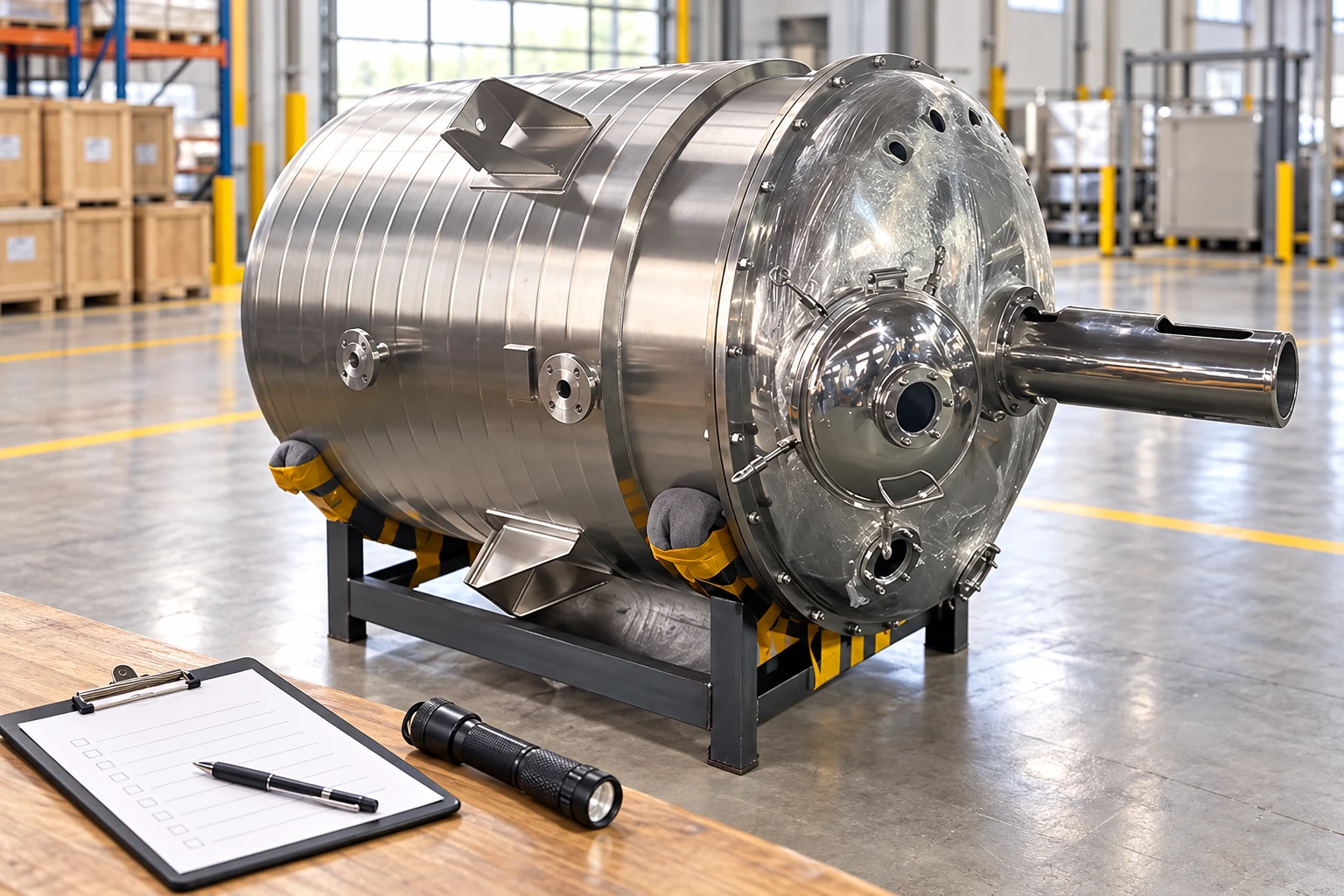
Tank manhole size should be selected from the actual maintenance, inspection and cleaning task, together with the vessel design and safe access requirements. Distinguish the clear opening from the cover diameter, neck bore and outside flange dimensions. A cover that fits a drawing may still leave too little usable space once internal equipment or external obstructions are considered. There is no single universal diameter that makes every tank safe to enter. Define whether the opening is for observation, tools, component removal or planned personnel access, then confirm the arrangement with the vessel supplier and the responsible safety team.
Define the task before choosing an opening
List what must pass through the opening: inspection equipment, a cleaning device, a removable component, a tool or a person using the required equipment. The task can determine both opening dimensions and location. A small inspection port and a personnel access manway serve different purposes even if both are called manholes in a catalogue.
Identify which tasks can be performed without entering the vessel. External inspection methods, appropriate cleaning systems or removable components may reduce the need for entry, but their suitability must be assessed for the actual vessel. Avoid enlarging an opening without first defining the job it is intended to make possible.
If personnel entry is planned, involve the site’s responsible team early. The OSHA permit-required confined spaces standard is an important reference for applicable US workplaces. It addresses entry management and hazards; the presence of a manway does not by itself authorise entry or establish a safe rescue arrangement.
Distinguish clear opening from catalogue size
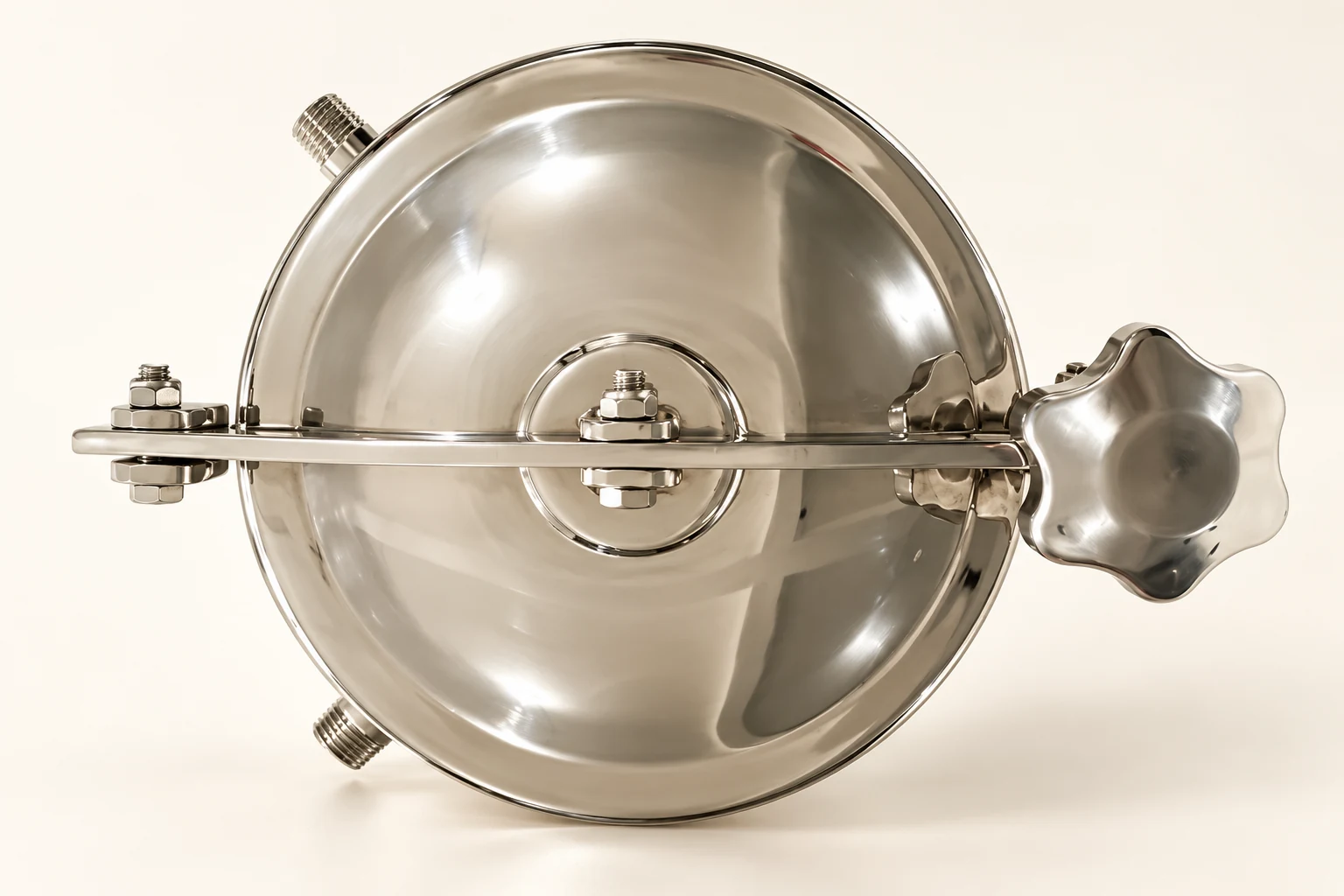
Request a drawing identifying the smallest usable opening, neck length, cover diameter, mating arrangement and any obstruction after the cover opens. Nominal size can refer to a product family or connection rather than the unobstructed passage. Clarify which dimension the supplier means before comparing quotations.
A circular opening is usually described by its clear diameter, while an oval or rectangular opening needs its clear width and height. Also consider the passage through the neck rather than only the mouth of the opening. A long neck or internal projection can make movement more difficult even if the outer opening appears generous.
As a simple dimensional example, an outside cover diameter of 500 millimetres does not establish a 500-millimetre clear opening. The neck, sealing land and closure geometry can reduce the usable passage. This is an explanation of different dimensions, not a suggested minimum access size or a specification for the pictured cover.
Review location and approach clearance
Assess the complete route to the opening. A top manway may require a platform or other approved access arrangement. A side manway may be obstructed by piping, a jacket connection or nearby equipment. The opening can be adequate on a vessel drawing while its installed location makes the intended task impractical.
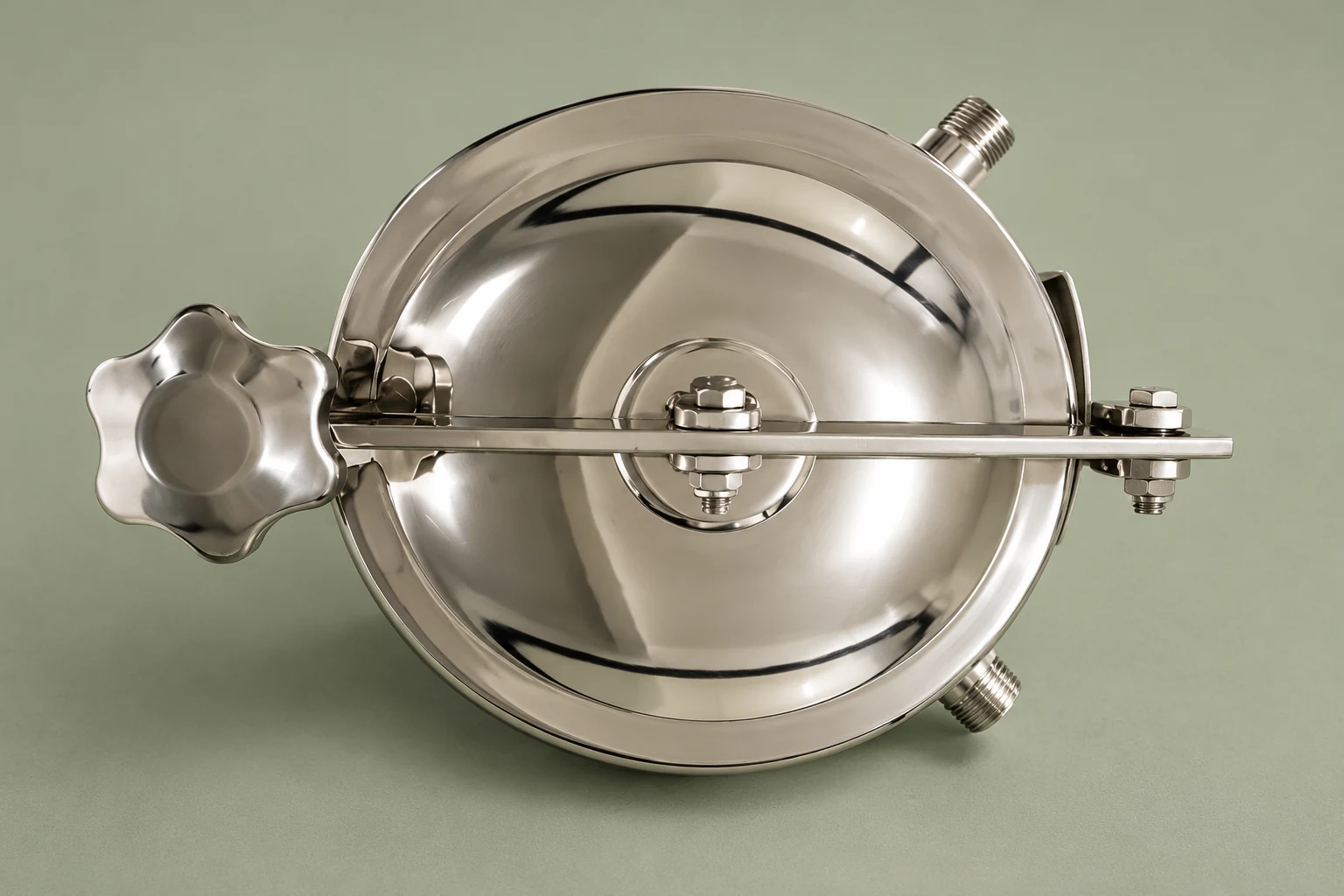
Request the cover’s opening envelope and required operating space. A hinge, swing arm or handwheel can occupy space beyond the cover itself. Check where the cover is held while work occurs and how it is prevented from moving unexpectedly. Avoid relying on a worker to support a heavy cover throughout a task.
Review internal obstructions such as agitator shafts, baffles, coils or spray devices. Show these on the access drawing. A person or removable component must be able to pass beyond the neck into the required area, not merely reach the opening. Use an appropriate dimensional review or mock-up where the task is uncertain.
Keep access size separate from pressure suitability
Opening size does not establish whether the cover is suitable for pressure, vacuum or a particular temperature. Request the complete manway assembly’s design basis, operating envelope, materials, sealing arrangement and closure instructions. Include the vessel’s production, cleaning and shutdown conditions.
Do not assume that an atmospheric cover is interchangeable with a pressure manway. Likewise, a robust-looking closure or stainless finish does not prove a rating. Any change to opening dimensions or configuration needs the vessel supplier’s engineering review because the opening and its reinforcement are part of the vessel design.
The HSE pressure-systems guidance provides a useful safety framework alongside the project’s applicable requirements. The manway must be reviewed as part of the complete vessel, including operating procedures and verification of safe condition before opening.
Use a practical dimensional review table
| Task or feature | Dimension or arrangement to check | Evidence to retain |
|---|---|---|
| Tool or camera inspection | Clear aperture and viewing/reach path | Opening drawing and task confirmation |
| Cleaning-device insertion | Device envelope and neck passage | Equipment dimensions and insertion review |
| Component removal | Largest component envelope and handling route | Removal drawing, lifting and clearance plan |
| Planned personnel access | Clear opening, neck length and internal route | Competent access and rescue assessment |
| Cover operation | Swing, hinge, handwheel and holding position | Opening envelope and operating instructions |
| Pressure or vacuum duty | Complete assembly and vessel design | Confirmed operating envelope and design documents |
This table avoids a universal diameter recommendation. It makes the task and its verification explicit. The relevant requirements depend on the vessel, workplace, equipment and applicable rules. An opening should be accepted against its actual purpose, not a number copied from an unrelated tank.
Review cleaning and inspection access
Consider whether the opening lets operators inspect the surfaces that matter. A view of the nearest wall does not establish access to the underside of a coil or the far side of a baffle. Lighting, camera position and the inspection method need to fit the vessel geometry.
Ask how the sealing surfaces, gasket and closure will be cleaned and checked. Residue at the sealing land can affect closure or contamination control. The cover arrangement should support the approved cleaning method and practical inspection without unnecessary handling difficulty.
Where the cleaning strategy relies on circulation or spray devices, define how its effectiveness will be assessed separately from manway access. A large opening does not make an inadequate cleaning system effective. For complementary process planning, review the food mixing tank cleaning guide.
Assess personnel access and rescue as a system
For planned entry, the opening is only one element. The hazards can include atmosphere, engulfment, chemicals, temperature, stored energy and moving equipment. The responsible team must assess the vessel and define the applicable entry procedure, isolation, monitoring, communication and rescue arrangements.
Do not assume that a person able to squeeze through the opening can be removed safely after an incident. Required equipment, body position, neck length, vertical or horizontal movement and internal obstructions can affect rescue. Include these conditions in the competent assessment and any approved practice or mock-up.
The HSE confined-spaces guidance is another useful reference for applicable workplace planning. It reinforces that safe work depends on the complete procedure and hazards. This dimensional guide does not grant entry permission or replace a site’s risk assessment and trained personnel.
Plan isolation and opening procedures
Before opening, the site must establish the required safe condition for pressure, temperature, contents and stored energy. Agitators, pumps and connected lines can create hazards even when the vessel itself appears empty. Follow the approved isolation and verification procedure for the actual system.
The OSHA control-of-hazardous-energy standard is a relevant reference where applicable. Isolation of moving machinery and other energy sources is a separate requirement from selecting the opening size. Closing a valve or stopping a motor is not automatically the complete isolation plan.
Use the supplier’s closure instructions for the supplied assembly. Do not loosen a cover to discover whether pressure remains inside. Define how pressure and other hazards will be verified safely before the opening step. Identify the people authorised to perform the task and the records required by the site procedure.
Compare materials, seals and serviceability
Provide the product and cleaning exposure when requesting the cover and gasket. Confirm material compatibility, temperature range and replacement specification. A stainless cover can still have a gasket unsuitable for the duty. Include any required surface condition or documentation without assuming that the catalogue name proves compliance.
Check the availability of seals, closure parts and the maintenance instructions. Clarify whether replacement can be done with the installed vessel and nearby equipment in place. A cover that requires a difficult removal route can create avoidable service delays or unsafe handling pressure.
Retain the exact assembly identification. Later substitution of a similar cover, hinge or gasket can change the approved arrangement. If a change affects access, closure or the pressure boundary, obtain the necessary review before treating it as a routine interchangeable spare.
Verify the arrangement before acceptance
At the drawing stage, compare clear opening, location, neck and cover envelope with the defined tasks. Resolve interference with platforms, pipework and internal components. For difficult tasks, use a competent dimensional review or approved mock-up rather than relying on a two-dimensional catalogue picture.
At receipt and installation, check the delivered model and materials against the approved documents. Confirm cover movement, seal condition, holding arrangement and service access under safe conditions. Any pressure or functional test needs the project’s agreed method and responsible personnel.
Record which tasks have been demonstrated and which remain conditional. A successful cover-opening check establishes operability; it does not demonstrate safe personnel entry, cleaning effectiveness or rescue capability. Keep those acceptance questions separate and complete the required reviews before the vessel enters the relevant service.
Prepare a useful manway enquiry
For equipment discussion, see the website’s round tank manhole product. Send the task list, required clear aperture, vessel drawing, internal arrangement, operating envelope, cleaning conditions and service-space constraints. Ask for a complete assembly drawing and confirmation of suitability.
The manway cover selection guide covers the broader procurement decision, while mixing tank nozzle layout and storage tank decommissioning and changeover address complementary layout and service planning.
Further learning
The following independent safety-training video explains how confined spaces are identified. It supports recognising why a vessel opening is part of a larger safety assessment; it does not authorise entry or provide a complete rescue plan for your tank.

Watch Free OSHA Training Tutorial – Identifying Confined Spaces by OSHA Training Services
Frequently asked questions
Is cover diameter the same as tank manhole size?
Not necessarily. Request the clear opening, neck bore and length, cover dimensions and any obstruction. The usable passage can be smaller than the outside cover dimension or catalogue nominal size.
What diameter guarantees safe personnel entry?
No universal diameter guarantees safe entry. The task, equipment, approach, internal obstructions, hazards and rescue arrangement require competent assessment under applicable workplace rules. Opening size is only one part of that system.
Can an existing manway simply be enlarged?
A change requires vessel engineering review because the opening, reinforcement, closure and operating envelope may be affected. Define the access task first and obtain an approved design and verification plan before modifying the vessel.