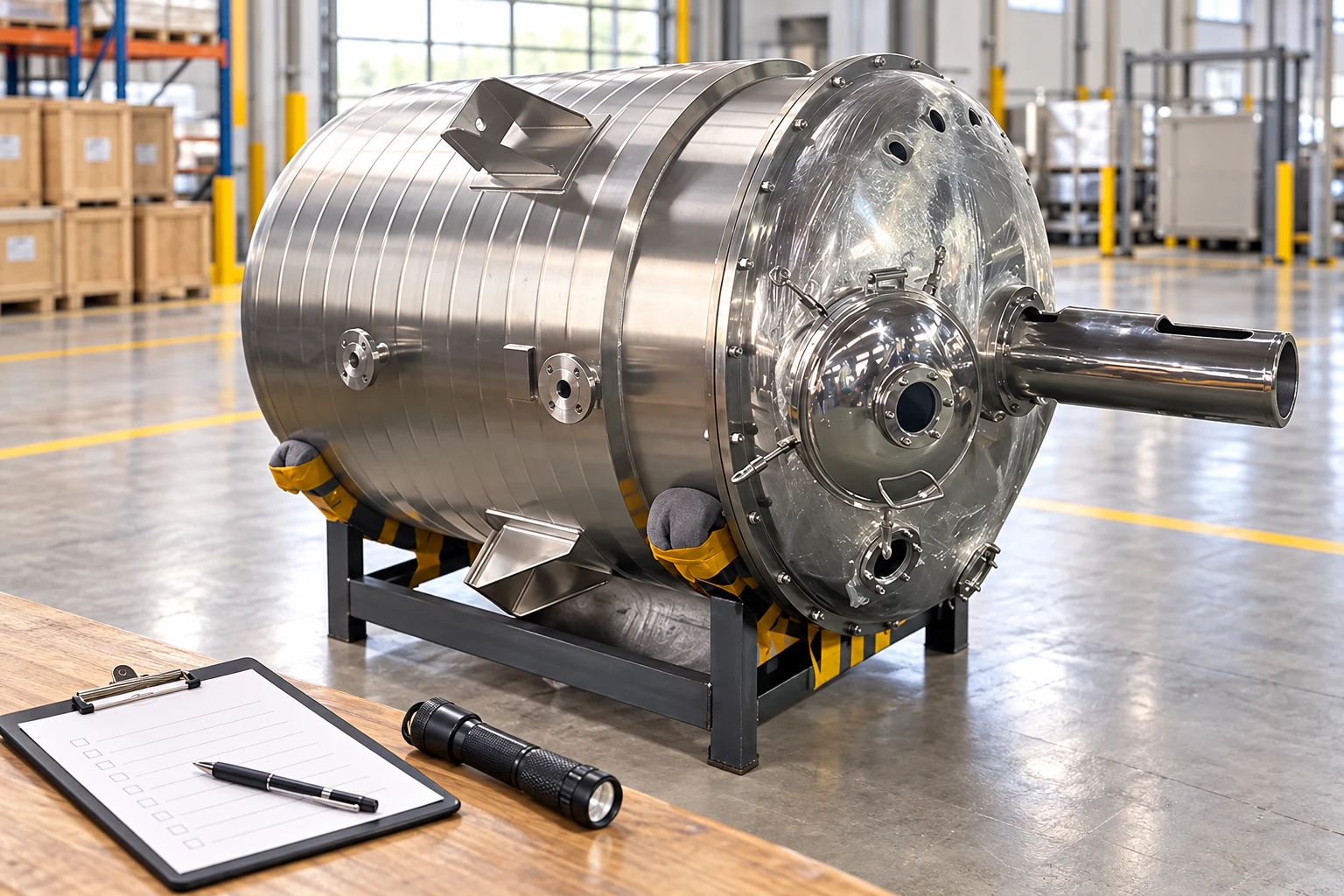
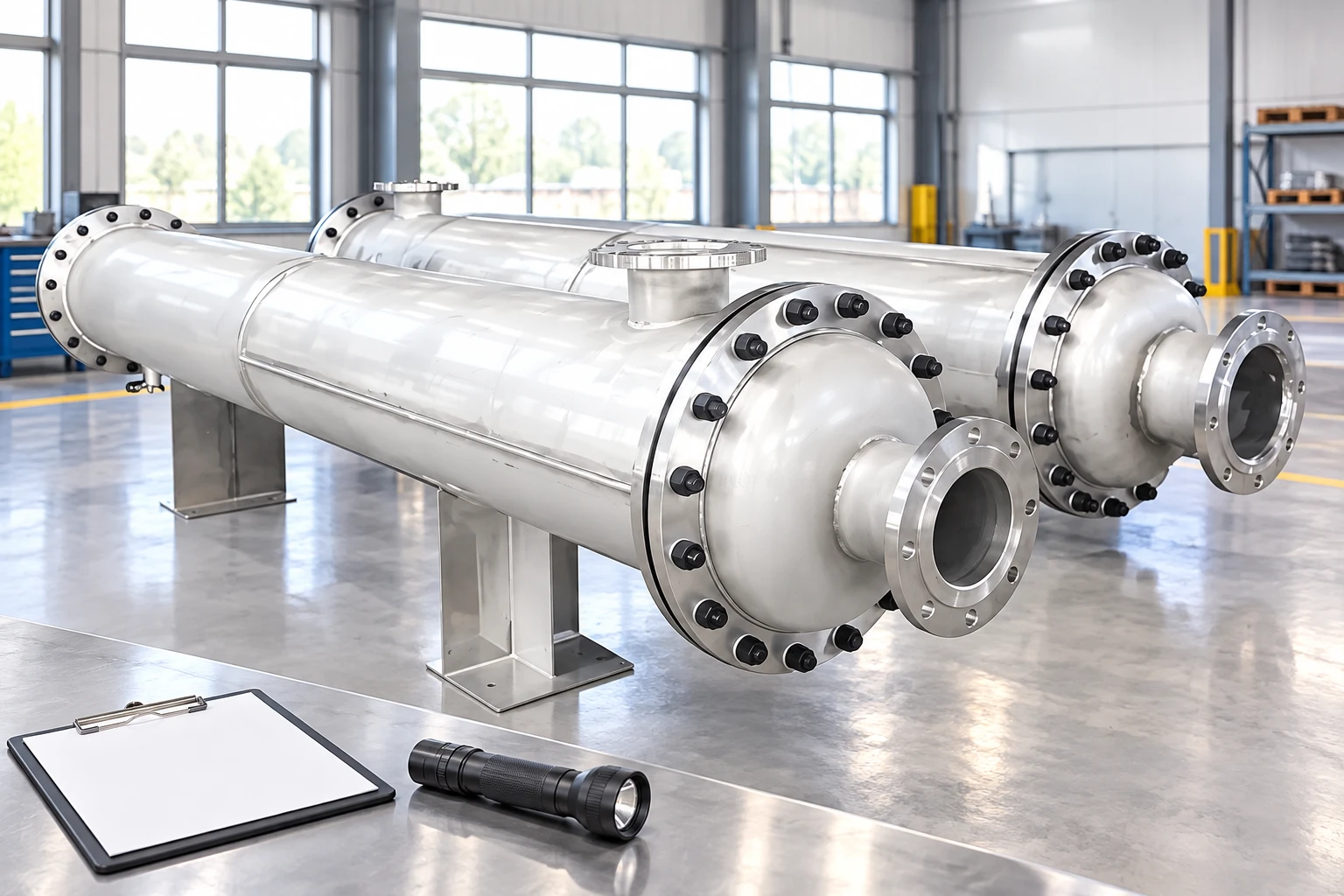
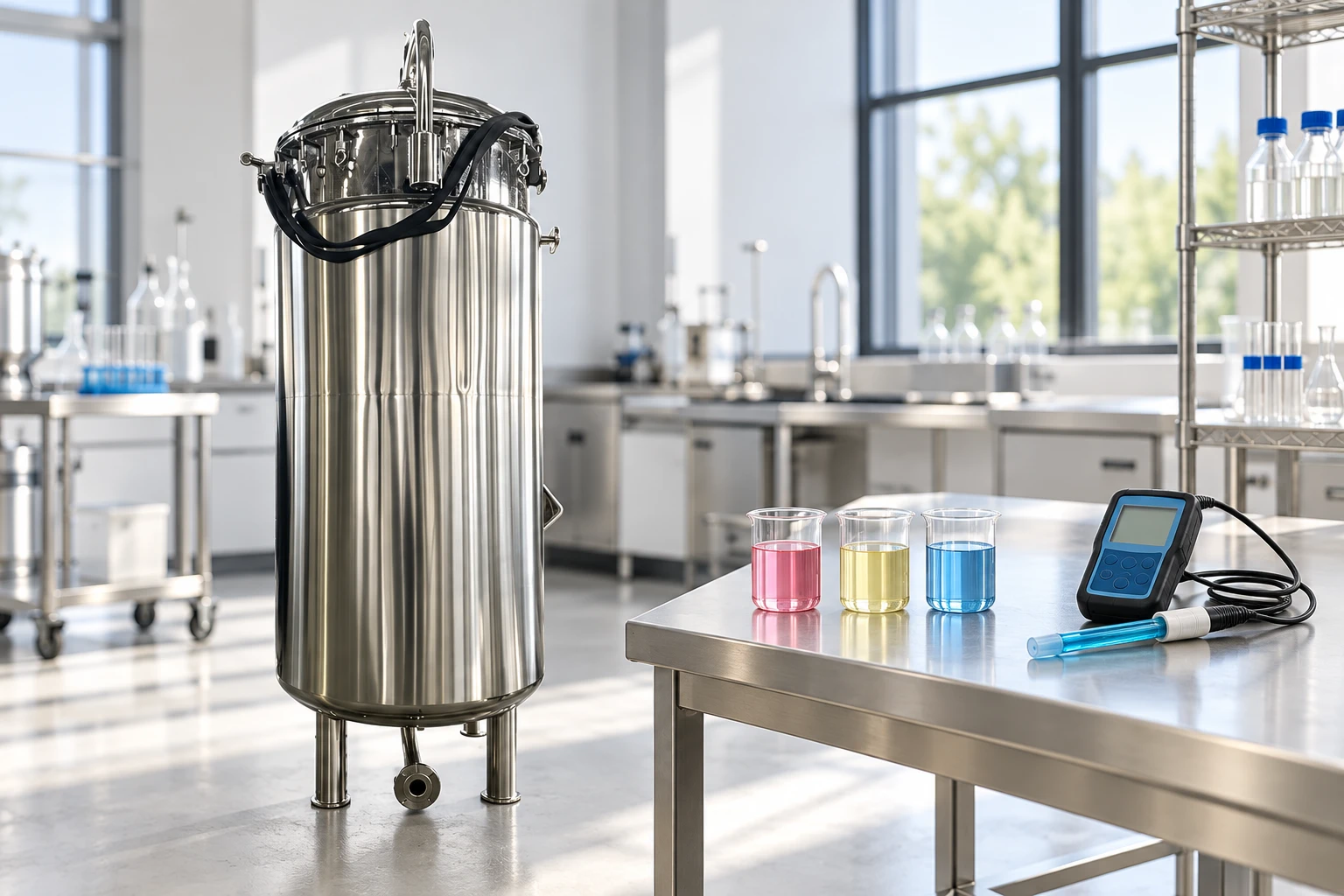
An immersion heat exchanger is specified through the tank process, not from a coil label alone. Start with the product, volume range, batch or continuous duty, temperature profile, heating medium, level range, viscosity or solids, agitation, cleaning method, access, controls, and facility responsibilities. A tubular product photograph cannot prove an immersed-coil layout, heat-up time, uniform temperature, material compatibility, or safe operation.
For related interfaces, see the coiled-tube selection guide and the jacketed mixing tank guide.

Part 1. What Is the Tank Heating Duty?
Define the product, batch volume or continuous inventory, starting and target temperatures, permitted heat-up or hold window, heating medium, expected losses, operating cycles, and allowable product conditions. Add viscosity, solids, phase change, sensitivity to temperature, and cleanout requirements where relevant. These inputs distinguish a tank-heating duty from a generic heat-exchanger request.
| Duty field | Record | Why it matters |
|---|---|---|
| Product | Composition, solids, viscosity, temperature sensitivity | Starts fit and cleaning review |
| Tank duty | Volume, level range, batch or continuous profile | Defines the process boundary |
| Thermal input | Start/target temperature, medium, hold requirement | Frames energy and control questions |
| Operating pattern | Heat-up, hold, changeover, shutdown | Changes access and control needs |
Part 2. Which Tank Interfaces Matter?
State the tank geometry, internal clearances, nozzle layout, expected liquid level, agitation or circulation, coil support concept, drainability, cleaning reach, inspection route, and installation constraints. Also assign valves, vents, drains, instrumentation, insulation, pumps, pipework, access platforms, and lifting to either the facility or equipment scope. These interfaces must be documented before a supplier can assess a configuration.
| Interface | Buyer should define | Evidence |
|---|---|---|
| Tank layout | Diameter, height, nozzles, internal obstructions | Drawing or dimensional sketch |
| Level and movement | Minimum/maximum level, mixing or circulation | Process narrative |
| Utilities | Heating medium, supply/return, isolation, recovery | Utility boundary list |
| Access | Cleaning, inspection, support, lifting route | Layout and access note |
Part 3. How Should Coil and Medium Boundaries Be Reviewed?
Review the heating medium, piping, wetted materials, joints, supports, vents, drains, pressure and temperature boundary, expansion considerations, isolation, and inspection requirements as one system. TEMA, API, and ASME are public standards references, but they do not decide the project design. The responsible team must identify applicable requirements and verify the actual materials, conditions, and responsibilities.

Part 4. What Cleaning and Inspection Inputs Are Needed?
List the cleaning method, chemistry, circulation path, rinse verification, deposits, drain points, access openings, inspection records, cleaning recovery, and waste boundary. A coil arrangement does not make a tank automatically cleanable. Product residues, cleaning media, temperature, time, flow, and all wetted components must be evaluated together.
Important: Do not infer cleanability, product protection, or safe operation from an in-tank heating concept. Source note: ASME codes and standards are public reference context; the project must confirm applicability.
Part 5. How Are Controls and Safety Boundaries Assigned?
Define who owns the temperature measurement, control logic, heating-medium control, low-level protection where applicable, alarms, circulation, shutoff, operating procedure, maintenance, and records. The configuration should state its requested interfaces and exclusions; a blog article cannot certify the complete safety or control system.
| Control field | Project defines | Supplier clarifies |
|---|---|---|
| Temperature | Measurement point, tolerance, control objective | Required connection and assumptions |
| Medium control | Supply, return, isolation, pressure/temperature boundary | Equipment-side scope and exclusions |
| Process response | Start-up, hold, upset, shutdown procedure | Inputs required for review |
| Records | Drawings, documents, tests, approval route | Deliverables if requested |
Part 6. How Should the Supplier Scope the Configuration?
Use the heat-exchanger configuration reference, the YIYI process-equipment range, and send tank-heating inputs including:
- Buyer should provide these RFQ inputs before a configuration is reviewed:
- product, volume, level range, temperatures, heating medium, process cycle, and allowable operating conditions;
- tank drawing, agitation or circulation, nozzle and access constraints, cleaning route, inspection, supports, and installation boundary;
- control, isolation, vent, drain, documents, applicable requirements, responsible parties, and exclusions.

FAQs
What is an immersion heat exchanger?
It is a heat-transfer configuration considered when a project introduces heating or cooling surfaces into a tank process. The actual arrangement must be established from the confirmed tank duty, design review, and supplier documentation.
Does an in-tank coil eliminate hot spots?
No. Temperature distribution depends on the product, heat input, level, agitation or circulation, geometry, control method, and operating sequence.
Is one coil material suitable for every liquid?
No. Product chemistry, additives, temperature, cleaning media, concentration, exposure, and all wetted parts need project-specific review.
Does agitation replace temperature control?
No. Agitation and temperature measurement/control are separate functions. Their required scope must be set from the process objective and operating procedure.
Can a tubular product photo prove an immersion coil?
No. It is a general first-party equipment reference and does not establish an in-tank arrangement, materials, ratings, or process suitability.
What data should be sent for a quote?
Include with the RFQ the product and cleaning media, volume and level range, temperatures, heating medium, operating cycle, tank drawing, mixing/circulation, access, control needs, documents, responsibilities, and exclusions.
References
- TEMA — public source for framing exchanger interface and maintenance questions.
- API standards catalog — public catalog for project teams identifying potentially relevant process standards.
- ASME codes and standards — reference point for a project’s own code, documentation, and responsibility review.