A semi-welded plate heat exchanger comparison starts with service evidence, not with a universal construction claim. Record the product and cleaning fluids, contaminants, temperature and pressure range, flow variation, allowable pressure drop, fouling behavior, downtime window, inspection expectation, and responsibility split. Those details determine what the project must check for joints, seals, cleaning, access, documentation, and exclusions.
For related reading, compare the welded versus gasketed comparison with the broader plate heat exchanger guide.

Part 1. What Service Is Being Evaluated?
Describe the actual thermal and operating boundary: both fluids, temperature range, flow range, heat load, pressure-drop allowance, cycling, start-up and shutdown conditions, and allowable downtime. Explain whether the task is to prevent repeat deposits, reduce cleaning time, improve inspection access, or compare lifecycle responsibilities. A comparison becomes useful only when every proposal answers the same documented duty.
| Input | Record | Why it matters |
|---|---|---|
| Media | Process and cleaning chemistry, contaminants | Starts compatibility review |
| Duty | Temperatures, flows, heat load, pressure-drop allowance | Defines the performance boundary |
| Operation | Cycling, start-up, upset, shutdown conditions | Changes service assumptions |
| Objective | Fouling, cleaning, inspection, outage target | Keeps the comparison focused |
Part 2. Which Fouling Inputs Change the Review?
Fouling discussion needs evidence from the plant: deposit type, location, rate, process upsets, cleaning result, time since prior service, and the accepted trigger for intervention. State whether the concern is product residue, utility scale, solids, biofilm, corrosion products, or another condition. Avoid treating a construction name as proof that deposits will not form.
| Fouling field | Buyer should provide | Review use |
|---|---|---|
| Deposit history | Observed solids, residue, scale, location | Identifies the service question |
| Cleaning record | Method, media, duration, result | Tests current assumptions |
| Process change | New product, utility, temperature, cycle | Explains trend changes |
| Outage limit | Available time and access restrictions | Sets practical maintenance scope |
Part 3. How Should Construction Boundaries Be Checked?
Review all wetted materials, seals where used, joints, connections, vents, drains, inspection points, and cleaning exposure against the confirmed duty. TEMA, API, and ASME are public sources for a project’s standards review, but the project must define the applicable document, edition, jurisdiction, design authority, and acceptance requirements. A material name alone is not a compatibility statement.

Part 4. What Cleaning and Access Data Matter?
Specify the proposed cleaning route, including circulation, chemical cleaning, rinse verification, mechanical access, isolation, draining, recovery, waste handling, and the evidence needed after cleaning. Also state who provides access platforms, lifting, permits, utilities, and safe work procedures. These are site interfaces that cannot be inferred from a generic heat-exchanger image.
Important: Neither a construction label nor a cleaning method proves that a unit is automatically cleanable or fit for a specific fluid. Source note: TEMA provides public industry context; project applicability requires engineering review.
Part 5. How Is Lifecycle Scope Compared?
Put the operational boundary next to the purchase decision. Compare expected records, inspection access, spares policy, cleaning ownership, outage planning, and exclusions along with thermal assumptions. This prevents a lower initial quotation from hiding a missing service responsibility.
| Lifecycle field | Project defines | Supplier clarifies |
|---|---|---|
| Cleaning | Procedure, acceptance, waste boundary | Assumptions and access limits |
| Inspection | Required evidence and service interval policy | Documentation and exclusions |
| Spares | Stocking policy and outage tolerance | Requested spare scope |
| Handover | Drawings, test records, review milestones | Deliverables and responsibility split |
Part 6. How Should the Supplier Scope the Proposal?
Use the heat-exchanger configuration reference, the wider YIYI process-equipment range, and send documented duty inputs with:
- process and cleaning fluids, contaminants, temperatures, pressures, flows, heat load, and allowable pressure drop;
- fouling record, cleaning procedure, inspection evidence, outage window, access, isolation, and waste scope;
- requested construction review, material and seal assumptions, documents, applicable requirements, responsibilities, and exclusions.

FAQs
What is a semi-welded plate heat exchanger?
It is a plate-exchanger construction category that a project may compare against its defined process, service, and lifecycle requirements. The actual construction must be confirmed from supplier documentation and the approved duty.
Does semi-welded construction prevent fouling?
No. Deposits depend on media, contaminants, temperature, flow, operating cycles, and the cleaning program. Record plant evidence before setting an expectation.
Can one gasket material suit every fluid?
No. Product chemistry, additives, temperature, cleaning media, exposure time, and all wetted components require a joint review.
Is chemical cleaning always appropriate?
No. The cleaning chemistry, deposit, materials, temperature, concentration, rinse, waste handling, and site procedure must be checked for the actual duty.
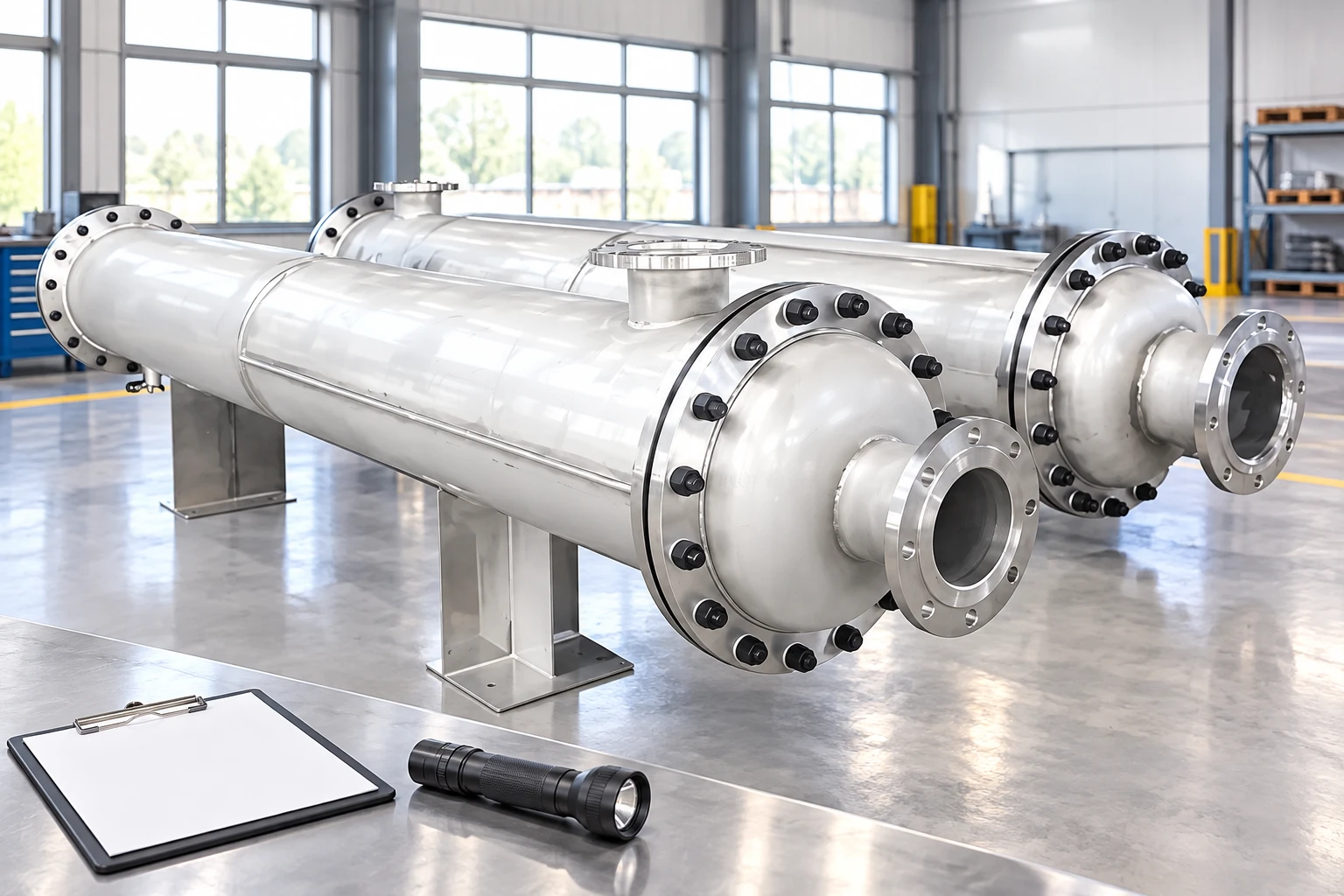
Can a shell-and-tube photo prove plate construction?
No. A first-party tubular photo is only a configuration reference and cannot prove plate construction, materials, ratings, or suitability.
What should a supplier receive before quotation?
Provide the process and cleaning fluids, duty, fouling history, operating envelope, access and outage constraints, documentation needs, applicable requirements, and exclusions.
References
- TEMA — public context for framing exchanger service and maintenance questions.
- API standards catalog — catalog for identifying process-industry standards a project may need to assess.
- ASME codes and standards — public source for the responsible team’s code-path and documentation review.