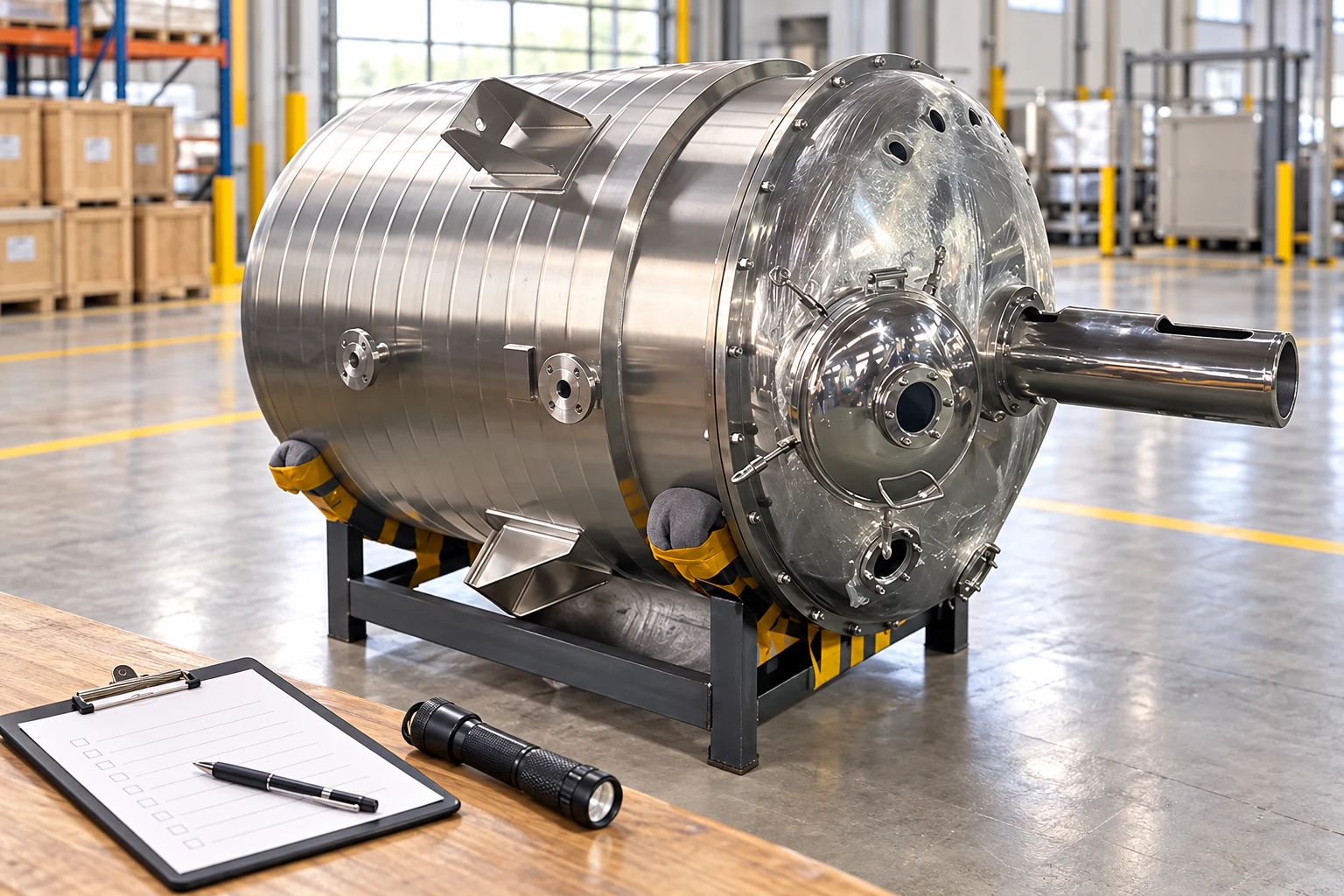
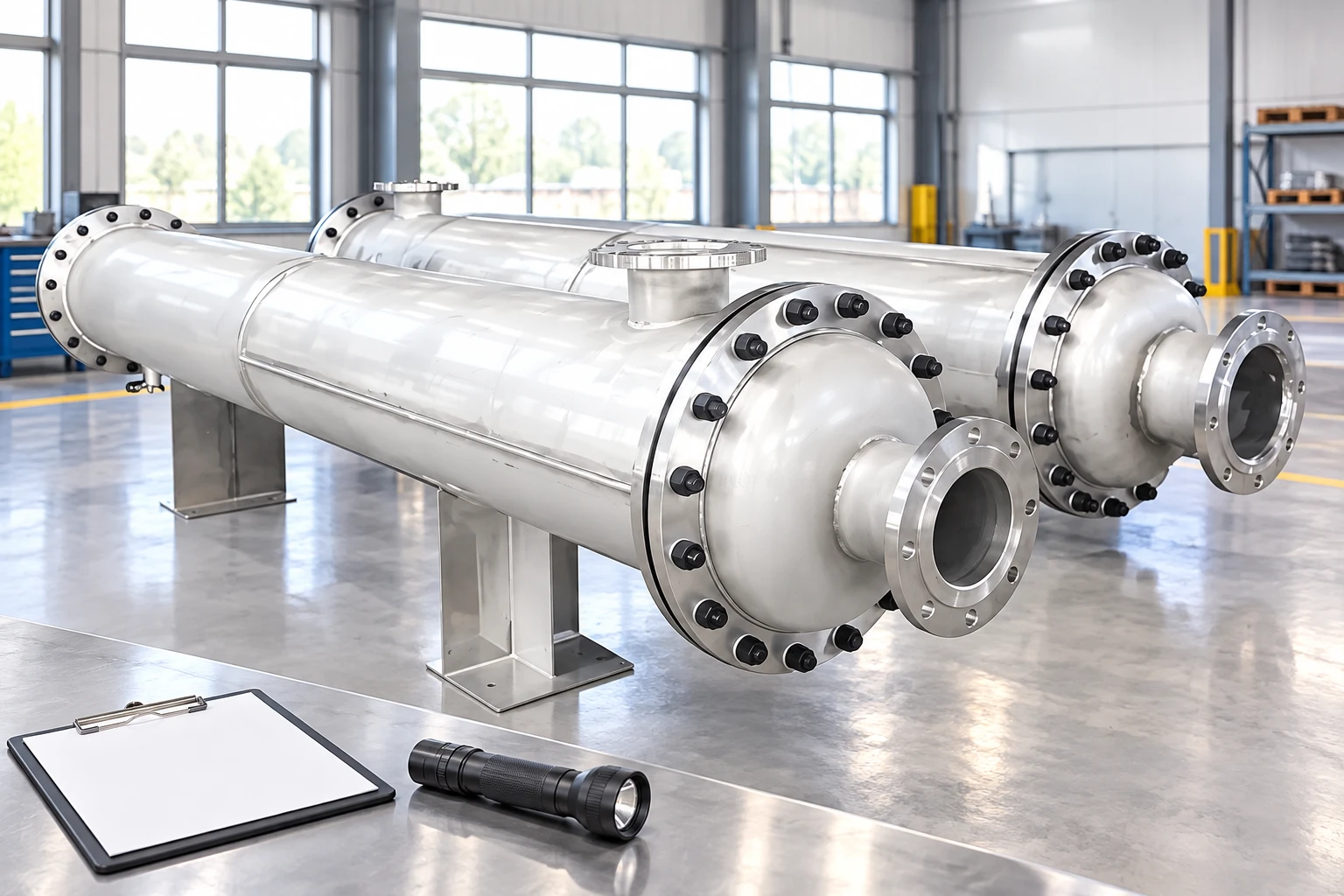
The comparison starts with a duty sheet, not with a claim that one construction is universally better. Record each process fluid, contaminants, temperature and pressure range, cycling, allowable pressure drop, fouling behavior, cleaning method, inspection requirement, downtime limit, and the project’s applicable requirements. These inputs define what must be reviewed for seals, welded boundaries, access, documentation, and service ownership.
For broader equipment context, see the plate heat exchanger guide and the tubular heat exchanger guide.

Part 1. What Is Being Compared?
Compare the same documented process boundary. A useful comparison distinguishes the thermal duty, fluids, operating envelope, serviceability target, cleaning approach, inspection evidence, and project responsibilities from the exchanger label. Do not treat a nominal connection size, plate count, or marketing name as a substitute for the conditions that affect process fit.
| Comparison input | Buyer records | Reason for review |
|---|---|---|
| Media | Composition, contaminants, cleaning residues | Starts compatibility review |
| Operating range | Temperatures, pressures, cycles, flow variation | Defines the condition boundary |
| Thermal duty | Load, approach assumptions, pressure-drop allowance | Makes proposals comparable |
| Service plan | Cleaning, inspection, outage, access | Connects selection to lifecycle scope |
Part 2. Which Process Inputs Change the Choice?
Ask how product changes, batch cycles, start-up and shutdown, solids, viscosity, gas content, and cleaning media affect the requested service. State the permitted pressure drop and any requirement for isolation, venting, draining, sampling, or recovery. A supplier needs these inputs to state assumptions; the article cannot determine a suitable construction for an unknown process.
| Duty field | Question for the project | Evidence |
|---|---|---|
| Fluid boundary | What products, additives, contaminants, and cleaning agents contact the exchanger? | Process and cleaning data |
| Operating envelope | What are normal, start-up, upset, and cleaning conditions? | Operating narrative |
| Fouling | What deposits have occurred and how were they removed? | Maintenance history |
| Controls | Who owns instruments, bypasses, isolation, and alarms? | P&ID responsibility split |
Part 3. How Should Seals and Welded Boundaries Be Reviewed?
Review every wetted material, sealing element where used, connection, joint, expansion behavior, inspection point, and cleaning exposure as one duty. A named metal or elastomer is not a universal compatibility statement. TEMA, API, and ASME can provide public reference context, but the responsible project team must confirm applicable standards, materials, pressure and temperature conditions, testing, and design authority.

Part 4. What Cleaning and Access Questions Matter?
Describe the intended cleaning path: circulation, flushing, chemical cleaning, mechanical access, rinse verification, drainage, recovery, waste handling, and acceptance criteria. The project must also identify isolation points, safe access, lifting needs where relevant, and the party that supplies each facility interface. CIP is a process strategy, not proof that every inspection or maintenance requirement has been met.
Important: Do not claim that welded or gasketed construction is leak-free, automatically cleanable, or fit for a particular fluid. The confirmed process duty and engineering review establish those boundaries. Source note: ASME codes and standards are public context; applicability requires project review.
Part 5. How Should Lifecycle Scope Be Compared?
Put downtime, spares, inspection access, cleaning procedure, documentation, and responsibility split next to the process duty. This avoids a purchase comparison that omits the operating team’s service constraints.
| Lifecycle field | Buyer should define | Supplier should clarify |
|---|---|---|
| Cleaning | Method, media, cycle, acceptance criteria | Assumptions and access limitations |
| Inspection | Records, intervals, access, project standard | Available documentation and exclusions |
| Spares | Site stocking policy and outage tolerance | Recommended spare scope if requested |
| Handover | Drawings, test evidence, manuals, training boundary | Deliverables and responsibilities |
Part 6. How Should the Supplier Scope the Comparison?
Use the sanitary heat-exchanger configuration reference, the YIYI process-equipment range, and contact YIYI with comparison inputs including:
- process and cleaning fluids, contaminants, temperatures, pressures, flows, heat load, and pressure-drop allowance;
- requested construction comparison, materials and seal assumptions, connection and instrument boundaries;
- fouling history, cleaning route, access, inspection, outage, spares, and site responsibilities;
- required drawings, project standards, documentation, testing, review milestones, and exclusions.

FAQs
What is a welded plate heat exchanger?
It is a plate-exchanger construction category discussed when a project compares process duty, joints, access, cleaning, and service expectations. The actual configuration must be defined by the confirmed duty and supplier documentation.
Is gasketed always easier to maintain?
Not automatically. Service access, fouling, isolation, cleaning procedure, seal review, spares, and site practices determine the maintenance scope for a particular configuration.
Can one material suit every process fluid?
No. Product chemistry, concentration, additives, temperature, pressure, cleaning media, exposure time, and all wetted components must be reviewed together.
Does CIP remove the need for inspection?
No. CIP may be part of a cleaning strategy, but inspection requirements, acceptance evidence, and maintenance procedures remain project-specific.
Can a shell-and-tube product photo prove plate construction?
No. The first-party photo is a general heat-exchanger configuration reference and cannot prove welded-plate or gasketed-plate construction, materials, rating, or process fit.
What should a comparison RFQ include?
Include fluids and cleaning media, operating envelope, thermal duty, pressure-drop allowance, fouling history, construction assumptions, access and service plan, documentation, responsibilities, and exclusions.
References
- TEMA — public context for structuring exchanger service questions before project review.
- API standards catalog — catalog used to identify possible project standards without asserting applicability.
- ASME codes and standards — public reference for the responsible team’s code and documentation assessment.