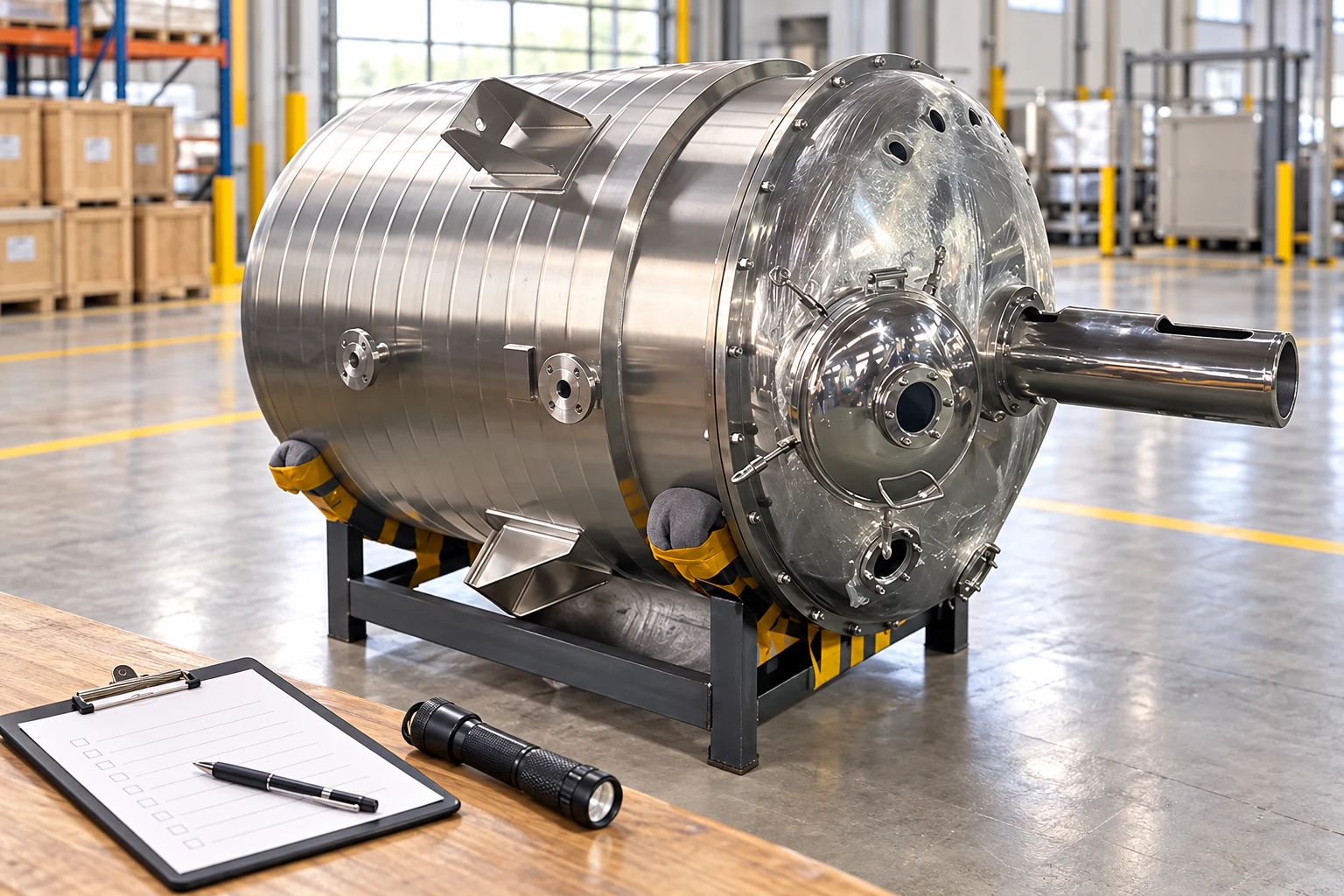
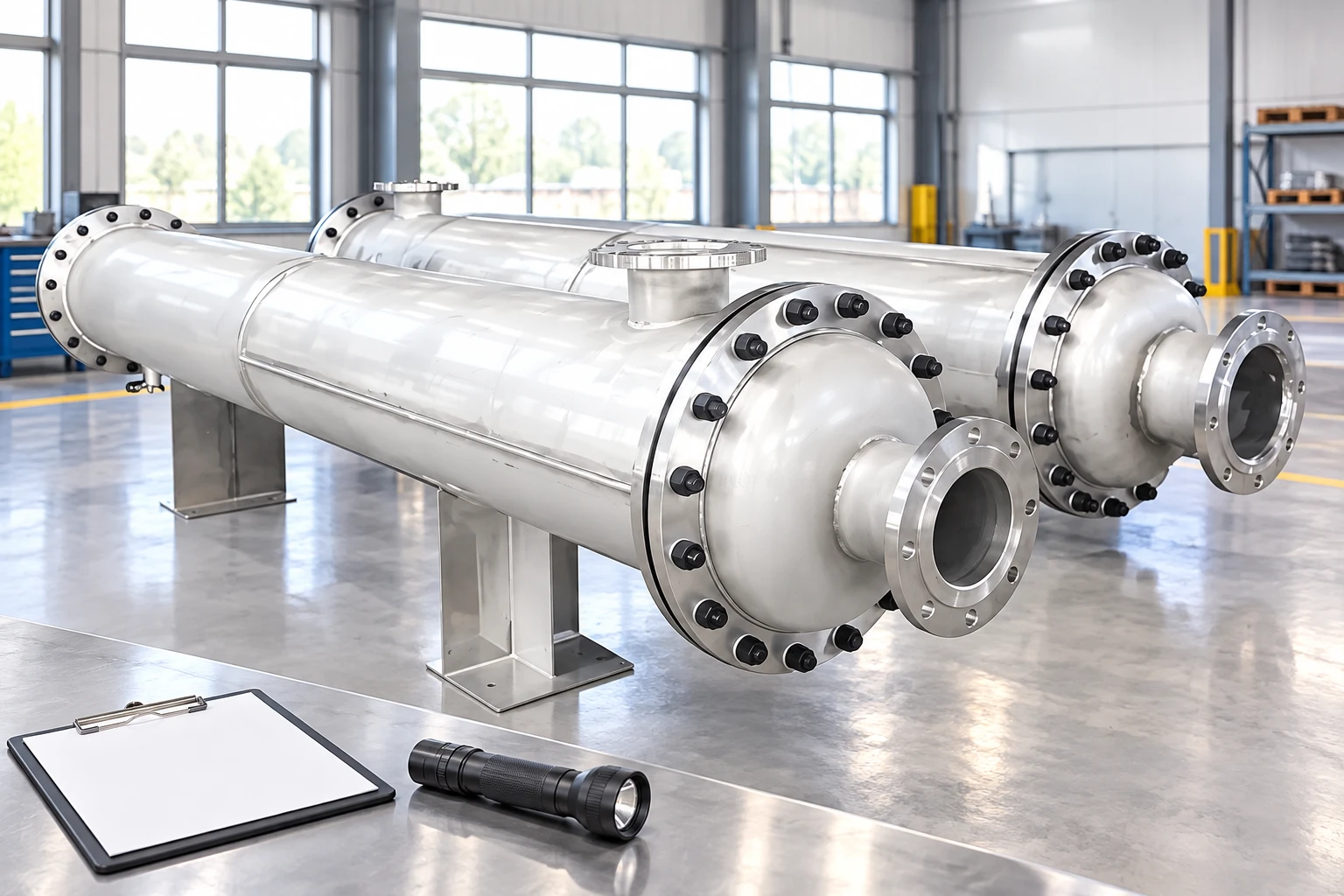
A fuel storage tank is a facility component whose specification starts with the exact fuel and the way it will be received, stored, transferred, inspected, and contained. Temperature, additives, venting, access, containment, transfer equipment, and local requirements all affect the RFQ. A tank image cannot prove code compliance or flammable-liquid suitability.
This guide separates vessel scope from facility obligations. For solvent-specific questions, see the solvent storage tank guide. For material and contamination questions, see the oil storage tank article.

Part 1. What Defines a Fuel-Storage Duty?
Name the fuel, additives, concentration where relevant, temperature range, storage duration, throughput, and tank role. A receiving tank, day tank, reserve tank, and transfer tank have different connection and inspection priorities. Record fill method, discharge method, expected level range, and the plant acceptance check.
| Input | Record | Why it matters |
|---|---|---|
| Product | Fuel type, additives, safety data | Starts compatibility review |
| Temperature | Receipt, storage, transfer, cleaning | Changes material and vent questions |
| Role | Receiving, reserve, day, or transfer | Defines access and connections |
| Location | Indoor/outdoor, ambient, access | Defines facility interface |
Part 2. How Should Materials and Seals Be Reviewed?
Review vessel, fittings, valves, gaskets, sampling points, and transfer seals together. Additives, temperature, water, and cleaning agents can alter compatibility. Ask the supplier to state product assumptions and identify the requested material records. A stainless grade alone is not a universal answer.
| Review field | Supplier question | Evidence |
|---|---|---|
| Fuel chemistry | Which product and additives are assumed? | Duty sheet |
| Wetted parts | Which grades and elastomers apply? | Material list |
| Cleaning | Are cleaning chemicals included? | Cleaning boundary |
| Exposure | Are hot, idle, or upset conditions considered? | Engineering review |
Part 3. What Venting and Transfer Interfaces Matter?
Venting depends on product, temperature, fill/discharge method, location, and applicable facility requirements. OSHA 1910.106 is public context for applicable flammable-liquid installations; it is not a design approval. Define who owns vents, flame or pressure devices where applicable, pumps, hoses, filters, meters, and external piping.

Part 4. How Should Secondary Containment Be Planned?
Containment is a facility planning question. State whether the tank sits in a bund, tray, room, or other site-controlled arrangement, and who supplies drains, sensors, access, and spill response equipment. Do not describe a tank as “contained” unless the complete installation boundary is documented.
Important: A storage vessel title does not establish flammable-liquid suitability, containment, venting compliance, or a safe operating procedure (OSHA 1910.106).
Part 5. What Inspection and Facility Boundaries Need Evidence?
List manways, sampling, level indication, drains, inspection access, maintenance clearance, lifting, supports, grounding or bonding responsibilities where applicable, and records requested. API standards can provide industry context, but the applicable document and responsible party must be named in the project.
Part 6. What Belongs in a Fuel-Storage-Tank RFQ?
Use the storage tank configuration reference, the storage tank family, and contact YIYI with:
– fuel identity, additives, temperature, volume, role, and storage duration;
– fill/discharge, pump, vent, meter, filter, and external piping scope;
– materials, seals, cleaning, access, sampling, drains, containment, and location;
– instruments, records, safety review, applicable documents, and exclusions.

FAQs
What is a fuel storage tank?
It is a vessel that receives, holds, or transfers a defined fuel under stated site conditions. Its construction and interfaces depend on the duty.
Does stainless steel suit every fuel?
No. Fuel, additives, temperature, seals, cleaning, and exposure time must be reviewed together.
Is venting the same for every fuel tank?
No. Product, temperature, fill/discharge method, location, and local requirements change the venting discussion.
What is secondary containment?
It is a site-level arrangement intended to limit release spread; its scope must include the tank, supports, drains, sensors, and response plan as applicable.
Can a tank guarantee safe fuel storage?
No. Safe operation depends on the complete facility, procedures, maintenance, and applicable requirements.
What should a fuel tank RFQ include?
Include product data, volume, temperature, role, transfer, venting, materials, seals, containment, inspection, documents, and exclusions.
References
- OSHA 1910.106 — public reference for reviewing applicable flammable-liquid installation controls.
- API standards catalog — petroleum-industry standards context.
- ASME codes and standards — reference point for confirming the project’s applicable code path.