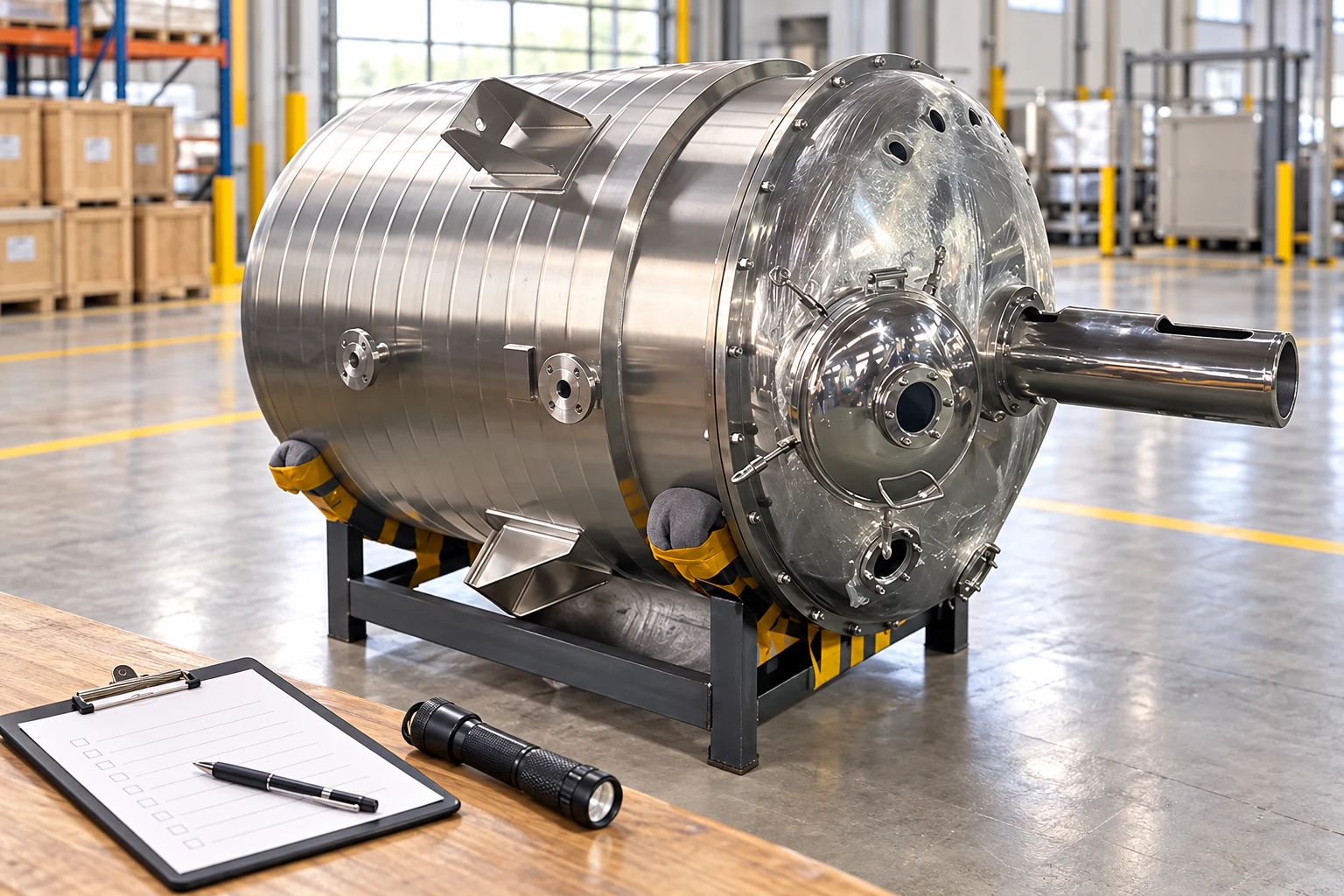
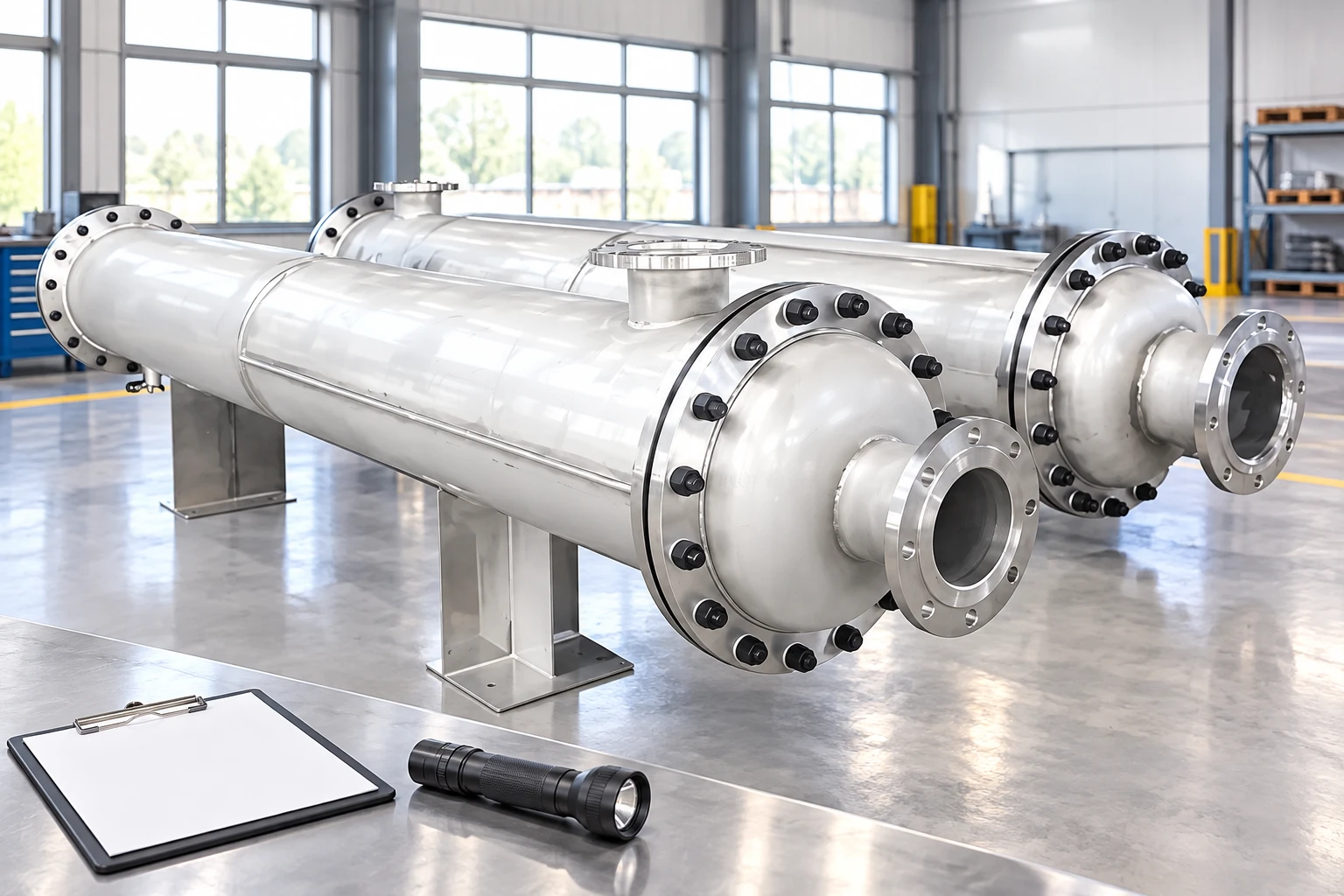
An oil storage tank should be specified from the exact oil and storage conditions, not from a generic tank label. Additives, temperature, storage period, material and seal compatibility, transfer route, water and sediment exposure, venting, access, cleaning, and acceptance method all affect the equipment request. A product page cannot prove compatibility, safe service, or a contamination-free result.
This guide organizes the questions a buyer should answer before requesting an oil-storage proposal. Where a project concerns solvents or another hazardous medium, review the solvent storage tank planning guide separately. For alcohol-related material questions, see the ethanol storage tank article.

Part 1. What Defines an Oil-Storage Duty?
Name the oil before naming the vessel. Record product type, additives, viscosity range, temperature, storage duration, batch or continuous operation, expected throughput, transfer route, and whether the tank is a receiving, hold, day, or reserve vessel. The oil’s condition at receipt and at discharge can change the material, seal, drain, and access questions.
Also identify what “acceptable” means for the project. It may mean a documented receiving check, a transfer observation, a sampling method, or a defined maintenance routine. Avoid writing an undefined cleanliness or shelf-life claim into a quotation request.
| Duty input | What to send | Why it changes the proposal |
|---|---|---|
| Product identity | Oil type, additives, and safety information | Starts compatibility and safety review |
| Temperature | Receiving, storage, transfer, and cleaning range | Changes material and viscosity questions |
| Storage role | Receiving, hold, day supply, reserve, or transfer | Defines connection and access priorities |
| Transfer | Pump, gravity, line route, and receiving point | Defines outlet and interface boundary |
| Acceptance method | Sampling, inspection, or approved plant check | Replaces an unsupported outcome claim |
Part 2. How Should Materials and Seals Be Reviewed?
Material review must cover more than the vessel wall. List the product-contact metal, fittings, gaskets, seals, sampling devices, valves, and any component exposed during transfer or cleaning. Compatibility can change with additives, temperature, water content, cleaning agents, and time in contact, so a material name alone is not a project decision.
Ask the supplier to state the product assumptions behind the proposed construction. If the project has flammability, pressure, elevated-temperature, or regulatory implications, identify those requirements in the RFQ. An equipment title is not a substitute for a duty-specific safety or compliance review.
| Compatibility field | Supplier question | Evidence or boundary |
|---|---|---|
| Oil and additives | Which product information is assumed? | Written product and temperature duty |
| Wetted construction | Which material applies to vessel, fittings, and valves? | Material identification and requested records |
| Seals and gaskets | Are product and cleaning conditions both included? | Seal list and maintenance boundary |
| Exposure changes | What happens during hot cleaning, idle periods, or contamination events? | Project review; no compatibility-life promise |
Part 3. Which Contamination-Control Interfaces Matter?
Contamination control is an interface problem. Water ingress, sediment, open access, unsuitable seals, dirty transfer lines, poor draining, and unclear sampling practice can all change storage quality. The first step is to identify which sources the project actually needs to manage, then assign responsibilities across receiving, storage, transfer, inspection, and cleaning.
Do not promise clean oil from the tank alone. Instead, specify access openings, inspection points, sample points, drains, transfer connections, filters or separators where the project owns them, and the planned maintenance or inspection procedure. The facility may need additional containment or filtration scope outside the tank supply.

| Contamination question | Buyer decision | RFQ evidence |
|---|---|---|
| Water ingress | Where can water enter during receipt, storage, or cleaning? | Operating and inspection boundary |
| Sediment | Is settling expected and how will low points be managed? | Drain and sampling approach |
| Transfer cleanliness | Who owns hoses, pumps, lines, and filters? | Scope split and cleaning procedure |
| Access | Which manways, sample points, and inspection openings are required? | Access and maintenance record |
Part 4. What Venting, Access, and Installation Boundaries Should Be Stated?
Venting is product- and installation-specific. State the oil identity, temperature range, fill/discharge method, location, external piping, and any facility requirements before accepting a generic vent arrangement. If the medium is hazardous or flammable, define the applicable project safety review and local obligations; OSHA 1910.106 flammable liquids is public context, not a design approval.
Installation scope needs equal clarity. Identify indoor or outdoor location, ambient exposure, support, lifting, access, containment responsibility, cable or instrument boundary, and who owns field piping. These details prevent a vessel quote from being treated as a complete facility solution.
Important: A tank title does not establish flammable-liquid suitability, containment, venting compliance, or a safe operating procedure. Confirm the actual product and facility requirements through a documented project review (API standards catalog).
Part 5. What Inspection, Cleaning, and Documentation Evidence Is Needed?
Describe how the vessel will be inspected, sampled, drained, cleaned, and returned to service. Include access constraints, cleaning media, temperature, waste route, maintenance interval, and records requested. A cleaning method that works for one oil can be unsuitable for another product or facility procedure.
Documentation should match the stated scope. Buyers can request material identification, construction details, connection list, instrument boundary, operating assumptions, inspection access, and exclusions. When a project requires additional code, safety, or certification evidence, state the exact document and responsible party rather than assuming it comes with a generic storage tank.
Part 6. What Belongs in an Oil-Storage-Tank RFQ?
Use the stainless steel storage tank configuration reference and the stainless steel storage tank family as equipment context. Then send the oil-storage duty sheet to YIYI with the actual conditions.
- Oil type, additives, temperature/viscosity range, storage duration, and product safety information.
- Working/minimum/maximum volume, receiving and transfer route, operating sequence, and acceptance method.
- Wetted materials, fittings, seals, cleaning chemistry, drain, sample, access, and maintenance needs.
- Venting, location, external piping, containment boundary, instruments, records, and installation interfaces.
- Applicable project requirements, requested documents, exclusions, and responsible parties.

FAQs
What is an oil storage tank?
It is a vessel used to receive, hold, transfer, or reserve a defined oil under stated operating conditions. Its configuration depends on the product and facility duty.
Does stainless steel suit every oil?
No. Suitability depends on the exact oil, additives, temperature, water content, cleaning conditions, seals, and exposure time. Request a duty-specific review.
How can water contamination be addressed?
First identify entry points and responsibility across receiving, access, drains, vents, transfer equipment, inspection, and cleaning. The tank is only one part of the control plan.
Does a tank guarantee clean oil?
No. Storage quality depends on product condition, receiving, access, seals, transfer lines, maintenance, sampling, and facility procedure. Define an acceptance method instead.
Is a vent always the same for every oil?
No. Venting depends on product identity, temperature, fill/discharge method, location, safety boundary, and applicable facility requirements.
What should an oil-storage RFQ include?
Include product information, volume, temperatures, materials, seals, storage role, transfer route, access, drains, venting, cleaning, records, safety boundaries, and exclusions.
References
- API standards catalog — public petroleum-industry standards context for project review.
- OSHA 1910.106 flammable liquids — public safety context for applicable products and facilities.
- ASME codes and standards — background source for documenting code questions around a defined oil-storage scope.