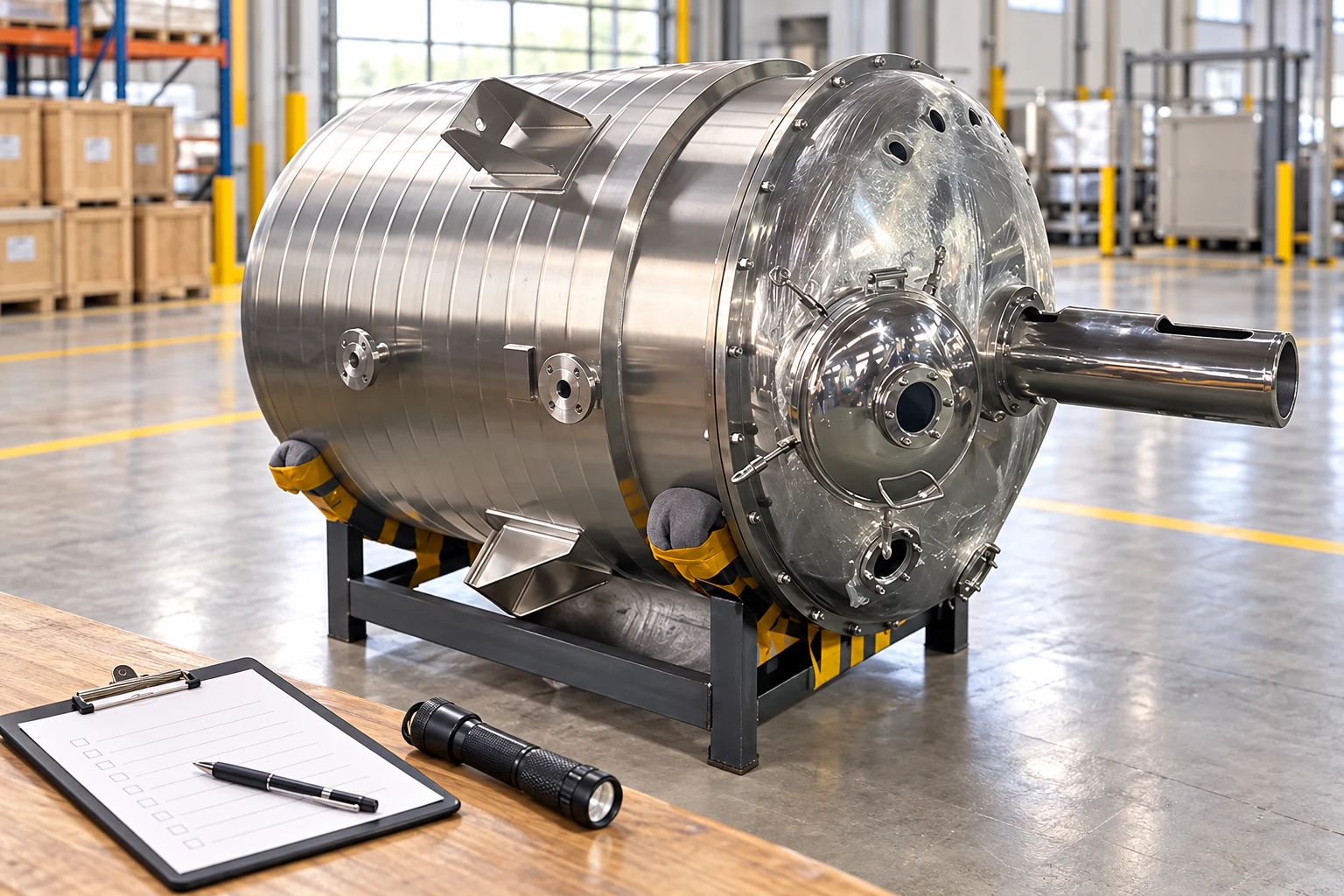
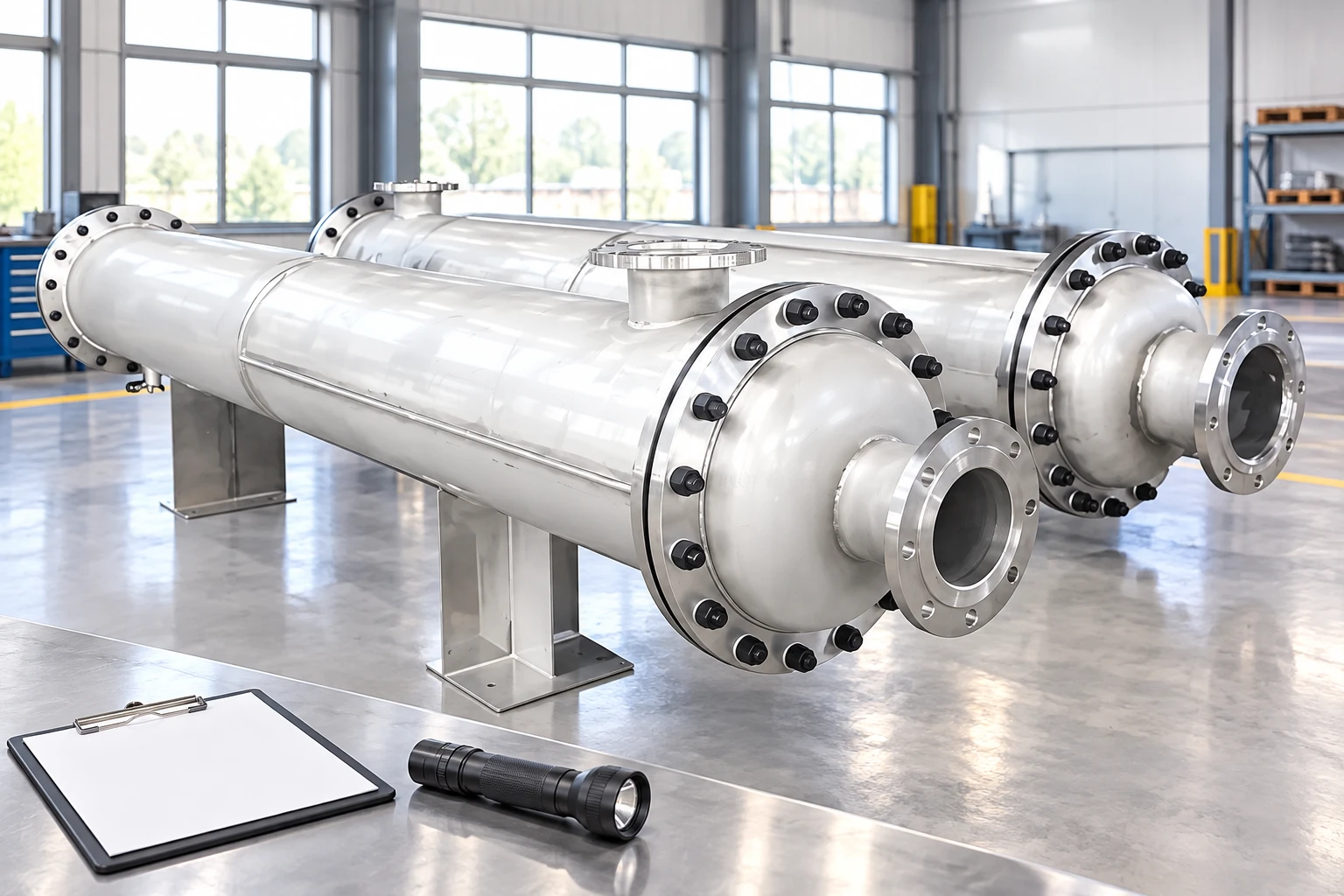
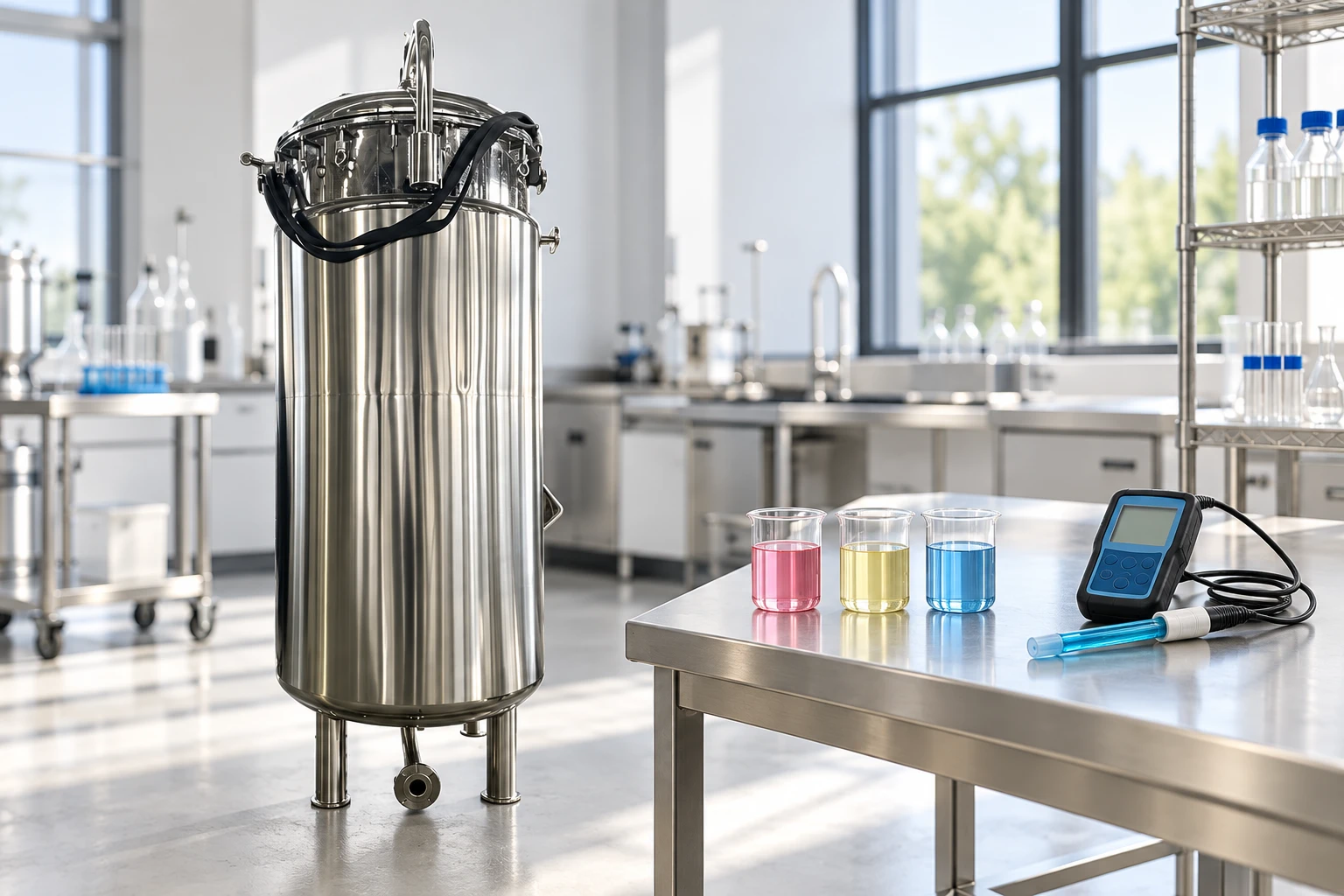
A heavy duty mixing tank is specified when viscosity, solids loading, or start-up torque push beyond light blending service. Buyers who pick a motor from a catalog horsepower table without rheology data often discover stalled shafts, overheating gearboxes, or impeller designs that never circulate the batch. The RFQ should therefore collect process loads first, then match impeller and drive packages to those loads.
This article covers torque inputs, impeller selection logic, and drive/gearbox boundaries. Capacity and materials checklists remain in the industrial-grade stirrer tank RFQ guide. High-shear dispersion duties are handled in the high shear mixing tank dispersion guide and should not be conflated with heavy paste torque service.

Part 1. Define Heavy-Duty Mixing Tank Duty
Call a vessel heavy duty when the agitation load is governed by high viscosity, dense slurries, large solids fractions, or demanding start-from-rest conditions. The label is about load and mechanical margin, not marketing steel thickness alone. State the process goal: blend, suspend, knead, or keep a paste moving without air entrainment.
Describe fill range, batch temperature, and whether the product changes viscosity during the mix. Many heavy batches thicken as solids wet out or as temperature falls. Suppliers need that trajectory to comment on running torque versus start-up torque.
| Duty tag | What to record | Why it matters |
|---|---|---|
| Viscosity band | at process temperature | Primary torque driver |
| Density | product and slurry | Affects power and shaft load |
| Solids | % and particle notes | Impeller and wear risk |
| Fill range | min/max working level | Coverage and vortex risk |
| Start condition | empty, partial, full | Start-up torque margin |
Use the mixing tank product family for category context after the duty statement is written.
Part 2. Capture Rheology and Load Inputs for Torque
Torque quotes are only as good as the process data behind them. Send measured viscosity when available, or a bounded estimate with temperature and shear notes. Flag non-Newtonian behavior if the plant has seen shear-thinning or shear-thickening in lab tests.
Never treat a brochure torque curve as plant truth. Curves assume fluids and geometries that may not match your vessel. Ask each bidder to show which inputs they used and which safety factors they applied, then verify those inputs against your process data before PO.
| Send with quote | Example entry |
|---|---|
| Viscosity | value or range at stated temperature |
| Rheology note | Newtonian / shear-thinning / unknown |
| Density | kg/m3 or lb/gal |
| Start-up | from rest under full fill? |
| Available power | voltage, frequency, soft-start? |
If heating changes viscosity dramatically, include the steam heating versus jacketed mixing tank discussion as a parallel utility decision, but keep torque inputs explicit in this RFQ.
Part 3. Match Impeller Geometry to the Process Goal

Impeller selection follows the process goal. Anchor and helical styles often appear in high-viscosity paste service; pitched-blade or hydrofoil styles appear more often in lower-viscosity blending or suspension. The correct choice depends on vessel geometry, baffling, and the flow pattern the recipe needs.
Ask suppliers to justify diameter, clearance, and speed against your viscosity band and fill range. Request comments on wall scraping, dead zones, and whether dual impellers are required as level changes. Avoid copying an impeller from a lighter product line without revisiting torque.
Wear and cleaning also belong here. Abrasive solids may need hardened edges or replaceable blades. If the same tank must CIP between SKUs, confirm the impeller does not create rinse shadows that defeat cleaning.
Important: Do not invent or rely on unverified numerical torque curves when process viscosity and start-up load are unknown. Buyers should verify rheology and load data before accepting a drive package. Rotating equipment also requires guarding and lockout practices consistent with guidance such as OSHA machine guarding. When the vessel is a pressure boundary, review applicable pressure-equipment practice such as ASME BPVC for the quoted scope.
Part 4. Select Drive, Gearbox, and Seal Interfaces
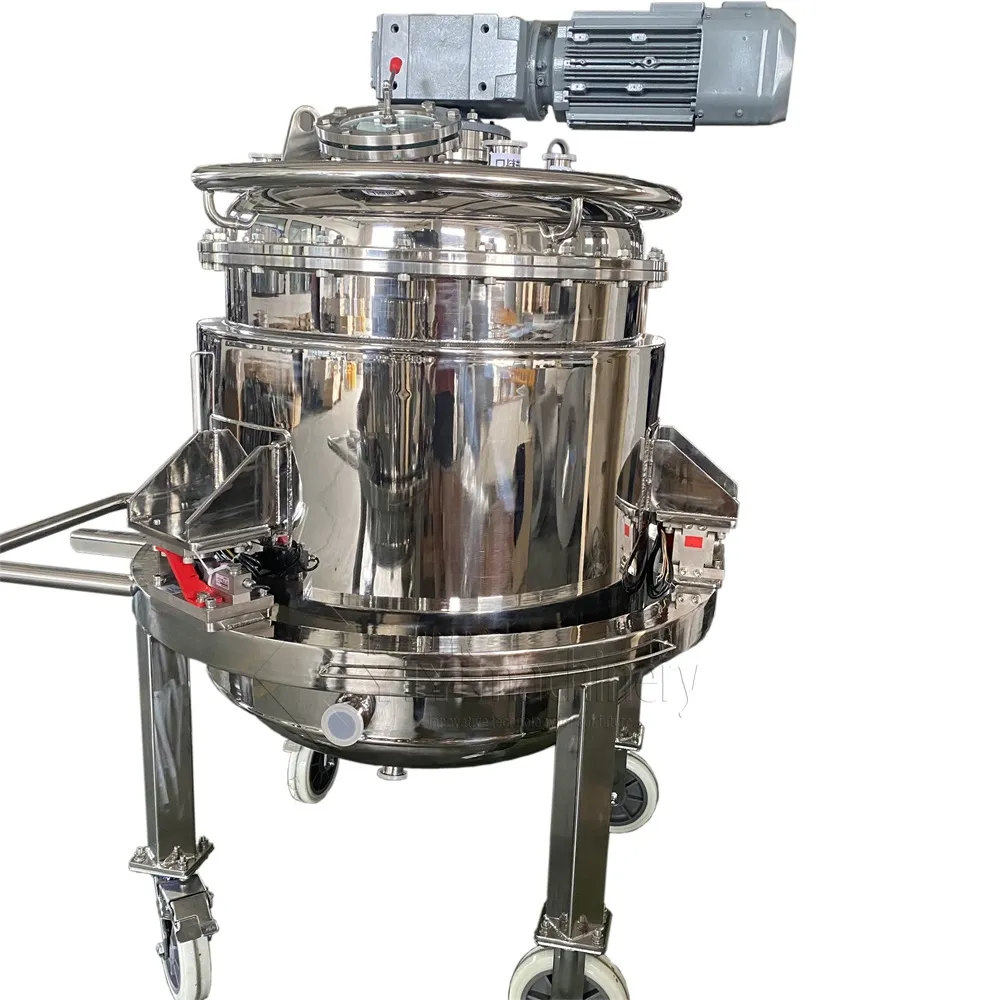
The drive package converts process torque into motor size, gearbox ratio, service factor, and mounting. Provide available electrical service and any soft-start or VFD constraints. Ask whether the gearbox is sized for start-up torque, continuous running torque, or both, and which value governs.
Seal selection must travel with the drive decision. High viscosity and solids can punish packing or mechanical seals if flush plans are undefined. State whether the process is sealed for emissions, hygiene, or operator exposure, then request compatible seal materials and flush requirements.
Mounting geometry matters: top-entry, angled, or side-entry change shaft length and bearing loads. Include preferred mounting and headroom limits so the gearbox does not collide with platforms or utilities. For drive hardware context after loads are known, review gearbox motor options for agitator drives.
| Drive RFQ field | Buyer note |
|---|---|
| Motor service | voltage, Hz, enclosure |
| Gearbox | ratio preference or leave open |
| Service factor | plant reliability expectation |
| Seal type | packing / mechanical / other |
| Speed control | fixed / VFD range |
Part 5. Review Structural and Shaft Support Implications
Heavy torque loads stress shafts, couplings, and vessel nozzles. Ask for shaft diameter rationale, bearing arrangement, and whether a steady bearing or bottom guide is proposed. Long shafts in tall vessels need this discussion early.
Vessel structure must accept agitator reaction loads. Require nozzle reinforcement notes and vessel support assumptions when the mixer is large relative to the tank. Misaligned expectations here create field vibration that no later VFD tweak fully cures.
Coupling access and alignment space should appear on the general arrangement. Maintenance crews need room to service seals and gearboxes without removing the vessel from the line.
Part 6. Align Safety, Guarding, and Controls
Rotating shafts, couplings, and belt or gear guards belong in the safety scope. State lockout points, emergency stop expectations, and whether the mixer must refuse to start with the manway open. Controls should expose overload, seal flush failure, and high-temperature gearbox alarms when those risks apply.
Overload protection is not optional marketing language on heavy-duty service. Ask how the drive protects itself during cold start of a thickened batch and how operators restart safely after a trip. Document who programs interlocks: supplier panel or plant PLC.
Training and manuals should list routine checks for gearbox oil, seal flush, and unusual noise or vibration. Those operating notes reduce unplanned downtime more than an oversized nameplate alone.
Part 7. Finalize Drive Selection and Send the RFQ
Compare bids against the same viscosity, density, fill, and start-up assumptions. Reject proposals that omit those inputs or that paste catalog curves without tying them to your data. Review the stainless steel mixing tank agitator configuration as a configuration reference after the mechanical brief is complete, then use the mixing tank product family for adjacent options.
Request drawings, impeller rationale, motor and gearbox datasheets, seal plan, shaft support notes, controls boundary, and exclusions. When process data is ready, contact YIYI with viscosity bands, solids notes, and available power for a drive discussion.
Idle batches that cool and thicken between shifts need an explicit restart procedure in the RFQ. Ask whether the quoted drive can break a gelled or settled charge, or whether a staged fill and heat step must precede agitation. That restart story often governs gearbox selection more than steady-state mixing at target temperature.
FAQs
What makes a mixing tank “heavy duty” in an RFQ?
Heavy duty means the agitation load is driven by high viscosity, dense or solids-rich batches, or demanding start-up torque, requiring explicit mechanical and drive margins beyond light blending service.
Which process data should buyers send before torque is quoted?
Send viscosity or rheology notes at process temperature, density, solids loading, fill range, temperature trajectory, and whether the mixer starts under full load from rest.
How should impeller selection relate to viscosity and solids?
Match impeller style and diameter to the flow pattern the recipe needs at the stated viscosity and solids level, then confirm rinse and wear implications for the same geometry.
When does a gearbox or motor package need re-rating?
Re-rate when viscosity, fill, start-up conditions, or speed range change beyond the assumptions used in the original quote, or when field trips and overheating show insufficient margin.
Should buyers accept catalog torque curves without plant data?
No. Catalog curves are reference tools. Accept a drive package only after the supplier ties torque assumptions to your verified or clearly bounded process data.
Can drive selection be finalized before seal and shaft details?
Not safely. Seal plan, shaft length, and support bearings change mechanical losses and reliability. Finalize drive, seal, and shaft support as one package.