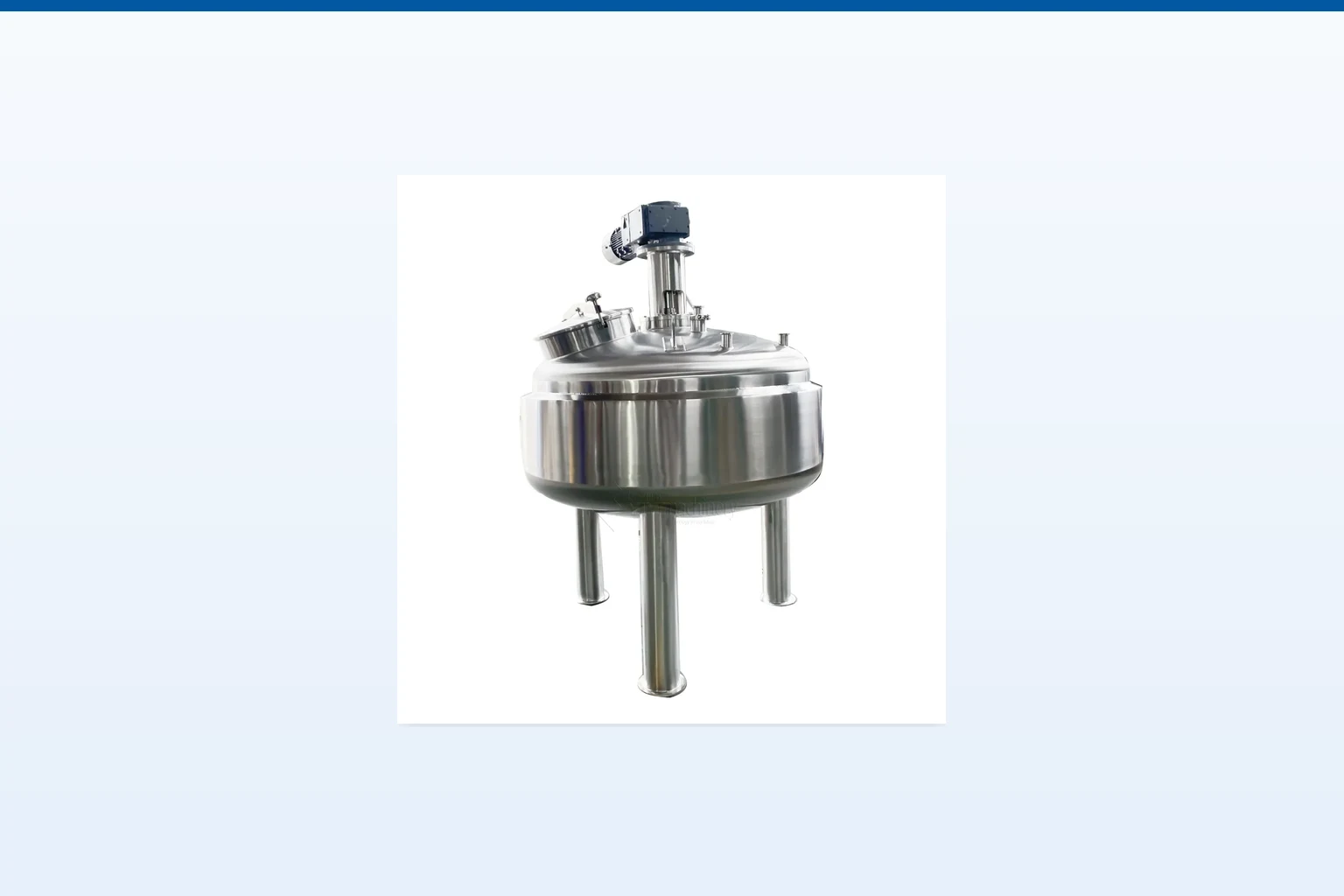
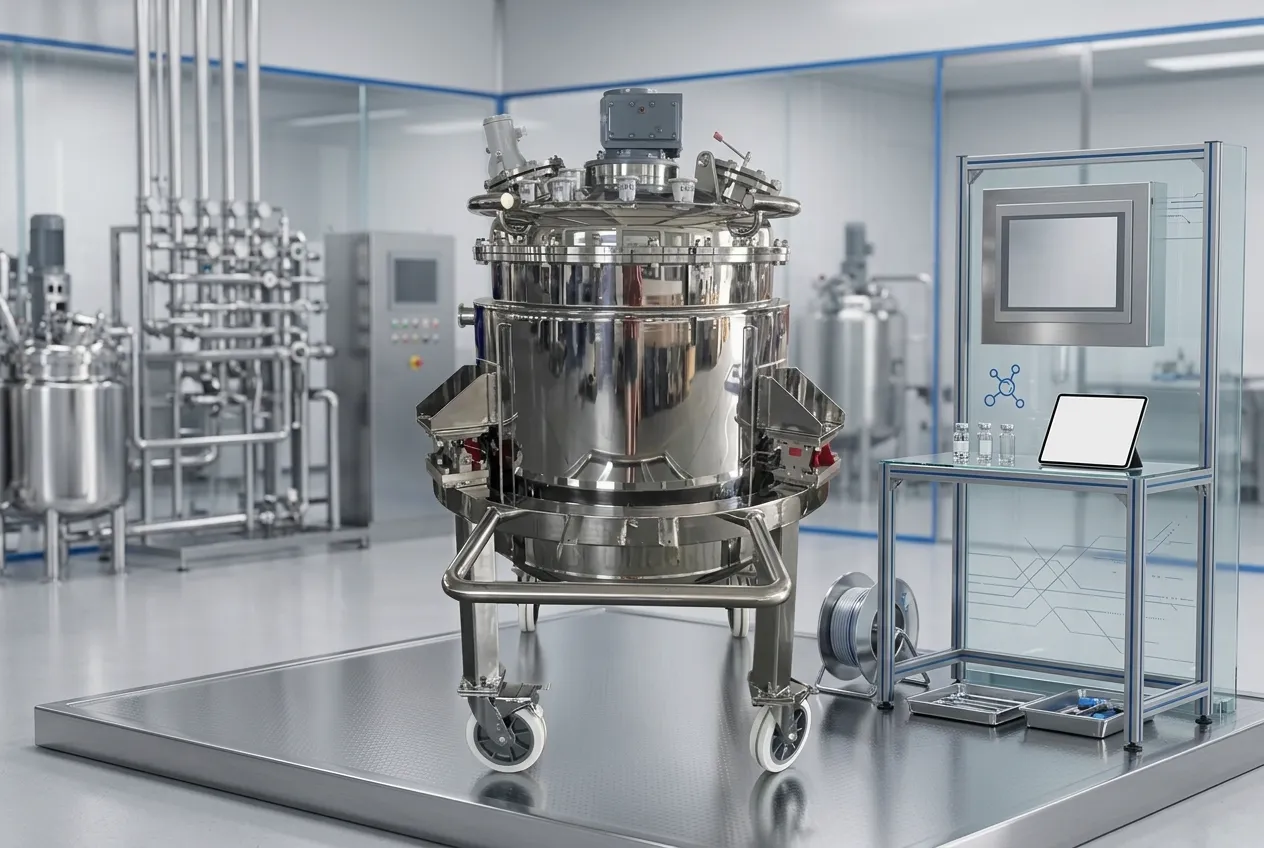
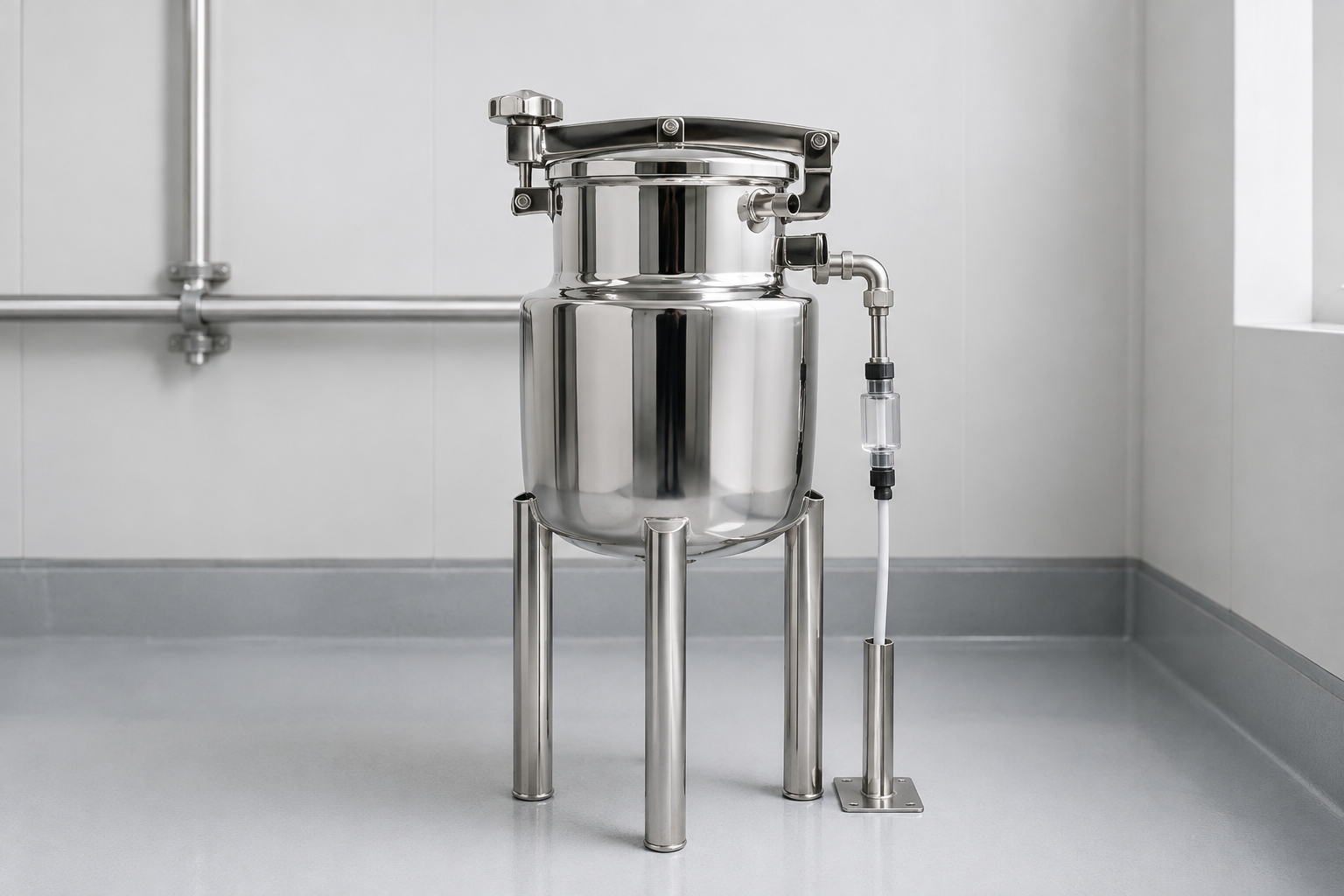
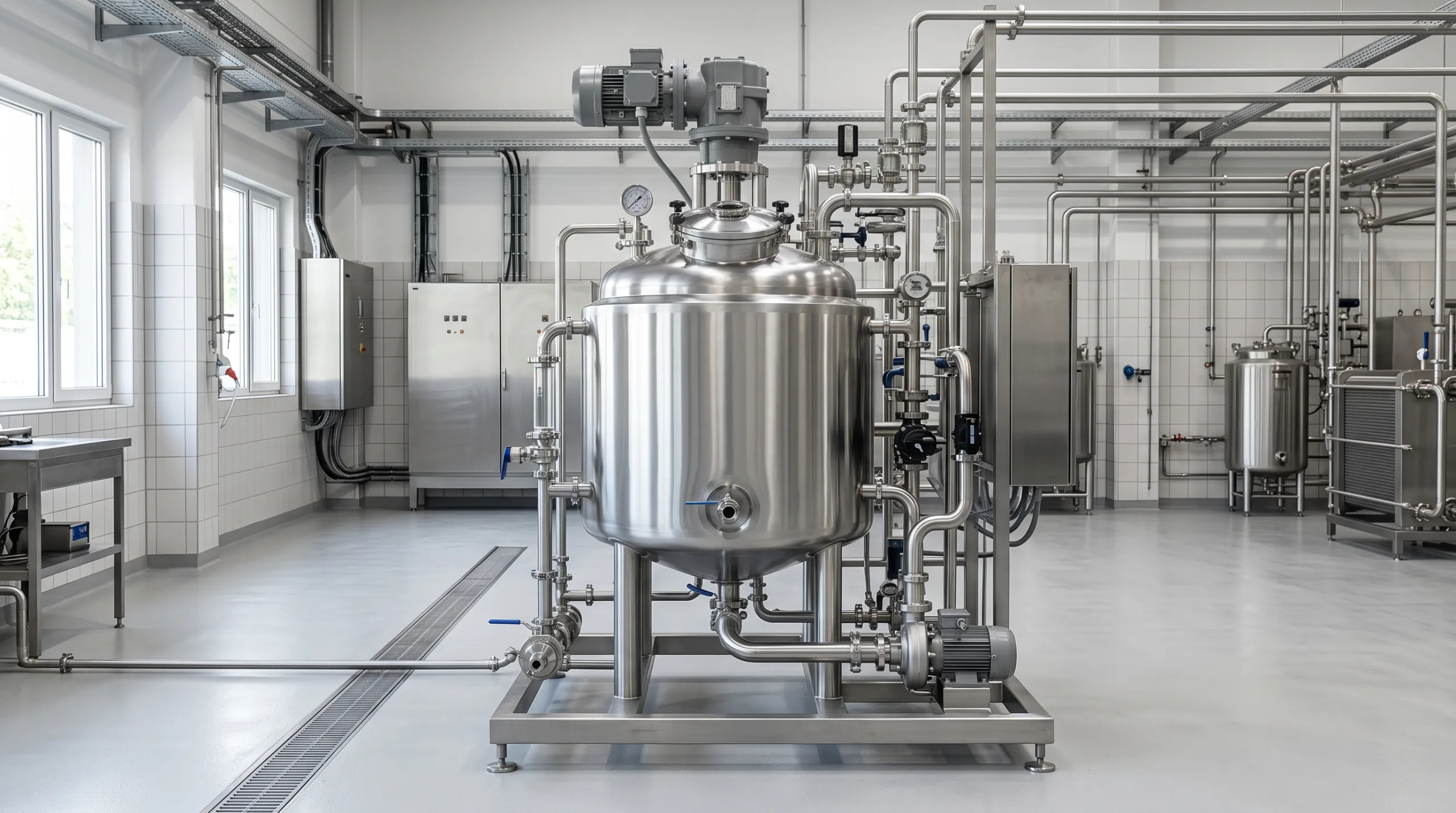
A dairy products mixing tank is a sanitary process vessel designed to blend milk-based products, cream, cultured bases, beverages, sauces, and related ingredients while supporting controlled cleaning between batches. The important purchase criteria are not only capacity and stainless steel: product-contact finish, drainage, CIP coverage, seals, agitation, temperature control, and documentation all affect hygienic operation.
This guide helps food plants define a dairy mixing tank RFQ. Published YIYI INTELLIGENT equipment pages are configuration examples only. Buyers must confirm the required sanitary standard, material certificate scope, surface finish, and cleaning validation approach for the actual line.

Part 1. What is a dairy products mixing tank?
The tank holds dairy ingredients while an agitator provides the required circulation. It may use a jacket to warm, cool, or hold the batch. Depending on the formulation, the tank can support blending of milk powders, cream, sugar, stabilizers, fruit preparations, cultures, or sauce ingredients. The required design changes with viscosity, fat level, particulate content, temperature profile, and cleaning frequency.
| Element | Dairy-process role | Buyer question |
|---|---|---|
| Vessel | Product containment | What are minimum and maximum working volumes? |
| Agitator | Blending and temperature uniformity | Is the product shear-sensitive or foam-prone? |
| Jacket | Heating and cooling | What ramp and hold temperatures are required? |
| CIP interfaces | Automated cleaning | Which chemicals, flow, and coverage are required? |
| Drain | Complete product and cleaning removal | Can the tank empty at the required slope? |
| Instruments | Batch control | Which temperature, level, or recording points are needed? |
Start with the mixing tank category for capacity and configuration context, then write the sanitation and process requirements into the RFQ.
Part 2. Why do cleanability and drainability matter?
Dairy residues can dry, bake onto warm surfaces, or create cleaning problems in poorly drained crevices. A sanitary tank should be designed to avoid unnecessary dead zones, provide access for inspection where required, and allow cleaning solution to reach relevant product-contact surfaces. The plant’s CIP method, not just the tank’s appearance, determines the required spray devices, ports, and return arrangement.
| Design point | Why it matters | RFQ input |
|---|---|---|
| Internal finish | Supports effective soil removal | Owner finish requirement |
| Drain slope | Limits retained product and wash water | Lowest-point discharge detail |
| CIP spray coverage | Reaches upper shell and fittings | Flow, pressure, chemistry, cycle |
| Manway and ports | Access and hygienic interfaces | Port schedule and gasket type |
| Weld treatment | Limits residue traps | Weld and inspection documentation |
Tip: State the full product-changeover sequence, including pre-rinse, chemical wash, final rinse, and any verification requirement. Hygienic guidance such as 3-A sanitary standards and EHEDG can frame owner expectations but do not replace the line’s own validation plan.
Part 3. Which agitator fits dairy products?
Thin milk blends may use lower-intensity propellers or pitched blades. Creams, thick cultured bases, and higher-solids mixtures may need anchors or other wall-sweeping arrangements to avoid temperature gradients. The goal is enough circulation to maintain uniformity without excessive foam or product damage.
| Product condition | Starting mixing approach | Risk to control |
|---|---|---|
| Thin milk or beverage | Propeller or pitched blade | Vortex and air drawdown |
| Cream or cultured base | Gentle turbine or anchor | Excessive shear |
| High-solids sauce | Anchor or ribbon | Wall build-up and torque |
| Powder addition | Controlled feed plus bulk circulation | Lumps and fish eyes |
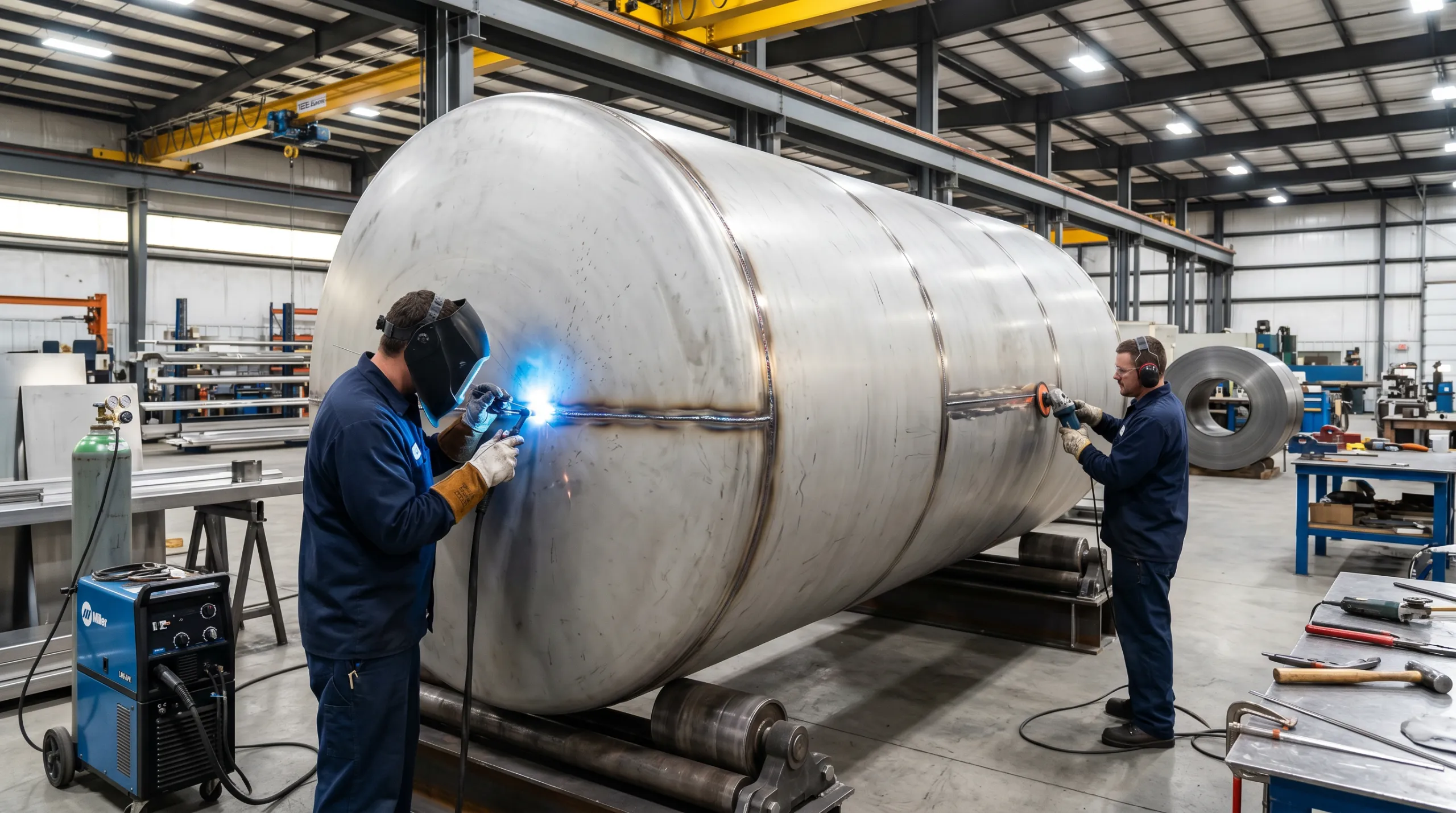
For unusual powder wet-out or emulsion duty, distinguish the requirement from ordinary dairy blending. A high-shear device may help dispersion, but it can also change texture or entrain heat; specify the desired product result rather than simply requesting the highest available speed.
Part 4. How should heating and cooling be specified?
Dairy tanks often need a jacket for pasteurization-adjacent preparation, ingredient melting, cooling, or temperature holding. Utility selection follows site conditions and batch temperature targets. A jacketed vessel must be paired with agitation that moves product across the wall; otherwise the wall and bulk product can run at different temperatures.
| Thermal requirement | Inputs to state | Equipment implication |
|---|---|---|
| Heat-up | Initial/target temperature and minutes | Jacket area and utility selection |
| Cooling | Target temperature and permitted ramp | Chilled utility and circulation |
| Hold | Duration and allowed deviation | Sensor and control detail |
| Viscous batch | Viscosity during heat/cool | Agitator torque and wall sweep |
| Temperature records | Batch log requirement | Controller and sensor scope |
See the jacketed mixing tank guide for general utility and control selection.
Part 5. Which materials, seals, and fittings matter?
304 and 316L are common stainless starting points, but selection should account for product chemistry, cleaning chemicals, temperature, and chloride exposure. Gaskets, mechanical seals, sight glasses, and valves also require product and CIP compatibility review.
| Item | Buyer decision |
|---|---|
| Product-contact metal | 304 or 316L after chemistry and cleaning review |
| Seals | Elastomer compatibility with product and CIP |
| Fittings | Hygienic connection standard and gasket type |
| Sight glass | Cleaning access and illumination requirement |
| Insulation | Personnel protection and temperature stability |
Do not infer a specific sanitary certification from a product photo. Ask suppliers to list the material, finish, weld, and documentation actually included.
Part 6. What belongs in a dairy mixing tank RFQ?
The RFQ should turn the formulation and cleaning sequence into engineering inputs.
| RFQ section | Inputs to provide |
|---|---|
| Product | Density, viscosity, solids, fat, foam behavior |
| Batch | Minimum, normal, and maximum working volume |
| Agitation | Blend target, speed range, shear sensitivity |
| Thermal | Heat/cool range, ramp, hold, utility data |
| CIP | Chemicals, cycle, flow, pressure, validation needs |
| Materials | Metal, finish, seals, fitting standard |
| Interfaces | Nozzles, manway, drain, sample point, load cells |
| Documentation | Drawings, FAT, material records, spare seals |
Part 7. What quote mistakes occur and which YIYI examples fit?
Common mistakes include quoting a tank by gross volume only, omitting the lowest working level, and assuming that a bottom outlet guarantees full drainability. Dairy projects also fail when cleaning responsibility between the tank supplier and CIP skid supplier is unclear.
| Mistake | Field symptom | Prevention |
|---|---|---|
| CIP scope absent | Incomplete cleaning coverage | Define chemicals, flow, and responsibility |
| Wrong agitator | Foam or uneven temperature | State product viscosity and sensitivity |
| Poor drain detail | Retained heel | Request lowest-point drain drawing |
| Thermal duty vague | Long batch cycle | Provide ramp and hold requirements |
YIYI publishes a heated mixing tank with sight glass jacket and mixing tank with agitator as starting configuration contexts. Confirm sanitary scope on the exact project offer, then request a quote with the data in Part 6.
FAQ
What is a dairy products mixing tank?
It is a sanitary stirred vessel for blending dairy ingredients while supporting cleanability, temperature control, and batch repeatability.
Is 304 or 316L needed for dairy?
Both can be used in defined dairy duties. Select the grade against product, cleaning chemicals, temperature, and owner requirements.
Why is drainability important?
Complete drainage limits retained product and cleaning solution, supporting repeatable sanitation between batches.
What agitator suits dairy products?
The right type follows viscosity, foam tendency, and shear sensitivity; thin milk and thick cream can require different flow patterns.
Can dairy tanks heat and cool?
Yes, when a jacket, utility, controls, and agitation are specified for the required thermal duty.
What CIP details should be requested?
Specify chemicals, temperature, flow, pressure, spray coverage, drain path, and cleaning-validation expectations.
Are sight glasses sanitary?
They can be specified in hygienic configurations, but the fitting, gasket, cleanability, and operating scope must be confirmed.
What should be listed in an RFQ?
List product properties, batch range, agitation, thermal duty, CIP sequence, materials, ports, and required documents.
References
- 3-A Sanitary Standards — sanitary owner-requirement context
- EHEDG — hygienic design context
- ASME BPVC — pressure-boundary scope when applicable