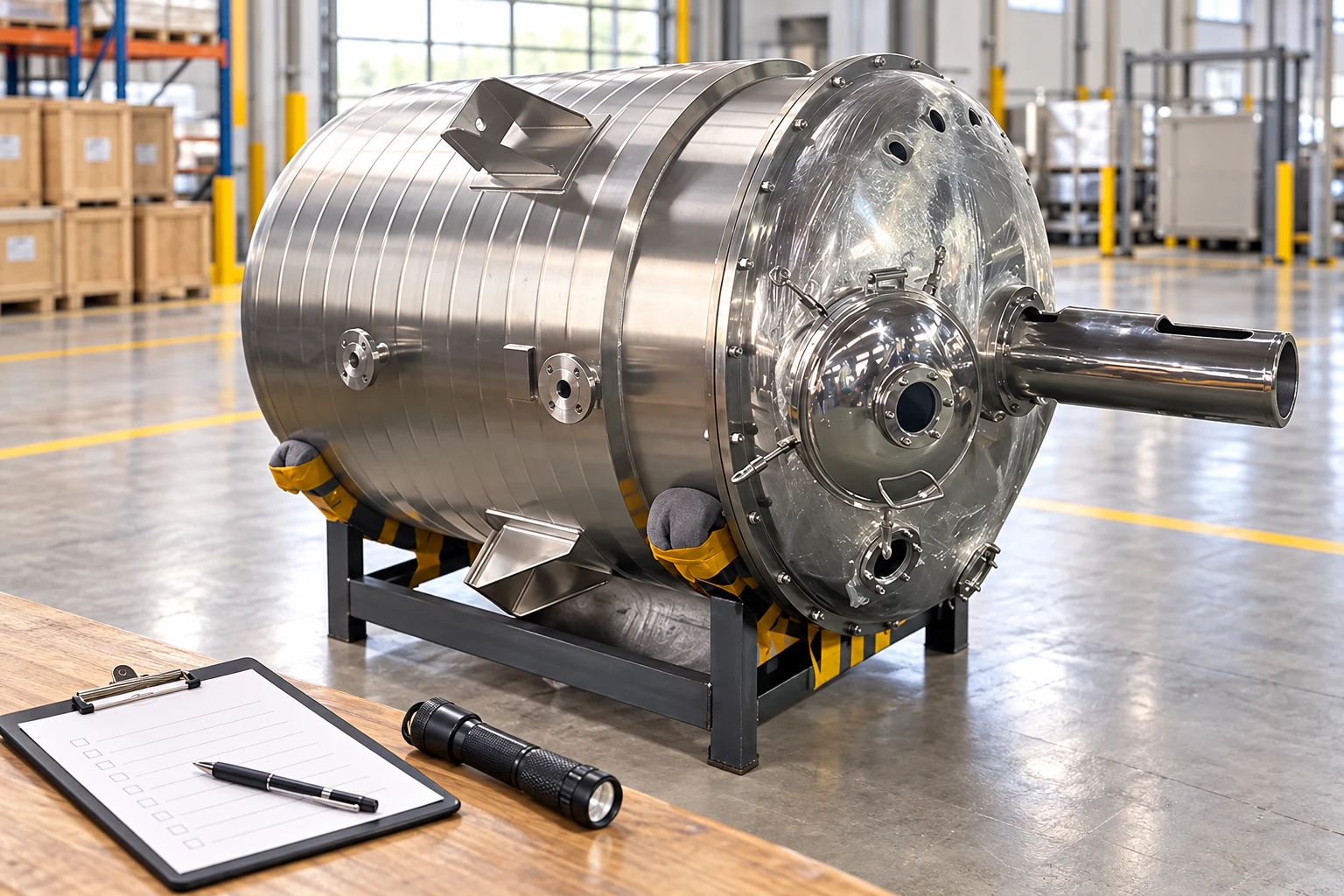
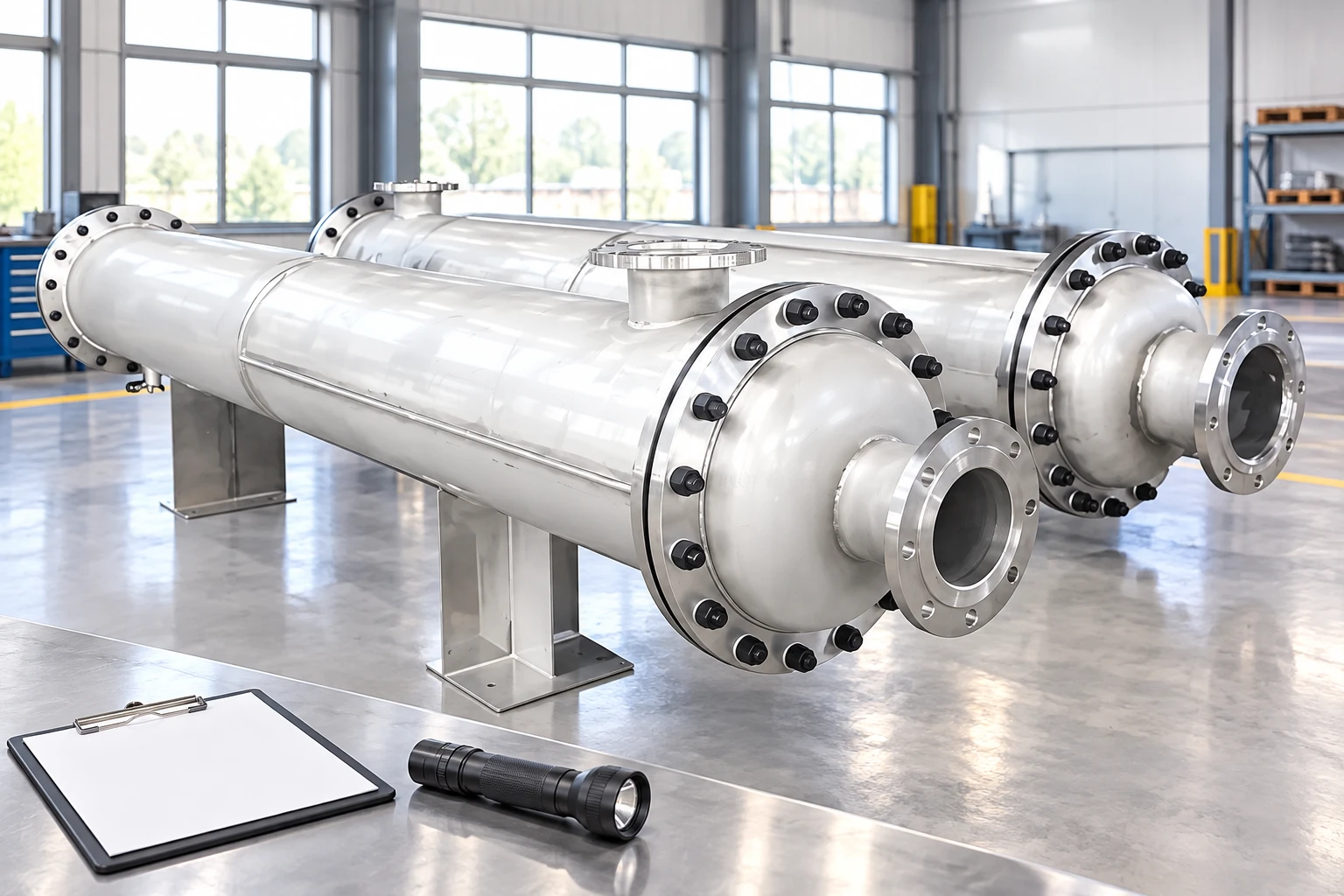
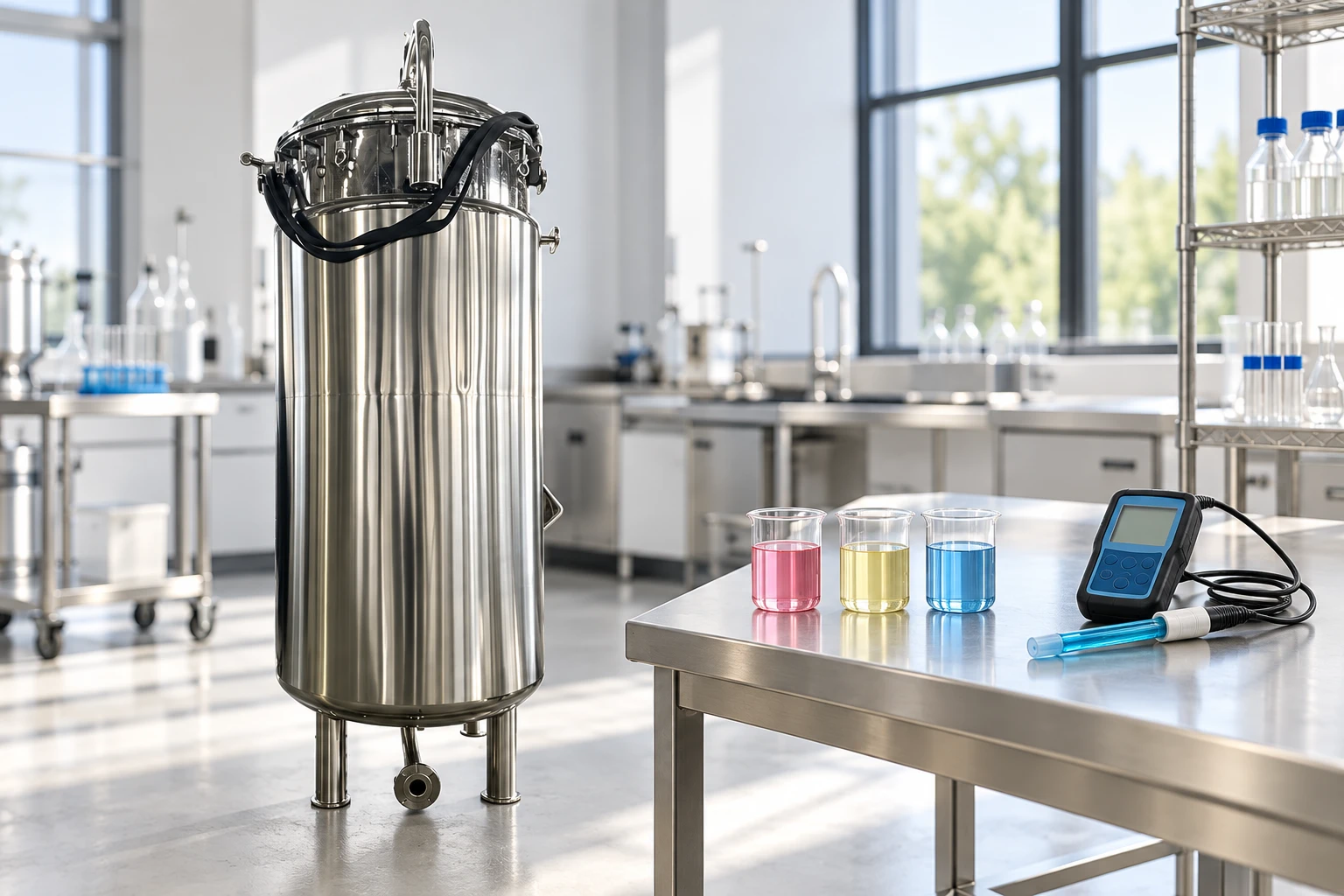
A vacuum homogenizer is chosen by matching the process duty to the machine architecture. Vacuum level, mixing pattern, homogenizing stage, viscosity, solids, temperature, working volume, cleaning method, and documentation all matter. The label alone does not prove that a machine will deliver a target particle size or stable emulsion.
This guide helps equipment buyers separate the functions, define the duty, and prepare an RFQ for emulsion and dispersion service. For a general vacuum comparison, see the vacuum mixing tank guide. For a cream, sauce, and gel scope, see the vacuum emulsifying mixer guide.

Part 1. Define the Emulsion or Dispersion Duty
Write down what the machine must do before comparing suppliers. An emulsion may need oil and water phases brought together; a dispersion may need solids wetted, deagglomerated, and distributed. These duties can share equipment features but differ in product behavior and acceptance tests.
Record the phases, solids, viscosity trend, temperature window, air sensitivity, batch sequence, and whether the product is shear-sensitive. Note if powders are added under vacuum or through a separate premix step. Avoid promising a stable emulsion or a final particle size until the recipe and test method are defined.
| Duty input | What to record | Why it changes selection |
|---|---|---|
| Product phases | oil/water, liquid/solid, or multi-phase | Sets wetting and shear questions |
| Viscosity | range and temperature at start/end | Changes drive load and circulation |
| Solids | type, concentration, abrasive or fibrous behavior | Affects rotor/stator and wear review |
| Air sensitivity | foaming, oxidation, entrainment concern | Determines whether vacuum is useful |
| Acceptance test | visual, lab, sieve, or particle method | Prevents unsupported performance promises |
Part 2. Separate Vacuum, Mixing and Homogenizing Functions
Vacuum removes or limits gas in the headspace and can support deaeration when the product and vessel are suitable. The anchor or sweep mixer moves bulk material. A homogenizing head creates a localized high-shear zone. A machine can include all three, but each function needs its own specification.

| Function | Buyer question | Evidence to request |
|---|---|---|
| Vacuum | What air-removal or oxygen-control goal is in scope? | Vessel vacuum envelope and control description |
| Bulk mixing | How will the full batch circulate at minimum fill? | Impeller type, position, and operating sequence |
| Homogenizing | Where is the high-shear zone and when is it used? | Head arrangement, duty limits, and test method |
| Addition | How are powders or a second phase introduced? | Inlet location, wetting step, and dust-control boundary |
Do not call a vacuum homogenizer automatically sterile, leak-free, or self-cleaning. Those are separate equipment and site-validation questions.
Important: A vacuum-capable vessel does not establish food, GMP, pressure-equipment, or cleaning compliance by itself. Confirm facility validation and the required documentation against applicable local hygiene guidance — source note: EHEDG cleanability vocabulary.
Part 3. Match Shear Demand to Product Behavior
High shear can help break agglomerates or reduce droplet size, but excess shear can heat, aerate, or damage a shear-sensitive product. Ask for a staged recipe: wetting, premix, vacuum hold, homogenizing interval, cooling, and discharge. This makes it possible to compare proposals without inventing RPM, torque, or micron claims.
Use the high shear mixing tank dispersion guide when dispersion energy is the main question. If the process is primarily degassing with moderate mixing, the vacuum mixing tank may be a better fit than a homogenizing stage.
| Product behavior | Selection implication | RFQ evidence |
|---|---|---|
| Low-viscosity liquid | Circulation and air control may dominate | Minimum-fill mixing description |
| Thick or temperature-sensitive batch | Drive load and cooling become important | Viscosity-temperature curve and heat-removal plan |
| Abrasive solids | Wear and cleanability need explicit review | Rotor/stator materials and inspection access |
| Shear-sensitive formulation | Short, controlled high-shear stage may be preferable | Recipe sequence and acceptance test |
Part 4. Compare Batch Scale and Vessel Geometry
Specify working volume, minimum and maximum fill, freeboard, batch frequency, and transfer method. A vessel that performs well near its nominal volume may not circulate a half batch or a small trial batch the same way. Geometry, baffles, bottom outlet, and head arrangement influence dead zones and cleaning access.
Ask suppliers to separate gross volume from working volume and to state the assumed fill range. Include whether the product is charged by powder, liquid line, or preblend. If a jacket is required, provide the heating or cooling medium and temperature envelope without assuming a guaranteed heat-up time.
Part 5. Specify Cleaning, Materials and Instrumentation
List product-contact materials, elastomers, surface-finish targets, drainability, spray coverage, and CIP or COP chemistry. A product page is configuration context, not evidence of a plant-specific sanitary certification. If GMP, pressure code, or food-contact documentation is required, identify the exact documents and responsible party in the RFQ.
Instrumentation may include temperature, level, vacuum, agitator status, and motor protection. Ask how alarms and interlocks behave during a vacuum loss, overload, or dry-running condition. Do not infer a compliance result from the presence of a gauge or controller.
Part 6. Choose a Configuration and Issue an RFQ
Use the vacuum emulsification homogenizer configuration reference to discuss the equipment family, then send YIYI the actual duty through contact YIYI. Include phases, viscosity, solids, batch volume, temperature, vacuum goal, shear sequence, cleaning chemistry, materials, utilities, controls, acceptance test, and exclusions.

FAQs
What is the difference between a vacuum homogenizer and a vacuum mixing tank?
A vacuum mixing tank emphasizes bulk circulation and air control. A vacuum homogenizer adds a dedicated high-shear stage; the right choice depends on product behavior and the acceptance test.
Does a vacuum homogenizer guarantee a smaller particle size?
No. Particle size depends on formulation, shear exposure, temperature, residence time, and test method. Request a supplier test plan instead of assuming a catalog result.
When should a buyer specify a homogenizing head?
Specify it when the process needs localized high shear for wetting, deagglomeration, or droplet reduction and the product can tolerate that energy. Keep the duty and limits explicit.
What batch information should be sent to a supplier?
Send working and minimum volume, phases, viscosity range, solids, temperature, vacuum goal, addition sequence, cleaning method, materials, utilities, and acceptance criteria.
Is a vacuum homogenizer automatically sanitary or GMP compliant?
No. Sanitary design, GMP documentation, and site validation are separate requirements that must be evidenced for the specific build and facility.
Can the same machine handle every emulsion and dispersion?
No. High viscosity, abrasive solids, shear-sensitive products, or unusual temperature and vacuum duties may require a different rotor, mixer, cooling plan, or vessel configuration.
References
- EHEDG — hygienic design and cleanability vocabulary
- ASME codes and standards — pressure-equipment context when applicable