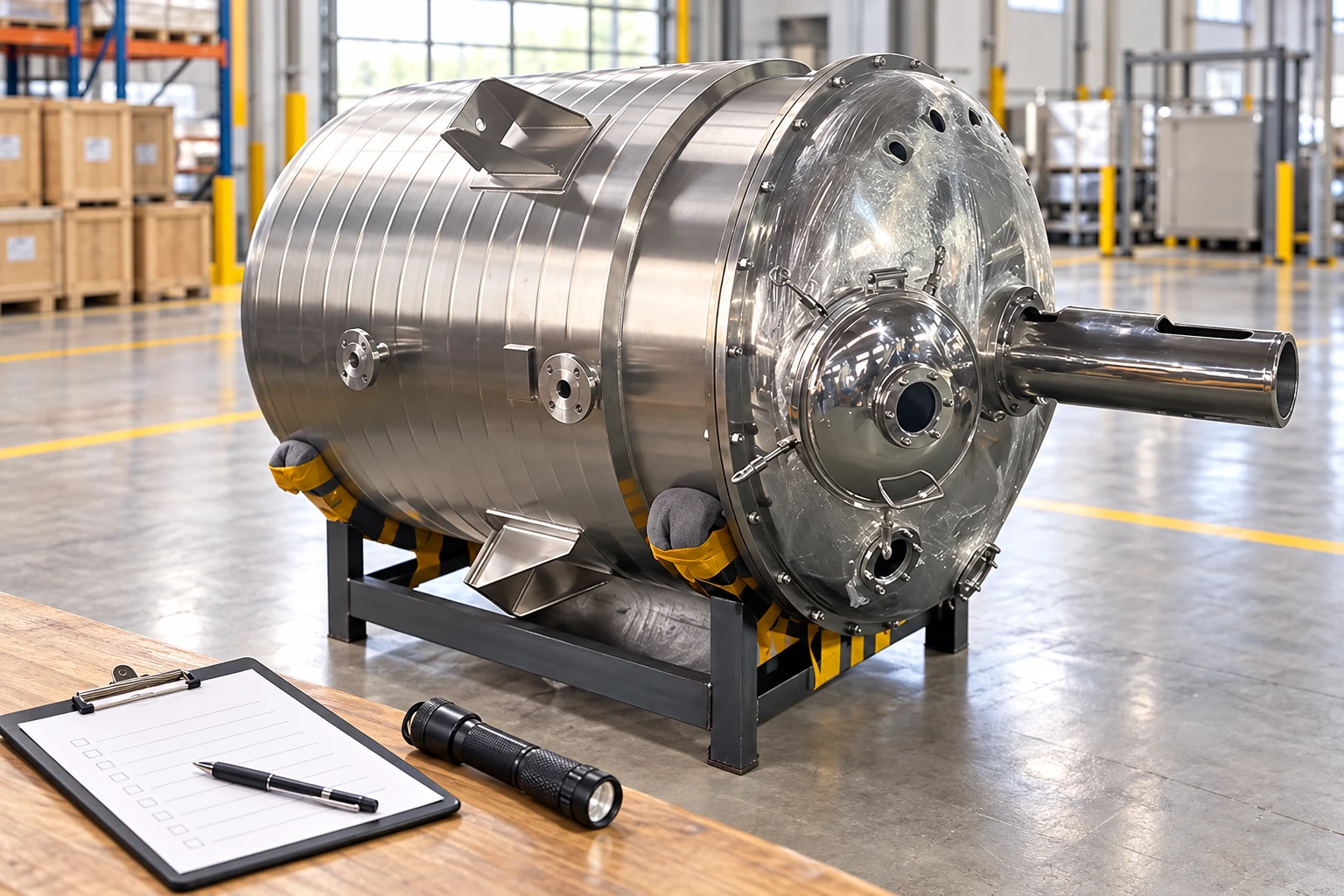
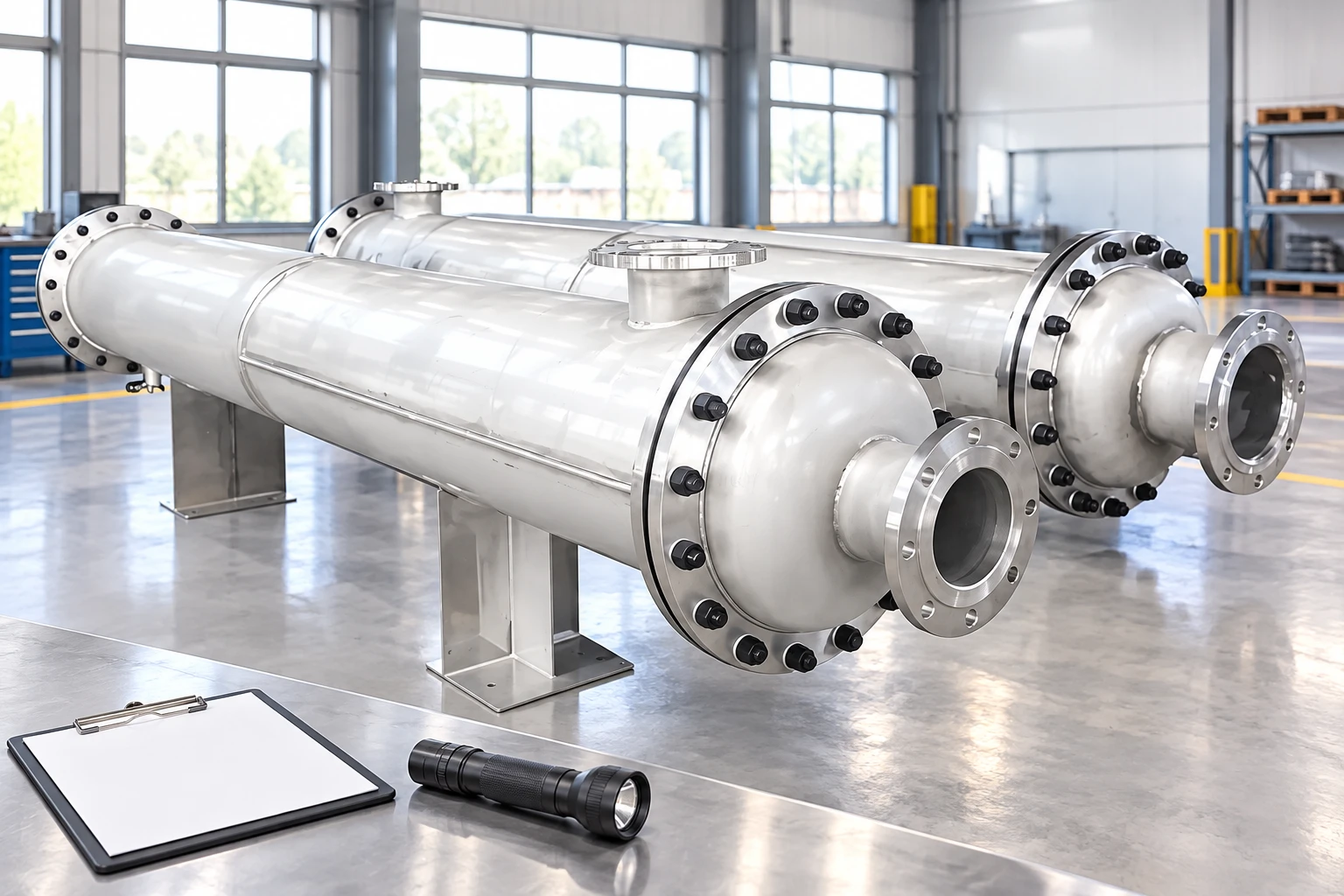
The practical difference in a silo vs grain bin comparison is the storage duty, not a universal height or shape rule. In agricultural usage, a grain bin commonly stores dry grain, while a silo may refer to silage storage, dry bulk storage or a process vessel. Industrial suppliers also use both terms for bulk-solids equipment. Choose the system by material condition, storage duration, aeration needs, usable inventory and discharge requirements. A compact stainless process silo and a farm grain-storage installation solve different problems; neither can be selected safely from its name alone.
Why the names cause purchasing mistakes
Site language often reflects local history. A tall structure may be called a silo, while a wider corrugated-metal structure is called a grain bin. Yet a dry-grain silo remains a common term in many markets, and a process plant may call a small intermediate hopper a silo. Names help identify equipment families, but they do not define an engineering specification.
Ask the process owner to describe what enters the vessel and what should leave it. Whole dry kernels, chopped forage, milled flour and a blended industrial powder have different preservation and handling needs. Two stores with equal nominal volume can differ substantially in allowable residence time, discharge behavior and cleaning requirements. A shape-based comparison overlooks those differences.
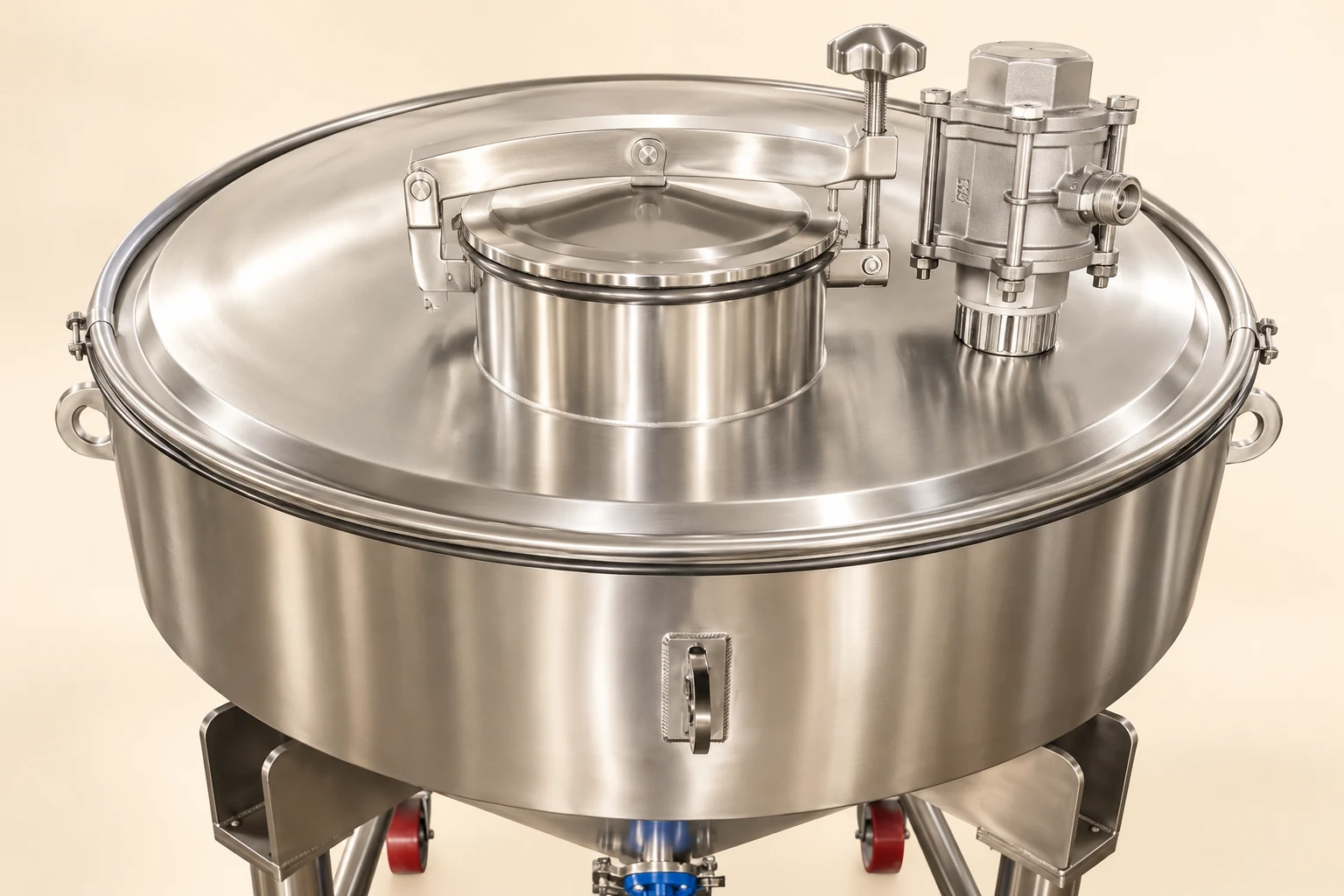
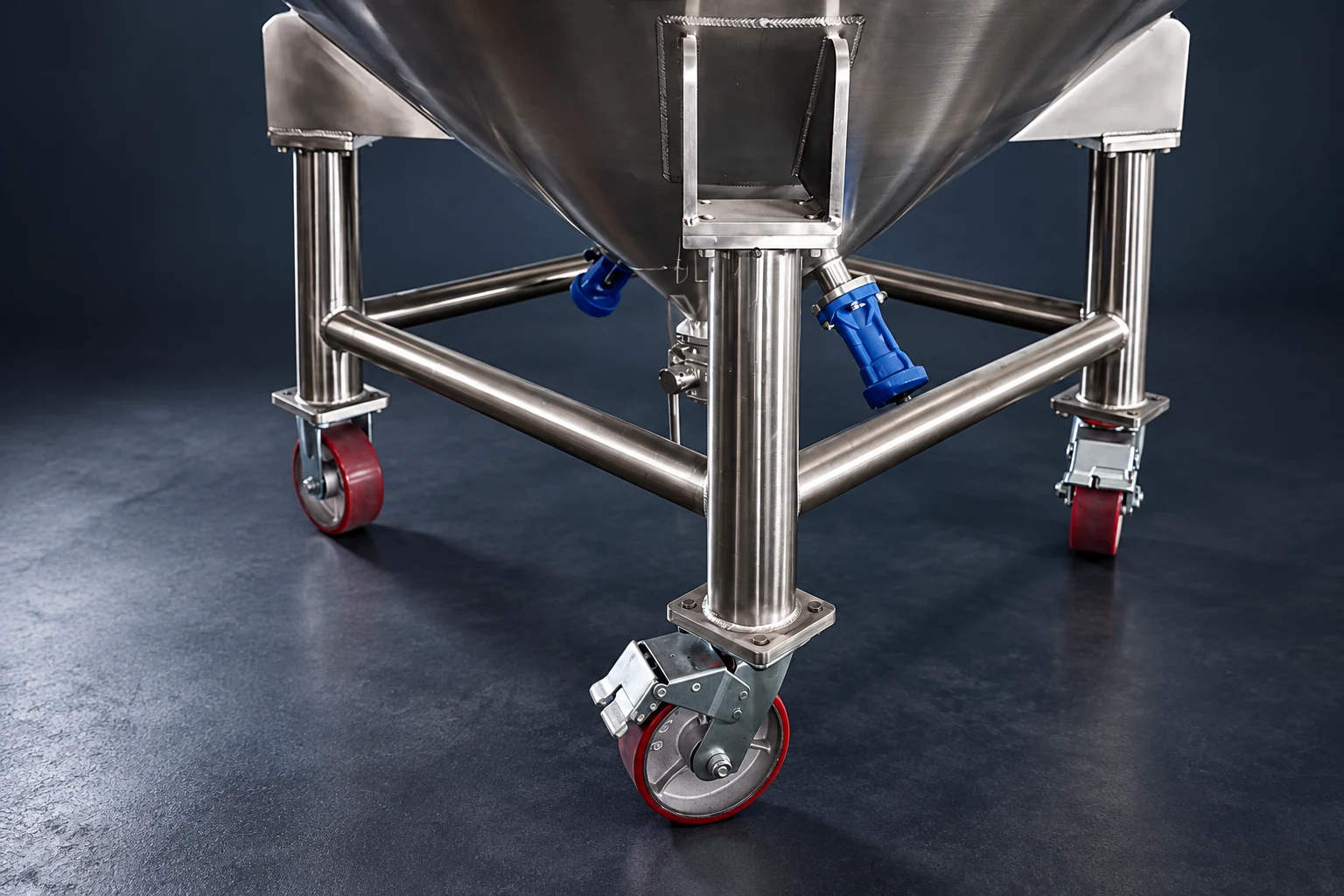
The website’s compact stainless steel silo provides a real example of a process-vessel configuration. The photographs in this guide are based on that product. They do not show a farm grain bin, prove grain-aeration capability or establish suitability for a particular powder. Use them to discuss physical interfaces, then request the duty-specific design evidence.
Compare three distinct storage duties
Dry-grain storage aims to maintain grain quality during the required holding period. Silage storage supports a different preservation process involving moist forage. A process silo provides an intermediate inventory for production or transfer, often with more frequent filling, emptying and product changeovers. Keep these duties separate before comparing construction materials or purchase prices.
| Decision area | Dry-grain bin or silo | Silage storage | Industrial process silo |
|---|---|---|---|
| Stored material | Grain with a defined moisture and quality condition | Forage prepared for the intended preservation process | Identified powder, granules or other specified process material |
| Storage objective | Preserve quality through the planned season or holding interval | Support the intended forage preservation and feed-out duty | Buffer production and deliver a defined downstream feed |
| Important system questions | Aeration, monitoring, weather exclusion and unloading | Containment, loading, feed-out and preservation management | Flow properties, feeder interface, cleaning and contamination control |
| Capacity basis | Usable grain inventory and bulk-density assumptions | Material and storage-method assumptions | Peak inventory, refill interval and usable discharge volume |
| Evidence before purchase | Storage and aeration design for the actual grain | Suitability for the actual forage-storage method | Material testing and acceptance criteria for the operating duty |
This table is qualitative. It assigns no standard dimensions or performance claims. For the dry-grain column, Ontario’s grain-aeration guidance explains how aeration supports temperature management. The process-silo decisions require their own material and application review.
Grain quality changes the equipment specification
For dry-grain storage, specify the crop, incoming moisture condition, temperature, fines, expected holding period and local climate. Aeration and drying are related but different duties. Cooling grain to manage temperature variation does not mean that an ordinary aeration installation has enough airflow to dry a wet harvest. State explicitly whether the project requires cooling, drying or both.
Monitoring belongs in the storage plan. Decide how temperature and material condition will be checked, how records will be retained and who responds to an abnormal result. The Canadian Grain Commission’s storage guidance connects warm, moist grain with deterioration risks and describes the role of monitoring and aeration. Use locally appropriate crop advice rather than copying a single storage limit into every project.
Avoid comparing grain-storage proposals solely on shell price. Fans, air distribution, unloading, weather protection, monitoring and installation can change both performance and total cost. Request a system boundary showing what the supplier includes and what the owner must provide. A quotation that omits a necessary subsystem may look inexpensive while failing the intended preservation duty.
Process silos must match the actual material flow
A production buffer is often selected by the required mass inventory and downstream demand. Identify loose and settled bulk-density assumptions, refill frequency, minimum working inventory and allowable residual material. Ask how usable volume differs from gross geometric volume. Dead regions and operating clearances should not be silently counted as available production stock.
The material’s behavior matters as much as capacity. Powders may compact, bridge, segregate or form a central discharge channel, while free-flowing granules may behave differently. Moisture, particle-size distribution and time in storage can change the result. Obtain representative material data and define the conditions the supplier must consider, rather than assuming that a conical bottom guarantees reliable discharge.
The powder storage tank RFQ guide covers the broader material and discharge information to prepare. For the narrower geometry question, use the supplier’s material-test basis to assess hopper suitability. An operating history from a different grain or powder is context, not proof that the same arrangement will perform here.
Flat bottoms and hopper bottoms involve different tradeoffs
A hopper bottom can provide gravity discharge through an outlet, but it uses height and introduces a transition that must match the material and feeder. A flat-bottom installation may require a different unloading arrangement and residual-cleanout method. Neither is universally preferable. Compare the complete unloading duty, usable capacity, headroom and maintenance access.
Describe the receiving system below the outlet. A batch receiver, conveyor, dosing feeder and pneumatic transfer line impose different interfaces. The vessel and discharge equipment should be reviewed together so that the downstream device does not undermine the desired flow pattern. Request drawings that identify the available opening, connection and required operating clearance.
For an existing installation, document the present symptoms before prescribing a new bottom shape. Variable feed, incomplete emptying and a blocked transfer line can have different causes. Ask which change the proposal will make and how success will be demonstrated. A larger vessel is not automatically a remedy for a poorly matched discharge interface.
Construction material follows exposure and cleaning
Steel, concrete and stainless steel are used in different storage applications, but their names do not determine service suitability. Describe weather exposure, product-contact requirements, abrasion, corrosion, cleaning chemicals and the desired changeover procedure. Ask the supplier to identify the materials and surface condition for all relevant components, including seals and discharge equipment.
A compact mobile process vessel has a different structural and installation boundary from a permanently installed agricultural storage structure. Specify whether the equipment must move, how it is supported during operation and how it connects to other plant equipment. Photos of casters or legs do not establish permissible loads or safe movement instructions.
Access should support the chosen inspection and cleaning tasks. Establish whether cleaning occurs dry, wet or after disassembly, and how residual material will be checked. Personnel entry requires a separate safety assessment; an access opening does not make entry routine. For related maintenance planning, see the steel silo cleaning guide, while retaining the actual material and site procedures as the deciding basis.
Define the installation and safety boundary
Ask for the required support, foundation or floor conditions and confirm who provides the design. Outdoor wind, site conditions and other applicable loads must be reviewed for the actual installation; a volume statement is not a structural specification. For indoor process equipment, check clearances, handling routes, maintenance access and transfer connections before approving a layout.
Bulk storage can introduce engulfment, machinery, dust, access and atmospheric hazards. Those risks depend on the material and equipment arrangement. Avoid entering storage to restore material flow or treating a blockage as permission for an improvised intervention. The owner should establish approved isolation, inspection and recovery procedures with the responsible specialists.
Keep combustible-dust assessment separate from vessel naming. A bin, silo or hopper label does not establish whether protection is required or supplied. Define the material assessment, applicable installation rules and responsible parties in the project scope. Ask vendors to state clearly which safeguards, controls and interfaces they include.
Use a comparison that can be tested
Prepare one duty sheet for all bidders. It should identify material condition, usable inventory, maximum and normal throughput, storage duration, refill method, preservation requirements, unloading interface, cleaning method and available installation space. Add monitoring, utilities, documents and the required operating instructions. State which values are measured and which remain assumptions.
An acceptance plan should relate to the stated duty. For grain storage, that may include confirming the agreed preservation-system design and installed monitoring arrangements. For a process buffer, it may include a representative discharge trial, residual-material assessment and feed stability under agreed conditions. These are examples of evidence to define with the supplier, not promised capabilities of the product shown.
For general purchasing context, the feed silo buyer’s guide can help organize a quotation review. A useful final decision explains why the offered configuration fits the material and operating cycle, which assumptions remain open and what evidence is required before use.
Further learning: grain storage fundamentals
The NPTEL IIT Kharagpur lecture below explains grain-storage principles. It is useful background for understanding why agricultural storage must be specified around preservation requirements. It does not certify the compact process vessel pictured here or replace crop-specific advice and engineering review.

Watch Lecture 45: Grain Storage by NPTEL IIT Kharagpur
Frequently asked questions
Is every tall storage structure a silo rather than a grain bin?
No. The names vary by region and industry, and dry-grain stores are often called silos. Specify stored material, preservation duty, usable capacity and unloading requirements rather than using height as the deciding rule.
Can a grain bin be used for silage or industrial powder?
Do not assume interchangeability. Material condition, preservation method, flow behavior, containment, cleaning and structure require a separate suitability review. A system designed for one duty needs documented assessment before a different service.
What should be included in a silo or grain-bin inquiry?
Include the material and its condition, storage duration, usable inventory, throughput, refill and discharge methods, aeration or drying needs, monitoring, cleaning and installation constraints. Ask suppliers to state assumptions and exclusions against the same duty sheet.