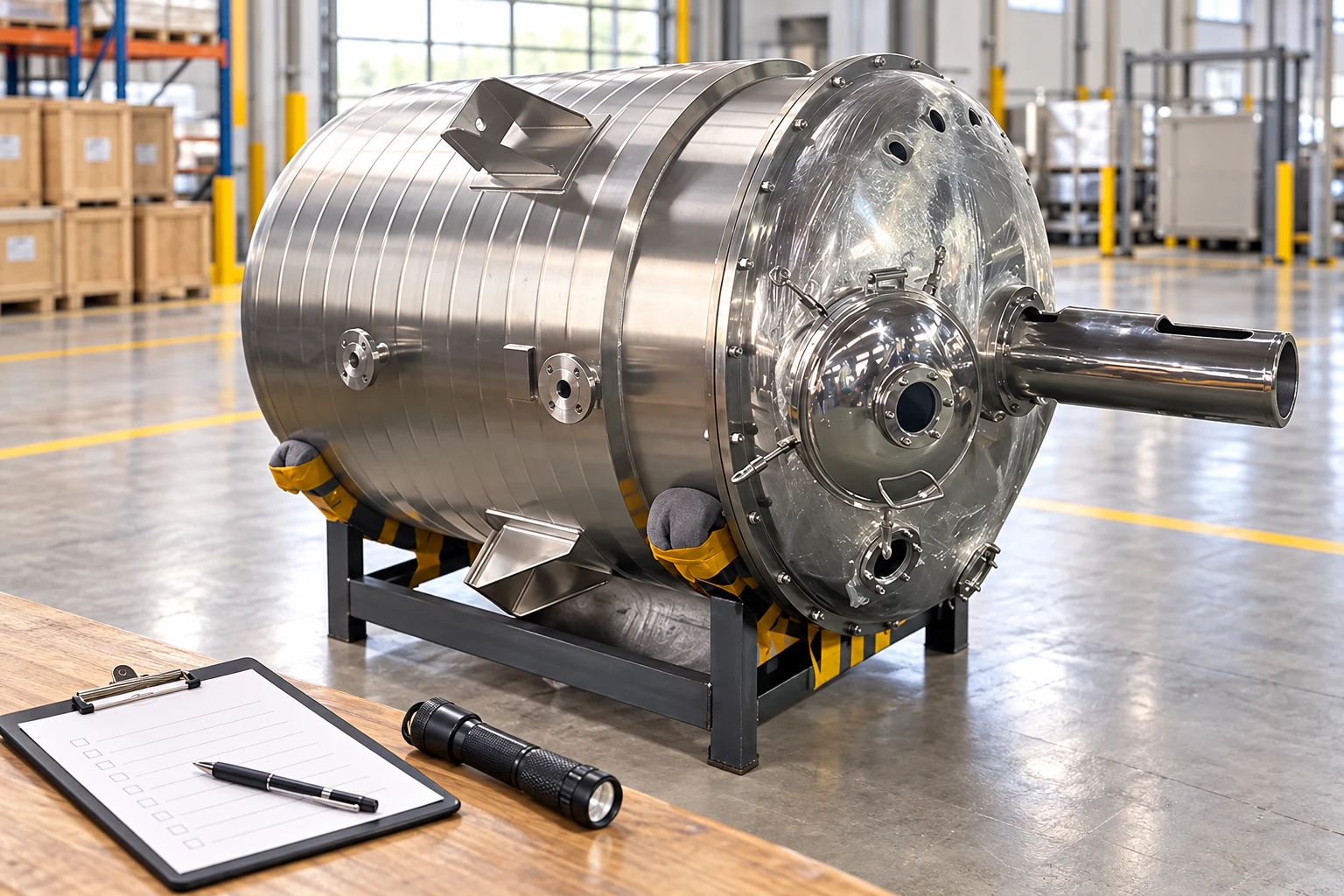
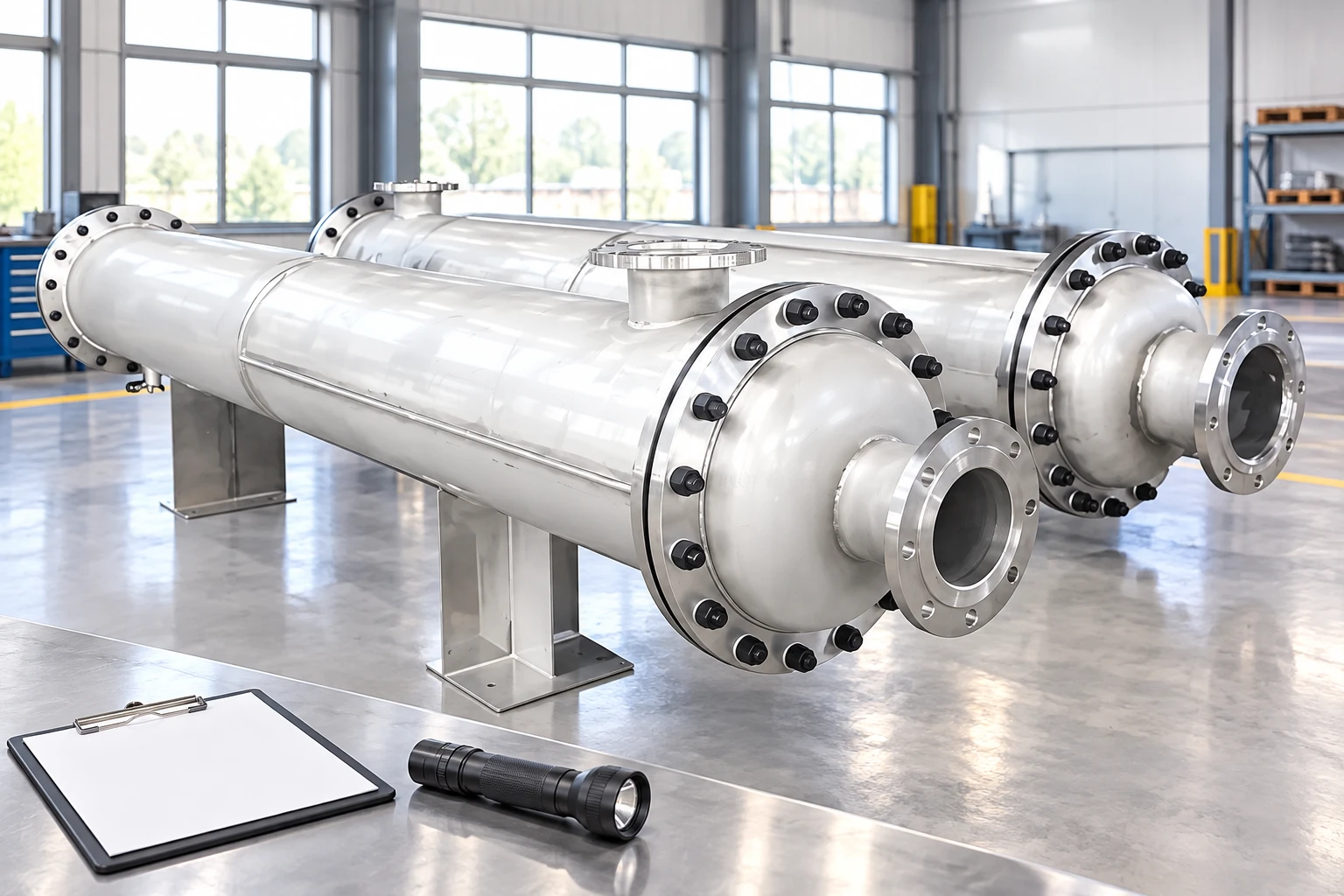
A receiving tank stands at the boundary between logistics and process. Tankers, containers, and upstream lines deliver liquid in bursts; the plant wants a steady, verified feed. The vessel that absorbs that mismatch deserves more specification attention than it usually gets.
Collection tanks solve the mirror-image problem. Rinse returns, recovered product, condensate, and intermittent process streams arrive unpredictably and wait for a decision: reuse, treatment, or disposal. Both duties share the same design questions, which this guide turns into RFQ inputs.
Part 1. Separate Receiving Duty from Collection Duty
Name the duty precisely. A receiving tank accepts planned inbound deliveries and feeds a defined consumer; a collection tank gathers intermittent or return streams whose next step may vary. The distinction changes sizing logic, instrumentation, and cleaning expectations.
Describe both sides of the vessel. For receiving duty, record what delivers, how often, and what draws the liquid away. For collection duty, record which streams drain in, how fast they can arrive together, and how the tank is emptied.
State the consequence of interruption. Answer whether production stops when the receiving tank runs empty, and where liquid goes when the collection tank overfills. Honest answers shape the reserve volume and the alarm philosophy better than any rule of thumb.
| Question | Receiving duty | Collection duty |
|---|---|---|
| Inflow | planned deliveries | intermittent returns |
| Outflow | steady process draw | batch transfer or disposal |
| Sizing driver | largest delivery plus reserve | worst simultaneous inflow |
| Quality step | acceptance before use | decision before routing |
| Failure case | empty tank stops feed | overflow event |
Part 2. Size Against Deliveries and Unloading Surges
Anchor the volume to the largest delivery. A common receiving basis is the largest single receipt plus the working heel the process needs while unloading is in progress; state both numbers and the refill frequency rather than a rounded total.
Unloading is a surge event. A tanker discharging through a transfer pump can fill a small vessel quickly, so record the maximum unloading rate and its duration. That rate, not the daily average, sizes the inlet nozzle, the vent, and any foam allowance.
Fast fills need air paths. During high-rate filling the vent must release displaced air without pressurizing the vessel, and splashing or bottom-entry choices affect foaming and air entrainment. Ask the fabricator to state the venting basis for your unloading rate.
Part 3. Match the Inbound Formats and Transfer Equipment
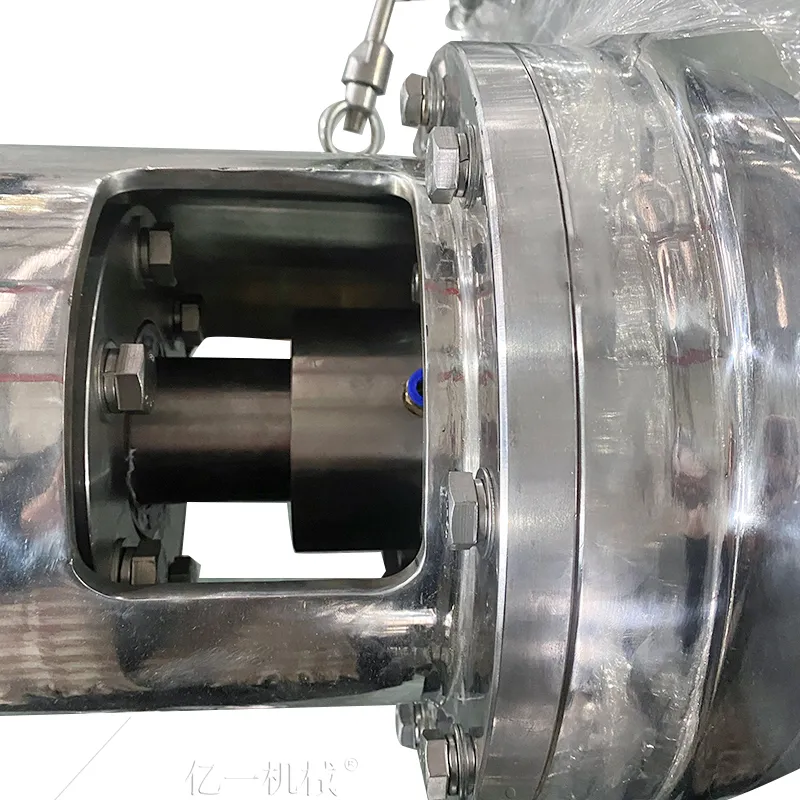
List every delivery format the tank must accept. Road tankers, intermediate bulk containers, drums, and in-plant pipelines each imply different connection points, hose stations, and operator workflows, and a tank quoted for one format may frustrate another.
Clarify the transfer equipment scope. Whether the pump belongs to the truck, the plant, or the new package changes nozzle sizes, strainer placement, and control interlocks. Record who supplies it and the expected transfer rate.
Think about the operator’s sequence. Where does the hose connect, how is the connection drained afterward, and what confirms the transfer is complete? Small features such as a drain-back point or a sight glass often decide daily usability.
Part 4. Plan Sampling, Solids, and Acceptance
Receiving is a quality gate. Many plants sample the delivery before or during unloading and need a hygienic or representative sampling point on the vessel or its inlet line; state the acceptance workflow so the hardware supports it.
Solids arrive uninvited. Rust, gasket fragments, and product solids travel with inbound liquid, so decide where a strainer or filter sits and how it is serviced. Collection duties should also state whether settled solids must be drained separately.
Keep acceptance rules with the quality team. The vessel enables sampling and isolation; the accept-or-reject criteria belong to the plant’s quality system. Writing that split into the RFQ keeps the fabricator’s scope clean.
Part 5. Specify Level Protection and Overflow Response
Level indication is the baseline instrument. Choose a level sensor technology suited to the liquid (foaming, coating, or clean), and state whether the reading feeds a local display, the unloading station, or the plant control system.
Define the high-level responses in order: alarm, pump stop or valve close, and overflow routing as the last resort. Unloading events move fast, so the response chain and who or what acts at each step should be written down, not assumed.
Overflow deserves a real destination. Route it to containment, drain, or a spare vessel as the site requires, and state the routing in the RFQ so nozzles and supports are quoted. The surge-control reasoning in the buffer tank vs balance tank guide complements this receiving-side view.
| Level event | Expected response | Who or what acts |
|---|---|---|
| High level | alarm to operator and station | control system |
| High-high level | stop pump or close valve | interlock |
| Overflow | routed discharge to safe point | vessel design |
| Low level | protect downstream draw | process control |
Part 6. Set Materials, Cleaning, and Installation
Materials follow the liquid data. Provide the analysis or product datasheet, the temperature range, and cleaning chemistry, then ask bidders to state the proposed grade, gaskets, and the basis rather than accepting a generic stainless label.
Cleaning depends on the duty cycle. A dedicated single-product receiving tank may need only periodic washout, while multi-product or collection duty may justify spray devices and self-draining geometry. State changeover frequency and the cleaning method.
Describe the installation context: outdoor unloading pad or indoor process area, footprint and height limits, containment, frost or heat exposure, and access for sampling, strainer service, and inspection. Solids-handling parallels for dry materials appear in the powder storage tank guide.
Part 7. Compare Configurable Vessels and Prepare the RFQ
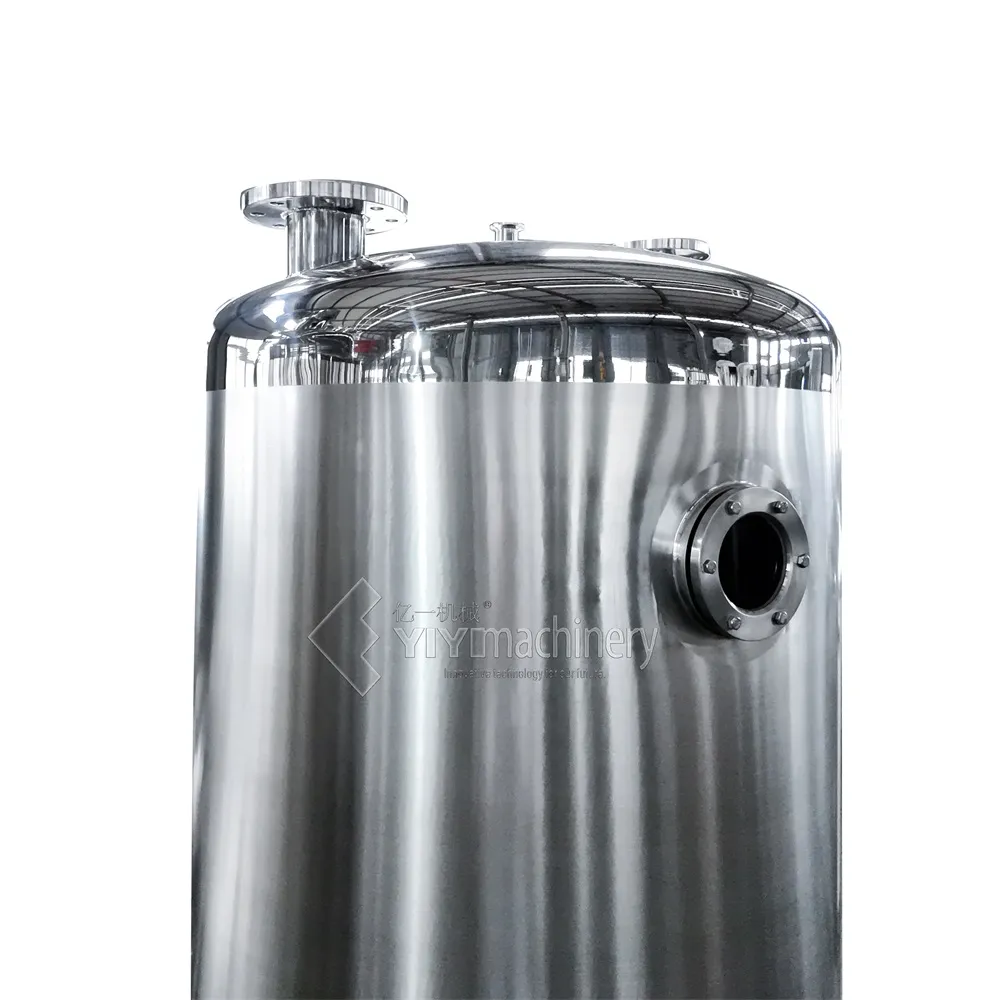
Published equipment anchors the size class. The 1000L receiving tank configuration shows a compact inbound vessel, and the configurable storage tank range extends to larger volumes and layouts. Product pages provide configuration context; they do not certify compatibility with your liquid.
Send one identical package to every bidder: liquid data, delivery formats, largest delivery and unloading rate, draw pattern, sampling and acceptance workflow, solids expectations, venting basis, level instrumentation and response chain, materials, cleaning method, connection schedule, and installation constraints.
Require stated assumptions and exclusions in each response. When the package is ready, describe your inbound duty for a configuration discussion and compare bidders on the same delivery scenario.
FAQs
What is a receiving tank?
It is a vessel that accepts inbound liquid deliveries from tankers, containers, or upstream lines and holds them so downstream steps see a steady, verified feed.
What is the difference between a receiving tank and a collection tank?
Receiving duty handles planned inbound deliveries feeding a defined consumer. Collection duty gathers intermittent or return streams that wait for routing to reuse, treatment, or disposal.
How big should a receiving tank be?
A common basis is the largest single delivery plus the working heel needed during unloading, adjusted for refill frequency. State the numbers and assumptions rather than a rounded figure.
Why does unloading rate matter for a receiving tank?
The unloading rate sizes the inlet, the vent, and the foam allowance, and it drives the high-level response timing. The daily average says little about these short surge events.
Do receiving tanks need sampling points?
Most acceptance workflows sample before or during unloading, so a representative sampling point on the vessel or inlet line is a standard request. The acceptance criteria stay with the quality team.
What instrumentation does a receiving tank need?
Level indication with a defined high-level response chain is the baseline. Some duties add temperature, a sight glass for operators, or interlocks with the unloading pump.
What should a receiving tank RFQ include?
Include liquid data, delivery formats, largest delivery, unloading rate, draw pattern, sampling workflow, solids handling, venting basis, level protection, materials, cleaning, connections, and installation limits.