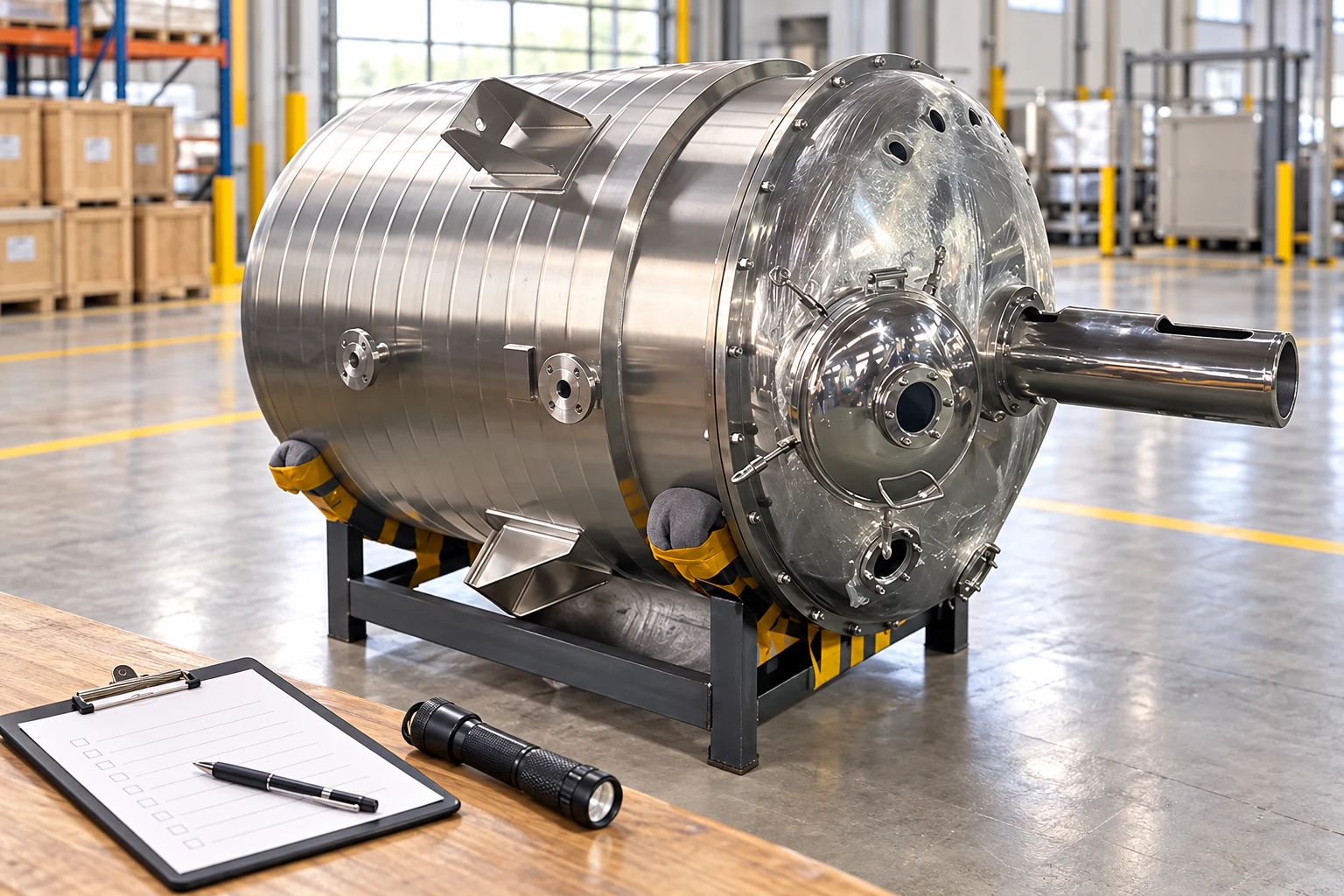
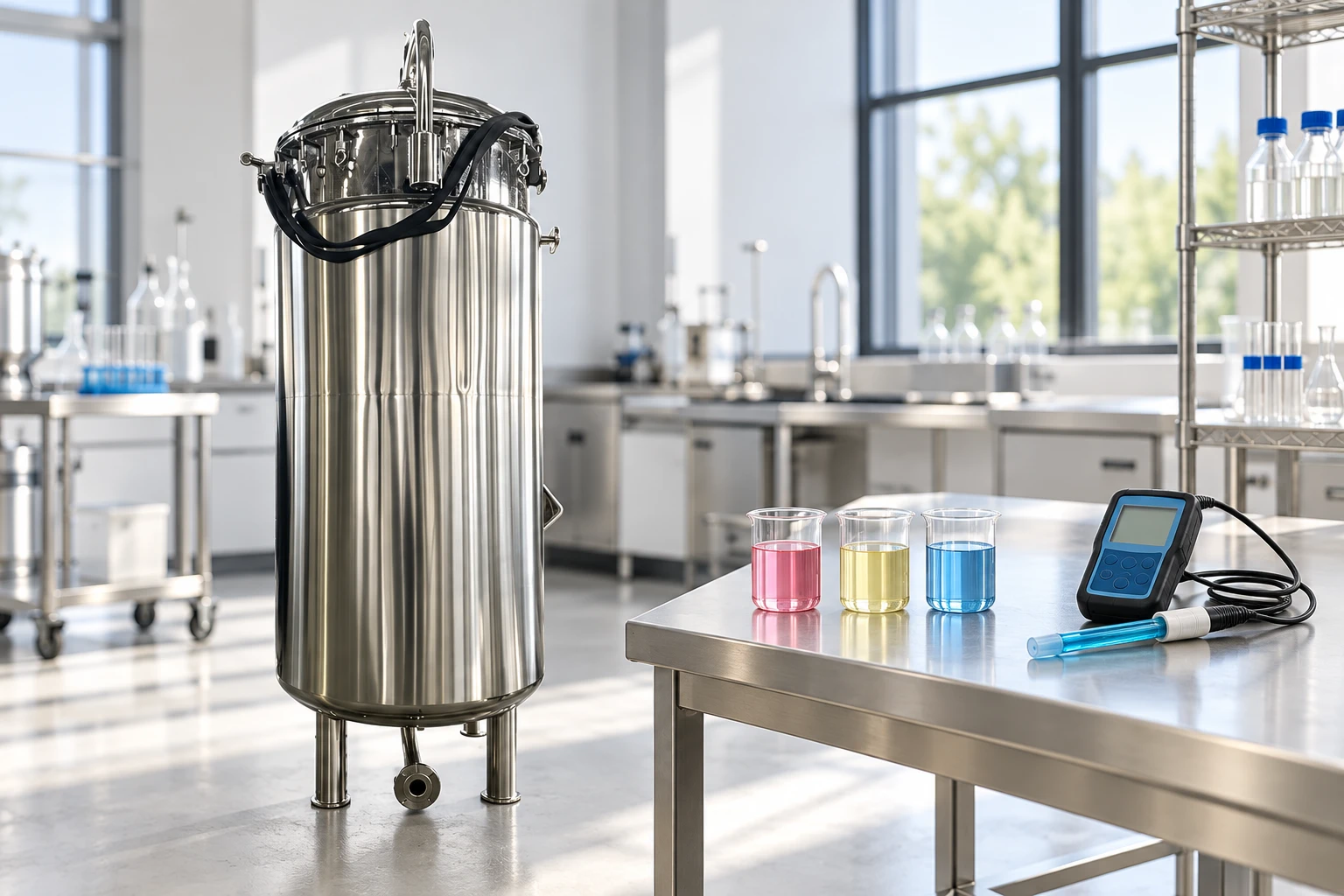
A mechanically stirred fermentation vessel should be treated as an operating system with defined process ownership, not as a tank plus a motor. The inquiry needs the aeration objective, agitation range, batch conditions, temperature profile, gas and cleaning interfaces, instrumentation, and the team that approves biological performance. This prevents a nominal RPM from being mistaken for a process guarantee.
The broader biological fermentation equipment range and the beer fermentation tank guide provide useful adjacent context.

Part 1. Treat the Stirred Fermenter as an Operating System
Mechanical stirring interacts with the medium, gas phase, temperature, instruments, piping, cleaning method, and operating sequence. Begin the RFQ with a process map that identifies when each element is active and who controls the corresponding data. It is more useful than asking a supplier to derive a mixing duty from a volume alone.
Separate documented observations from proposed assumptions. If a target or limit is still being developed, label it as open so that it cannot appear as a vendor commitment in the quotation.
Part 2. Translate Aeration into Stage-Based Inputs
Aeration should be described by its process objective, not just by a line size. Record the aeration rate supplied by the process team, whether gas is used for a defined stage, the medium condition, measurement points, gas distribution boundary, and the process validation owner. The supplier can then address connections and configuration assumptions coherently.
| Stage | Buyer should provide | Equipment discussion use |
|---|---|---|
| Charging | working level, material state, and initial temperature | frames initial vessel geometry and access |
| Aerated operation | aeration objective, gas properties, range, and measurement owner | identifies gas-distribution and instrument interfaces |
| Agitated hold | agitation range, temperature profile, duration, and limits | makes the impeller duty discussion traceable |
| Cleaning | cleaning method, media, acceptance owner, and downtime boundary | assigns ports, drains, and service access |
Part 3. Use RPM as an Operating Range, Not a Promise
RPM is an operating input that changes meaning with vessel geometry, impeller arrangement, liquid level, product properties, gas interaction, and process stage. Specify the expected agitation range, starting and ending conditions, any restrictions, and who is responsible for process decisions. Avoid treating a fixed number as proof of mass transfer or biological performance.
| Review topic | Buyer should identify | Supplier should clarify |
|---|---|---|
| Mixing objective | circulation, suspension, blending, or another stated aim | configuration assumptions used for the proposal |
| Operating window | planned agitation range and stage timing | drive and control boundary, not process validation |
| Instrumentation | requested signals and responsibility split | provided interfaces and exclusions |
| Process data | source and approval status | questions that must be resolved before release |
Important: A vessel, an impeller, or a stated RPM does not establish dissolved-oxygen performance, biological yield, cleaning validation, or regulatory suitability. Project-specific process and quality decisions remain with the responsible team; ISPE offers public industry context.
Part 4. Map Gas, Cleaning, and Instrument Interfaces
Gas supply, distribution hardware, vents, sample points, instruments, drains, and clean-in-place connections require one interface map. Identify the clean-in-place boundary, where the facility boundary ends, which accessories belong to the equipment supply, how cleaning returns are handled, and who owns any validation evidence. That prevents a mechanical package from being interpreted as a complete process system.

Use the map to establish maintenance access and document handover requirements. It should not be used to infer a process recipe or a universal sanitary design outcome.
Part 5. Compare Proposals on a Controlled Data Set
Every bidder should receive the same stage data and responsibility matrix. Ask for responses on working range, aeration interface, agitation range, temperature records, cleaning scope, instrument connections, materials, documents, and exclusions. A controlled set makes commercial differences reviewable before purchase release.
| Bid topic | Buyer should define | Supplier should state |
|---|---|---|
| Process sequence | operating stages and approval owner | scope assumptions by stage |
| Aeration | gas boundary and process objective | proposed connection and distribution boundary |
| Agitation | requested range and product conditions | mechanical and control assumptions |
| Hygiene | cleaning interface and documents | access, drains, and excluded items |
Part 6. Start the Supplier Review with Named Owners
Use a vertical modular fermenter discussion after the process input package has an owner, revision, and open-item list. The YIYI fermentation category can frame the equipment family; send the controlled data pack for a project-specific conversation.
- Name the batch stages, working range, temperature profile, and validation owner.
- Provide aeration objectives, gas properties, agitation range, instruments, and any operating restrictions.
- Identify gas, vent, sample, cleaning, drain, transfer, and service interfaces with ownership.
- Request drawings, documents, review points, supplied items, and explicit exclusions.

FAQs
What is a mechanical stirring fermentation tank?
It is fermentation equipment configured with mechanical agitation for a stated process. The actual vessel, impeller, controls, gas interfaces, and cleaning scope depend on project data and review.
Does a higher RPM ensure better fermentation?
No. RPM has to be interpreted with geometry, impeller duty, medium condition, gas interaction, operating stage, and the process objective. It is not an independent quality result.
What aeration information belongs in an RFQ?
Provide the stage objective, gas properties, expected operating information, connection boundary, measurement points, restrictions, and the person responsible for process targets.
Who sets dissolved oxygen targets?
The responsible process or validation team sets and approves those targets. An equipment supplier can discuss instrument and connection interfaces around the documented requirement.
Can a supplier validate cleaning performance?
No. Suppliers can define supplied hardware and assumptions; the facility’s cleaning method, validation evidence, procedure, and acceptance remain project responsibilities.
Which documents should accompany the inquiry?
Include the stage map, process data status, interface list, equipment boundaries, drawing needs, material questions, instrument request, cleaning scope, review owner, and exclusions.
References
- ISPE — public context for project-specific bioprocess and quality-system review.