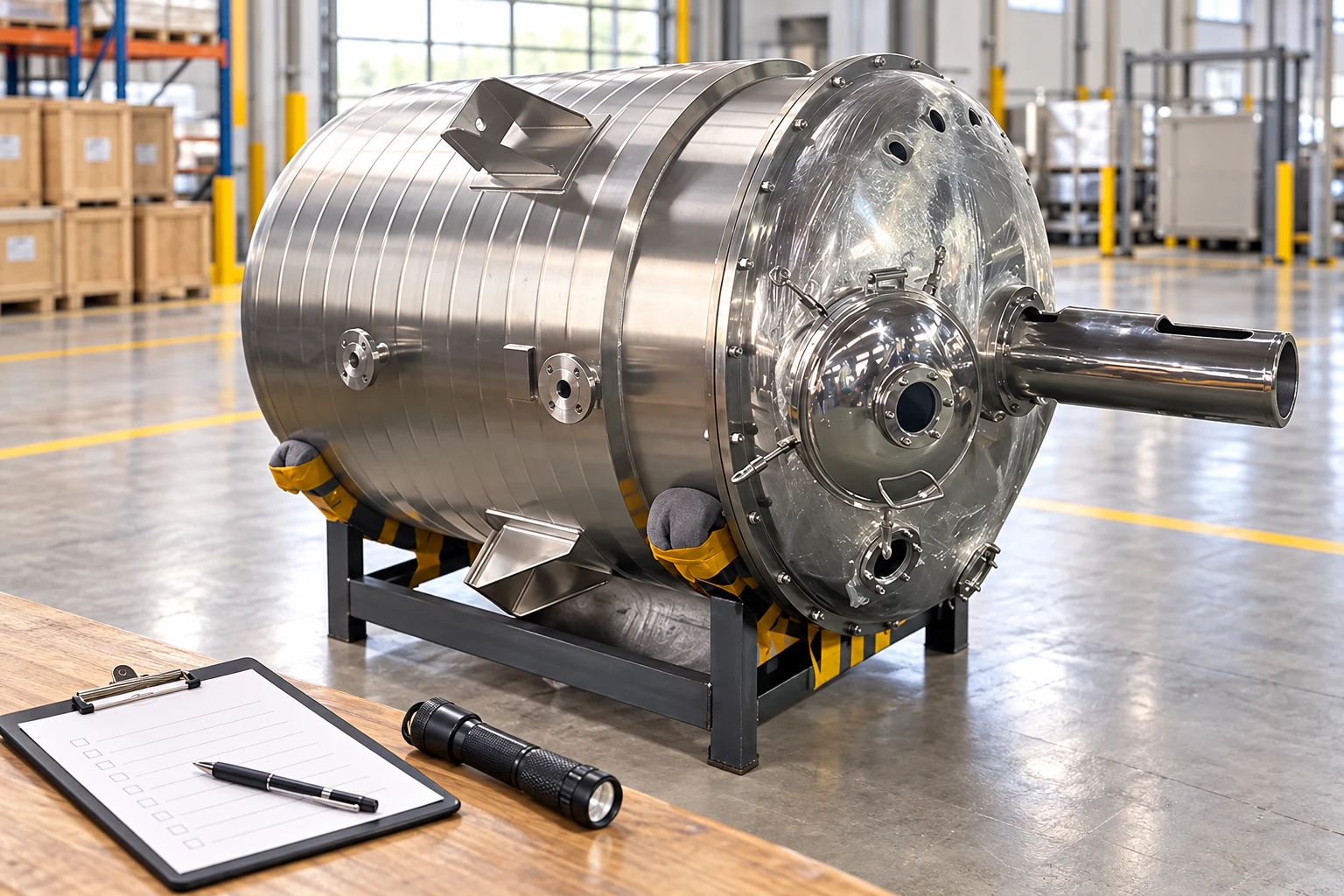
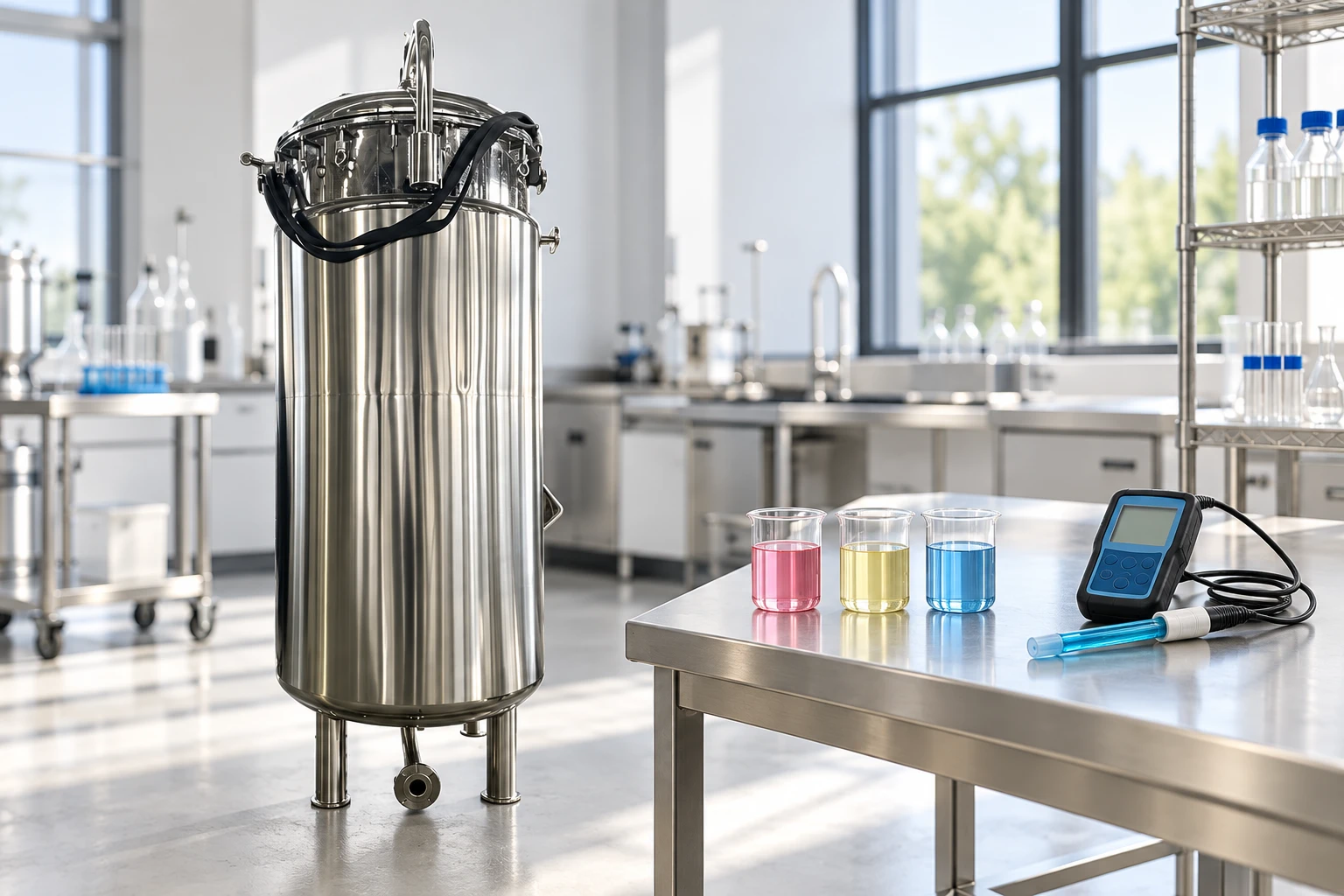
A sake tank RFQ becomes useful when it follows the process path instead of relying on a vessel label. Describe each fermentation stage, the temperature profile, hold and transfer conditions, hygienic interfaces, cleaning method, and batch records that the process owner controls. Suppliers can then discuss equipment around stated inputs without being asked to infer a brewing programme.
For adjacent equipment questions, review the biological fermentation equipment range and the beer fermentation tank guide.

Part 1. Define the Batch Before Naming the Vessel
The same word “tank” can cover charging, fermentation, settling, holding, or a transfer step. Start by assigning which stage the vessel supports and what material enters and leaves it. State the planned working level, expected batch sequence, time boundary, and the process owner who approves the procedure.
This record prevents a quotation from quietly mixing process assumptions with mechanical scope. It also gives purchasing a way to compare what each supplier has included rather than comparing capacity labels alone.
Part 2. Record Temperature as a Process Profile
Temperature data should be described by stage and ownership. Provide the target ranges supplied by the process team, the expected duration, how temperature is measured, available utilities, permitted deviations, and the response path for an out-of-range condition. These entries make the interface clear without publishing an unreviewed fermentation setpoint.
| Batch stage | Buyer should provide | Why it matters |
|---|---|---|
| Preparation | incoming material condition and starting temperature | establishes the initial operating context |
| Fermentation | approved temperature profile, duration, measurement method, and owner | separates process control from equipment assumptions |
| Hold or transfer | release condition, destination, and maximum hold time | identifies downstream and vessel interfaces |
| Cleaning | cleaning method, media, sequence, and acceptance owner | frames hygienic access and documentation questions |
Important: Stainless steel or a polished vessel image does not prove hygienic operation, regulatory acceptance, or a validated cleaning programme. Sanitary design and verification must be assessed against the actual product and process requirements; see 3-A Sanitary Standards for public context.
Part 3. Review Material and Finish with the Cleaning Plan
Material finish should be discussed together with the actual cleaning method, product contact conditions, temperature range, chemical exposure, drainage expectation, weld treatment, and inspection needs. A material name alone does not describe the finish, joints, access, or validation evidence required for a particular facility.
| Review area | Process owner should define | Supplier should clarify |
|---|---|---|
| Product contact | relevant media and duration | proposed wetted boundary and assumptions |
| Cleaning | method, chemistry, temperature, and acceptance evidence | access, ports, drains, and exclusions |
| Finish | requested project requirement and inspection basis | feasible fabrication scope and documentation |
| Venting | pressure boundary and treatment responsibility | vessel connection boundary only |
Part 4. Assign Hygienic Transfer and Cleaning Interfaces
The vessel is not isolated from the rest of the batch. Assign piping, hoses, pumps, receiving equipment, vents, sample points, drains, and cleaning connections to named owners. Hygienic transfer needs a defined route, not a statement that a tank is “sanitary.”

Keep batch traceability with the process owner. Equipment documentation can describe the supplied configuration, while production records and acceptance decisions remain part of the facility’s operating system.
Part 5. Ask Each Bidder to State the Same Assumptions
Use one controlled inquiry sheet for every supplier. It should show the work stages, material-finish questions, temperature profile, utilities, interfaces, cleaning boundary, documentation needs, and exclusions. The resulting comparison is more informative than a table of nominal volumes.
| Comparison topic | Buyer should define | Supplier should state |
|---|---|---|
| Batch basis | stage sequence and working level | vessel arrangement assumptions |
| Temperature | process profile and utility boundary | required connections and instruments |
| Hygiene | cleaning method and documentation need | supplied access and drain scope |
| Transfer | route and receiving condition | outlet and interface limits |
Part 6. Use the Equipment Conversation to Resolve Open Inputs
Start a vertical modular fermenter discussion only after the process inputs have an owner and revision status. The wider YIYI fermentation category provides equipment context; send the controlled inquiry when the project is ready for a configuration conversation.
- Identify the use stage, batch volume range, and expected operating sequence.
- Provide the approved temperature profile, utility information, instrumentation request, and process owner.
- Describe product-contact conditions, cleaning method, transfer route, venting boundary, and required documents.
- List open decisions and exclusions so they are not hidden in a generic tank request.

FAQs
What is a sake tank?
A sake tank is a vessel considered for one or more steps in a sake-related process. The final equipment scope depends on the documented batch stage, temperature, cleaning, transfer, and facility requirements.
Does stainless steel guarantee hygienic operation?
No. Hygienic performance depends on the project’s product contact conditions, finish, fabrication, drainage, cleaning method, validation approach, and operating controls.
Which temperature data should be supplied?
Supply the approved profile by stage, duration, measurement points, allowed deviation, utility conditions, and the party responsible for process decisions.
Why is transfer part of the tank scope?
Transfer changes the batch boundary. The route, outlet, receiving equipment, vents, hoses, cleaning connections, and responsibility split should be stated before equipment scope is compared.
Can a supplier validate fermentation quality?
No. Suppliers can discuss equipment configuration around stated inputs, while the process owner retains responsibility for the recipe, operating procedure, quality checks, and release criteria.
What should be included in an RFQ?
Include the batch sequence, working range, temperature profile, utilities, material and finish questions, cleaning plan, interfaces, documentation needs, responsible parties, and exclusions.
References
- 3-A Sanitary Standards — public context for hygienic-design review; project applicability must be established by the responsible team.