Heat exchanger stored equipment deterioration inspection planning begins with the storage history, not an assumption that idle equipment remains ready for service. Identify the exchanger, establish how it was preserved and ask a competent reviewer which deterioration mechanisms and checks matter before the proposed reuse. A clean shell or an unused purchase record cannot establish the condition of hidden surfaces, the suitability of the new duty or the completeness of inspection records.
This guide helps maintenance planners and buyers organize that review. It does not prescribe a test pressure, inspection interval or acceptance limit. Great Britain work equipment guidance provides the regulatory context where applicable; the installed equipment, process and local rules determine the actual scope.
Establish the equipment and intended reuse
Start with a reliable identity: equipment number, manufacturer information, drawings and previous service records. Connect the physical nameplate to the document set rather than matching by appearance alone. Two similar exchangers in a warehouse may have different materials, previous fluids or design conditions. Record missing or unreadable identifiers as issues for resolution before technical decisions rely on them.
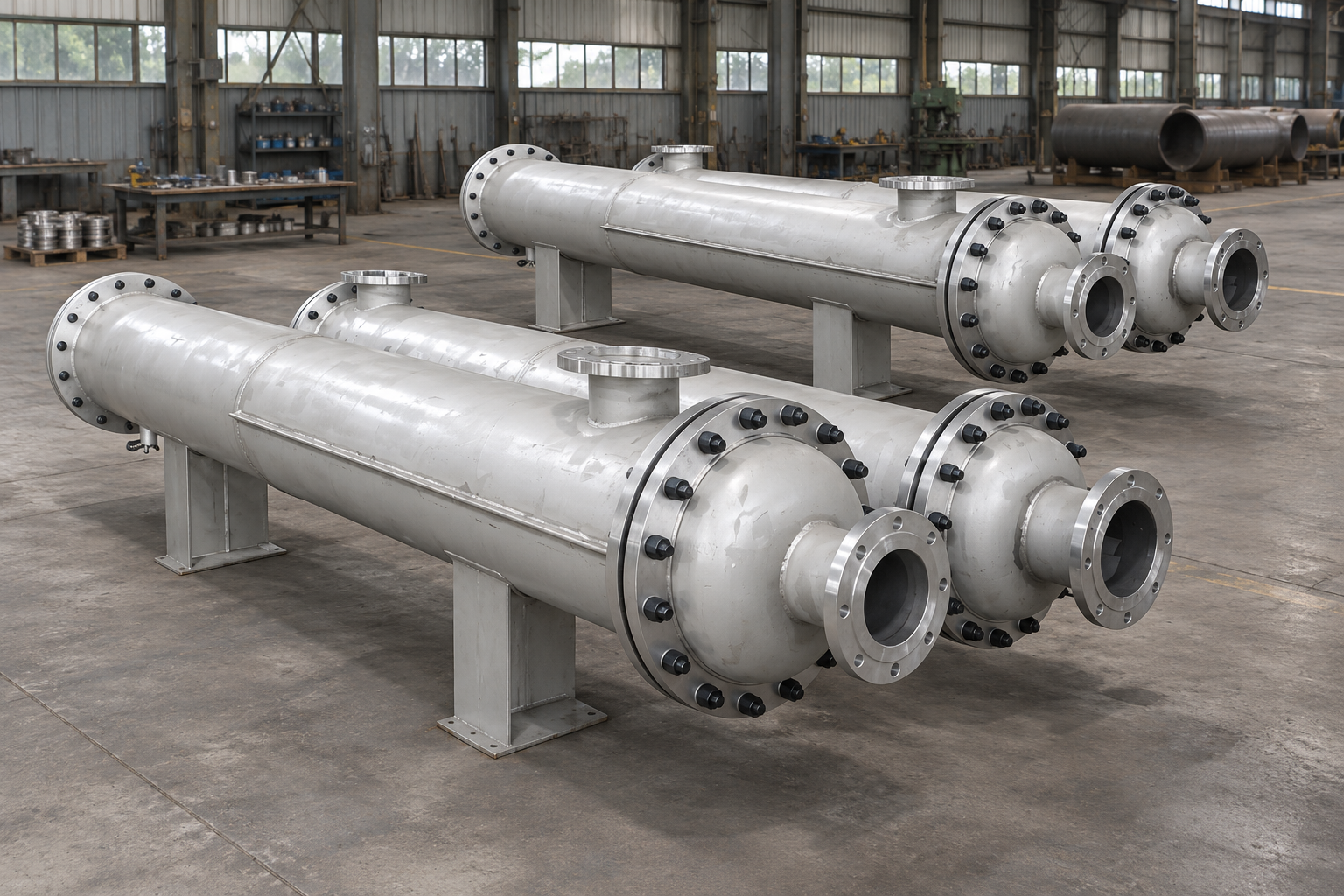
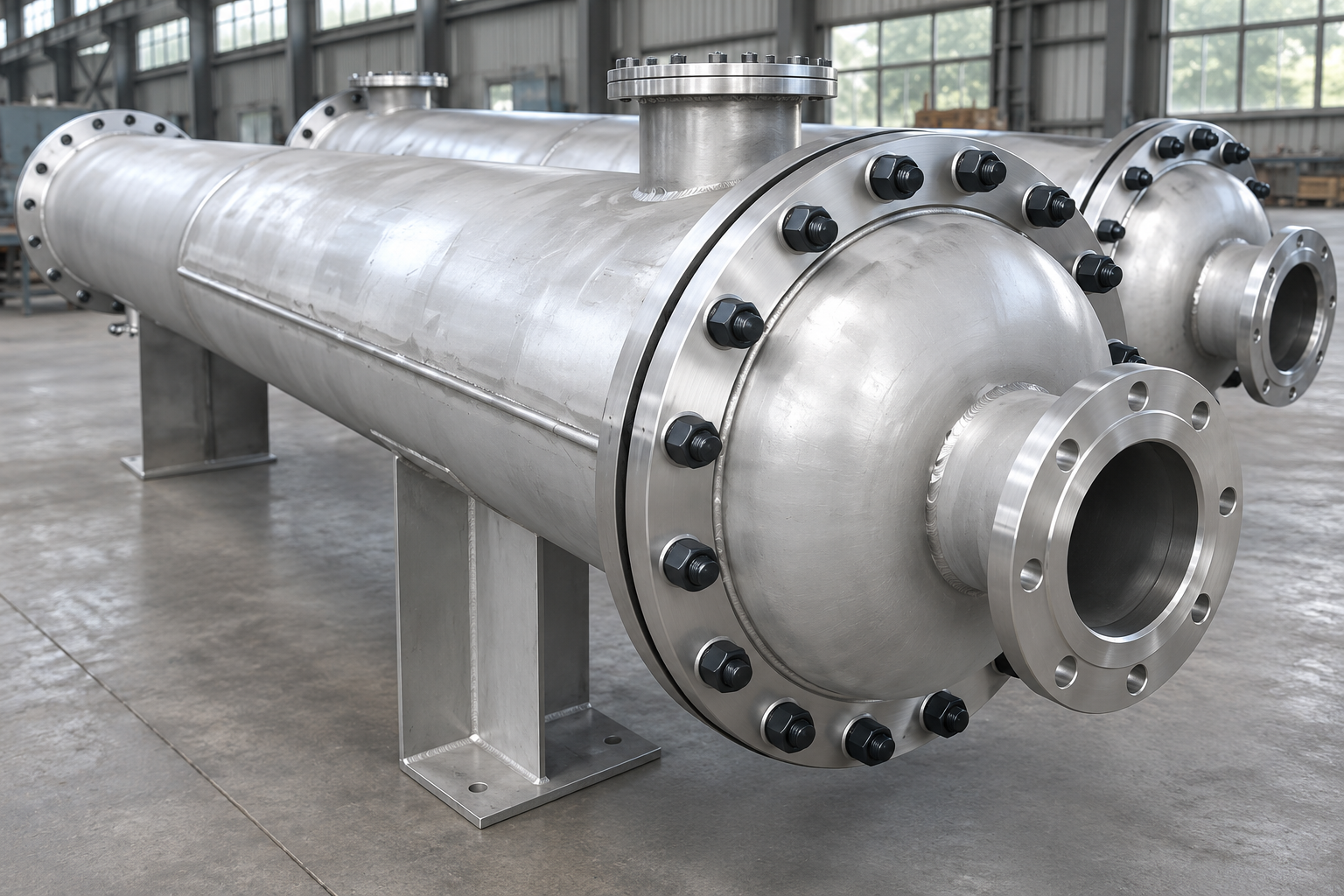
Describe the proposed duty separately from the last known duty. List the fluids on both sides, intended operating conditions and relevant process hazards without inventing unavailable values. A review of a fixed tube sheet shell and tube heat exchanger should address the actual configuration offered or installed. Its product photograph does not verify internal cleanliness, material certificates, pressure ratings or a preservation arrangement.
Define the review boundary as well. Equipment condition, installation suitability and process performance are connected but distinct questions. A favourable condition inspection cannot establish that the exchanger has enough heat transfer area for a different process.
Reconstruct what happened during storage
Collect the receipt date, previous use, storage location and any moves. Ask what preservation method was specified, who maintained it and which records remain available. Indoor storage, outdoor exposure and repeated handling create different evidence needs. Describe actual events such as a missing cover, water exposure or an impact; do not convert an unverified recollection into a confirmed defect.
Look for gaps in the timeline. A receipt inspection may establish condition on one date, while leaving a later period undocumented. A preservation checklist is useful only if it identifies the equipment and the actions actually taken. If records are incomplete, explain the uncertainty to the reviewer so the inspection scope can address it.
Separate observations from conclusions. For example, staining around an opening is an observation. Its cause, depth and effect on suitability require assessment. This distinction helps buyers avoid treating a cosmetic issue as a serious failure or dismissing a significant condition as harmless appearance.
Use deterioration mechanisms to shape the scope
Possible concerns include moisture exposure, contamination, physical damage and deterioration of relevant seals or coatings. Their significance depends on materials, previous contents and storage arrangements. The purpose of the planning review is to identify credible concerns and the evidence needed to evaluate them. It is not to apply every available inspection method indiscriminately.
The HSE heat exchanger technical measures page identifies a range of failure modes in major hazard contexts. Use it to prompt questions about relevant mechanisms, while keeping its application boundary clear. A warehouse exchanger does not automatically require every measure listed for a major accident installation.
For each credible mechanism, ask what is visible externally, what remains hidden and which person is qualified to decide whether further investigation is needed. Record why a method is selected and what it cannot establish. Photographs, dimensional observations and specialist examinations can serve different purposes; none should be described as proof beyond its actual scope.
Build an inspection planning matrix
The matrix below is a buyer and maintenance planning aid. It organizes evidence without imposing universal acceptance values. The competent reviewer should adapt the checks to the equipment and operating context.
| Storage information or observation | Question to resolve | Evidence useful to the reviewer | Planning consequence |
|---|---|---|---|
| Preservation records incomplete | Which conditions are unknown? | Storage timeline and available maintenance logs | Define checks addressing the missing period |
| Openings found uncovered | Could water or foreign material have entered? | Dated photographs and exposure information | Assess internal condition investigation needs |
| External staining or deposits | What is the cause and significance? | Location-specific photographs and material history | Avoid unsupported cosmetic or corrosion conclusions |
| Handling incident reported | Could nozzles, supports or shell be affected? | Incident details and relevant measurements | Obtain a suitable damage assessment |
| Old seals or gaskets present | Are they suitable for intended reassembly? | Identity, storage and manufacturer information | Review replacement or examination requirements |
| Previous process unclear | What contamination or compatibility questions remain? | Cleaning and service history | Resolve before reuse planning is closed |
| New installation proposed | Does installation affect safety? | Support, piping and installation information | Plan installation checks separately |
A useful matrix names an evidence owner and a decision owner. Otherwise, the same unresolved issue can move from purchasing to maintenance and back without anyone arranging the necessary review.
Keep external observation within its limits
An external review can help document condition and identify obvious concerns. It may record exposed nozzles, protective covers, support areas, accessible surfaces and identification marks. Plan access so observations can be made safely. Do not move an exchanger, remove covers or work beneath it merely to improve a photograph without approved arrangements.
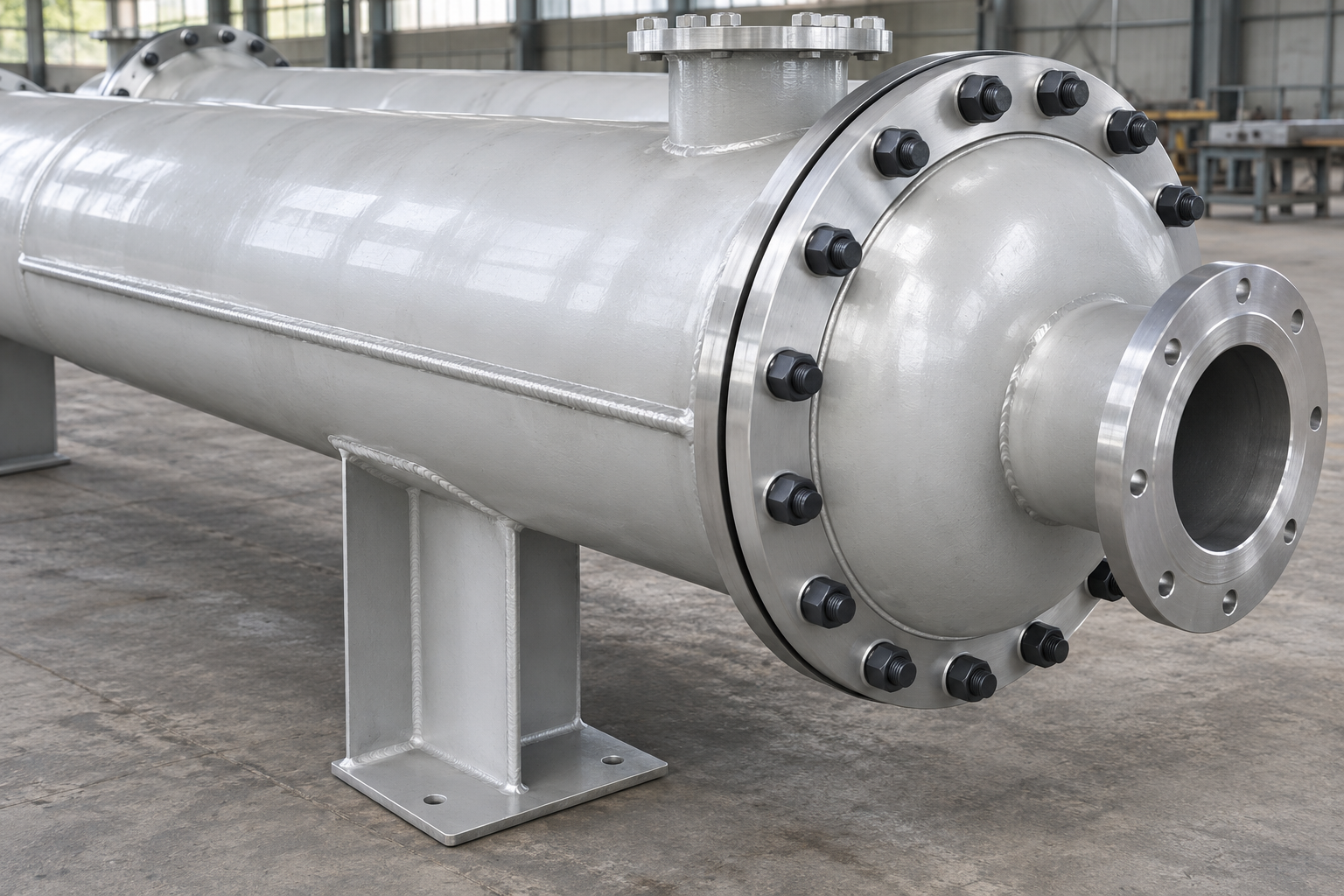
The two product-based illustrations show visible equipment context and detail. They do not depict certified storage supports or demonstrate an acceptable preservation condition. Use actual equipment photographs in the inspection file, including wider location views that make the position of a concern understandable.
Where access is obstructed, record the limitation explicitly. An inspection report describing accessible surfaces should not later be summarized as a complete examination of every pressure boundary. Ask the reviewer how inaccessible areas affect the conclusion and whether additional access is necessary.
Let the reviewer select internal checks and tests
Hidden surfaces can require a different evidence route from the shell exterior. The relevant specialist should decide what inspection, cleaning verification or testing is appropriate, considering the configuration and credible deterioration mechanisms. Do not select a pressure test simply because it appears to offer a quick yes or no answer.
A test can introduce hazards and may not detect every relevant condition. Its procedure, scope and acceptance criteria need appropriate approval. Similarly, an internal visual inspection or a particular nondestructive method has limitations that should be explained in the report. Ask which surfaces and mechanisms it addresses and which remain outside the conclusion.
The HSE inspection guidance for work equipment supports a risk-based approach to inspection needs. It does not provide a universal exchanger test procedure. The general principle is useful here: choose the extent of checking to answer the actual safety question, document it and remedy relevant deterioration before it creates risk.
Separate preservation review from statutory examination
A storage condition review is not automatically the same as a required pressure system examination. Establish whether the proposed system falls within the applicable rules and which records or examinations are required. If Great Britain pressure system duties apply, obtain competent advice about the relevant written scheme and the installation as a whole.
Use the related written examination scheme revision review when a changed installation or system requires that separate decision. Avoid assuming that a previous scheme remains sufficient after storage, relocation or a different duty. Conversely, do not present an informal storage checklist as a replacement for examination under an applicable scheme.
The HSE guidance for pressure system users provides the relevant Great Britain context. Requirements elsewhere can differ, and the site’s responsible reviewer should confirm which obligations apply to the actual system.
Explain the limits of a release decision
Record which questions have been resolved and which conditions remain before reuse. The conclusion might accept a particular observation scope while requiring further document review, repair verification or installation checks. Keep these conditions visible to the person coordinating commissioning, rather than burying them in report appendices.
If the exchanger changes owner, preserve the distinction between condition evidence and the ownership transfer record review. A complete sales file is valuable, but it does not make a damaged component suitable. A sound condition report is also insufficient if important identity or operating information cannot be linked to the item.
For further learning, the neutral educational video below explains pressure-system principles. It supplies background understanding, not permission to pressurize a stored exchanger or a procedure for recommissioning it.

USCSB: Ignored Warnings: Explosion in St. Louis.
Prepare an equipment-specific inquiry
Send the supplier or inspection specialist a concise equipment pack. Include identity, configuration, known previous duty, proposed duty, storage timeline, preservation records and photographs of observed concerns. State whether the request concerns purchase screening, preservation recovery, pressure system examination or commissioning support. These scopes can require different expertise and deliverables.
Ask the provider to describe assumptions, access requirements and exclusions. Request a report that links findings to equipment locations and explains recommended follow-up. If key information is missing, make that explicit rather than filling a quotation request with guessed specifications. This gives the provider a workable starting point and reduces the risk of comparing offers based on different scopes.
After corrective work, keep the evidence that closes each relevant finding. Link the accepted condition assessment to installation and handover records so the next reviewer can distinguish stored condition, repairs and the eventual return to service. That traceability is the practical outcome of a well-planned review.
For routine maintenance organization, see the shell and tube exchanger bundle maintenance guide. Confirm the actual construction first: a fixed tubesheet arrangement should not be treated as a removable bundle solely because another exchanger uses that design.
FAQ
Does unused equipment need a storage condition review?
Unused status alone does not establish current condition. Review storage history, preservation and intended duty, then obtain the checks appropriate to credible deterioration and installation risks.
Is a pressure test enough to approve a stored heat exchanger?
Not by itself. A competent reviewer should select the evidence needed for the actual concerns and explain the limits of each test or inspection. Identity, compatibility and installation questions may require separate decisions.
What if storage records are missing?
Document the missing period and the available observations. Ask a suitable reviewer how the uncertainty affects inspection planning, instead of treating the absence of records as either proof of damage or proof of acceptable condition.