A heat exchanger examination report missing an equipment identifier needs a documented identity review before it is relied on for the installed system. Assemble the original report, current asset records, available manufacturer information and relevant examination scheme, then ask the issuing competent person to resolve the connection. A similar description, matching room name or familiar photograph is not enough by itself. This guide concerns document reconciliation for applicable pressure systems in Great Britain; it does not determine whether a particular exchanger falls within the regulations or authorize continued operation.
The immediate objective is to establish what the report actually covers, preserve its original meaning and make unresolved uncertainty visible to the person responsible for the system. Changing a filename or typing an asset number into a local copy does not establish that connection.
Identify the kind of document first
Start by distinguishing an examination report from a maintenance note, a delivery inspection, a fabrication record and a test certificate. These documents may refer to the same exchanger while answering different questions. A maintenance visit does not automatically provide the examination required by an applicable written scheme.
Record the report issuer, issue date, report number, examination date and stated system description. Keep the original file and any covering correspondence together. If the file appears incomplete, ask for the complete issued version before drawing conclusions from a missing page. A scanned first page can omit equipment schedules or limitations included elsewhere.
HSE’s pressure system user guidance explains responsibilities for applicable systems in Great Britain. The first review should therefore confirm which system, equipment and duties are involved. Do not apply a regulatory label to every vessel simply because its shape resembles pressure equipment.
Understand why identity needs more than a familiar description
A site may have two exchangers with similar appearance and different duties. A location can remain the same after a replacement. A locally assigned asset tag may change during a maintenance database migration. Each situation can create a plausible but incorrect match between equipment and an old report.
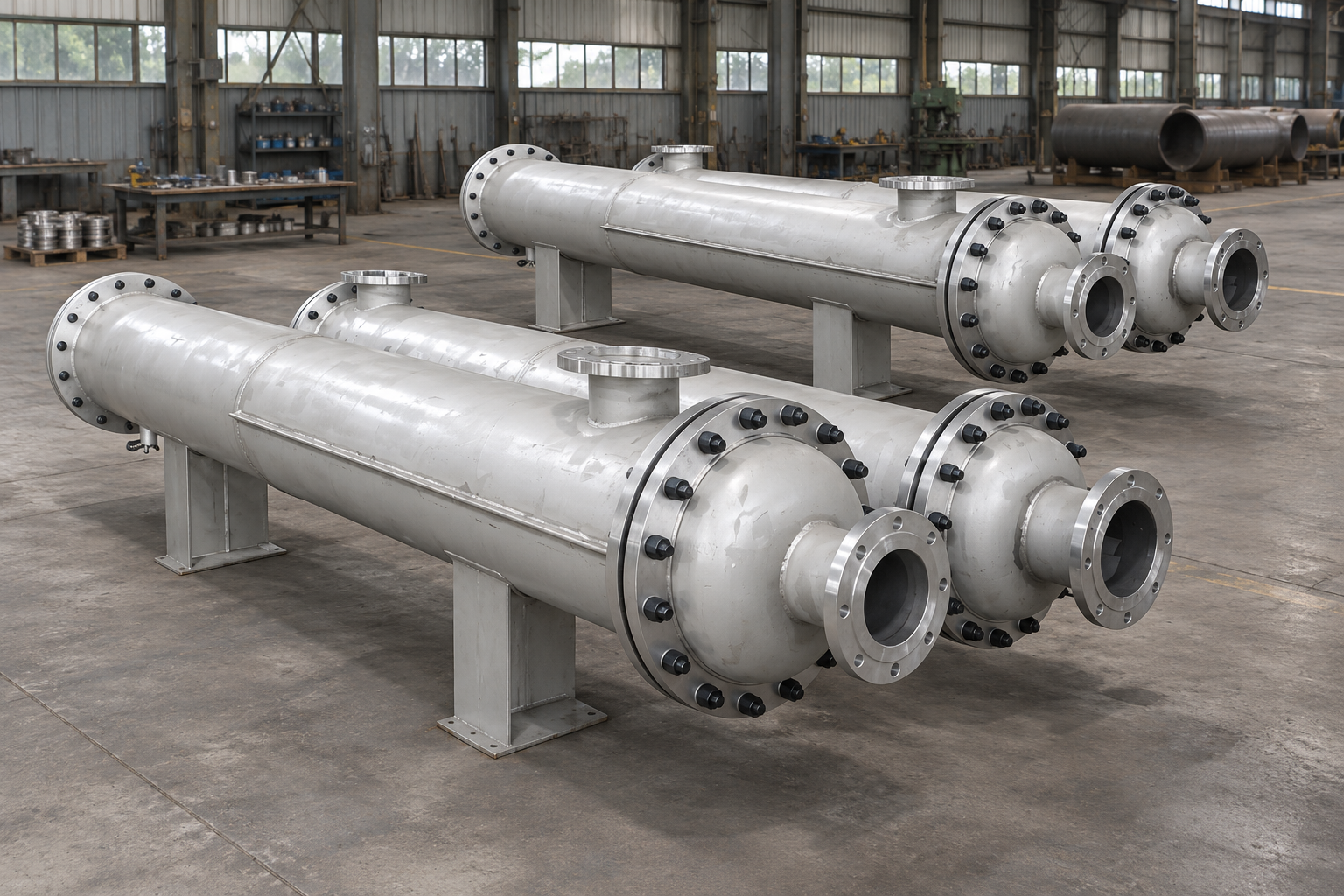
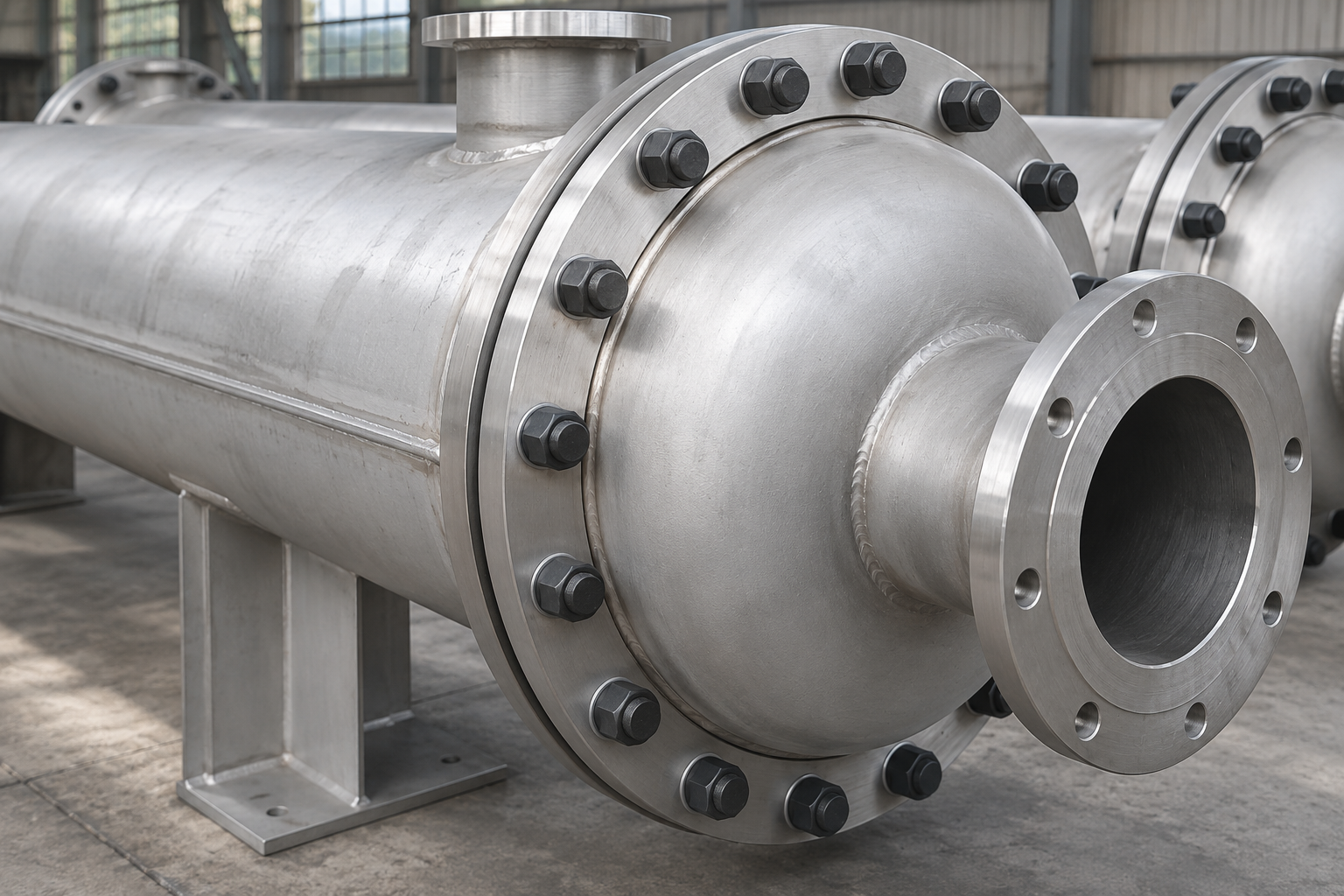
The website’s fixed tube sheet shell and tube exchanger page provides product context. The visible paired equipment, bolted heads and connections are not evidence that an installed unit was examined or that the report covers both pressure sides. Obtain configuration-specific documentation rather than transferring conclusions from a product image.
A useful identity review separates the whole pressure system from individual components. The examiner may have used a system reference while the maintenance database lists a component tag. That difference may be explainable, but it needs a reliable cross-reference. It should not be resolved by assuming every component in the same room was included.
Assemble a traceable reconciliation package
Collect the original report and appendices, the applicable written scheme, current asset register, available manufacturer serial information and relevant arrangement drawings. Add equipment photographs taken through an approved safe access process. Do not remove insulation, guards or pressure-retaining parts just to obtain an identifier without a separate safe method.
List each proposed matching identifier and its source. Manufacturer references and site tags may both be useful, but they serve different purposes. If a plate is unreadable or unavailable, describe that limitation honestly. A blank field is more useful than an invented serial number because it tells the reviewer what evidence is still missing.
Include relevant replacement, relocation or modification records. A report that predates a replacement may remain a genuine historical document while no longer being evidence for the current unit. Likewise, a change in site numbering may be straightforward to explain if the conversion record was controlled and retained. Preserve the chronology so the competent reviewer can distinguish those cases.
Use an evidence matrix to show the mismatch
The following original matrix organizes questions for the issuing competent person. It is informed by HSE’s Safety of pressure systems guidance, including its treatment of examination reports and records. It does not provide a substitute report or a rule that any one identifier is sufficient.
| Evidence item | What to compare | Typical uncertainty | Appropriate next record |
|---|---|---|---|
| Original report and appendices | Report reference, system description and listed parts | A component is not named in the page supplied | Complete issued report or issuer clarification |
| Written scheme | Equipment scope and identifying references | Register tag and scheme reference differ | Competent review of the controlled cross-reference |
| Manufacturer information | Available serial, model and supplied configuration | Similar models exist on the same site | Verified link to the specific installed item |
| Current asset register | Site identifier, location and history | Tag changed during database migration | Approved old-to-new asset reference |
| Replacement or relocation records | Dates and equipment identities before and after the event | An older report may refer to removed equipment | Chronology reviewed with the issuer |
| Photographs or site observations | Visible identifiers and installation arrangement | A plate cannot be safely read | Clearly recorded limitation and safe follow-up plan |
Write the conflict in a sentence that another person can evaluate. For example, “The report uses system reference HX-A; the register uses asset 204; no approved cross-reference was supplied.” This states the problem without asserting that the report is invalid or that the equipment has passed examination.
Ask the issuer to resolve the report connection
Send the evidence package to the issuing competent person or organization through the established site process. Explain what cannot be reconciled and request a response that identifies the report, equipment and scope being clarified. Ask whether further information or a site assessment is necessary.
Keep a response with its original context. A brief email confirming only that an organization visited the site is different from confirmation that a particular exchanger and relevant parts were covered by a specified examination. The clarification needs to answer the actual mismatch rather than provide general reassurance.
If a corrected report is issued, retain the original and connect the revised version through the document control process. Record which document supersedes which and why. Do not quietly replace an issued report with an internally edited copy. The person responsible for the system should be able to reconstruct the decision from retained evidence.
Keep operation decisions separate from administrative correction
An identity gap may reveal more than a typing error. It may leave the examination scope, findings or next examination information uncertain. Escalate those uncertainties to the responsible user or owner and competent person. This article cannot establish that the equipment may continue to operate while documents are being reconciled.
Loughborough University’s pressure system safety policy illustrates an institutional approach to written schemes, reports and the handling of dangerous defects. It is an example of that university’s arrangements, not a universal template for every plant. Use the applicable legislation, scheme and competent advice for the actual system.
Keep any defect, restriction or required action visible during reconciliation. An identifier correction does not cancel an adverse finding, extend a due date or establish that a repair was completed. Equally, a genuine administrative mismatch should not be “fixed” by inventing technical evidence. Resolve the document question and the engineering question through their proper owners.
Review nearby records for consistency
Once the report connection is resolved, check the asset register, written scheme references, maintenance package and document index. Make controlled updates where authorized, with enough explanation that a later reviewer can understand the change. Do not copy new identifiers into unrelated historical records without evaluating what those records originally described.
The related written examination scheme revision guide addresses whether a scheme needs review after a relevant change. The pressure system modification handover guide addresses information generated by modification work. Those topics complement identity reconciliation without replacing the issuer’s examination report.
For mechanical planning, the broader shell and tube exchanger maintenance guide provides another starting point. Equipment construction still controls what maintenance is possible. A fixed tube sheet product photograph should not be interpreted as evidence of a removable bundle or a particular disassembly method.
Watch an investigation about ignored equipment warnings
The U.S. Chemical Safety Board investigation below explains the consequences of ignored warnings in a pressure equipment incident. Its role here is to reinforce the importance of keeping findings and responsibilities visible. It is not a heat exchanger identity procedure, a statement of Great Britain law or evidence about the condition of any YIYI equipment.

USCSB: Ignored Warnings: Explosion in St. Louis.
Close the review with a clear decision trail
A useful closure note identifies the equipment, original report, evidence reviewed, issuer response and any controlled replacement document. It also records remaining actions and who accepted the reconciled record for the applicable purpose. Avoid the vague status “certificate received” when the real issue was whether the report covered the installed unit.
For a supplier inquiry, provide available equipment photographs, model or serial information, purchase reference and the exact missing record. Ask what documentation can be retrieved for the supplied configuration. The supplier may help establish equipment identity, but the examination issuer remains central to clarifying what its report covers. Do not expect a product quotation to replace that role.
Before the case is closed, confirm that the people using the maintenance and examination systems can find the accepted records. An accurate clarification stored only in one person’s inbox is difficult to rely on during the next inspection, ownership change or shutdown. Preserve the evidence in the controlled equipment file and keep operational concerns assigned until they are resolved.
FAQ
Can we add the missing asset tag to the report ourselves?
Do not alter the issued report as though the issuer supplied that identification. Record the proposed cross-reference separately and ask the competent issuer to clarify or correct its report through a controlled process.
Is a matching photograph enough to identify the examined exchanger?
A photograph can support the evidence package, but similar equipment may look alike and installations can change. The competent reviewer should reconcile the report scope with reliable equipment and system records rather than appearance alone.
Does correcting an identifier extend an examination deadline?
No extension should be inferred from an administrative correction. Examination dates, restrictions and required actions must be reviewed with the responsible user or owner and competent person under the applicable arrangements.