Titanium rod filter cleaning should follow an element-specific, validated procedure that removes the actual deposit while preserving retention performance and safe mechanical condition. Identify the foulant, isolate and depressurize the assembly, apply only approved cleaning conditions, rinse to the agreed endpoint, inspect the elements and seals, and verify recovery before returning the filter to service. Restored flow alone is not proof of successful regeneration. This guide helps industrial purchasers and maintenance teams prepare a controlled cleaning plan without prescribing a universal acid, alkali, temperature, or soaking time. A titanium material designation does not establish compatibility of every porous element, joint, seal, or contaminant with an arbitrary cleaning recipe.
Define what regeneration must achieve
Set the acceptance criteria before cleaning begins. The filter should regain the required hydraulic capacity and retention performance within the approved operating envelope. The process may also require residue, microbial, or product-changeover checks. These are different objectives and may need separate tests. Describe the required result in measurable terms rather than simply asking whether the element looks clean.
Collect the original clean baseline, previous cleaning records, element identity, service hours, processed volume, feed condition, and the reason for intervention. A pressure rise, poor outlet quality, or a planned product change can lead to different investigations. Cleaning should address the actual problem, not erase useful evidence before anyone understands it.
The filter-housing pressure-drop guide explains how flow and fluid conditions affect resistance measurements. Use those principles when comparing pre-cleaning and post-cleaning results. A lower reading obtained at lower flow or warmer temperature cannot be treated as equivalent recovery without a justified comparison.
Identify the deposit and its likely location
Review feed samples, process changes, and service history. Particulate loading, sticky organic residue, mineral deposits, corrosion products, and mixed foulants can behave differently. A deposit may sit on a surface, occupy part of the pore structure, or affect sealing and seating. Do not assume that an exterior inspection identifies the internal condition of a porous element.
Where the cause is uncertain, obtain a suitable deposit analysis or controlled sample trial. Explain to the cleaning specialist what fluid, temperature, and cleaning chemistry the element has already encountered. A material compatibility assessment should consider the entire assembly, not just the word titanium. Different seals, joining methods, and supplied element constructions can constrain the procedure.
Avoid treating competitor instructions for another product as an approved method for the installed unit. They can suggest questions, but the actual supplier must confirm the conditions and limits for the supplied configuration. Record the approval and any required trial. If a chemical treatment is proposed without element identity or compatibility evidence, keep the equipment out of that unverified treatment.
Make isolation and handling part of the procedure
Use the site’s approved isolation, depressurization, draining, and hazardous-substance controls before opening the housing. Check for pressure trapped between isolation points and in sensing lines or connected cavities. A zero reading on one gauge does not establish that every part is safe to open. The responsible personnel should verify the complete boundary using the approved method.
The HSE pressure-systems guidance provides context for controlling pressure-equipment hazards. The cleaning plan must also address the actual liquid and chemical risks at the site. This article does not authorize opening a vessel or replacing the competent operating procedure with a checklist.
Provide suitable lifting and handling arrangements for the closure and element assembly where needed. Avoid damage to porous surfaces, threads, seats, and seals. Keep removed parts identified and protected so that reassembly preserves the original configuration. Do not rotate or tilt a vessel merely because the product has a handwheel; first obtain the supplied mechanism’s operating instructions and safe conditions.
Select an approved cleaning method
Potential methods may include a compatible rinse, controlled reverse flow, an approved chemical cycle, or another supplier-approved technique. The appropriate method depends on the deposit, element construction, and service. A method that removes one foulant may be ineffective against another or may harm a component. Require the procedure to define its purpose and applicable boundary.
For reverse flow or backwash, confirm the permitted direction, flow, temperature, pressure difference, sequence, and discharge arrangement. Do not assume the normal filtration pressure limit also applies in reverse. Verify how detached solids leave the system and how the dirty discharge is separated from the clean side. Returning removed solids to the feed can conceal an ineffective cleaning cycle.
For a chemical method, require the exact approved chemical, concentration, temperature, contact duration, mixing or circulation conditions, and rinse endpoint. Obtain compatibility and safety information for the element, housing, seals, and deposit. This guide deliberately provides no universal recipe because a concentration copied from another product can create corrosion, residue, or loss of performance.
Use a controlled recovery checklist
The table organizes evidence for an element-specific procedure. It is not a numerical cleaning standard. The EPA filtration handbook supports following equipment-specific service limits, while US drug-equipment cleaning and maintenance requirements provide a relevant controlled-procedure framework when that regulated application applies.
| Stage | Record to retain | Release question |
|---|---|---|
| Diagnosis | Foulant description and service history | Does the method address the actual problem? |
| Compatibility | Supplier approval for all affected components | Are treatment conditions suitable for this assembly? |
| Isolation | Completed site safety checks | Is the equipment safe for the planned work? |
| Cleaning | Actual conditions and cycle identification | Did the approved process run as specified? |
| Rinsing | Endpoint method and result | Are residues within the agreed service requirement? |
| Inspection | Element, seat and seal findings | Are parts fit for reassembly? |
| Hydraulic check | Comparable flow and pressure results | Has required capacity recovered? |
| Retention check | Agreed quality or integrity evidence | Is filtration performance still acceptable? |
| Release | Authorized decision and open-item closure | Is the assembly ready for its next use? |
Define a rinse endpoint that matches the service
Rinsing is not complete merely because a fixed time has elapsed. Use an endpoint suitable for the cleaning agent, product, and quality requirement. Conductivity, pH, a chemical-specific residue test, or another method may be relevant, but each has limitations. The responsible process or quality specialist should define the method and acceptance value rather than adopting an arbitrary number.
Conductivity can track some ionic residues but may not detect every organic cleaning agent. A neutral pH does not establish the absence of all contaminants. Visual clarity likewise cannot prove chemical or microbial suitability. Select the test that answers the actual question and record sample location, method, and result.
Review drainage and any remaining liquid in the housing or element. Establish whether the next use requires a wet condition, drying, storage preservation, or another controlled state. Avoid treating air drying as universally safe or effective. The decision should follow the element specification and the site’s contamination-control requirements.
Inspect before reassembly
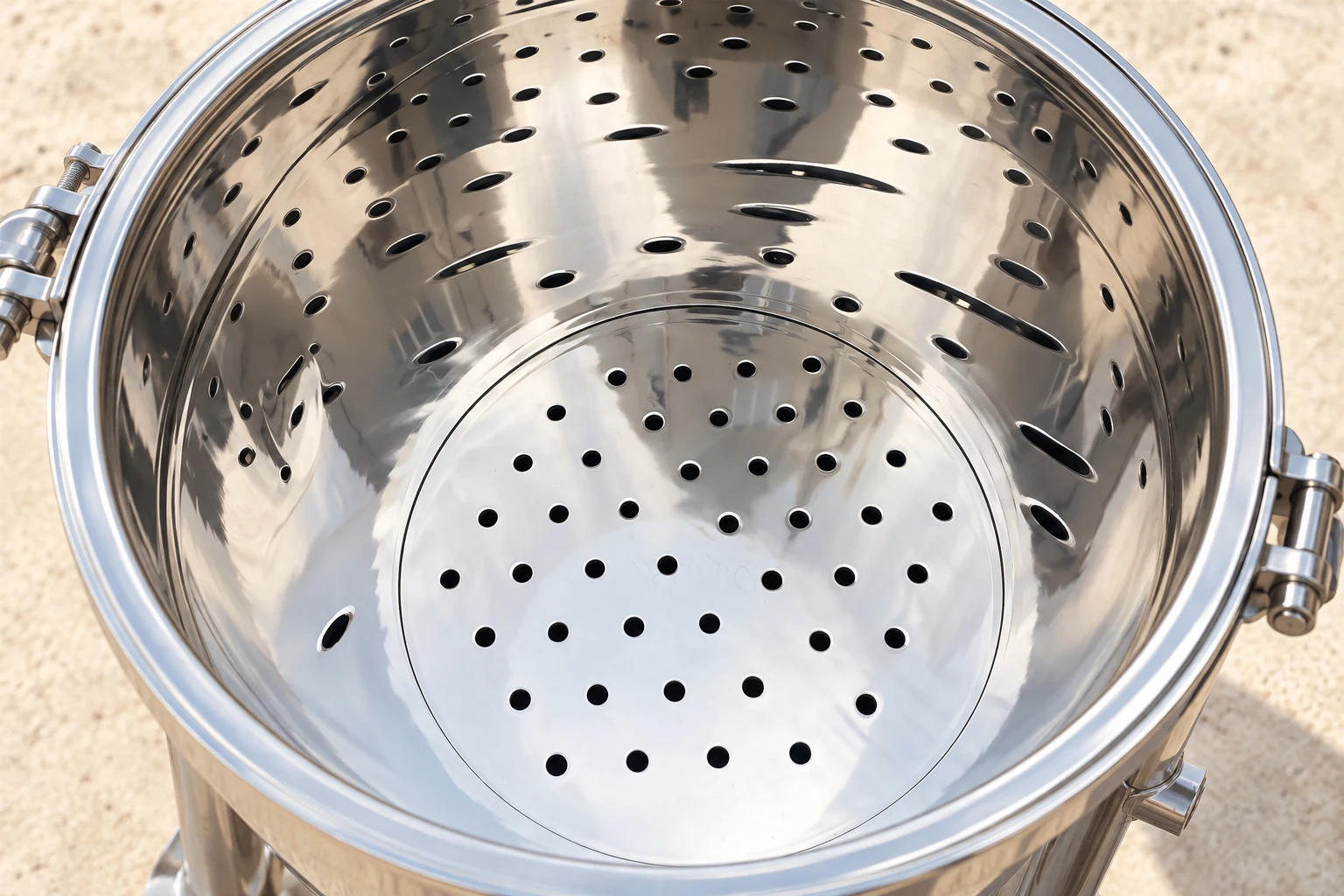
Check accessible porous surfaces, component connections, seats, and seals according to the approved inspection method. Record damage, deformation, unexpected residue, or changes in fit. Do not polish or modify an element to improve appearance without supplier approval, because the intervention may alter its retention behavior or mechanical condition.
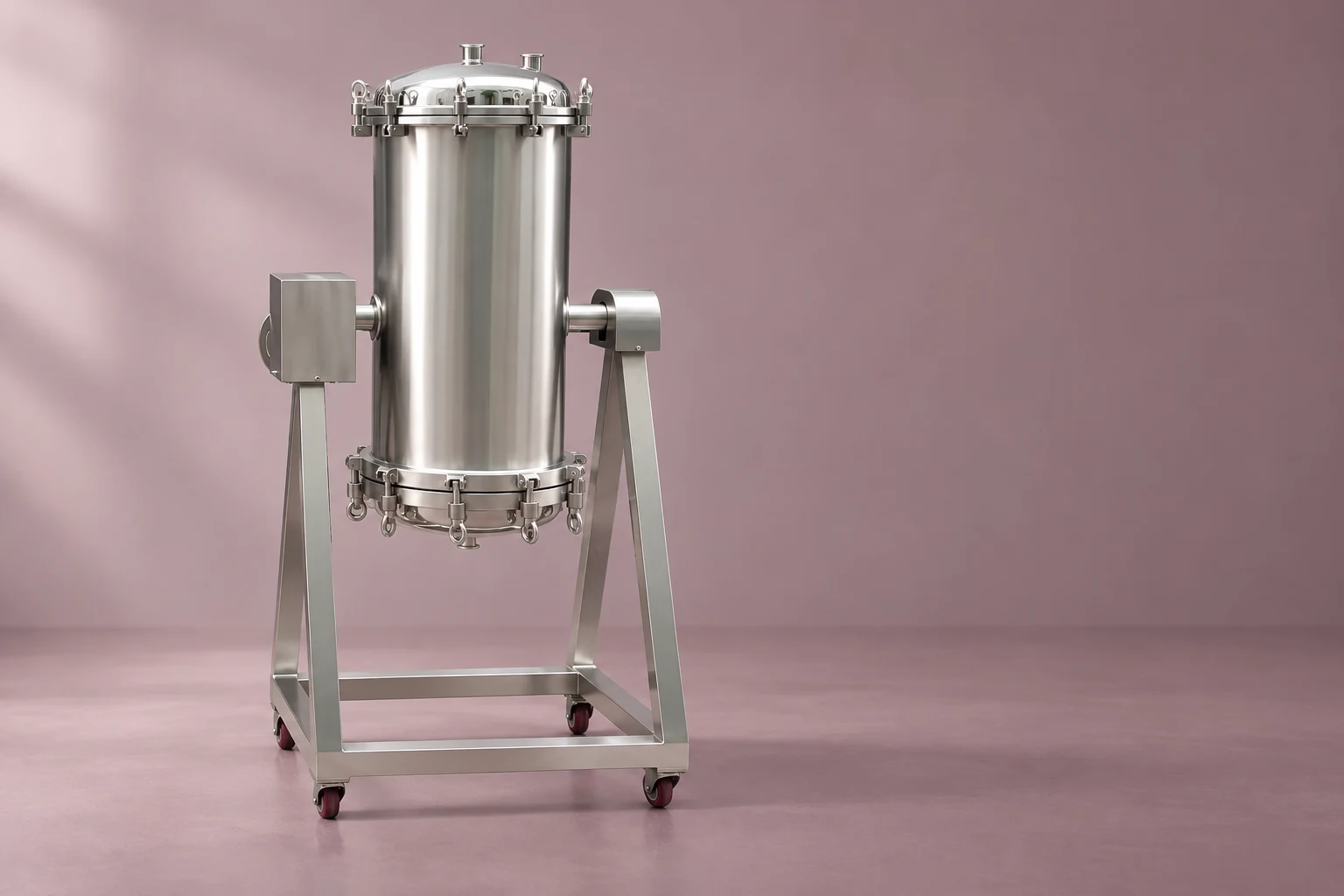
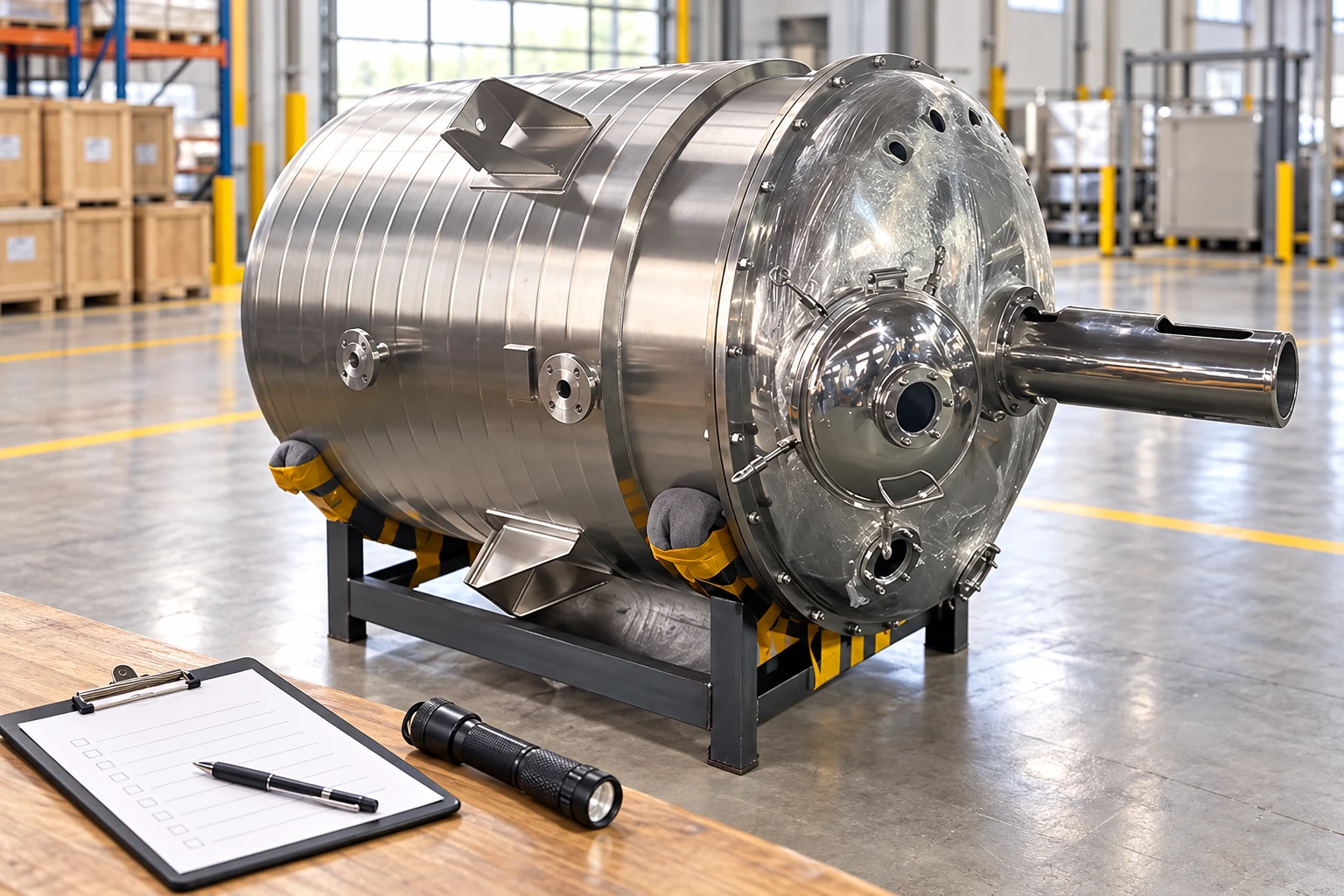
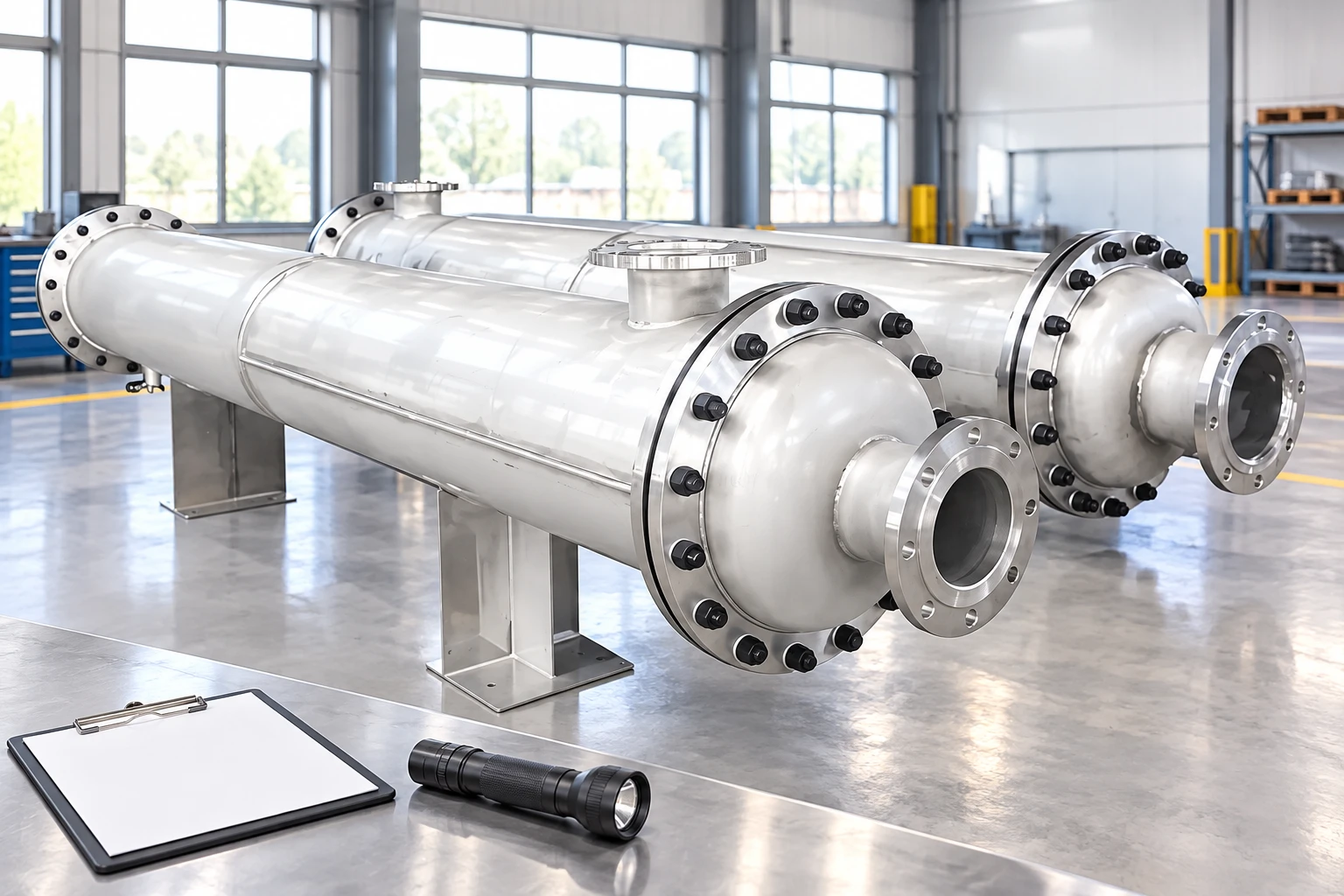
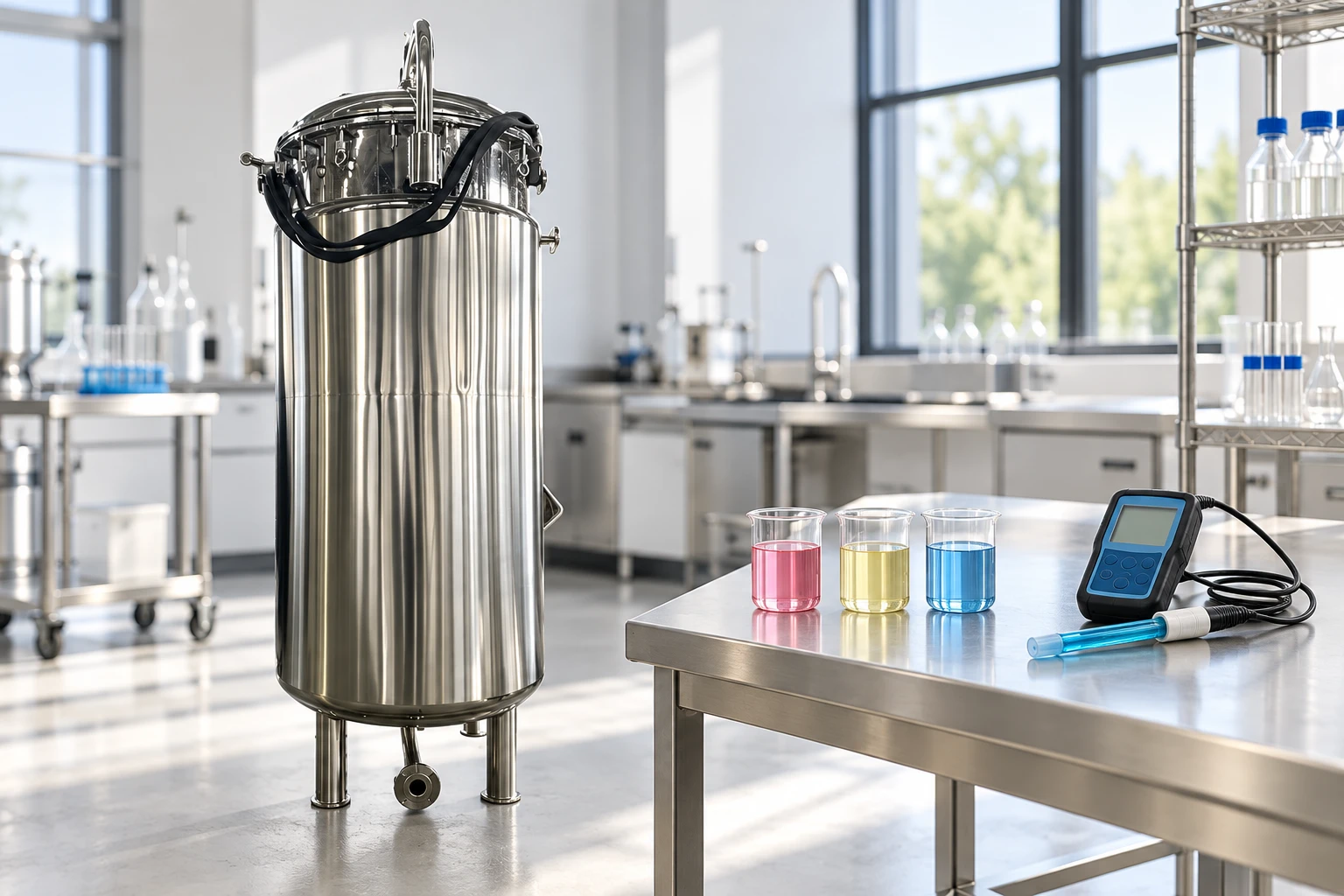
The YIYI titanium-rod filter product page provides the real housing reference used in the illustrations. Its visible internal mounting openings are not proof of pore size or clean-element performance. Request the supplied element details and service instructions. The filter-tank overview explains broader construction considerations.
Reassemble with the specified elements, seals, and orientation. Keep component identification clear if multiple similar units are serviced together. Verify that the clean and dirty boundaries are restored and that closure instructions are followed. A correct cleaning cycle can still lead to poor filtration if reassembly introduces bypass.
Verify hydraulic recovery and retention separately
Repeat the agreed hydraulic check at comparable flow, liquid properties, temperature, and measurement points. Compare it with the accepted baseline and account for instrument limitations. If resistance remains high, review residual foulant, blocked passages, the assembly configuration, and the measurement system before deciding that more aggressive cleaning is required.
Then verify the required outlet quality or applicable element integrity using the approved method. A damaged element can have lower resistance and worse retention, so hydraulic recovery alone is insufficient. The micron-rating selection guide explains why rating conventions and test conditions must accompany the retention claim.
If either check fails, record the result and keep the unit in its controlled service state. Ask the supplier to assess whether another approved cleaning cycle is justified or whether repair or replacement is necessary. Repeated unverified treatment can consume time while reducing element life. The release decision should be based on evidence, not the number of cleaning attempts.
Investigate recurring short service cycles
Trend operating time, volume processed, feed properties, differential pressure, quality results, cleaning method, and recovery. A progressively shorter cycle can reflect changing feed conditions, inadequate pretreatment, residual fouling, or element deterioration. Examine the pattern before simply increasing cleaning frequency or selecting a coarser rating.
The industrial filter sizing guide links solids loading and active area to cycle requirements. If the installed filter never had adequate capacity for the duty, cleaning alone will not fix the mismatch. A representative trial or revised process arrangement may be more effective than repeated regeneration of an unsuitable configuration.
Further learning: retained solids and filtration
NPTEL’s IIT Madras lecture explains filtration mechanisms and retained-solids behavior. It provides background for understanding fouling and resistance, rather than a titanium-element cleaning recipe. Use the supplied element’s approved procedure for actual maintenance and verification.
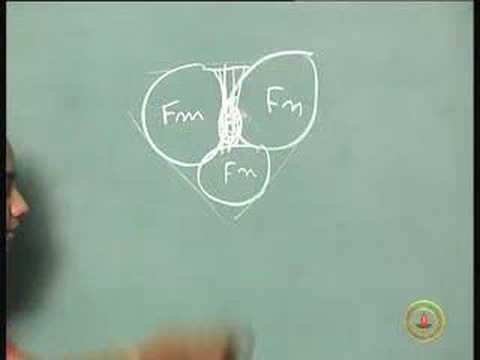
Watch Lecture 13 Filtration by nptelhrd
Request a complete cleaning and service package
Ask the supplier for element identity, approved cleaning methods and limits, compatibility information, isolation and handling instructions, rinse criteria, inspection methods, hydraulic and retention acceptance checks, storage requirements, and replacement criteria. Include the actual process liquid and likely foulants in the enquiry. Clarify which conditions need a controlled trial before routine use.
Keep the cleaning records connected to the unit and element history. A service package that explains how to verify recovery is more useful than an unsupported claim that the elements are indefinitely reusable. Agree who authorizes release and how failed checks are handled so that the next production run begins with a documented acceptable condition.
Frequently asked questions
Can I use the same cleaning chemical for every titanium filter?
No. The supplied construction, seals, foulant, temperature, and service requirements affect compatibility. Obtain approval for the exact assembly and treatment conditions.
Is restored flow enough to prove regeneration?
No. Verify hydraulic recovery and the required retention or quality performance separately. Damage or bypass can reduce resistance while making filtration worse.
When should an element be replaced instead of cleaned again?
Use the supplier’s replacement criteria and the documented inspection and performance results. Persistent failed recovery, unacceptable retention, or confirmed damage require a controlled assessment rather than repeated unverified cleaning.