An automated saccharification tank runs mash conversion on a controlled temperature and time path so the sugar profile leaving the vessel—the wort—stays consistent from batch to batch. This article maps the control points that make that repeatability real: sensors and probe placement, setpoints tied to enzyme rests, mash tun automation sequences and agitation, alarms and batch records, and how to discuss a stainless tank together with its controls package.
What Automated Saccharification Control Is For
Automation on a saccharification tank exists to repeat the mash path that creates the intended wort sugar profile, not merely to light indicator lamps on a panel.
In brewing and related starch-conversion duties, ground grain and hot liquor are held so enzymes break starch into sugars that dissolve into wort. When operators run that path by hand, small timing and temperature drifts stack up across shifts.
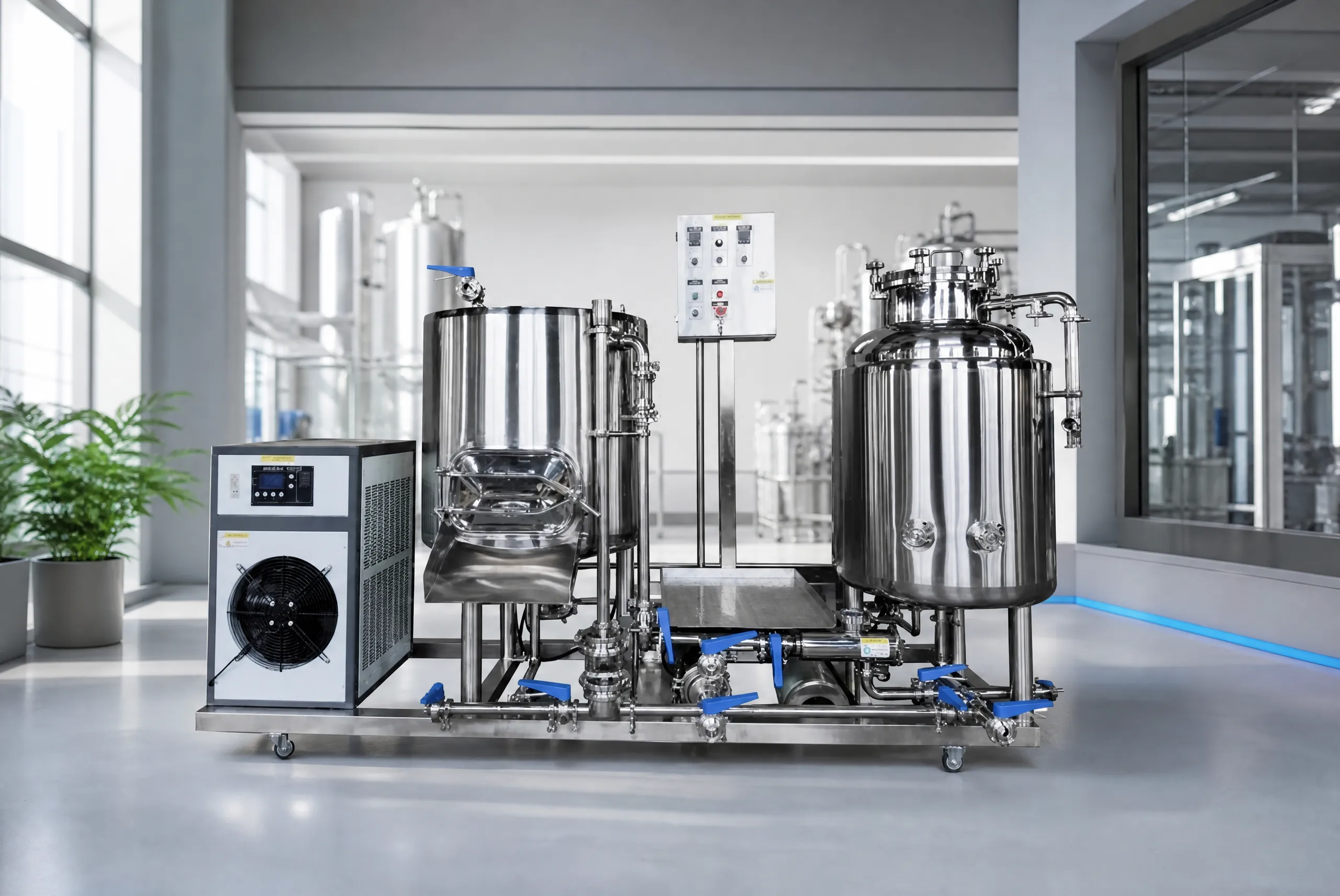
A PLC with an HMI stores the rests, drives heating and agitation, and hands off to lautering or transfer so the same style recipe lands in a similar fermentable window. That is mash temperature control applied to wort consistency rather than to a one-time brew day guess.
That job sits beside other planning questions on the same site. A general saccharification system guide helps buyers frame the whole hot-side train.
A platform-type layout article covers elevated decks and interfaces. A vertical tank efficiency guide focuses on geometry and heat transfer.
Use this page when the decision is how sensors, setpoints, sequences, and alarms keep conversion consistent once the vessel is on the floor.
Sensors and Measurement Points That Trust Temperature
Trustworthy mash control starts with calibrated probes placed where the mash temperature actually is—not where a convenient weld-o-let happens to sit.
Most automated packages center on temperature. Education and build practice favor RTD probes in sanitary thermowells because they stay linear across brewing ranges and drift less than many thermocouple setups when cables and connectors are handled carefully.
Recirculating systems often read temperature in the outlet plumbing so the controller sees mixed flow instead of a stratified pocket next to a wall or a grain bed that heats from top to bottom. Vessel-side probes still matter when you need a second opinion during step ramps or when recirculation is offline.
pH inputs appear when the recipe depends on enzyme windows that shift with mash acidity, or when acid/base dosing is part of the automated sequence. Level and flow inputs protect dry heating, confirm liquor-to-grist targets during mash-in, and pace transfers.
None of these signals help if the transmitter type, cable length, and controller input card disagree—or if nobody records an ice-point or reference-thermometer offset after install.
| Measurement | Typical role on an automated mash vessel | What breaks consistency if it is wrong |
|---|---|---|
| Temperature (RTD / thermowell) | Holds rests and mash-out; feeds PID | Offset or lag → false “on target” while mash runs hot or cold |
| Temperature (second location) | Cross-check grain bed vs recirculation loop | Single-point stratification hides incomplete ramps |
| pH | Confirms enzyme-friendly chemistry; optional dosing | Unverified pH drifts conversion without a temperature fault |
| Level | Prevents dry heat and overfill | Low-level ignored → scorched mash or aborted batch |
| Flow / liquor meter | Mash-in ratio and transfer pacing | Wrong liquor volume changes thickness and enzyme buffering |
From the field: Homebrew and small-system controllers frequently “overshoot” mash setpoints by several degrees until operators calibrate the probe against a trusted thermometer and place the sensor close enough to the heat source that lag does not fool the loop. Treat that as a commissioning lesson, not as a brand claim: automation without measurement trust is just a faster way to repeat the wrong temperature.

Setpoints, Rests, and PID Heat Control
Setpoints are enzyme rests executed by heat loops that understand thermal lag—not a single magic number typed once into an HMI.
Brewing science describes step infusion and decoction paths with pauses across roughly 45–78 °C so different enzymes can work. Common reference windows include β-glucanase around 40–45 °C, protease around 50–54 °C, β-amylase around 62–67 °C, and α-amylase around 71–72 °C, with the practical note that optima also depend on mash pH and thickness.
Amylase activity often overlaps, so many recipes use one conversion rest whose temperature leans drier or fuller-bodied. Mash-out is typically kept at or below about 78 °C so leftover starch does not create haze after enzymes denature.
Heating transitions faster than about 1 °C per minute near heating surfaces can denature enzymes in the hot film even when the bulk average still looks safe—so ramp authority belongs in the control conversation.
On the actuator side, jackets, steam valves, or hot-water loops close the loop. Lab and industrial teaching units often pair a mash temperature sensor with jacket-outlet feedback into a PID controller so the heat medium is trimmed instead of slammed fully open.
On/off control is simpler but swings more; PID reduces the overshoot that can push a conversion rest above the intended band. Whatever algorithm you choose, tune it under a representative fill and grain load, then freeze the gains and document them with the recipe.
| Rest intent | Typical temperature context | What the controller must hold |
|---|---|---|
| Cell-wall / glucan work | ~40–45 °C class window | Stable early rest without racing into protein range |
| Protein rest | ~50–54 °C class window | Timed hold before starch conversion |
| Fermentable / body balance | ~62–72 °C amylase overlap | Chosen conversion temperature ± recipe band for the style |
| Mash-out | Up to ~78 °C | Viscosity drop without exceeding denaturation ceiling |
When you compare pale-ale dryness with a fuller lager body, you are really comparing conversion setpoints and hold times that the automated tank must reproduce on Monday and Thursday alike.
Sequences, Agitation, and Transfer Steps
Recipes store rests, agitation, and transfers so different shifts run the same path instead of improvising valve timing under pressure.
A useful mash sequence is more than a temperature list. Mash-in may meter liquor temperature and flow while grist hydrates.
During heating, higher agitation or rake speed can reduce scorching and equalize temperature. During rests, slower motion may preserve a grain filter bed when lautering will follow in the same vessel.
Timed enzyme rests then hand off to mash-out, recirculation or vorlauf cues, and a transfer interlock that only opens when destination readiness and temperature gates are met. Commercial brewhouse mash tun automation descriptions typically package those steps as selectable recipes with pneumatic valves, pumps, and sensor interlocks under a PLC and HMI.
Batch-to-batch wort consistency shows up when the same recipe ID loads the same setpoints, the same rest timers, and the same transfer conditions. Operators should not be able to skip a step silently without a logged exception.
If your plant also cares about elevated deck routing or vessel geometry for heat transfer, keep those design talks on the layout and vertical-tank pages linked above. The sequence layer here is about executable logic on the vessel you already have.

Alarms, Interlocks, and Batch Records
Alarms and logs catch lag, dry-run, and valve faults before wort drifts quietly into the fermenter.
At minimum, plan temperature deviation bands around each rest, low- and high-level trips, pump or valve position faults, and emergency stop paths that leave the plant in a safe state. Some packages escalate notifications when a rest runs long or a related vessel shows a foam or pressure condition.
Even a compact mash skid benefits from clear local indication when heating continues after a probe fails high. Manual overrides and analog thermometers remain useful backups: automation should assist operators, not create a single point of failure on brew day.
Historical records close the loop for quality conversations. Temperature/time traces, recipe IDs, and exception notes let a brewery compare two batches that tasted different without guessing which rest drifted.
That is the same consistency story industrial automation pages tell when they emphasize archived logs—only here it is aimed at wort leaving the saccharification step, not at finished-beer marketing claims.
Choose a Saccharification Tank and Controls Package
Choose a configurable stainless saccharification vessel together with I/O, recipes, and commissioning expectations so the shell and the control brain arrive as one decision.
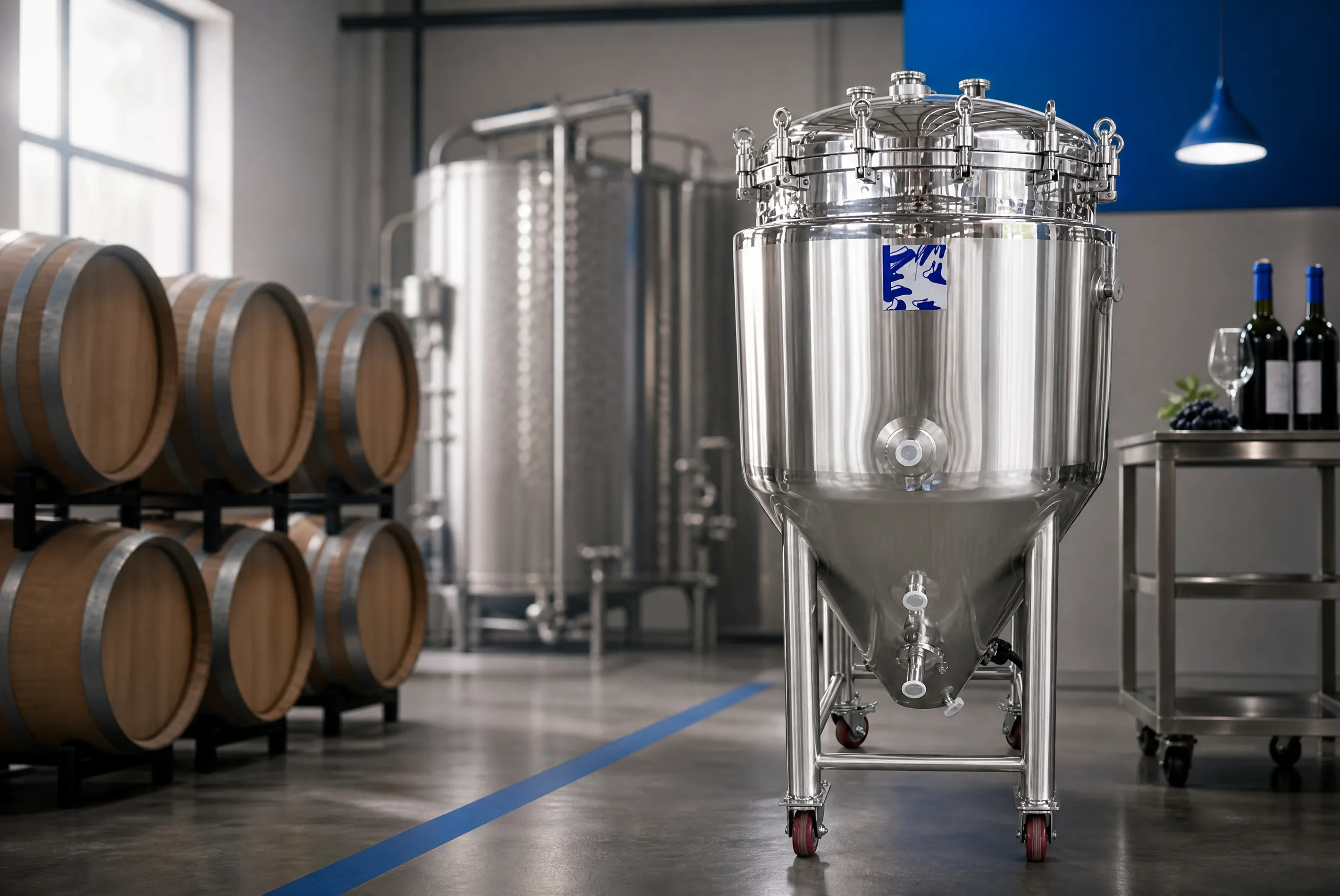
On the vessel side, YIYI’s Saccharification System Tank is presented as a configurable stainless offering with SS304/SS316L material options, single- to multi-layer structures for insulation or heating/cooling service, and accessories such as quick-open manholes and CIP cleaners.
Use that page to discuss how the tank will hold mash, accept CIP, and interface to utilities—not as a promise of a particular PLC brand or accuracy band.
When sensorized heating or downstream fermentation enters the same project conversation, the fermentation tank heating tank lists temperature, pH, dissolved oxygen, and pressure sensors among its published components. The fermenter family publishes volume and mixing tables for cellar vessels that eventually receive the wort.
Browse the biological fermentation tank hub when you need the broader category map.
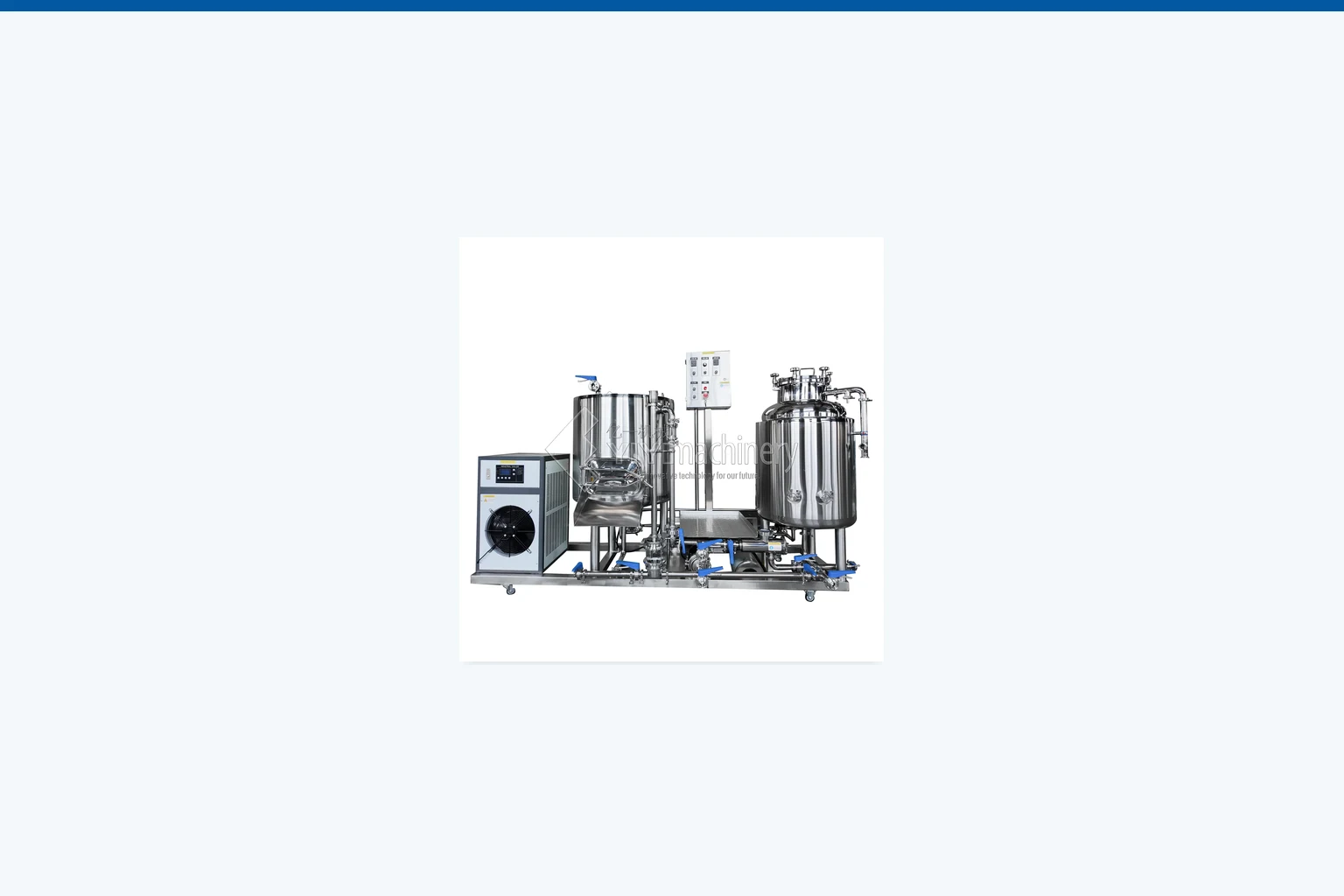
Bring a short control checklist to the same discussion: probe types and locations, PID or equivalent loop strategy, recipe fields (temperature, time, agitation, transfers), alarm list, data export format, and who performs first-article tuning with real mash loads.
Community build threads often treat the control panel and temperature probe sets as one package when the goal is professional-grade indoor process control—keep that pairing visible in the RFQ conversation.
When those items are written next to the vessel scope, “automated” stops being a sticker and becomes a shared definition of consistent wort quality. For configuration questions, use contact us.
FAQ
What is an automated saccharification tank?
It is a mash vessel paired with a control system that executes temperature and related steps so starch conversion—and the wort it produces—can be repeated across batches with less manual timing.
Which sensors matter most for consistent wort?
Temperature probes (often RTDs in thermowells) are foundational; pH, level, and flow become important when chemistry, dry-run protection, or mash-in ratios drive the recipe. Placement and calibration matter as much as the sensor brand.
How do setpoints relate to enzyme rests?
Setpoints are the temperatures and hold times that favor specific enzyme activity windows during mashing. Choosing a cooler or warmer conversion rest changes the balance of fermentable sugars and body in the wort.
Why does mash temperature overshoot the setpoint?
Common causes include uncalibrated probes, sensors placed too far from the heat source, aggressive on/off heating, and PID gains tuned without a representative mash load. Fix measurement trust before chasing more automation features.
What should a mash recipe sequence include?
At least mash-in conditions, each rest temperature and time, agitation changes, mash-out, and transfer or lautering readiness checks—plus a clear recipe ID operators can select on the HMI.
Which alarms protect an automated mash?
Temperature deviation, level trips, valve/pump faults, and emergency stop coverage are the usual core set. Logs of those events help explain batch differences later.
How does this topic relate to platform layout or vertical tank guides?
Platform articles emphasize elevated routing and interfaces; vertical tank articles emphasize geometry and heat-transfer efficiency. This page focuses on the control points that keep conversion consistent once the tank and utilities are defined.
What information helps specify a tank plus controls package?
Materials and layer structure, CIP access, probe ports, utility media, recipe/alarm expectations, and commissioning ownership. Pair the vessel discussion with the control checklist rather than treating them as separate purchases.
References
- Mashing — Wikipedia — enzyme rest context and mash-tun heating/CIP framing used in the setpoints and sequences sections.
- Wort — Wikipedia — definition of wort as the sugar-rich liquid leaving mash conversion.
- Build a Mash Temperature Controller — Brew Your Own — RTD, thermowell, and ice-point calibration practice informing the sensors section.
- Mash/Lauter Tun — The Electric Brewery — probe placement in recirculating systems and RTD linearity notes used for measurement trust.
- FBC Brewery Build — The Electric Brewery Forum — community discussion of control panels and temperature probe packages for repeatable indoor brewing.