A chemical dosing tank stores a working volume of liquid chemical and keeps metering pumps supplied so the process can inject a controlled dose. This article explains that storage role, how materials and temperature ceilings affect compatibility, which integration points protect dose reliability, and how the vessel differs from a calibrated measurement tank.

What a Chemical Dosing Tank Does in the Feed Loop
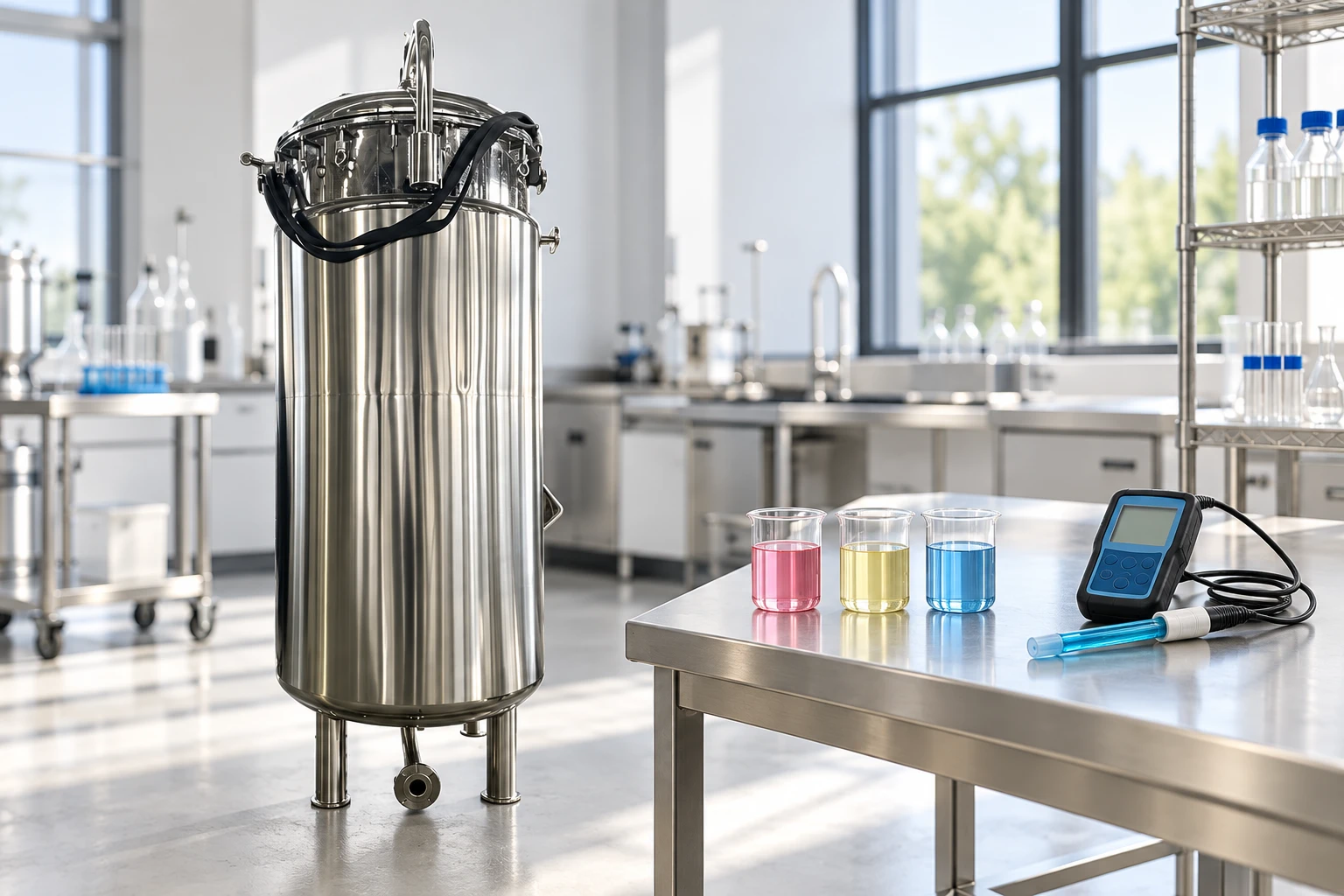
In practice, plants use a chemical dosing tank—also called a chemical feed tank or day tank—to hold reagent for the metering equipment that injects coagulant, acid, alkali, disinfectant, or similar chemicals into a process stream.
In a typical clarification train, a day tank sits between bulk delivery and the diaphragm pump so the pump always sees a flooded suction and operators can track daily use. The tank may also support dilution, light agitation, venting of off-gassing chemicals, and level indication before the chemical reaches the injection quill.
That storage-and-feed job differs from continuous inline blending or from a sealed reactor. Reliable inventory, compatible materials, and clean pump interfaces matter more than treating the tank as a metering instrument.
Why Dosing Accuracy Is a System Property
Dosing accuracy depends mainly on the metering pump and how it is installed, not on a number stamped on the tank wall.
A metering pump delivers a controlled volume over time when wetted materials, stroke or speed settings, and discharge conditions match the duty. If the tank lets air into the suction, crystallizes product in the outlet, or loses strength so fittings leak, the pump setpoint stops matching the real dose even when the motor still runs.
Treat the tank as the supply condition for that pump. Confirm flooded suction, chemical-compatible suction pipework, and a way to verify output—then judge accuracy against the pump’s defined conditions rather than against tank volume alone.

Materials for Chemical Dosing Tanks
Tank material must follow the chemical, its concentration, the service temperature, and the duty—not a generic “chemical grade” label.
For thermoplastic dosing tanks, published shortlists treat PVC, polyethylene (HDPE/PE), polypropylene, and PVDF as different slices of the chemical and temperature map. Indicative continuous ceilings are about 60°C for PVC, about 60°C for HDPE, about 80°C for PP-H, and about 140°C for PVDF, and those figures still need confirmation for the exact concentration and residence time.
Sodium hypochlorite often points toward PVC in ambient service, while strong hot caustic is a poor match for PVDF. A stainless steel storage tank in 304 or 316L can fit hygienic or confirmed-compatible liquid duties, but chloride oxidizers and other aggressive chemistries may require plastic or lined construction instead.
| Material family | Typical dosing-tank use | Indicative note |
|---|---|---|
| PVC (uPVC) | Many acids/oxidisers at ambient; common hypochlorite shortlist | ~60°C continuous ceiling (indicative) |
| HDPE / PE | Caustics, salts, many dilute acids; outdoor UV grades | ~60°C continuous ceiling (indicative) |
| PP / PP-H | Wider warm-acid service than HDPE | ~80°C continuous ceiling (indicative) |
| PVDF | Hot, concentrated, or high-purity duties | ~140°C continuous ceiling; avoid strong hot caustic |
| Stainless 304/316L | Hygienic or confirmed-compatible liquids; configurable accessories | Confirm media; not a universal chloride oxidiser choice |

Integration Points That Protect Dose and Safety
Integration details decide whether the stored chemical reaches the process at the intended rate and stays inside the plant when something leaks.
Plan flooded suction outlets, vents sized for fill displacement and off-gassing, level indication with usable alarms, and calibration ports where operators can prove pump output. Engineering forum practice often places a calibration cylinder on the suction side and returns pressure-relief flow to the suction tank so a closed discharge valve cannot overpressure the line.
Secondary containment belongs in the same conversation. Operator-training guidance for liquid chemical feed commonly sizes chemically resistant spill containment around 110% of the largest single tank and expects leak detection—confirm the figure against the code that governs your site.
Utility dosing specifications also treat containment as a path from delivery bay through storage to the dosing point, so fill connections and buried dosing lines need leak visibility, not only a tank skirt.
| Integration point | Why it matters | What to state early |
|---|---|---|
| Suction / outlet | Prevents air-lock and starved pumps | Elevation, flooded suction, anti-vortex needs |
| Vent / overflow | Manages fill air and off-gassing | Chemical vapour behaviour, outdoor UV |
| Level indication | Avoids dry-run and overfill | Sensor type vs coating/foam |
| Calibration column | Verifies real pump delivery | Port size and return path |
| Relief / anti-siphon | Protects pipework and prevents uncontrolled drain | Return to tank, set pressure basis |
| Secondary containment | Captures spills | ~110% largest tank as common training/code starting point; confirm jurisdiction |

Day Tank, Bulk Storage, and Measurement Tank Roles
Keep the day tank as a working supply so a single failure cannot empty the entire bulk inventory into the process, and so daily consumption stays visible.
Bulk storage optimises delivery intervals; the dosing tank optimises pump suction and turnover. Plants that dilute neat chemical often keep bulk neat storage and a smaller diluted day tank—especially when neat feed rates are too low to meter cleanly.
Do not confuse that feed vessel with a measurement tank or metering tank.
A measurement tank doses by filling a calibrated level span and releasing a known batch volume. A chemical dosing tank stores inventory for a metering pump or similar feed device. Mixing those RFQs produces the wrong geometry, instrumentation, and acceptance tests.
Field Problems That Break Dosing Reliability
Most feed-tank trouble starts as chemistry or housekeeping, not as a mysterious “accuracy drift.”
Common failures include material incompatibility, crystallization or sediment that blocks suction, leaks at fittings, tanks sized for the wrong refill rhythm, poor mixing that stratifies product, level-sensor faults, and contamination through open lids or shared tools. Forum buyers sizing small closed-loop feeder pots still have to state temperature and pressure because those conditions govern the vessel even when volume is only a convenience choice.
From the field: Feed-tank problem reviews repeatedly flag chemical incompatibility, crystallization in outlets, and small leaks at vents or threaded fittings as early accuracy killers—inspect seals and confirm material limits before blaming the metering pump. Source: Cannon Water feed-tank problems.
Keep turnover matched to chemicals that degrade in storage, flush lines that crystallize, and treat level alarms as process interlocks rather than optional accessories.
Choose Configurable Stainless Storage for Compatible Chemical Duties
When the media data sheet supports stainless contact, a configurable stainless steel storage tank can serve as the chemical hold vessel that metering equipment draws from.
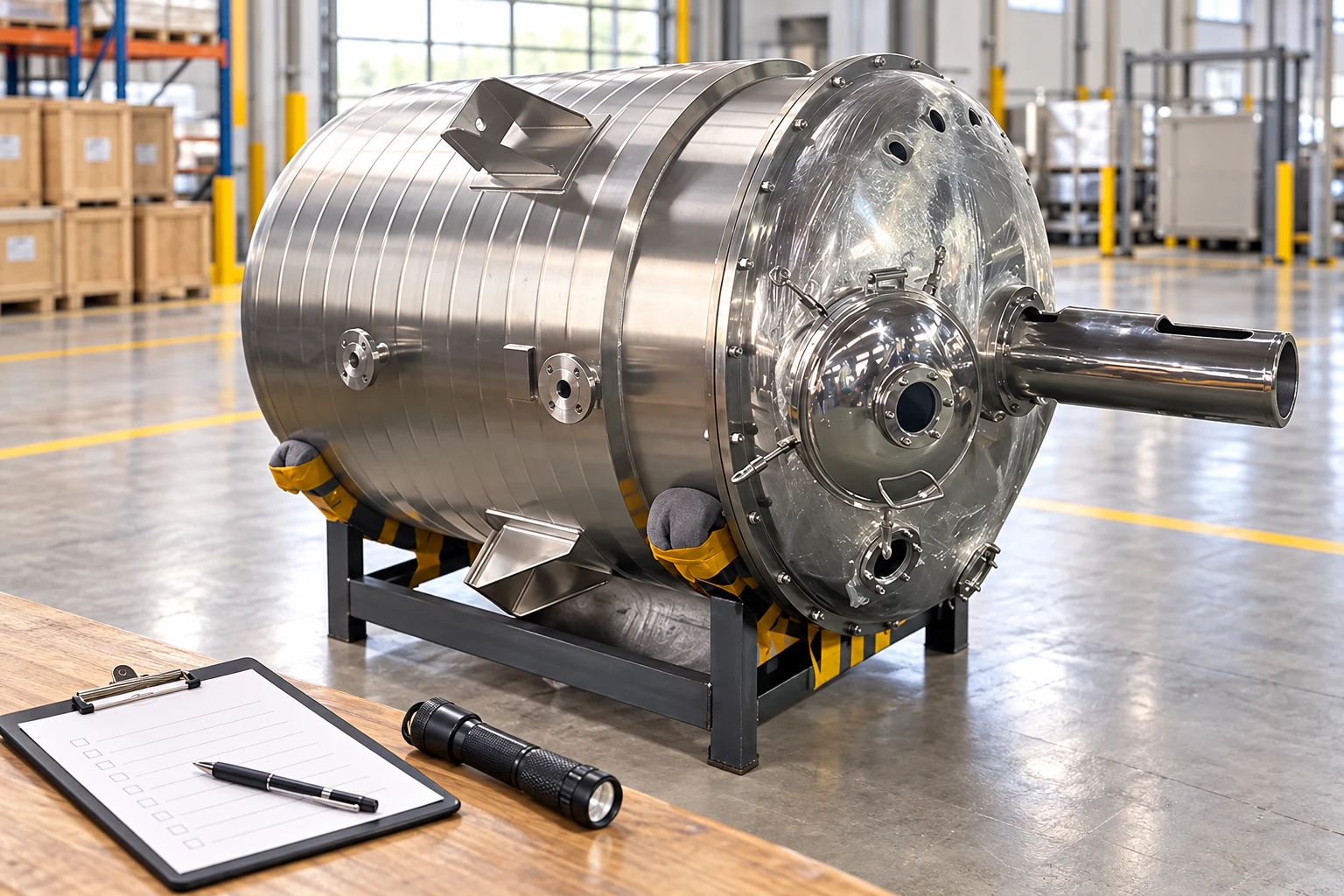
The 1000L stainless steel square storage tank publishes 304/316L options and accessory choices such as level gauges, agitators, and CIP spray balls for duties that need hygienic or cleanable inventory control. Use it when stainless is compatible; choose PE, PP, PVC, or PVDF specialists when the chemistry belongs in plastic.

If you already know the chemical name, concentration, temperature, target working volume, and pump interface, send the duty for a configuration review and keep measurement-tank requests on their own specification path.
FAQ
What does a chemical dosing tank do?
It stores liquid treatment or process chemicals and supplies metering pumps or related feed devices so a controlled dose can enter the stream.
What is the purpose of a chemical dosing system?
The system combines storage, metering, injection/mixing, and control so the chemical dose tracks flow or a measured parameter such as pH—not storage alone.
How is a chemical dosing tank different from a measurement tank?
A chemical dosing tank holds feed inventory for a pump-based dose. A measurement tank doses by a calibrated level span. See the measurement tank dosing guide for the calibrated-vessel path.
Which materials are used for chemical dosing tanks?
PE/HDPE, PP, PVC, PVDF, and stainless steel appear across the market. Choose from chemical, concentration, temperature, and duty; treat plastic shortlists as indicative until confirmed.
Do I need secondary containment under a dosing tank?
Liquid chemical feed rooms commonly require chemically resistant spill containment sized near 110% of the largest tank in operator-training guidance—confirm the rule that applies at your site.
How do I size a chemical dosing tank?
Size from dose rate, desired working days of inventory, delivery interval, freeboard, and whether the vessel is neat bulk or a diluted day tank. Small feeder pots still need temperature and pressure stated.
What integration points matter besides the tank body?
Suction geometry, venting, level alarms, calibration ports, relief/anti-siphon devices, and secondary containment decide whether the stored chemical becomes a reliable dose.
When is stainless steel appropriate instead of PE?
Use stainless when the media and cleaning chemistry are compatible and you need hygienic or cleanable construction. Prefer plastics for many chloride oxidisers and other duties that attack stainless.