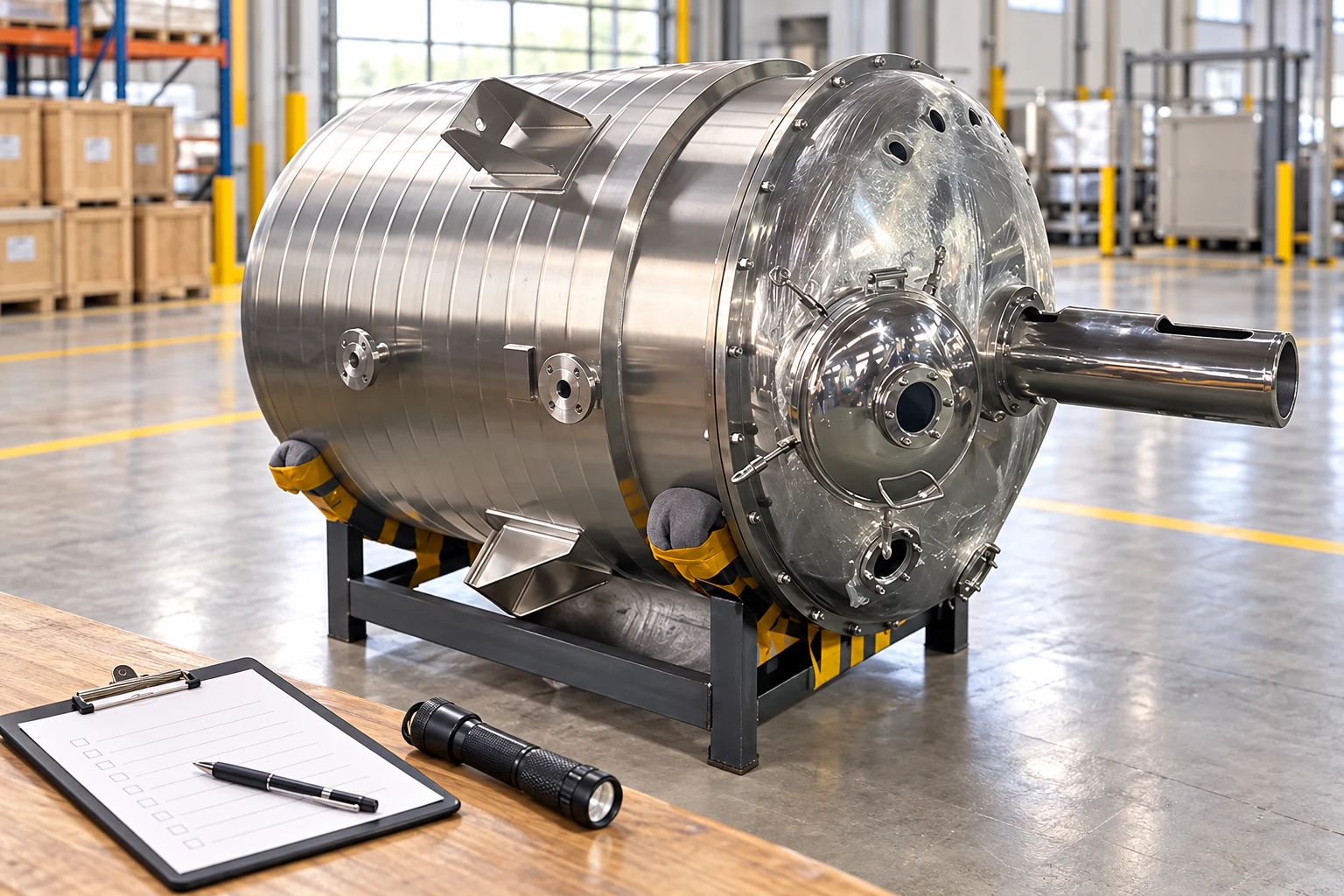
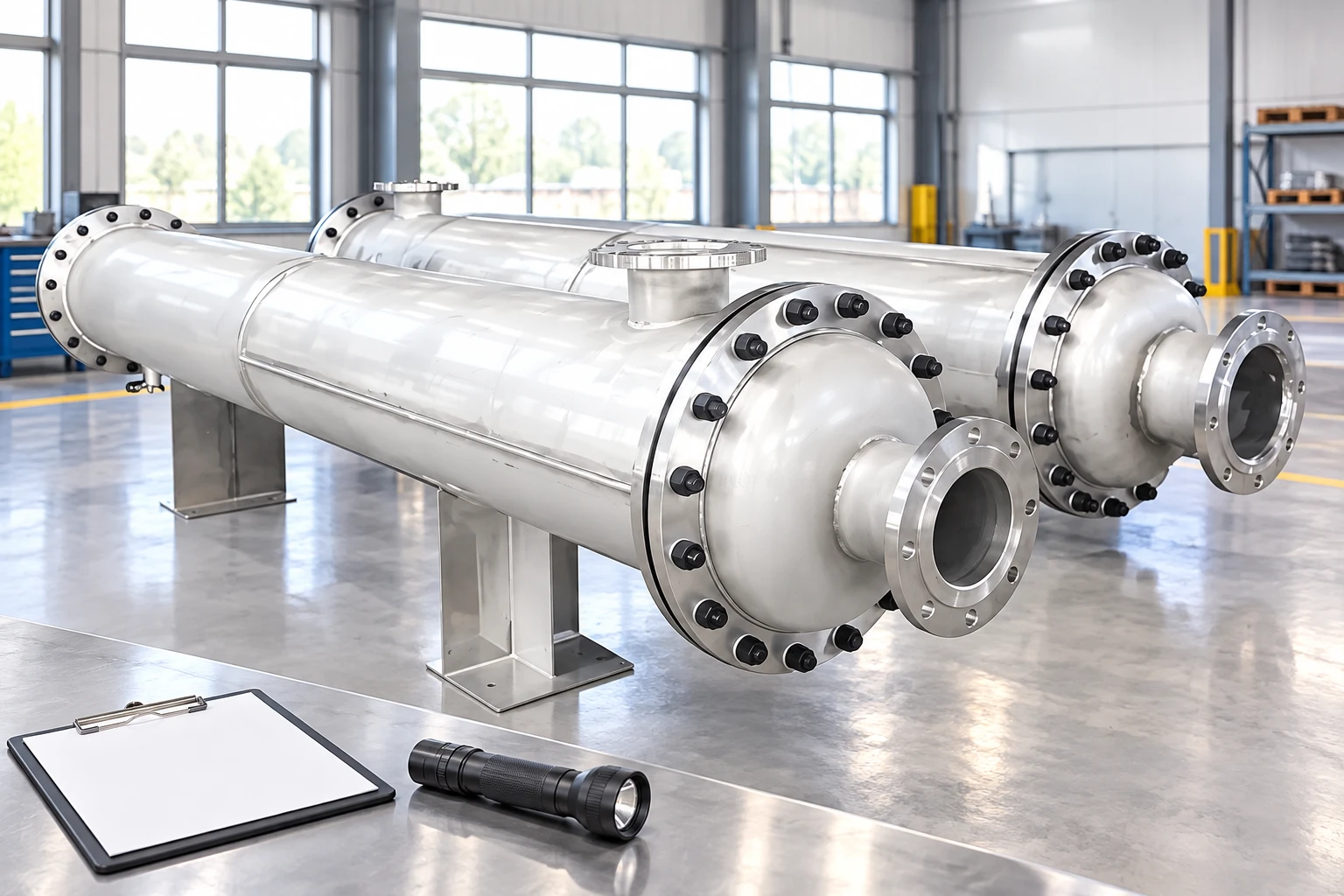
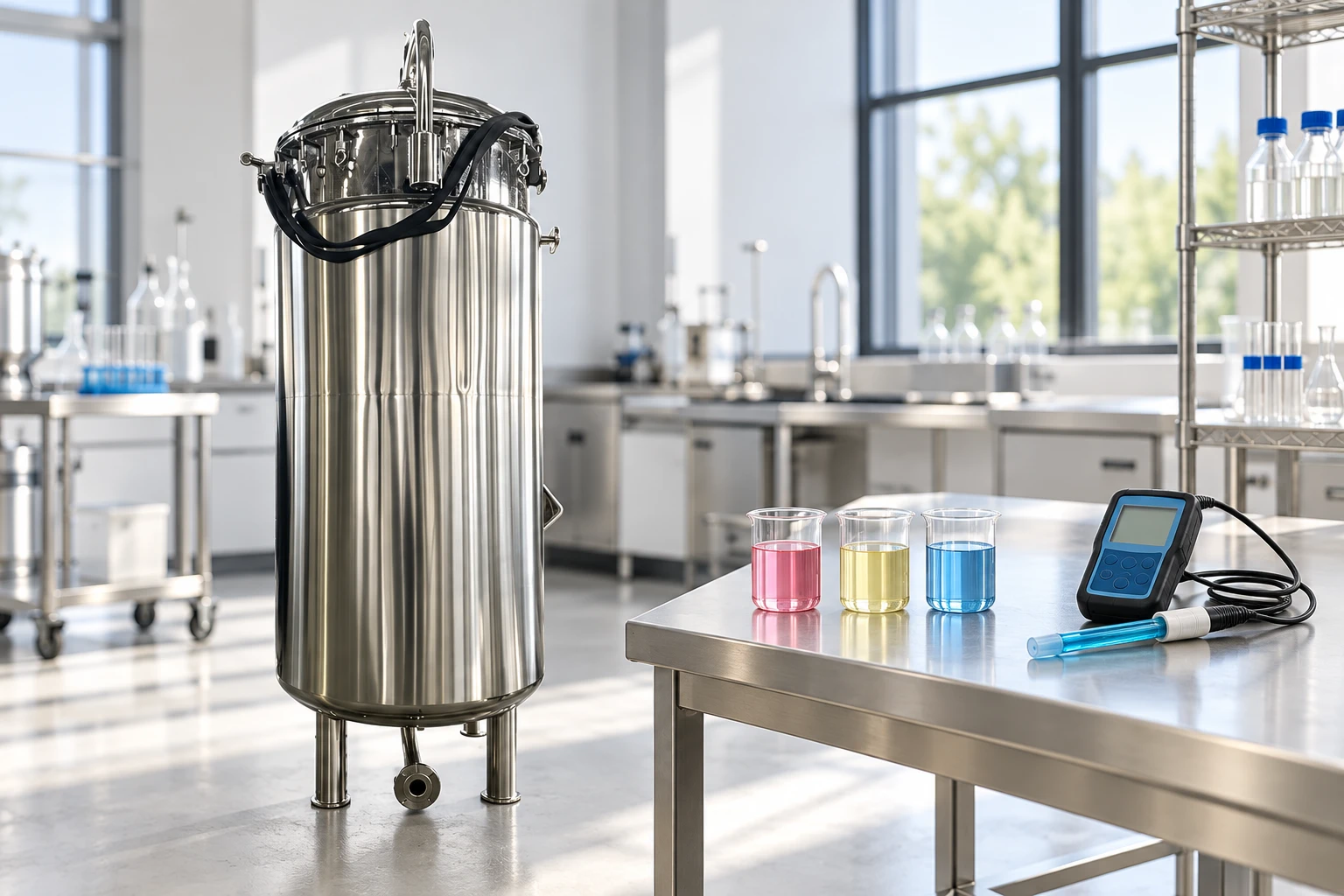
A coffee fermentation tank RFQ should describe the coffee lot and the process boundary before it names a vessel. Record the lot size, time, temperature, oxygen or gas conditions, sampling, drainage, cleaning between lots, and transfer route. Suppliers can then compare configuration assumptions without promising a cup profile.
For adjacent equipment questions, review the biological fermentation equipment range and the sake fermentation vessel article.

Part 1. Define the Coffee Lot Before Naming the Tank
“Coffee fermentation tank” can describe a vessel used for cherries, pulped coffee, mucilage, or a controlled hold before washing. Start with the lot basis, incoming condition, working range, loading pattern, hold time, discharge condition, and the process owner who approves the procedure.
The batch record should state whether the process is intended to limit oxygen, introduce a gas, or simply reduce uncontrolled exposure. That distinction changes the interface discussion. A tank label cannot substitute for an approved process description.
Part 2. Record Anaerobic Time, Temperature, and Gas Inputs
Time and temperature should be supplied by stage, with measurement method, permitted deviation, and owner. If the process uses an anaerobic or controlled-gas boundary, state the gas source, pressure or flow basis, exhaust path, relief concept, and filtration or treatment responsibility. Do not insert a universal setpoint into a procurement document.
| RFQ field | Buyer should provide | Supplier should clarify |
|---|---|---|
| Lot basis | coffee form, mass or volume range, incoming condition | working volume and loading assumptions |
| Time and temperature | approved profile, duration, measurement method | instrument and connection scope |
| Oxygen or gas | intended boundary, gas source, flow or pressure basis | inlet, exhaust, relief, and exclusions |
| Sampling | frequency, sample point, operator boundary | port arrangement and access |
| Changeover | lot sequence, cleaning method, acceptance owner | drain, access, and documentation |
Important: An airtight lid or gas connection does not prove anaerobic process performance, sanitation, or a desired cup profile. The complete process and its evidence must be reviewed by the responsible team; see SCA research resources for public context on coffee-processing research.
Part 3. Connect Material, Drainage, and Lot Changeover
Coffee solids, mucilage, and wash water make drainage and changeover practical design questions. Review product-contact conditions, residue, low points, access, weld treatment, cleaning chemistry, rinse path, and acceptance evidence together. Material grade alone cannot show whether a lot-changeover method is workable.

| Review area | Process owner defines | Supplier clarifies |
|---|---|---|
| Product contact | media, solids, exposure, and hold condition | wetted boundary and assumptions |
| Cleaning | method, chemistry, temperature, rinse and acceptance | ports, drains, access, and exclusions |
| Changeover | lot sequence and release owner | cleanability and documentation scope |
| Venting | gas and pressure responsibility | connection and relief boundary |
Part 4. Assign Sampling, Transfer, and Exhaust Interfaces
Sampling can change the gas boundary and the lot record. Identify the sample purpose, frequency, operator access, sample handling, and downstream route. Transfer should name the receiving vessel, hose or pipe path, drain destination, and responsibility split.
Useful interface questions include:
- Which gas, pressure, temperature, and sampling inputs are approved for the lot?
- Is exhaust vented, treated, or captured, and who owns that boundary?
- What must be recorded at loading, sampling, discharge, and changeover?
- Which drawings, instrument lists, cleaning notes, and exclusions accompany the quote?
The process owner retains responsibility for lot traceability and quality decisions. Equipment documentation should describe the supplied configuration, not a guaranteed flavor outcome.
Part 5. Normalize Supplier Assumptions for a Fair Quote
Use the same controlled inquiry sheet for each bidder. Normalize lot basis, working volume, gas boundary, cleaning scope, changeover time, instruments, documents, and exclusions before comparing price or lead time.
| Comparison topic | Buyer should define | Supplier should state |
|---|---|---|
| Lot and volume | mass, density assumption, working range | vessel basis and usable volume |
| Process profile | approved time, temperature, and gas boundary | instrument and connection assumptions |
| Cleaning | changeover method and acceptance evidence | access, drains, and exclusions |
| Transfer | route, receiving condition, and operator boundary | outlet and interface limits |
If one quotation assumes a full vessel while another assumes a working level, the commercial comparison is not yet equivalent. Keep open inputs visible and assign a revision owner.
Part 6. Move from Process Notes to an Equipment Discussion
Start a vertical modular fermenter discussion after the lot and process notes have an owner and revision status. The YIYI fermentation category gives equipment context; send the controlled inquiry when the project is ready for configuration review.
- Identify coffee form, lot range, loading pattern, time, temperature, and discharge condition.
- Provide oxygen or gas boundary, sampling, exhaust, utilities, cleaning, and transfer inputs.
- List changeover evidence, documents, responsible parties, and exclusions.
- Mark unresolved decisions so they are not hidden in a generic tank request.

FAQs
What is a coffee fermentation tank?
A coffee fermentation tank is a vessel considered for a defined coffee-lot processing stage. Final scope depends on lot condition, working range, time, temperature, gas boundary, cleaning, transfer, and facility requirements.
Does an airtight tank guarantee anaerobic fermentation?
No. Airtight construction is only one equipment characteristic. Gas control, measurement, relief, operating procedure, and verification determine whether the intended process boundary is achieved.
What time and temperature data should an RFQ include?
Provide the approved profile by stage, duration, measurement method, permitted deviation, utility conditions, and the person responsible for process decisions.
How should cleaning be handled between coffee lots?
State the residue, cleaning method, chemistry, rinse, drain, access, acceptance evidence, and release owner. A supplier can clarify equipment interfaces but cannot validate the facility’s changeover result from a tank label.
Can a tank supplier guarantee a cup profile?
No. A supplier can discuss vessel configuration around stated inputs. Coffee quality and cup profile depend on the complete process, raw material, controls, and evaluation programme.
What belongs in a coffee fermentation tank RFQ?
Include lot basis, working range, time, temperature, oxygen or gas boundary, sampling, exhaust, cleaning, changeover, transfer, utilities, documents, owners, and exclusions.
References
- SCA research resources — public context for coffee-processing research; project-specific claims require responsible review.