A batch mixing tank earns its keep when the full production cycle is predictable: charge, mix, discharge, and clean for the next SKU. Plants that only quote working volume and agitator speed often discover that changeover and CIP dominate available hours. Procurement therefore needs a cycle map and cleanability brief before comparing stainless vessels.
This guide focuses on cycle time, changeover cleaning, and RFQ inputs for cleanability. For capacity and materials checklists, see the industrial-grade stirrer tank RFQ guide. Dispersion and high-shear choices are covered separately in the high shear mixing tank dispersion guide.

Part 1. Define the Batch Mixing Tank Duty and Cycle Map
A batch mixing tank is a process vessel sized and agitated for discrete charges rather than continuous throughput. The procurement job is to make each charge repeatable while leaving enough calendar time for discharge and cleaning. Start by naming the products, the shared vessel, and the maximum batches per shift the plant must protect.
Write the duty as a story from empty vessel to empty vessel. Include ingredient addition order, mix holds, sampling, discharge destination, and the cleaning state required before the next recipe. That story becomes the cycle map suppliers use to comment on nozzles, agitator access, and CIP hardware.
| Cycle element | What to record | Why it matters |
|---|---|---|
| Working volume | min/max fill | Sets vessel and agitator coverage |
| Recipe count | SKUs sharing the tank | Drives changeover rigor |
| Target batches/shift | planned throughput | Exposes CIP time pressure |
| Discharge path | pump, gravity, pressure | Affects residual and rinse |
| Hygiene class | food, chemical, other | Sets finish and documentation |
Link the mixing tank product family early so bidders understand category context, then keep the RFQ focused on cycle and cleanability rather than catalog aesthetics.
Part 2. Break Cycle Time into Measurable Process Steps
Cycle time is the sum of steps the plant will actually enforce, not the agitator run time printed on a brochure. Separate charging, heating or cooling if used, mixing holds, sampling waits, discharge, and CIP or manual wash. Ask operations which steps already have timers and which are informal.
Document sticky delays: bag dump rates, solvent flush waits, foam collapse, and filter priming after discharge. Those delays often exceed mixer runtime on multi-SKU lines. When the plant needs jacketed heating context, cross-check the oil jacketed mixing tank procurement guide without expanding this RFQ into a thermal design package.
| Send with quote | Example entry |
|---|---|
| Charge sequence | solids first / liquids first / staged |
| Mix hold | duration and acceptance check |
| Discharge | pump size preference or gravity |
| Clean window | max minutes between SKUs |
| Utilities during CIP | water, steam, chemical supply notes |
Ask each bidder to state assumptions for residual volume after discharge and for rinse water volume. Residual and rinse assumptions change CIP duration more than impeller diameter usually does.
Part 3. Specify Cleanability and CIP Interfaces
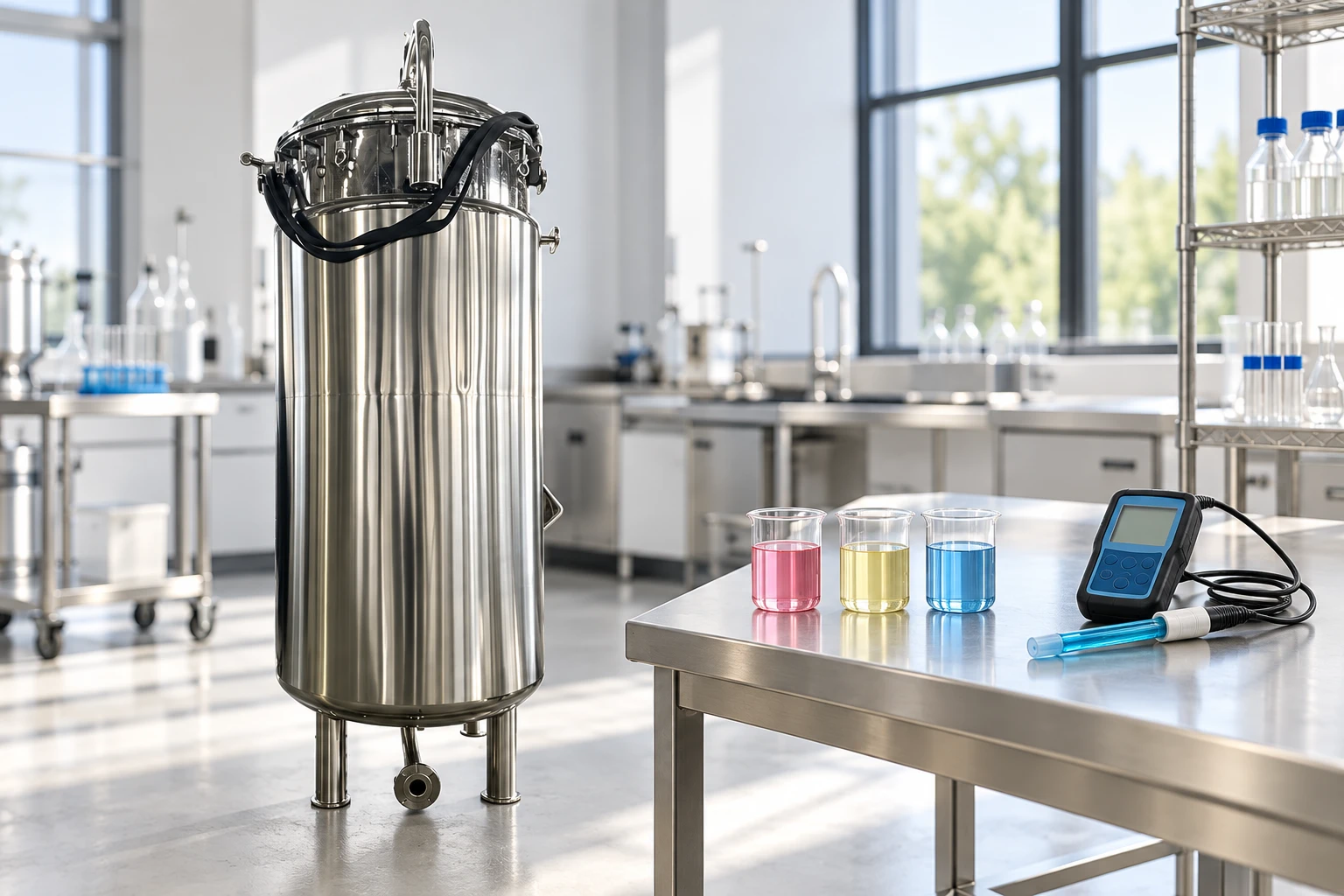
Cleanability is a design property expressed as drainability, surface finish, dead-leg control, and CIP device coverage. Volume alone does not make a vessel easy to clean after viscous or pigmented batches. Require a nozzle list for CIP supply and return, spray ball or rotary device locations, and how the agitator zone is rinsed.
State chemistry, temperature, and pressure the plant intends to use. Suppliers cannot price compatible elastomers, spray hardware, or drain valves without those inputs. If the facility validates CIP, name who owns the protocol and what documentation the vessel package must support.
Important: Food and beverage plants remain responsible for process hygiene and applicable requirements such as the FDA Food Code. Equipment cleanability features support those goals but do not replace site-specific sanitary design, cleaning validation, or regulatory review. For hygienic design framing, see also EHEDG.
| Cleanability input | Buyer note |
|---|---|
| Surface finish | product-contact Ra target if required |
| Drainability | bottom outlet slope and dead-leg limits |
| Spray devices | coverage at working and empty states |
| Seal / shaft rinse | how the agitator zone is cleaned |
| CIP return | low-point returns and sample points |
Part 4. Plan Changeover for Multi-SKU Batches
Changeover risk rises when colors, flavors, actives, or allergen classes share one vessel. Define the acceptance criteria for a clean tank: visual clear, swab target, conductivity, or validated CIP recipe. Suppliers need that bar to propose finishes, spray patterns, and optional accessories.
Sequence SKUs when possible so the hardest-to-clean product does not always force a full strip-down. Still price the worst-case clean in the RFQ so the plant is not trapped by an optimistic schedule. Record whether operators will use COP for impeller removal or must keep the agitator installed during CIP.
Residue traps to call out explicitly include manway gaskets, sample valves, sight glasses, and underside of baffles. Ask for drawings that show how those areas drain and rinse. Plants that skip this list often discover the mixer is fine while valves and instruments fail the first changeover audit.
Part 5. Align Materials, Finish, and Drainability
Material selection should follow product chemistry and cleaning chemistry together. A stainless grade that survives the formulation may still be wrong for hot caustic or chloride-bearing rinses. Provide both product and CIP media lists with temperature ranges.
Finish and weld quality affect residue release. If the plant specifies a polish or electropolish class, put it in the RFQ with the inspection method. Drainability belongs in the same package: cone angle or bottom slope, outlet size, and whether the agitator footprint creates a puddle zone.
Do not treat drainability as a piping afterthought. Horizontal runs, instrument tees, and CIP return paths can recreate dead legs even when the vessel shell drains well. Ask bidders to mark free-draining paths on the general arrangement.
Part 6. Document Controls and Batch-Record Boundaries
Controls decide whether cycle time is measurable. List instruments for level, temperature, agitator status, and CIP steps the plant wants recorded. Clarify whether the supplier provides a local panel, recipe steps, or only dry contacts to the plant PLC.
Batch records should identify start/stop of mix holds and CIP phases if the quality system requires them. State alarm and interlock expectations for manway open, seal flush failure, or CIP valve mis-sequence when those risks apply. Keep automation scope explicit so quotes remain comparable.
Operators also need safe access for inspection after CIP. Include manway height, platform needs, and hose-routing space in the layout notes. Access gaps create unofficial cycle delays that never appear on the process sheet.
After CIP, confirm how the vessel is dried or left under a protective rinse when the next charge is delayed. Idle-state rules belong in the cycle map because a wet hold can restart microbial or corrosion clocks the plant did not price into changeover time.
Part 7. Select Configuration Context and Send the RFQ
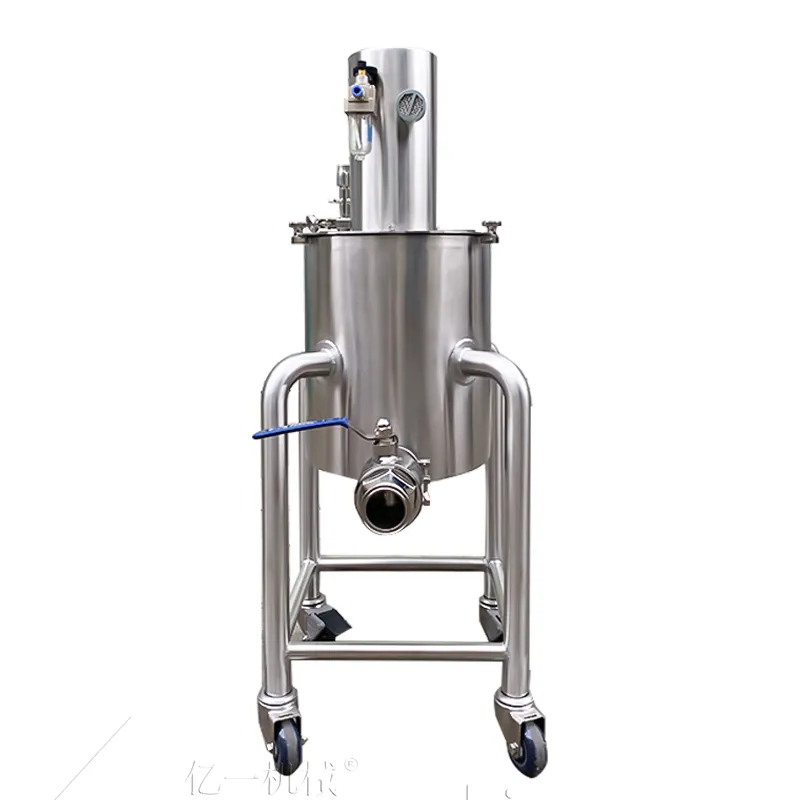
Review the mixing tank product family for category options, then use a published pneumatic mixing tank configuration as a discussion reference after the cycle and CIP brief is complete. Published pages do not replace a plant-specific cleanability review or certify CIP results.
Ask each bidder for general arrangement drawings, nozzle schedule, materials and finish, agitator scope, CIP device list, drain plan, controls boundary, and exclusions. When the cycle map is ready, contact YIYI with batch sizes, SKU changeover rules, and CIP chemistry for engineering review.

FAQs
What is a batch mixing tank in plant procurement terms?
It is a discrete-charge mixing vessel quoted for a defined working volume, agitation duty, and the charge-mix-discharge-clean cycle the plant will run, including changeover cleaning expectations.
Which steps usually dominate batch cycle time?
Discharge residuals and CIP or wash steps often dominate on multi-SKU lines, especially after viscous or pigmented products. Mixer run time is only one part of the calendar cycle.
What cleanability details belong in a batch mixing tank RFQ?
Include surface finish targets, drain points, spray coverage, seal/shaft rinse approach, CIP supply and return connections, chemistry and temperature limits, and who owns cleaning validation.
How does CIP planning affect changeover between SKUs?
CIP duration and acceptance criteria set how many SKUs can share a vessel without becoming a bottleneck. Incomplete CIP interfaces in the RFQ usually create schedule risk after installation.
Should drainability be specified before quoting agitator options?
Yes. Agitator geometry and baffles can create rinse shadows or puddles. Drainability and spray coverage should be reviewed with the agitator layout, not after the PO.
Can one RFQ cover both mixing performance and CIP hardware?
Yes, and that is preferred for comparable bids. Separate mixing performance targets from CIP hardware and acceptance criteria so each bidder prices the same boundaries.