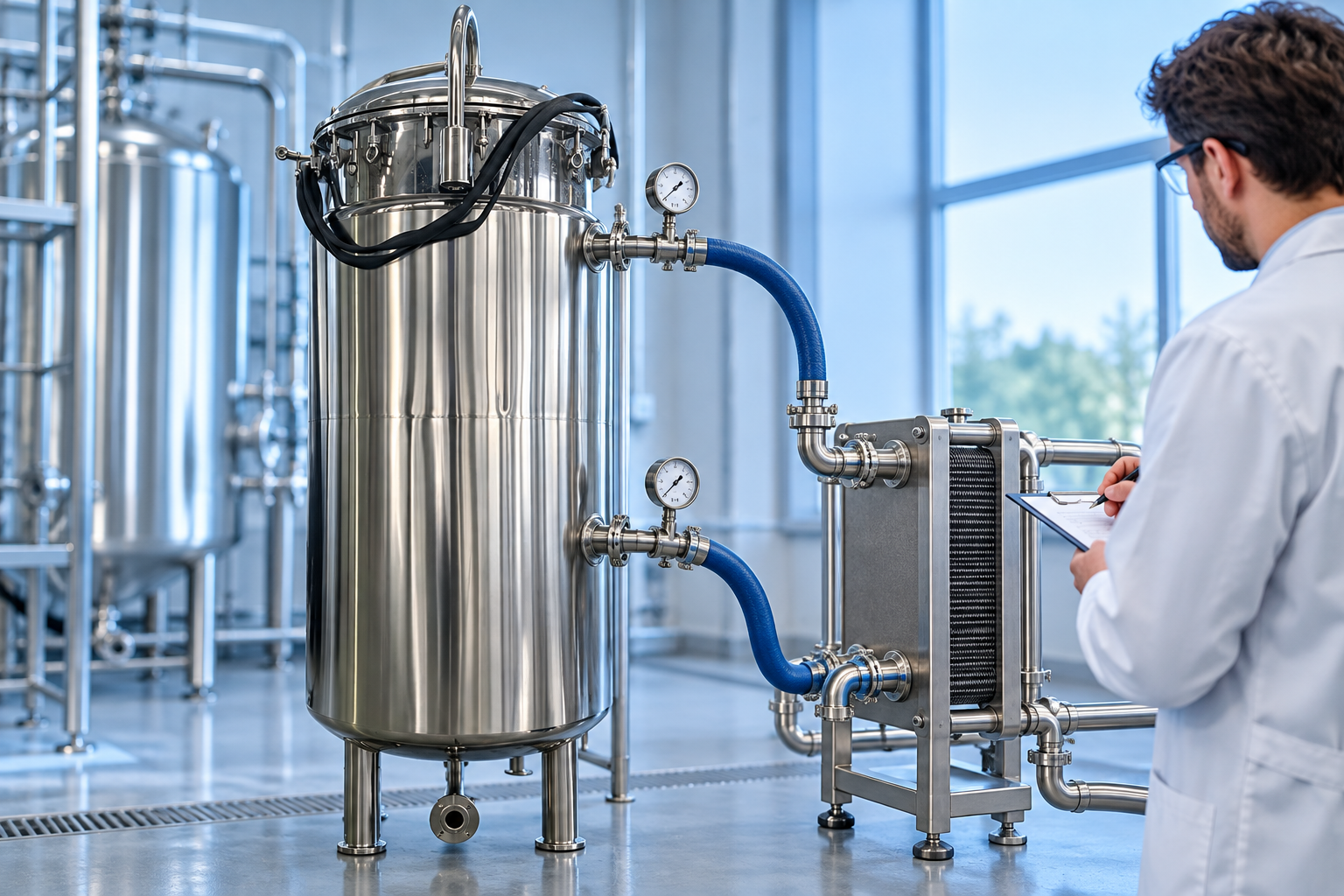
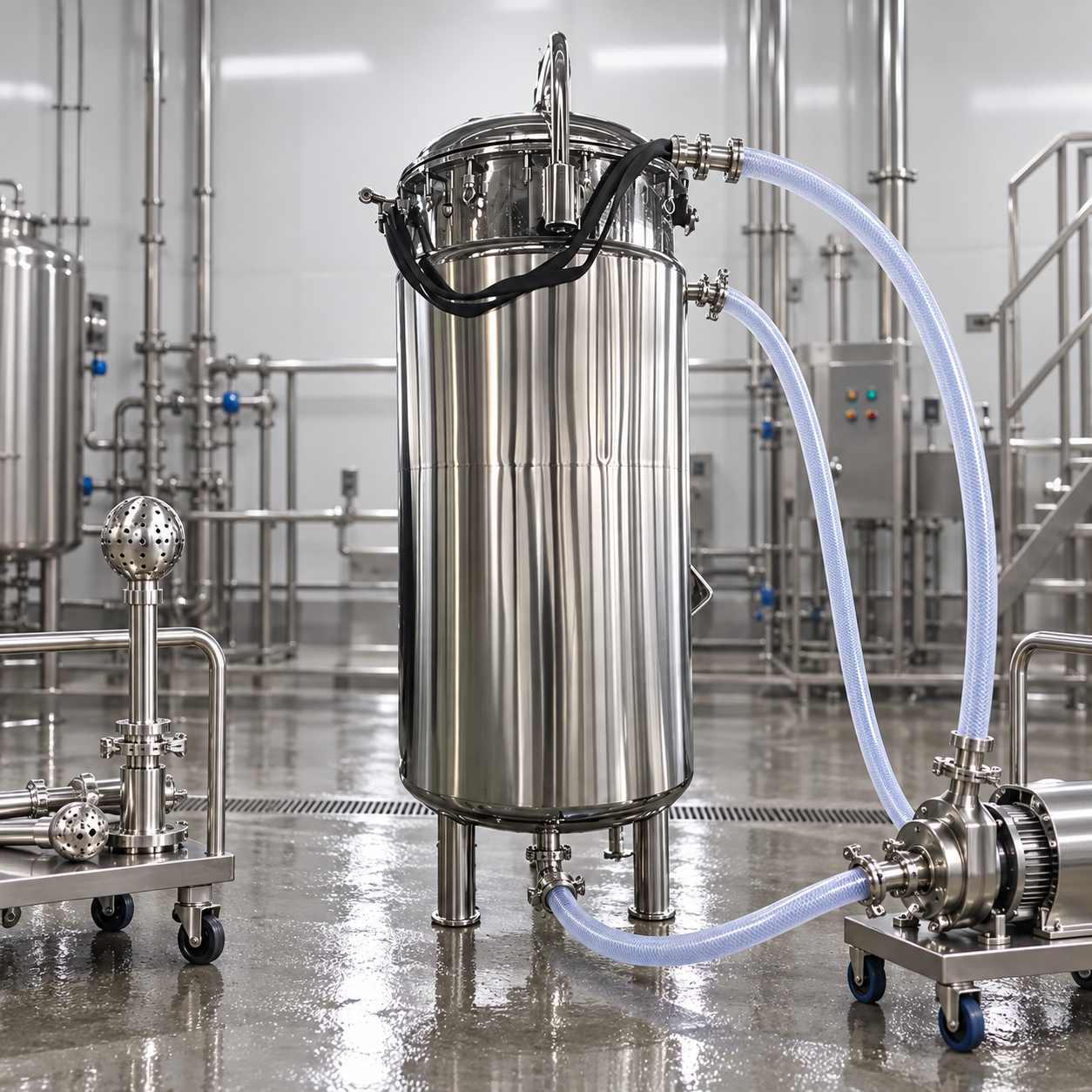
A brewery fermenter plan is a calendar before it is a purchase order. The right starting point is not “How large is the brewery?” but “What volume enters each tank, how long is it occupied, and what must happen before the next transfer?”
That framing works for both craft and industrial breweries. Their vessel mixes may differ, yet each needs the same visible inputs: working fill, occupancy, cleaning and release time, packaging interface, utility concurrency, layout, and room to change the production plan.
Part 1. Start With the Brewery Operating Pattern
Begin with the volume delivered from the brewhouse at each transfer. Record the typical and largest transfer, the number of turns possible on a brew day, the number of brew days, and the beer families that need cellar space. The MG Newell brewer sizing paper makes the central point: batch volume and beer variety both affect system sizing.
Then define what “capacity” means in the project. Annual sales targets, brewhouse nameplate size, cellar working volume, and packaging availability are different measures. A brewery fermenter portfolio must fit the production schedule that the brewery can actually run, not just a headline capacity figure.
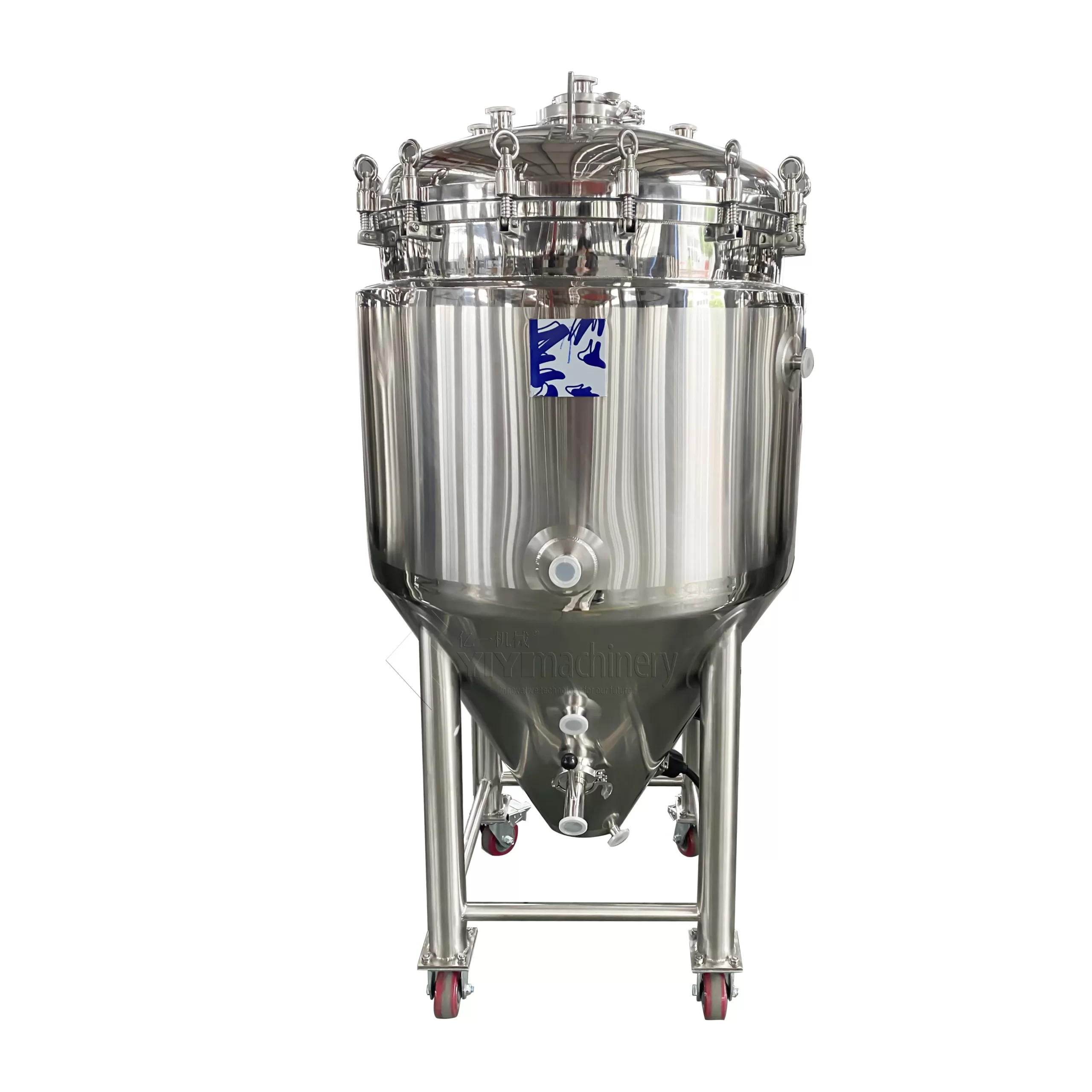
Keep the vessel-selection question separate from the capacity calculation. The conical fermenter selection guide addresses configuration choices; this guide helps convert a planned operating pattern into a sizing brief.
| Operating input | What to record | Why it matters |
|---|---|---|
| Brewhouse transfer | normal and largest transfer volume | Sets the batch unit |
| Brew pattern | turns per day and brew days | Defines arrivals to the cellar |
| Product mix | beer families and planned share | Changes occupancy assumptions |
| Packaging interface | available transfer and packaging windows | Shows downstream constraints |
| Expansion horizon | planned changes to batch or product mix | Prevents a short-lived layout |
Part 2. Define Usable Fermenter Capacity
Nominal vessel volume is not automatically usable production volume. State the intended working fill and the headspace the brewery needs, then use that working capacity consistently across the planning model. The same tank can look adequate or inadequate depending on which of those figures is used.
Match the transfer to the vessel deliberately. A brewery may choose one batch per vessel, multiple brewhouse turns into a vessel, or split a transfer among several tanks. Each approach changes cleaning sequencing, staffing, control needs, and the vessel mix. Make the chosen route visible in the RFQ.
Do not translate usable capacity into a promised output. Fermentation duration, product availability, quality holds, maintenance, package changeovers, and operating decisions influence results. A supplier can assist with configuration inputs, but the brewery owns the production model and its assumptions.
Part 3. Turn the Production Calendar Into Tank Occupancy
Create a line for every planned batch and mark when it enters a tank, when it remains unavailable for the brewery’s process, when it transfers out, and when it is released after cleaning. This produces an occupancy calendar instead of relying on a generic cycle-time number.
The largest number of concurrent occupied tanks is a useful planning check. It connects the batch calendar to working fermenter capacity and highlights clashes with cleaning, transfers, or packaging. Run more than one scenario if the brewery expects seasonal products, contract batches, or a changing product mix.
The goal is not to force every recipe into one assumption. The MG Newell paper uses fermentation-cycle examples to show how required volume follows capacity and cycle planning. Use the brewery’s own verified residency data or planning assumptions for the actual model.
| Calendar event | Input to capture | Capacity implication |
|---|---|---|
| Transfer in | date, volume, vessel assignment | Starts tank occupancy |
| Process hold | brewery-defined occupancy window | Holds working capacity |
| Transfer out | destination and window | Links to packaging or downstream tanks |
| CIP and release | cleaning route and release condition | Delays next available fill |
| Contingency | maintenance or schedule allowance | Tests resilience of the plan |
Part 4. Choose a Standardized or Flexible Vessel Mix
Standardized vessels can simplify transfer planning, spare parts, controls, and operator routines. A flexible mix can better accommodate trial batches, seasonal products, or uneven demand. Neither approach is automatically right for a craft or industrial brewery; the deciding evidence is the batch calendar and product mix.
Ask which transfers must fit a single vessel, which can be combined, and which need to remain separate. Also record whether one vessel must be available for a nonroutine batch or for a schedule change. These questions often matter more than a scale label.
Keep future changes explicit. If the brewery expects a larger brewhouse, more turns, new package formats, or a new beer family, identify the condition and timing. A layout can reserve connection and floor space without claiming that any specific output will be achieved.
Part 5. Include Cleaning and Downstream Interfaces
Cleaning time is part of tank occupancy. The MBAA CIP presentation defines CIP as cleaning equipment without major disassembly and explains that programs depend on variables such as time, temperature, chemistry, and mechanical action. Use the brewery’s validated or planned program to define when a vessel is released for the next batch.
List the physical cleaning interfaces too: supply, return, spray arrangement, drain path, and any connected valves or sampling points that belong in the route. The vessel count should reflect real availability, not assume a tank is empty and ready the moment beer transfers out.
Packaging and downstream capacity can create the same constraint. Record the planned transfer destination, available transfer window, whether a bright tank or packaging line creates a wait, and who owns the connecting scope. That review prevents the fermenter plan from being isolated from the rest of the cellar.
Part 6. Check Utilities, Layout, and Expansion
Map simultaneous utility demand, not only total installed vessel volume. Identify how many tanks may request cooling at the same time, the intended utility boundary, control-system ownership, and whether future vessel locations need header allowance. These are interface inputs; they do not establish a cooling rating for a particular tank.
Check the physical route early. Record ceiling height, door openings, floor and support information where available, clearance for access and service, location of headers and drains, and the delivery path. A technically suitable vessel can still be impractical if installation constraints are ignored.
Specify what documents the supplier should return: general arrangement, connection schedule, utility-interface summary, instrument list, and vessel drawings. This makes scope comparisons possible before an order is released.
Part 7. Compare Configurations and Prepare the RFQ
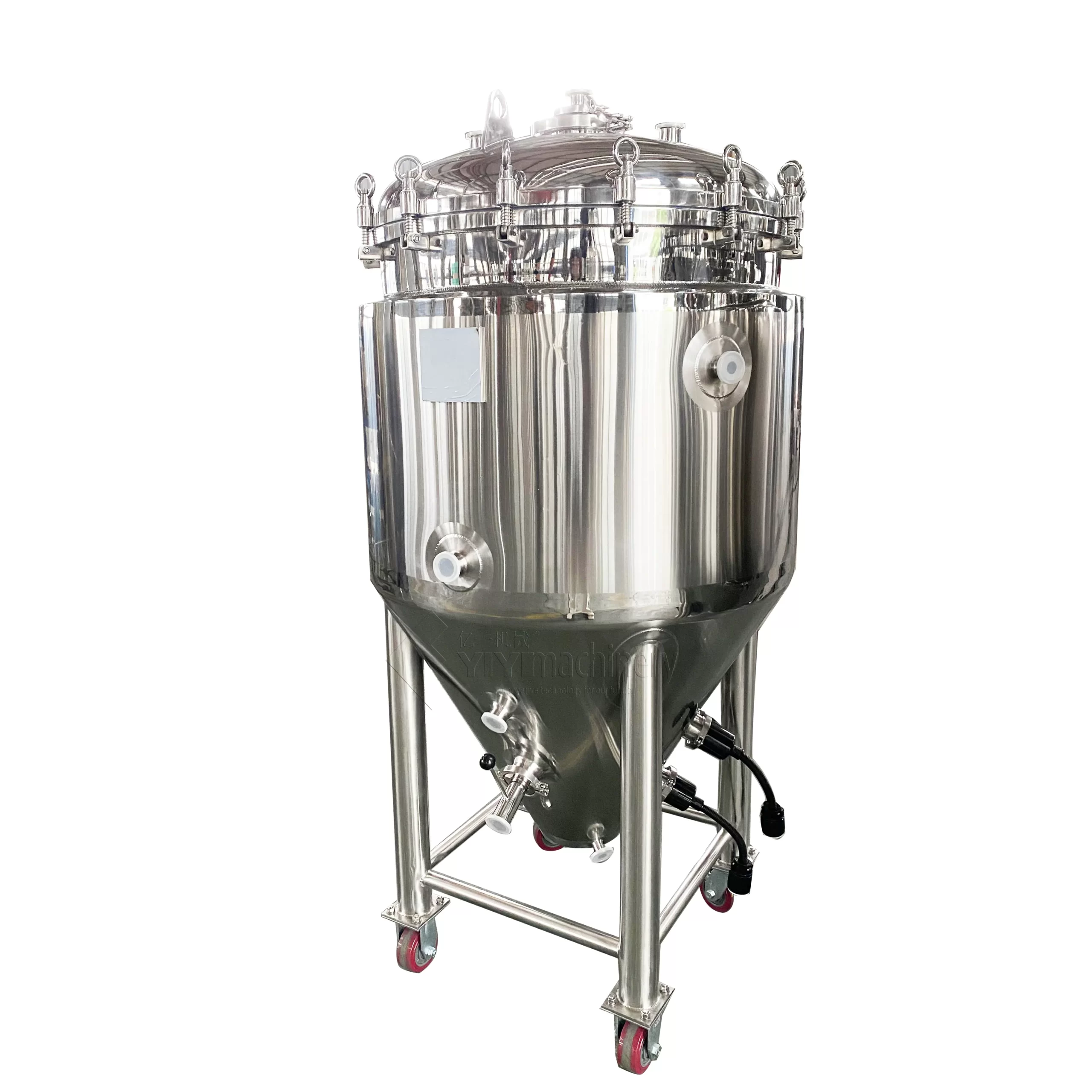
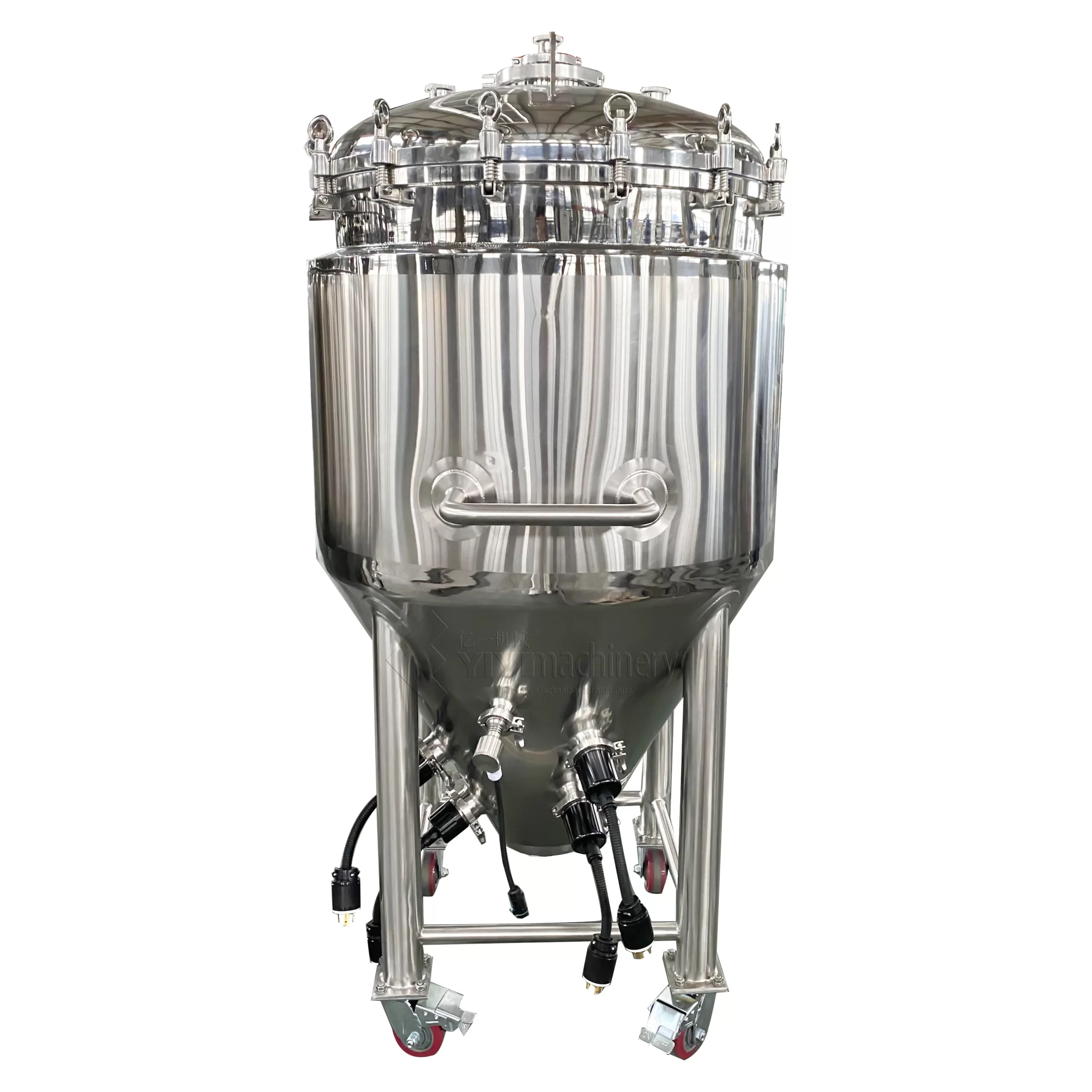
Published fermentation tank configurations can start a discussion, while the biological fermentation tank range provides product-family context. Neither page selects a tank count, predicts throughput, establishes a cooling rating, or certifies a brewery application.
Send each bidder the same sizing brief: transfer pattern, working fill, occupancy calendar, cleaning release, downstream interface, preferred vessel mix, utility concurrency, layout constraints, expansion scenario, and required documents. Ask bidders to list assumptions and exclusions beside their proposal.
Once the capacity plan is documented, share the brewery capacity plan for a configuration discussion. The next review should include brewery operations, utilities, controls, and safety stakeholders so the tank scope matches the operating model.
FAQs
What is a brewery fermenter?
A brewery fermenter is a vessel used in the brewery’s fermentation process. For sizing, treat it as working capacity within a larger schedule that also includes transfers, cleaning, release, and downstream availability.
How do I size a brewery fermenter?
Start with the brewhouse transfer volume, intended working fill, required headspace, and the way batches are assigned to vessels. Then test those choices against the occupancy calendar.
How many brewery fermenters are needed?
The number follows the greatest concurrent need shown by the brewery’s occupancy plan, plus any deliberate contingency. It should not be inferred from a brewery label or a generic output claim.
Should every brewery fermenter be the same size?
Not necessarily. Standard sizes can simplify operations, while a mixed portfolio can support different transfer patterns or product needs. Select the mix from the documented batch and calendar requirements.
Does cleaning time affect fermenter sizing?
Yes. A tank is not available for its next transfer until the brewery’s cleaning and release steps are complete. Include that window in the occupancy plan and CIP interface review.
How do packaging limits affect fermenter capacity?
If beer cannot transfer to its next destination when planned, it continues to occupy the fermenter. Include transfer destinations and packaging windows in the cellar calendar.
Can craft and industrial breweries use the same sizing method?
Yes. Both can model transfer volume, working fill, occupancy, cleaning, and downstream limits. Their schedules and vessel mixes may differ, so the resulting configuration should be project-specific.
What should a brewery fermenter RFQ include?
Include transfer volumes, working fill, product mix, occupancy calendar, cleaning release, downstream interfaces, vessel-mix preference, utilities, layout, expansion assumptions, and required drawings.