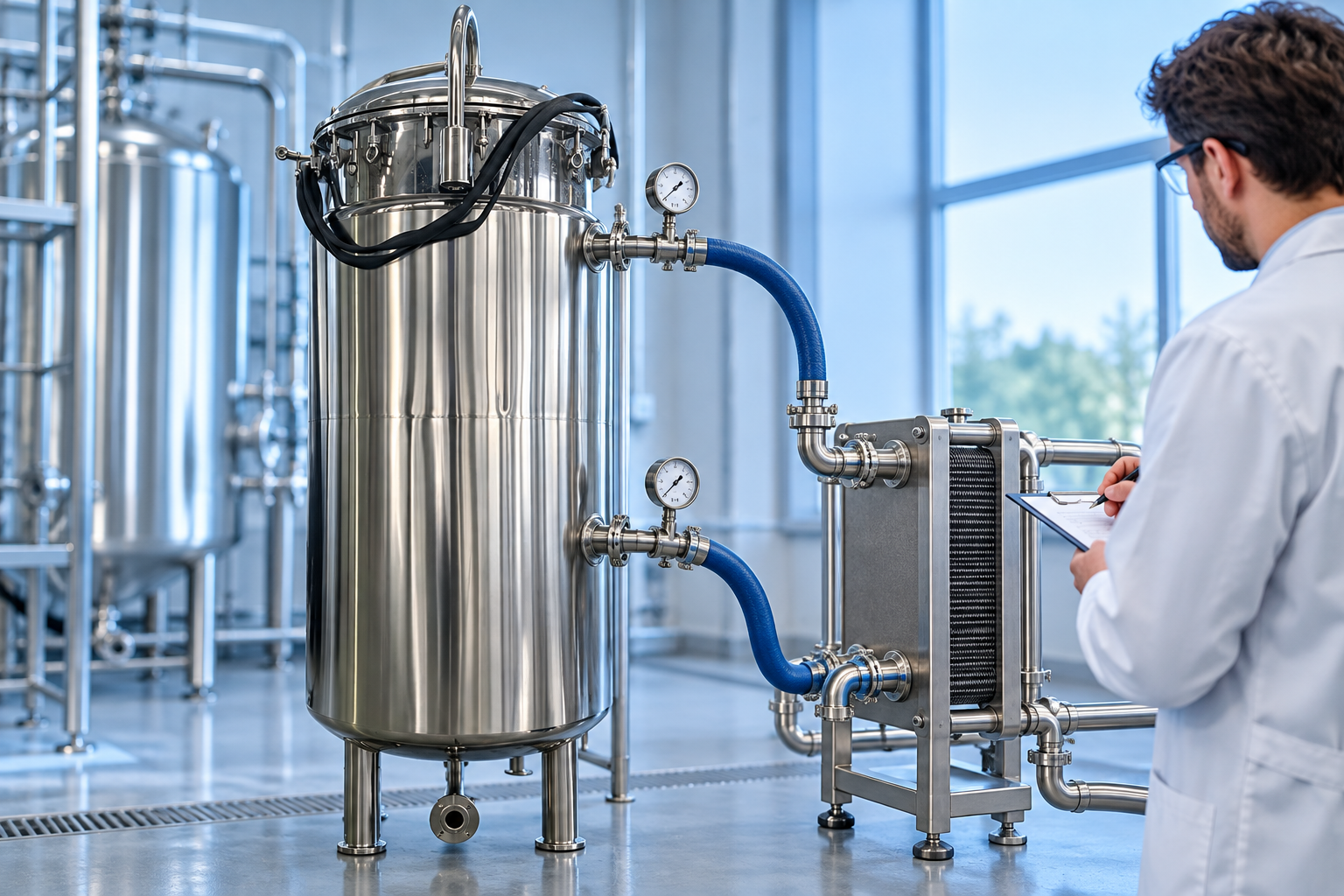
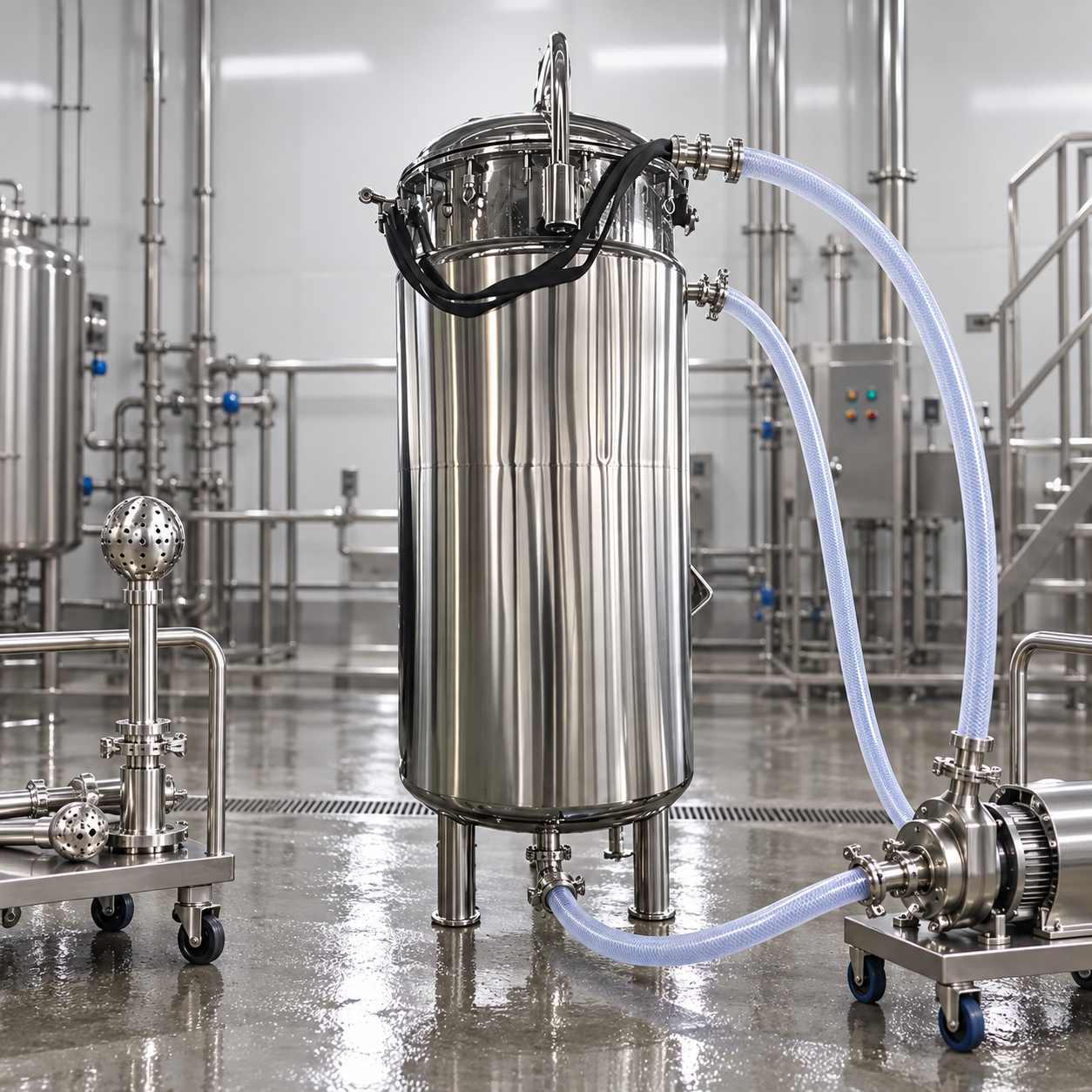
A beer fermentation tank is not selected by a headline volume alone. It has to receive a real wort transfer, leave enough process headspace, follow the brewery’s tank-occupancy calendar, and connect to cooling and cleaning systems that can be checked before purchase.
The most useful RFQ turns assumptions into inputs. Record the working fill, transfer temperature, peak cooling case, utility conditions, cleaning route, controls, and access constraints. That lets bidders identify gaps instead of silently pricing different duties.
Part 1. Define the Beer Fermentation Duty
Start with the liquid entering the vessel. Record the wort transfer volume, transfer temperature, gravity range if relevant to the project, expected fill level, and whether the vessel serves a single recipe family or changing production. A beer fermentation tank has to fit this duty before details such as exterior finish or accessory lists are compared.
Next, map the occupancy calendar. State the expected fermentation, conditioning, transfer, and cleaning windows as the brewery defines them. That calendar is more useful than a generic turnover promise because it shows when tanks are full, when they are available for cleaning, and when a new batch needs space.
Vessel shape is a related but different decision. The conical fermenter selection guide can help frame configuration choices; this guide concentrates on the inputs needed to quote the fermentation duty and interfaces.
| Duty input | What to record | Why it matters |
|---|---|---|
| Incoming wort | volume and transfer condition | Establishes the fill event |
| Working fill | planned operating volume | Separates usable capacity from nominal size |
| Headspace | required free volume | Must suit the brewery’s process plan |
| Occupancy | planned tank calendar | Connects vessel count to scheduling |
| Product routing | transfer, conditioning, packaging path | Defines connections and controls |
Part 2. Separate Nominal Volume From Working Capacity
Ask suppliers to identify nominal vessel volume and the intended working fill separately. A nameplate capacity without the planned operating level does not show how much batch volume the brewery can place in the tank or what free space is retained for its process.
Build the requested capacity around the brewhouse transfer pattern. One larger transfer, several turns in one day, or staggered batches can all lead to different vessel counts even when the annual plan sounds similar. Include the highest routine fill, the expected number of concurrent tanks, and the allowance the brewery wants for cleaning or schedule changes.
Avoid treating a tank’s size as a production guarantee. Fermentation duration, recipe, yeast management, cellar practices, packaging availability, and downtime all affect the calendar. The RFQ should request a vessel configuration, while the brewery retains responsibility for its production plan.
Part 3. Describe Cooling as an Interface
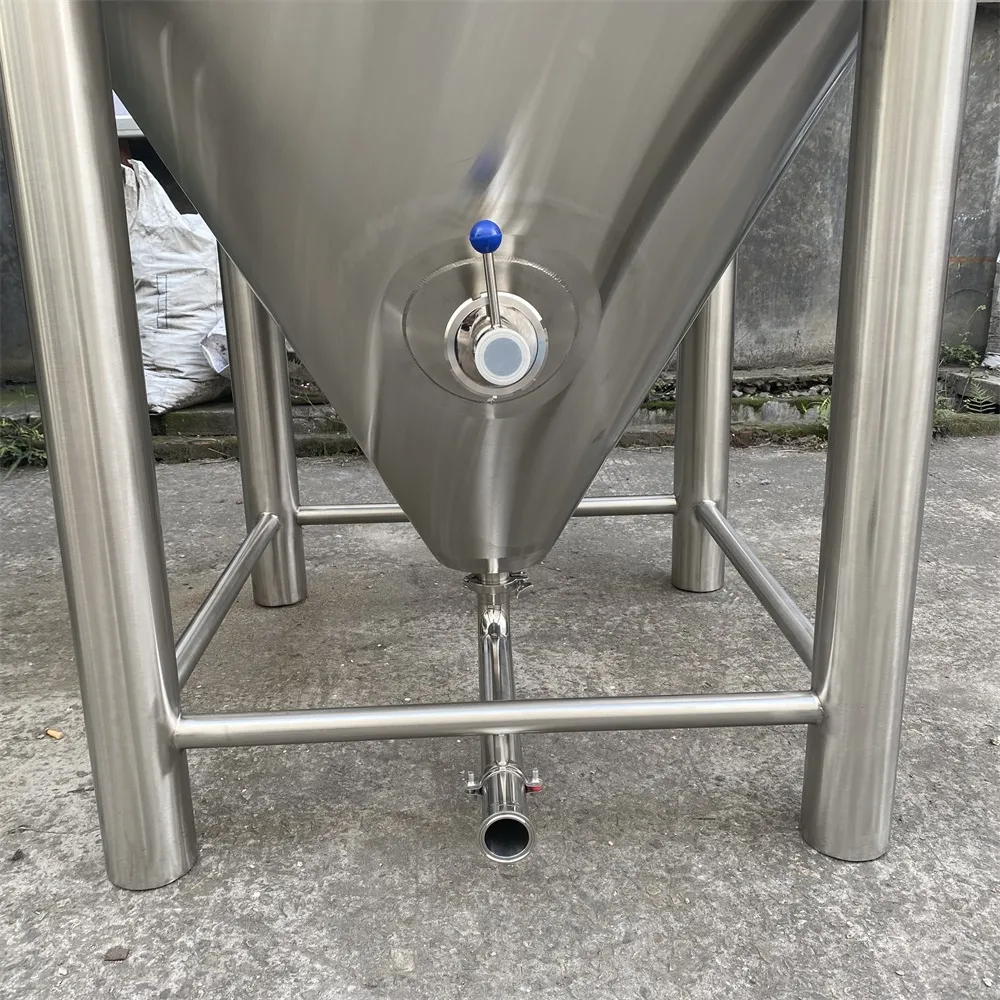
Fermentation releases heat, so the cooling conversation must begin with a defined case. Provide the wort volume, transfer condition, target temperature profile, expected peak heat-removal period, and whether the same utility serves other vessels at the same time. This gives the project team an engineering basis instead of an implied cooling rating.
Describe the utility loop at its boundary. Identify the intended medium, supply and return conditions, available flow or pressure information, header layout, insulation expectations, and the party responsible for the chiller and field piping. A tank supplier cannot responsibly infer those conditions from capacity alone.
Specify control ownership too. Individual temperature sensing, valve actuation, local indication, and signals to the brewery control system should appear in the scope table. The selected sensor location, control logic, and alarm limits remain project decisions.
| Cooling RFQ item | Buyer input | Supplier response to request |
|---|---|---|
| Peak case | batch and timing scenario | stated design assumptions |
| Utility boundary | medium and supply/return conditions | connection and interface proposal |
| Jacket arrangement | zones required by the duty | proposed configuration |
| Controls | sensor, valve, and signal scope | instrument and control list |
| Simultaneous demand | tanks calling for cooling together | exclusions and utility assumptions |
Part 4. Make CIP Inputs Checkable
Clean-in-place means cleaning equipment interiors without major disassembly. The MBAA CIP presentation describes how cleaning depends on time, temperature, chemistry, and mechanical action. Those variables belong to the brewery’s validated program; a vessel RFQ should make the physical route and evidence requirements clear.
List the CIP supply and return connections, the intended spray-device arrangement, the required drain point, and any cleaning of connected valves or sample points. Ask bidders to show the wetted layout and state how the design avoids uncleanable pockets. Do not replace this review with a generic “CIP ready” claim.
The cleaning system also has safety implications. The Brewers Association resource on safe CIP practices notes chemical, temperature, and pressure hazards. Confirm component suitability with the actual chemistry and operating conditions chosen by the brewery.
Part 5. List Sanitary Fittings and Process Access
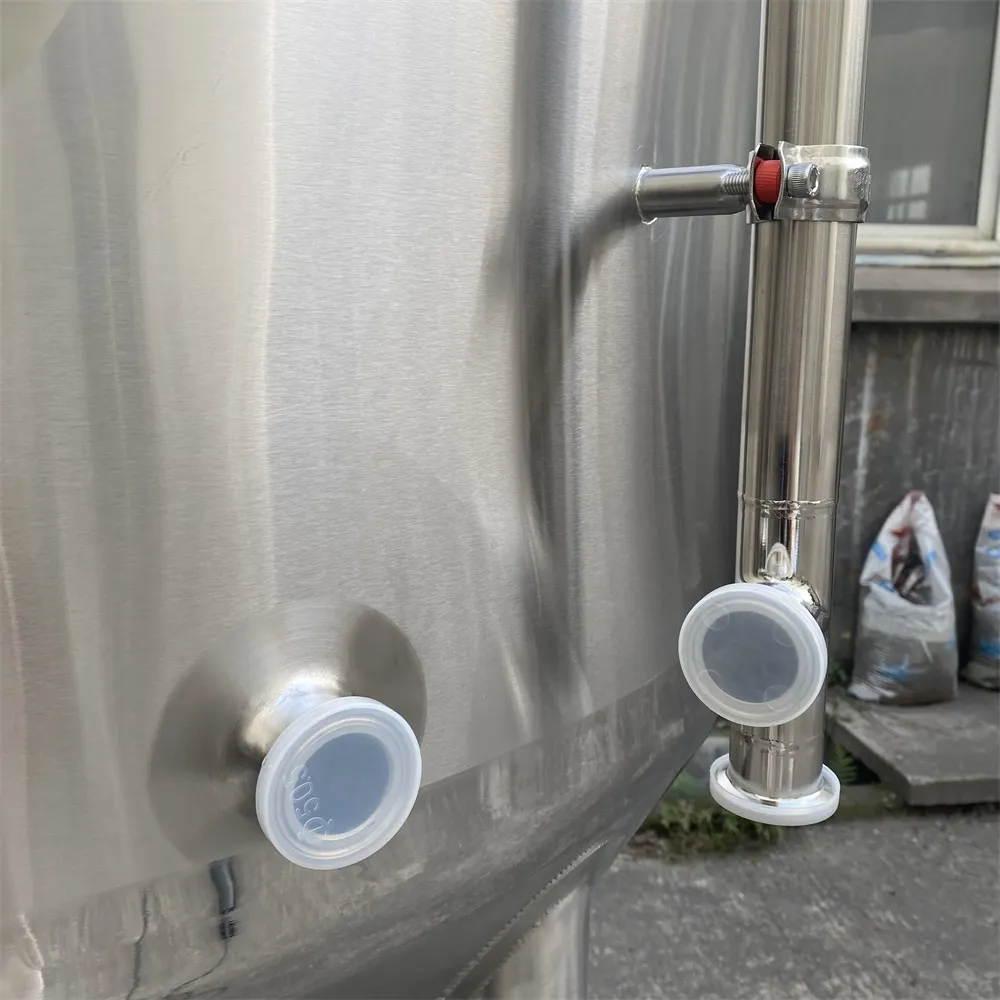
Create a connection schedule before comparing quotations. Typical entries include product inlet and outlet, CIP supply and return, vent or gas interface, pressure and temperature connections, sampling, relief provisions as required by the project, and the manway or service opening. Name the connection standard used at the facility rather than leaving “sanitary fitting” undefined.
Drainability deserves its own line item. Define the required drain point and ask how low points, valve bodies, and attached instruments are handled. If a sample valve, carbonation point, or transfer branch is part of the cleaning route, put it on the drawing review list.
Material, finish, gasket, and weld-documentation requests should be written against the brewery’s product, cleaning chemicals, and applicable requirements. The biological fermentation tank range provides product-family context, not a substitute for that project review.
Part 6. Plan Controls, Installation, and Service
Decide what must be visible at the vessel and what must report to the brewery system. Temperature, level, valve position, and alarm signals are common topics, but the exact instrument family and interlocks should follow the brewery’s controls philosophy. Record power, control-panel, and cable-routing boundaries as well.
Physical access changes the practical configuration. Include ceiling height, floor loading information when available, door and route limitations, clearance for a manway or top-mounted equipment, washdown exposure, and access to utility headers. State whether the vessel arrives as a standalone item or interfaces with site-installed piping and controls.
Plan the review sequence before issuing a purchase order: general arrangement, connection schedule, wetted-part drawing, utility interface, control list, and cleaning-route review. These documents reveal omissions much earlier than commissioning.
Part 7. Compare Configurations and Issue the RFQ
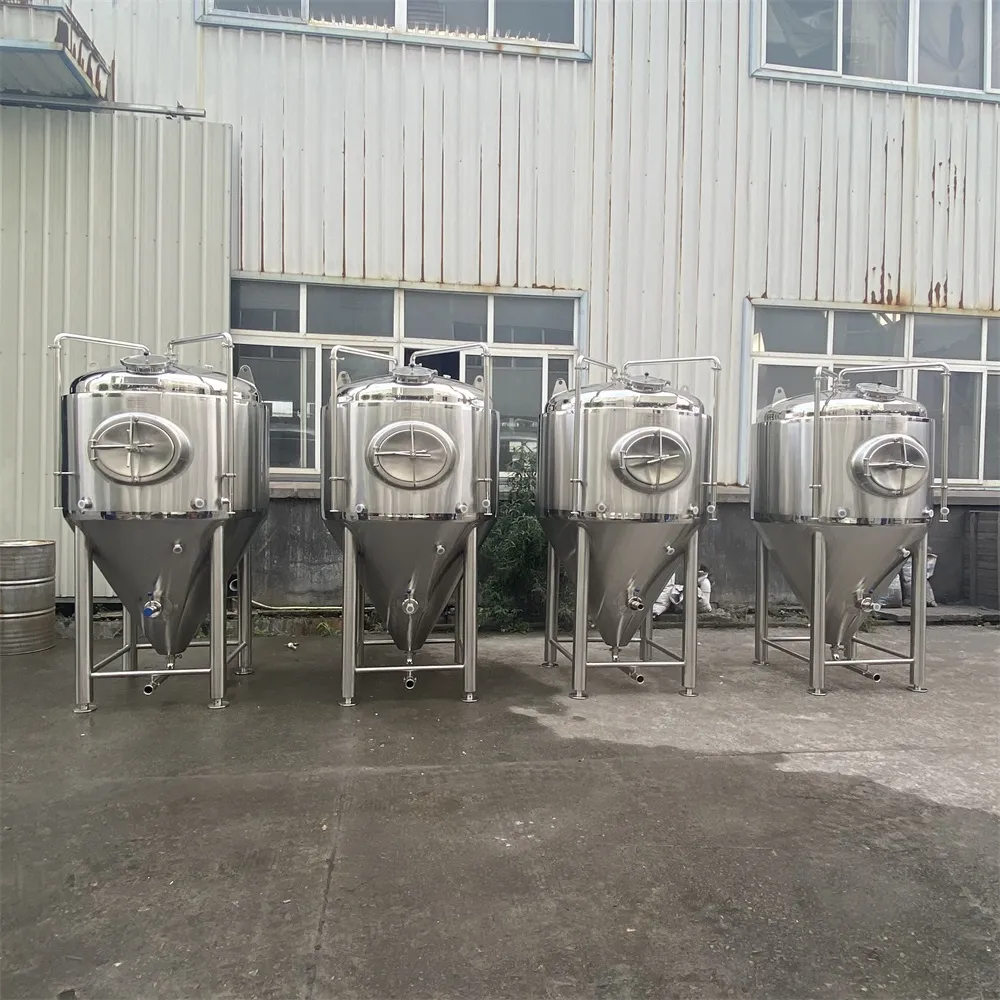
Use a published fermentation tank configuration as a starting point for discussion, then compare proposals against the same written duty. Published pages are configuration context only; they do not guarantee brewing output, certify a particular application, validate CIP, or establish cooling capacity.
Issue one RFQ package to every bidder. Include the working fill, occupancy calendar, cooling case, utility boundary, controls, CIP route, connection schedule, product-contact requirements, installation data, and requested drawings. Ask each bidder to list assumptions, exclusions, and interfaces owned by others.
When the inputs are complete, send the fermentation duty for a configuration discussion. The useful outcome is a transparent scope that the brewery can review with its process, utility, and safety stakeholders.
FAQs
What is a beer fermentation tank?
It is a closed vessel used to hold beer during the brewery’s fermentation process. For procurement, define the incoming wort, working fill, schedule, cooling interface, cleaning route, and connection requirements rather than relying on the tank name alone.
How should I state beer fermentation tank capacity?
State nominal vessel volume, intended working fill, required headspace, and the largest routine transfer. Add the production calendar and the number of tanks expected to be occupied at the same time.
What cooling details belong in the RFQ?
Provide the peak cooling scenario, transfer conditions, target process profile, utility medium, supply and return conditions, simultaneous demand, and control-interface expectations. The project team should review the resulting assumptions before any cooling performance is accepted.
Does a beer fermentation tank need CIP connections?
Closed brewery vessels commonly use a CIP route, so list the supply, return, spray-device, drain, and attached-component cleaning expectations. The brewery must still define and validate its own cleaning program.
How is a CIP spray device specified?
Request a proposed spray arrangement, wetted-layout drawing, coverage basis, cleaning connections, and drainability explanation. Check the proposal against the brewery’s chemistry, flow, temperature, and safety requirements.
Which valves and connections should be listed?
Include product inlet and outlet, CIP supply and return, vent or gas interface, instrument ports, sampling, access openings, and project-required relief provisions. Specify the facility’s required connection standard and ownership of field interfaces.
Can a supplier quote cooling performance from tank size alone?
No. Tank size does not define the actual heat load, utility conditions, simultaneous demand, jacket arrangement, or controls. Provide those inputs so the proposal can state its design assumptions and exclusions.
What should a beer fermentation tank RFQ include?
Include the duty, working fill, occupancy calendar, cooling case, utility boundary, CIP method, connections, controls, product-contact requirements, installation constraints, and document-review requirements.